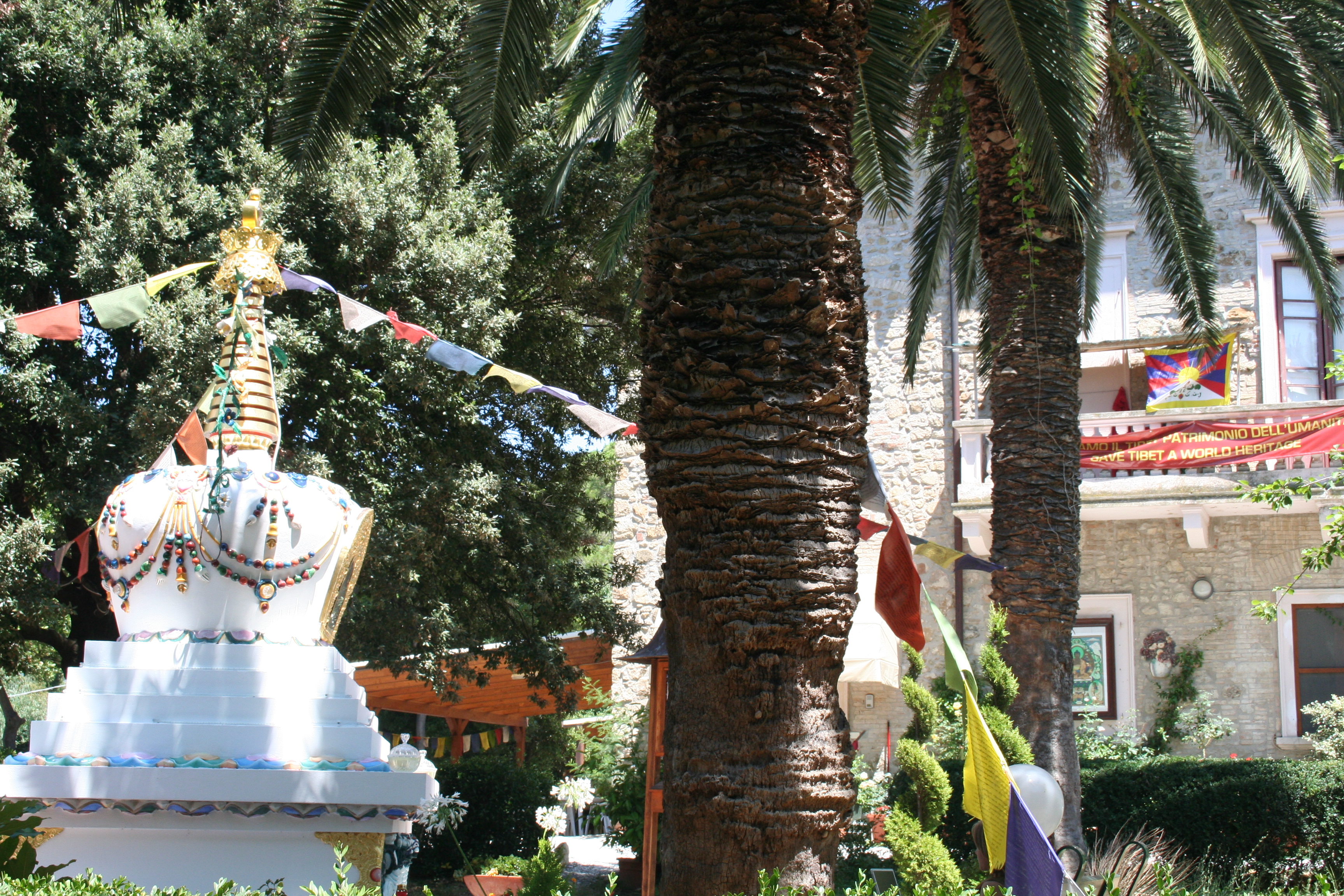
On December 3rd, 1976, a modest Buddhist association was founded in the Tuscan countryside—a commitment to translating and teaching Tibetan Buddhism in a Western context. That organization, Istituto Lama Tzong Khapa (ILTK), has spent nearly five decades becoming one of Europe's most significant centers for Buddhist scholarship, contemplative practice, and monastic life. As it approaches its 50th anniversary in December 2026, the institute stands as a living archive of how Eastern philosophy has taken root in Western soil.
The Birth of a Buddhist Home in Italy
The founding of ILTK in 1976 was not a casual undertaking. It emerged during an era when Tibetan Buddhism was beginning its first sustained diaspora into Europe, following the Chinese occupation of Tibet and the migration of numerous teachers to the West. The establishment of a formal institute in Pomaia, a rural village in Tuscany, represented an unusual commitment: to create a physical, intellectual, and spiritual home where serious Buddhist study could coexist with monastic training and community service.
What distinguished ILTK from the start was its rigor. This was not a retreat center dabbling in meditation tourism; it was an institution dedicated to the authentic preservation and transmission of Tibetan Buddhist texts, teachings, and practices. The location itself—the Tuscan countryside—seemed an unlikely choice for such work, yet the remoteness and natural beauty of Pomaia created conditions for sustained focus that urban centers could not offer.
Five Decades of Study, Growth, and Practice
Over the past 50 years, ILTK has grown into a multi-layered community. It houses resident monks and nuns, hosts visiting teachers from the Tibetan Buddhist tradition, operates a school of Buddhist philosophy and practice, and serves as a pilgrimage destination for practitioners across Europe and beyond. The institute's curriculum reflects the scholarly depth of the Gelug tradition it follows: students engage with classical Buddhist texts on logic, epistemology, ethics, and metaphysics—not as intellectual exercises, but as frameworks for understanding the mind and reducing suffering.
The teachers who have guided this work—both Tibetan masters and the Western students who have matured into teaching roles—have shaped a distinctive approach to bringing Buddhist wisdom to contemporary life. This is neither Buddhism stripped of its philosophical complexity to suit Western tastes, nor Buddhism frozen in nostalgic preservation. Instead, it has been a careful negotiation: honoring the authentic lineage while acknowledging that its practitioners are living in the 20th and 21st centuries.
Why This Moment Matters
The 50-year milestone carries particular significance. It marks the passage from a pioneering generation into a moment of maturity and consolidation. The teachers who founded ILTK and built its foundations are now elders; many of the early practitioners have become the institution's backbone. The question implicit in any 50th anniversary is not just "What have we accomplished?" but "What are we becoming?"
In 2026, ILTK is answering that question through action: twelve major events are planned to mark the year. These are not mere celebrations, but gatherings designed to strengthen the community, deepen practice, and invite new practitioners into a tradition that has proven itself capable of surviving and flourishing in the West.
The Global Reach of a Tuscan Institute
Though ILTK is rooted in a specific place—Pomaia, in the heart of Tuscany—its influence extends across Europe and beyond. Students from dozens of countries come to study; the institute's teachings reach far wider through online platforms and publications. Yet the physical center remains essential. There is something irreplaceable about a community gathered in a shared place, following a daily rhythm of study, practice, and service that has continued unbroken for fifty years.
This model—a residential Buddhist institute embedded in a rural European landscape—has become influential. It demonstrates that authentic Buddhist practice does not require either assimilation into Western secularism or exotic fetishization. It can be sustained as a serious intellectual and spiritual discipline in any climate, any language, any culture.
Teachers, Community, and Continuity
At the heart of ILTK's story is a simple but profound principle: Buddhism is transmitted from teacher to student, and the quality of that transmission depends on the depth of both the teachers and the students. Over five decades, ILTK has cultivated both. It has honored the Tibetan masters who came from Asia to teach; it has also supported Western practitioners in developing the knowledge, discipline, and wisdom to become teachers themselves.
This intergenerational transmission is visible in the institute's structure today. Younger monks and nuns study alongside elders; students become teachers; teachers continue to deepen their practice. The community is not static but living—growing, questioning, adapting to new circumstances while holding to core principles.
Looking Toward 2026 and Beyond
As ILTK enters its fiftieth-anniversary year, it faces both continuities and uncertainties common to any mature institution: How do you preserve what is essential while remaining vital? How do you honor the vision of founders while serving practitioners who may come with different questions? How do you maintain rigorous scholarship in an era of digital distraction?
The twelve major events planned for 2026 will be occasions to address these questions together—to celebrate what has been built, to deepen commitment among existing practitioners, and to make space for new arrivals who feel drawn to this path. In the Buddhist understanding, such gatherings are not abstract celebrations but opportunities for transformation. Every person who comes, every conversation, every meditation session contributes to a living transmission that has already lasted fifty years and may continue for fifty more.
Where to Go from Here
If you are interested in learning more about Istituto Lama Tzong Khapa, visiting the community, or participating in the 50th-anniversary celebrations in 2026, the institute maintains a comprehensive web presence with information on retreats, teachings, and events. The community welcomes both serious practitioners and curious newcomers. Whether you approach Buddhism as a philosophical inquiry, a meditation practice, or a spiritual path, ILTK's fifty years of experience offer a well-established ground on which to begin.