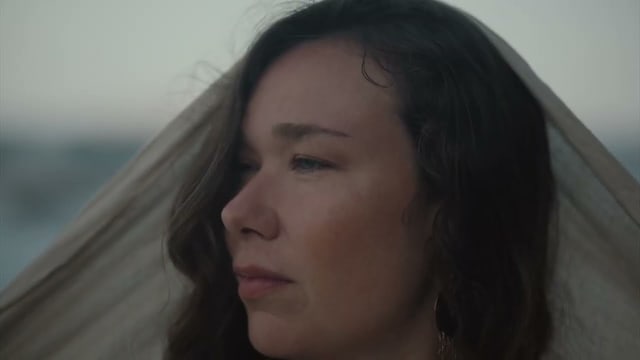
The structure sounds classical—and it is. Vision quests exist across cultures as thresholds where the ordinary world falls away and something deeper becomes available. But the specificity of this one matters. Ten days without running water or conventional shelter. Continuous rain that tested both tent and temperament. A gathering of women at different life stages, creating what Collings calls a "village"—a temporary community bound by shared purpose rather than proximity or blood. And for the solo portion, true isolation: three nights alone in the landscape, held by ceremony but untethered to another human voice.
Before solitude comes togetherness. The first three days in base camp were about learning to live together in the elements, listening to the women preparing to go out. Collings describes it as "a very powerful process, such an honor and a privilege to make village with these women." There is something deliberately countercultural in that framing—honor and privilege in domestic friction, in shared discomfort, in the willingness to sit in a tent and hear one another's intentions before disappearing into the bush.
The rain arrived on day two and didn't relent. Collings' tent began to leak almost immediately. Rather than a setback, this became part of the curriculum. Living in the rain introduces what she calls "a whole another level of water management"—the practical, unglamorous work of keeping sleeping systems dry, of understanding shelter not as a luxury but as the difference between rest and suffering. By day three, when the moment came to walk to individual sites, the sun briefly appeared. "Thunder in the background. The gods are with us," Collings noted in her vlog, an invocation of both gratitude and readiness.
The choice to remain on her medications and supplements during the solo reflects a deliberate stance. Fasting and extreme deprivation are part of some vision quest traditions, but Collings' question—"How can I best serve?"—didn't require suffering as its gateway. Instead, the solo became a container for listening, for attentiveness to what the landscape offered back.
Wet became the dominant weather. Out of three days and three nights, one day brought sun. The rest required constant negotiation with water: tent management, fire tending, the low-grade challenge of staying warm and dry enough to think clearly. In that stripped-down state, Collings undertook a Four Directions Ceremony, a practice where you face each cardinal direction with a question and listen for answers encoded in the environment itself.
The answers came as practical guidance for a woman approaching what she calls the "winter or crone season" of her life at nearly seventy. In the east, the direction of new beginnings: "bring new things and be flexible." In the north: "change directions so I can stand tall and strong and grow high into the sky." The west offered service: "be the grandmother for many different women of many different tribes." And the south instructed her to "clean up what's in front of me so that I can see what's ahead." These were not mystical abstractions. They were directives, born from landscape and ceremony, that gave shape to her path forward.
Throughout her vlog, Collings emphasizes that the weather wasn't incidental to the vision quest—it was essential to it. The rain "created quite the yin experience, an inner experience, and a very bonding experience." Yin, in Taoist and yogic traditions, represents the inward, the receptive, the cool and dark. The rain didn't allow for the outward drama of sunshine and clarity. It demanded presence, stillness, and the kind of interior work that only enforced quiet can open.
The constant moisture also bound the women together. Shared challenge creates a particular kind of intimacy. By the time they gathered for the return—the final three days in base camp—they had not simply undergone a ritual. They had survived something together, had proven to themselves and each other that they could live in conditions that modern life had taught them to avoid.
The return to village began with craft. The women made medicine pouches—small bags to hold "the magic and the medicine" of what the solo had opened. They unwrapped eco-dyed scarves that had been brewing in a cauldron while they were out in the bush, plant materials bleeding their colors onto cloth through days of rain and time. These objects—the pouches, the scarves, the stories themselves—became containers for experiences that language struggles to hold.
Collings speaks candidly about this difficulty: "it's so hard to use words to describe what happened." Yet that's exactly what the return ceremony asked of her. Each woman told her story, narrated her encounters with the landscape, the creatures she'd seen, the beings (metaphorical or literal) that had moved through her solitude. Collings heard stories of "magical beings and the meaning making of that"—the human gift for finding significance in the unexpected, for reading the world as a language.
When it came time for her own story, Collings spoke from her diary, recounting the Four Directions work and what it meant to ask "how can I best serve?" at this particular point in her life. The question itself carries weight at nearly seventy. It's not the question of ambition or achievement. It's the question of a life in its later season, looking toward crone-hood, asking what wisdom or service remains.
Collings returns repeatedly to a single refrain: "There's a before vision quest and an after vision quest. We are not the same women who went in." This isn't metaphorical inflation. Vision quests, in their traditional and modern forms, operate as initiatory thresholds. Something about stepping outside the structures of ordinary life, about sitting alone in wild country, about sharing that risk with a community of other seekers—it changes the nervous system, the sense of self, the relationship to fear and capacity.
The specifics of this particular quest matter too. The rain, the mud, the constant need to tend shelter and fire—these are embodied lessons. They teach self-reliance not as abstraction but as practice: how to find or create dry space, how to manage resources, how to stay warm when the world is wet. Collings describes appreciating "human ingenuity in plumbing" on the drive home—a toilet, a shower, dry shelter. The gratitude wasn't sentimental. It was grounded in having lived without them, in understanding what they cost in design and labor.
What emerges across Collings' account is a particular vision of what a vision quest can be: not a solitary hero's journey but a communal initiation. The village—the gathering of 27 women over ten days—provides the context that makes the solo meaningful. You go out into the bush alone, but you do it held by a community that has committed to this work, that is sitting in the rain together, that will receive your story when you return.
The rituals—the circle, the medicine pouches, the eco-dyed scarves, the final meal—are not ornament. They are the social technology that transforms individual experience into collective wisdom, that says: what happened to you in solitude belongs to all of us. In Collings' language, they "turned everything into a song, we danced, we healed our sisterhood, and we just loved each other up."
This is the innovation Collings brings from the School of Shamanic Womancraft: a vision quest that honors both the archetypal power of wilderness solitude and the often-overlooked power of women gathering, making village, bearing witness to each other's transformations. The rain, the mud, the cold—these aren't obstacles to spiritual experience. They're the curriculum itself, the place where the work becomes real.
For those drawn to vision quest work, the questions Collings models remain open: What would it mean to step outside your ordinary life for ten days? To sit alone in wild country, to listen to what the landscape says when you're no longer moving through it at ordinary speed? To return and tell your story, to hold others' stories, to become part of a community bound not by shared residence but by shared initiation? The School of Shamanic Womancraft offers wilderness solo programs as part of its larger curriculum. Collings continues teaching online and through membership offerings. The work of integration—of carrying what the vision revealed back into ordinary time—is ongoing, and community remains essential to that work.