BrightStar

Alle Events durchsuchen

Bewusste Zusammenkünfte entdecken

events

Yoga
Meditation
Breathwork
Qigong
Tai Chi
Sacred Music
World Music
Medicine Music
Sound Healing
Ecstatic Dance
Beliebte Reiseziele
BaliSedonaLos AngelesCosta RicaNew YorkSan FranciscoAustinMiamiJoshua TreeTulum
Alle Kategorien anzeigenAlle Reiseziele anzeigen

Alle Funktionen entdecken

Leistungsstarke Tools für Ihre Veranstaltungen

Plattform-Funktionen

Intelligente dynamische Preisgestaltung
Ticket-Kategorien
Sitzplatzreservierung
Warenkorbabbruch-Wiederherstellung
Besucher-Wiedergewinnung
Spenden & Staffelpreise
Affiliate-System
Ticket-Scanner
Rabattcodes
Individuelle Fragen
Ticket-Teilen
Upsells & Extras
Analysen & Berichte
E-Mail-Sequenzen
Warteliste / Benachrichtigen / Erinnern
Menschen & Orte
Artists & TeachersEvent OrganizersVenues & StudiosKnowledge BaseGlossaryInspiration
Alle Funktionen anzeigenÜber uns
PreiseBlog
Language
Saved events
Alle Veranstaltungen durchsuchen

events

YogaMeditationBreathworkQigongTai ChiSacred MusicWorld MusicMedicine Music

Beliebte Reiseziele

BaliSedonaLos AngelesCosta RicaNew YorkSan Francisco

Menschen & Orte

Artists & TeachersEvent OrganizersVenues & StudiosKnowledge BaseGlossaryInspiration

Plattform-Funktionen

Intelligente dynamische PreisgestaltungTicket-KategorienSitzplatzreservierungWarenkorbabbruch-WiederherstellungBesucher-WiedergewinnungSpenden & StaffelpreiseAffiliate-SystemTicket-ScannerRabattcodesIndividuelle FragenTicket-TeilenUpsells & ExtrasAnalysen & BerichteE-Mail-SequenzenWarteliste / Benachrichtigen / Erinnern
Alle Funktionen anzeigenÜber uns
PreiseBlog
AnmeldenSuchendeKreative
  • Alle Events durchsuchen
  • Für Suchende
  • Yoga
  • Meditation
  • Breathwork
  • Qigong
  • Tai Chi
  • Heilige Musik
  • Weltmusik
  • Medicine Music
  • Klangheilung
  • Ecstatic Dance
  • Retreats
  • Workshops
  • Alle Kategorien →
  • Bali
  • Sedona
  • Los Angeles
  • Costa Rica
  • Tulum
  • Byron Bay
  • San Francisco
  • Austin
  • New York
  • San Diego
  • Denver
  • Seattle
  • Portland
  • Miami
  • Alle Städte →
  • Join the Movement
  • Why we list
  • Sell Globally
  • Für Kreative
  • Für Teams
  • Für Autoren
  • Für Lehrer
  • Für Kirtan-Künstler
  • Für Studios
  • Für Festivals
  • Für Retreat-Zentren
  • Für gemeinnützige Organisationen
  • Markenbotschafter
  • Kostenloses Ticketing
  • Elevate
  • Amplify
  • 500.000+ Käufernetzwerk
  • Warenkorbabbruch-Wiederherstellung
  • Intelligente dynamische Preisgestaltung
  • Ticket-Kategorien
  • Wiederkehrende Veranstaltungen
  • Sitzplatzreservierung
  • Affiliate-System
  • Warteliste / Benachrichtigen
  • Ticket-Scanner
  • Einbettungs-Widget
  • Event-Syndication
  • Nachrichten
  • Integrationen
  • Berichte
  • Alle Funktionen →
  • Über uns
  • Das Ökosystem
  • Blog
  • Glossar
  • Inspiration
  • Hilfe-Center
  • Kontakt
  • API-Dokumentation
  • Marken-Assets
  • Karriere
  • Presse
  • Nutzungsbedingungen
  • Datenschutzrichtlinie

Events

  • Alle Events durchsuchen
  • Für Suchende
  • Yoga
  • Meditation
  • Breathwork
  • Qigong
  • Tai Chi
  • Heilige Musik
  • Weltmusik
  • Medicine Music
  • Klangheilung
  • Ecstatic Dance
  • Retreats
  • Workshops
  • Alle Kategorien →

Reiseziele

  • Bali
  • Sedona
  • Los Angeles
  • Costa Rica
  • Tulum
  • Byron Bay
  • San Francisco
  • Austin
  • New York
  • San Diego
  • Denver
  • Seattle
  • Portland
  • Miami
  • Alle Städte →

Für Kreative

  • Join the Movement
  • Why we list
  • Sell Globally
  • Für Kreative
  • Für Teams
  • Für Autoren
  • Für Lehrer
  • Für Kirtan-Künstler
  • Für Studios
  • Für Festivals
  • Für Retreat-Zentren
  • Für gemeinnützige Organisationen
  • Markenbotschafter
  • Kostenloses Ticketing
  • Elevate
  • Amplify

Funktionen

  • 500.000+ Käufernetzwerk
  • Warenkorbabbruch-Wiederherstellung
  • Intelligente dynamische Preisgestaltung
  • Ticket-Kategorien
  • Wiederkehrende Veranstaltungen
  • Sitzplatzreservierung
  • Affiliate-System
  • Warteliste / Benachrichtigen
  • Ticket-Scanner
  • Einbettungs-Widget
  • Event-Syndication
  • Nachrichten
  • Integrationen
  • Berichte
  • Alle Funktionen →

Unternehmen

  • Über uns
  • Das Ökosystem
  • Blog
  • Glossar
  • Inspiration
  • Hilfe-Center
  • Kontakt
  • API-Dokumentation
  • Marken-Assets
  • Karriere
  • Presse
  • Nutzungsbedingungen
  • Datenschutzrichtlinie
BrightStar
Hol dir die App
Laden imApp StoreJetzt beiGoogle Play
© 2026 BrightStar. Alle Rechte vorbehalten.
Inspiration

Why Arguing Feeds the Pain Body and How to Stop It

Eckhart Tolle
Eckhart Tolle
Nov 5, 2026
9 Min. Lesezeit

Von Eckhart Tolle

Ansehen · 7

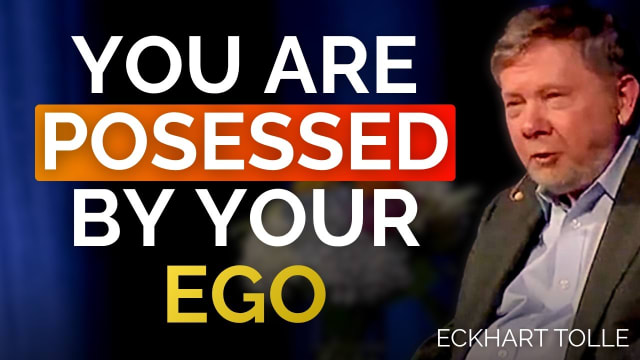
A car pulls alongside you, a window rolls down, and a stranger shouts that you are an idiot. Within a second your jaw tightens and your mind is already drafting a comeback. In a YouTube video published November 5, 2026, Eckhart Tolle takes that ordinary moment of road rage and treats it as a clue to something larger: the ego does not simply feel hurt by an insult, it needs the fight. His argument is that the urge to argue is rarely about the person in front of you. It is the voice of an accumulated store of emotional pain he calls the pain body, and the way out is not to win the exchange but to become conscious enough to decline the hook. Along the way he makes a counterintuitive case that discomfort itself, whether cold water, physical strain, or a difficult person, can be a doorway to awakening.

Lesen · 6 Abschnitte

What happens in the one second after someone calls you an idiot?

Tolle's example is deliberately mundane. "You're driving, somebody shouts at you, calls you something, idiot," he says, "and you can feel if the ego is there, you can feel the injury to the ego." The insult lands on a sense of self that has been built up and defended over a lifetime, and the reflex that follows is a kind of repair job. He describes it as happening in "one or two seconds": the ego immediately jumps "into repair mechanism" and shouts something back, usually something worse. From there, as he puts it with dry humor, the other driver may stop his car, and you may find yourself jumping out of yours.

What makes the passage useful is its insistence that this sequence is unconscious, and that the choice point sits inside the same instant. Tolle's alternative is not a pep talk about patience. It is simply to be present, to notice that the words are "just sounds coming out of his mouth" with "absolutely nothing to do with you." The outcome he describes is almost comic. The other person, expecting a reaction that never arrives, becomes the one who is disconcerted.

Why would anyone seek discomfort on purpose?

The talk's most surprising move comes early, when Tolle points to a long tradition of deliberate hardship. He mentions spiritual practitioners who "created extreme discomfort in order to awaken," citing the desert people of early Christianity and ascetic practices he says continue in India, including sleeping on a bed of nails. He is careful to add a caveat: "I don't recommend it." His reasoning is that the traditions "realize if you take yourself out of [the comfort zone] there is a possibility of awakening is greater."

He then scales the idea down to something anyone can test. Put your hand in very cold water, he suggests, and watch what happens. The first impulse is to pull it back, and that reaction is the point. If you observe the sensation rather than flinching from it, "you become the observer of that feeling, which is the observing consciousness." You have not stopped feeling the cold. You have stepped out of identification with it. Tolle extends the same claim to people in prisons, who he says often write to him, and "quite a few have reported that" through his teaching or spontaneously, they were able to awaken "in this situation of extreme discomfort."

The body analogy is the simplest version of the principle. Lie on the sofa for six hours, he says, and the body grows weaker because it is not being challenged. Lift weights, even small ones, and the body protests. Keep going and "at some point... you will experience an influx of energy which would never have come if the body had remained in its comfort zone." Then comes the twist: "you even begin to enjoy the movement because the energy is there." Tolle applies the same logic to life. A challenge, including a hard relationship, can be used to make you "more conscious" rather than simply more bothered.

How does the ego feed on conflict?

Tolle is blunt about what the ego wants from an argument. "The ego wants the reaction. It wants the other to react. It thrives on the turmoil." Insults are a way of drawing energy out of another person, and a defended ego is happy to supply the other half of the transaction. This is why, in his telling, an unconscious person can pull you down to their level so easily.

He illustrates it with a story from his own driving. People sometimes get upset with him in traffic, he says, and shout all kinds of things while he simply looks at them. "Sometimes they think I must be deaf," he says, to laughter from the audience. "Then they shout even louder." The point is not that the shouting is clever or that he has won. The point is that without a reaction, the exchange has no fuel, and the other person's agitation has nowhere to land.

What is the pain body, and why can't you argue with it?

The concept at the center of the talk is what Tolle calls the pain body. He describes it as "an accumulation of emotional pain and negativity accumulated since childhood," living in you "as a kind of energetic entity so to speak." It is usually dormant, but an external event can trigger it. When it rises, "the dormant pain body, the emotion that is painful then rises up into your mind and forces you to speak and say something." It uses your mind, and every thought you have while it is active will be "irrational," because "the old emotion in you is doing the thinking."

That framing explains why arguments with a triggered person go nowhere. Tolle's advice is stark: "you cannot argue with a pain body" (around 13:23 in the video), because the pain body is not interested in the facts of the situation. He offers an example. The driver who shouts at you may have carried the same emotion "for 45 years," and "you were just a convenient trigger." The pain body wants a reaction, and it "feeds on every negative thought" (around 15:53) you give it. Engaging with it, in other words, feeds it. That is the practical core of the title's promise. Stop arguing, and you stop handing the pain body the fuel it runs on.

How do you stop reacting without suppressing anything?

The obvious objection is that not reacting sounds like bottling things up. Tolle addresses it directly. "You're not suppressing a reaction. You're simply present." The difference is one of identification. A suppressed reaction is still a reaction, with the ego bracing against it. Presence is the recognition that the emotion is arising in you, which lets you observe it instead of acting it out.

Several threads from the talk add up to a working approach:

  • Notice the first instant. The insult lands, the ego flinches, and there is a gap of a second or two. That gap is where the choice lives.
  • Observe the feeling as you would the cold water. Let the sensation be there without turning it into a story about who is right, who is stupid, or what should happen next.
  • Don't argue with the pain body. It will try again, perhaps with a different insult. Without a reaction, Tolle says, "it can't do very much."
  • Decide case by case whether to speak. Tolle is clear that "in some cases you need to say something," while "in many other cases any reaction would be futile."
  • Wait it out. The pain body is temporary in its grip, even when it recurs. Presence lets you outlast it.

None of this is a call to be passive. It is closer to a reordering: the reaction still exists, but you are no longer the one doing the thinking inside it.

Where to go from here

The video is a short excerpt, and its own description points to a larger frame. The description describes a thought experiment in which a god offers Tolle, in his twenties, a fine body to enjoy for three decades in exchange for twenty years of his life. He says he would have accepted, and would be dead now, having spent those years on ego satisfaction. The point is how strong body identification can be, whether it shows up as pride or, for many years in his own case, as a negative identification that made him unhappy. The description's argument is that "a miserable ego... is just as strong as a proud one," and that a negative identification may even be easier to let go of, because you are more motivated.

The same description returns to age. People who built their identity on appearance often move into years of growing unhappiness, unless they break through to a deeper level. Old age, by contrast, is framed as a possible flowering of consciousness, as the body begins to dissolve and "something else can emerge." Its advice is to go to that deeper level before time erodes you, and if not then, at any point after, because "this moment is always the best moment to step out of time."

If the core lesson of this talk fits in one sentence, it is that an argument is rarely about the argument. Tolle's teaching asks you to notice the pull, see the pain body behind it, and let the insult pass without feeding it. Start with the next time a stranger shouts at you on the road. The full session, which the video description says goes much further into these ideas, is available through the speaker's Eckhart Tolle Now program.
Comments

Loading the conversation…

Transcript

[0:00] And so any unconscious person can pull

[0:03] you down to their level.

[0:06] You're driving,

[0:08] somebody shouts at you,

[0:12] calls you something, idy, you idiot,

[0:16] and you can feel if the ego is there,

[0:19] you can feel the injury to the ego.

[0:24] [bell]

[0:28] This has been done too over

[0:32] thousands of years. Spiritual

[0:34] practitioners have created

[0:39] extreme discomfort

[0:41] in order to awaken.

[0:44] Now there is the western mind says how

[0:47] can they be so stupid? Well, it's not

[0:49] that it's not that stu. I don't

[0:51] recommend it by the way. But let's just

[0:54] taking yourself out of the comfort zone.

[0:57] They used to do that in ancient times in

[1:00] the west also in the early days of

[1:02] Christianity. There were people there

[1:05] were the desert people who lived in the

[1:08] desert on almost nothing depriving

[1:11] yourself of every physical comfort. And

[1:15] to even nowadays in India that tradition

[1:18] still continues. There are humans who

[1:21] create

[1:23] very difficult situations. Some well

[1:29] I don't know if they still do this the

[1:31] ancient example you sleep on a bed of

[1:35] nails rather than a comfortable mattress

[1:38] for example but there are many other

[1:40] things where people inflict

[1:43] physical discomfort even suffering on

[1:46] themselves. Now there is

[1:50] this is not for most of you or all of

[1:53] you that's probably not your path. So

[1:55] please or if you have to do it go to

[1:57] India at least they'll they'll may

[2:00] support you but don't tell

[2:04] I don't recommend it. It's not so don't

[2:07] blame me.

[2:10] taking yourself out of the comfort zone

[2:13] in in many traditions. This has been a

[2:16] practice and there there is a deep

[2:19] meaning behind that and this is there's

[2:21] some insight behind that because they

[2:24] realize if you take yourself out of then

[2:26] there is a poss the possibility of

[2:28] awakening is greater.

[2:33] You can even observe it with something

[2:37] very little thing. Let's say you put

[2:38] your hand in very cold water

[2:43] just as an experiment and and leave it

[2:46] in for 30 seconds

[2:50] and then the very uncomfortable feeling

[2:52] arises or you can do the whole body jump

[2:55] in there's a river here I'm sure it's

[2:58] always very cold

[3:00] you jump in the river very unpleasant

[3:02] feeling arises

[3:04] and let's just stick with a hand.

[3:08] Your hand is in the cold water and then

[3:10] the first reaction is you want to pull

[3:12] your hand back and there's a reaction

[3:15] and this

[3:17] and then you you separate yourself. You

[3:20] just observe the feeling

[3:22] and then you become

[3:26] the observer of that feeling which is

[3:28] the observing consciousness. So you have

[3:32] dis

[3:33] associated from the the feeling. It's a

[3:36] feeling is there but you're not reacting

[3:38] to it. It's that was a a little

[3:41] practice. You be you you step out of

[3:43] identification with that the unpleasant

[3:46] feeling. This is why some people in I as

[3:51] Aaron mentioned at the beginning I'm

[3:54] going to talk to people in prison uh

[3:57] later this year and I often receive

[3:59] correspondence from people in prison.

[4:01] Now that's not a comfort zone. that's

[4:04] been in prison is the opposite of a

[4:06] comfort zone. And quite a few have

[4:11] reported that through coming into

[4:13] contact with this teaching or some other

[4:15] spiritual teaching or sometimes

[4:18] spontaneously

[4:20] they were able to awaken in in this

[4:23] situation of extreme discomfort.

[4:30] It operates on every level.

[4:33] Um

[4:36] energy flows in when there's a need for

[4:38] energy. Energy exists on many levels.

[4:42] You can have energy physical energy or

[4:45] higher energy at higher vibrational

[4:47] frequency where it becomes

[4:50] consciousness or it's all consciousness.

[4:53] It's just different vibrational

[4:55] frequencies of consciousness.

[4:59] If you want a stronger physical body,

[5:03] it not going to happen if if you make

[5:05] life for your body as comfortable as

[5:07] possible. That would be nice if it's

[5:10] okay, I'm going to strengthen my body

[5:11] now. I'm going to lie on this sofa for 6

[5:14] hours

[5:17] and watch Netflix,

[5:20] the body will get weaker because it's

[5:22] not being challenged.

[5:25] Or you you go out into you start

[5:29] some physical exercise lifting weights.

[5:34] Start with small weights.

[5:37] Oh my god.

[5:41] The body doesn't like it. You're making

[5:44] life difficult for your body. You're

[5:46] taking the body out of its comfort zone.

[5:52] And then the mind says, "Okay, I think

[5:54] that's enough."

[5:57] Or you carry on or you start jogging,

[6:00] you start running. At first, oh,

[6:04] why why did I get up from my sofa? You

[6:07] shouldn't be.

[6:10] And then there's a gap. There's not

[6:12] enough energy. But then at some point,

[6:16] whether it's weightlifting or running,

[6:18] whatever, you will experience an influx

[6:22] of energy

[6:24] which would never have come if the body

[6:28] had remained in its comfort zone. Then

[6:31] it comes and then you even begin to

[6:33] enjoy the movement because the energy is

[6:36] there. Before it wasn't there and this

[6:39] and then the body as if you persevere

[6:43] the body gets stronger and that's only

[6:46] on a physical level.

[6:48] any problem. If you encounter challenges

[6:51] and problems in your life,

[6:55] >> [clears throat]

[6:55] >> uh you can allow the the challenge

[7:00] to awaken you to make you more

[7:02] conscious. A difficult person, for

[7:04] example,

[7:08] life is full of them.

[7:11] You may have noticed

[7:14] there's always a difficult person

[7:15] somewhere around you. Not you, somewhere

[7:20] somebody.

[7:23] How do you react when you encounter a

[7:26] person who is unc accuses you of

[7:29] something silly or complaint

[7:34] [clears throat] is angry with you or

[7:36] shows you no respect or whatever they

[7:39] may be doing. Yes, in some cases you

[7:42] need to say something but in many other

[7:44] cases any reaction would be futile.

[7:48] Uh

[7:50] but it's usually the reaction is usually

[7:53] unconscious

[7:55] and so any unconscious person can pull

[7:58] you down to their level.

[8:01] You're driving,

[8:02] somebody shouts at you,

[8:07] calls you something, id you idiot.

[8:11] And you can feel if the ego is there,

[8:14] you can feel the injury to the ego.

[8:18] He called me an idiot.

[8:21] And immediately only takes one or two

[8:25] seconds, the idio will the the um ego

[8:28] will immediately jump into repair

[8:32] mechanism and shout something back.

[8:34] That's even worse than idiot. I don't

[8:37] know what's worse than idiot, but true

[8:38] many things.

[8:42] And then if you're not careful, that guy

[8:44] may stop his car and jump out and you

[8:46] jump out of your car.

[8:48] Total unconsciousness

[8:51] or

[8:54] same situation happens.

[8:57] Can't he shout something at you and you

[8:59] realize in that very instant you can be

[9:03] present or you can react of ego and you

[9:08] realize

[9:09] idiot and you

[9:15] that would be very disconcerting for the

[9:17] other person. You're simply present.

[9:22] They were just sounds coming out of his

[9:24] mouth. absolutely nothing to do with you

[9:28] and you're present. No, this person will

[9:30] become very disconcerted because there's

[9:32] no respon because the ego wants the

[9:35] reaction. It wants the other to react.

[9:39] It thrives on on the turmoil. It wants

[9:42] the I I have the pain body. You might

[9:47] written and spoken about what I call the

[9:49] pain body that lives in you which is an

[9:52] accumulation of emotional pain and

[9:55] negativity

[9:58] accumulated since childhood. It lives in

[10:01] you as a kind of energetic

[10:05] entity so to speak. Sometimes it's

[10:08] dormant

[10:09] periodically but it gets triggered by

[10:12] some external event. Then the dormant

[10:15] pain body, the emotion that is

[10:20] painful

[10:22] then rises up into your mind and makes

[10:27] forces you to speak and say something

[10:30] through the emotion then uses your mind

[10:33] and every thought you think when the

[10:35] pain body has been triggered by somebody

[10:37] or situation the mind become

[10:40] [clears throat]

[10:41] every thought that you think and is will

[10:44] be irrational and you you are not doing

[10:47] the thinking. The old emotion in you is

[10:50] doing the thinking in your mind. You are

[10:53] not even there anymore. You're

[10:54] completely asleep spiritually,

[10:56] completely unconscious. You're in the

[10:58] grip of the old emotion [clears throat]

[11:01] and you act it out. And it could be a

[11:03] driver.

[11:05] Maybe you triggered this driver and he

[11:08] shouts.

[11:10] It's nothing to do with you. This

[11:12] emotion has lived in him for 45 years

[11:16] and he's just you were just a convenient

[11:18] trigger

[11:20] and the pain body is there. The pain

[11:24] needs but it needs you to react.

[11:28] It's desperate. If if you don't react,

[11:31] it can't do very much.

[11:34] So it'll try again, say something else,

[11:37] no reaction. But you're not suppressing

[11:39] a reaction. You're simply present.

[11:43] I've done that quite a few times in

[11:45] traffic because sometimes I'm a bit slow

[11:49] and driver and and people get upset with

[11:54] me and they shout all kinds of things

[11:58] and

[12:00] I I look

[12:05] And sometimes they think I must be deaf.

[12:08] [laughter]

[12:10] Then they shout even louder.

[12:14] And then a few months ago a man did that

[12:19] and he shouted even louder. And then he

[12:21] shouted, "I know you can hear me.

[12:29] >> [laughter]

[12:38] >> pain body is very important to be aware

[12:40] of in your daily life because [snorts]

[12:45] most people have one. Well, virtually

[12:48] everybody has a pain body, but in some

[12:50] people it's much stronger than in

[12:52] others. It varies in strength. In your

[12:55] relationships, it's particularly

[12:57] important to be aware that periodically

[13:02] you

[13:04] act out drama in the relationship or

[13:08] often a small trigger is enough. It

[13:11] awakens somebody's pain body and then it

[13:15] tries to provoke the other and then and

[13:17] usually it succeeds and then

[13:23] you cannot argue with a pain body.

[13:26] There's no rational argument. When a

[13:28] person is in the grip of the pain body,

[13:30] the emotional pain body,

[13:33] any rational argument is totally

[13:36] impossible. So don't even try.

[13:39] [laughter]

[13:40] All you can do is remain in a state of

[13:43] non

[13:45] reactivity

[13:47] or if possible temporarily remove

[13:51] yourself

[13:55] by walking out of the room

[13:58] if you can't stay just present.

[14:02] So if you live if you are married or you

[14:04] live together

[14:06] [clears throat] I always recommend that

[14:09] at some not while the pain is active

[14:11] when the when you're fine have a

[14:14] conversation so that you can help each

[14:16] other next time this emotional turmoil

[14:20] wants to return the pain body when you

[14:23] observe it in another person the

[14:26] beginning of it come to an agreement

[14:29] that you're going to give the other

[14:30] person a little sign

[14:35] whatever it may be.

[14:38] And the sign means could that be your

[14:40] pain body just talking just now. And if

[14:44] you catch it early enough and this and

[14:47] that person is already there there's a

[14:49] certain amount of presence that's

[14:50] already in that person. I call it

[14:53] presence power that grows in you. This

[14:56] is if there's a certain amount of

[14:58] presence power then if you and you catch

[15:01] it early then that other person may

[15:03] become conscious at that very moment of

[15:05] the emotion and then and then would say

[15:08] oh yes thank you I got it and then it

[15:11] cannot rise up and use your mind it

[15:14] cannot renew itself through the other

[15:17] person's reaction

[15:19] but even if you live alone

[15:22] the pain body can renew itself through

[15:26] your thought processes because thought

[15:28] is also energy. So once the pain body

[15:31] has taken possession of your mind your

[15:33] thinking becomes deeply negative

[15:37] very heavy density to it and the pain

[15:41] body in that moment

[15:44] you are the pain body and you are

[15:46] addicted

[15:48] to the negative thinking in that moment.

[15:50] It's an addiction because the pain body

[15:53] feeds on every negative thought. So

[15:56] you're addicted to it in that moment.

[16:00] So pain body can feed on other people's

[16:03] reactions or it can also just feed on

[16:05] your thoughts. Once you're at the grip

[16:08] of it, you have to just wait for it to

[16:10] subside. But more present you are, the

[16:14] easier it will be to catch it as it

[16:16] arises.

[16:18] And then it will not renew itself by

[16:20] using your mind and creating havoc in

[16:23] your personal relationships.

[16:26] That's all this is all connected to

[16:29] presence. The arising of presence in

[16:32] your life. And the pain body is a

[16:34] wonderful challenge. And again, it's not

[16:37] comfortable, but that's how we grow.

[16:41] Now it's extremely important that we

[16:44] practice presence when confronted with

[16:47] world events and so on.

Eckhart Tolle
ArtistEckhart Tolle

German-born spiritual teacher whose 1997 book The Power of Now became one of the most widely read spiritual works of the 21st century. After a profound transformation at 29 — movin…

Profil ansehenWebsite
Themen erkunden
Pain-bodyEgo-reactionPresence-practiceObserving-consciousnessSpiritual-discomfort

Hast du Fragen?

Häufig gestellte Fragen

In this talk, Tolle describes the pain body as an accumulation of emotional pain and negativity built up since childhood, which lives in a person as a kind of energetic entity. It stays dormant until an external event triggers it, and then it rises into the mind and takes over the thinking.
Tolle says you cannot argue with a pain body, because the emotion is doing the thinking and is not responding to facts. He adds that the pain body feeds on every negative thought and reaction you give it, so arguing only strengthens it.
Tolle's approach is to be present in the first instant rather than reacting from the ego, and to observe the feeling the way you would observe the sensation of cold water. He stresses that this is not suppression: you are simply not identifying with the reaction, and in many cases any response would be futile.
Tolle argues that many traditions have used deliberate discomfort because taking yourself out of the comfort zone can increase the possibility of awakening. He uses everyday examples like cold water and weightlifting to illustrate that stepping out of comfort can generate an influx of energy and a shift into observation. He also says he does not recommend extreme ascetic practices.
Suppressing a reaction still involves the ego bracing against it, while presence means recognizing the emotion as it arises and observing it without acting it out. Tolle puts it simply: you are not suppressing a reaction, you are simply present.
According to the video's description, people who build their identity on how they look often move into years of growing unhappiness, comparing themselves to the young. Tolle's advice is to break through to a deeper level of consciousness before time erodes you, because old age can be a flowering of consciousness rather than a loss.
Tolle says the ego wants the other person to react and thrives on the turmoil. When you respond from the ego, you hand it the energy it needs, and when you stay present instead, the exchange has no fuel.

Weiterlesen

More from Eckhart Tolle

Alle anzeigen
Why You Can't Choose Your Reactions (and the Step Back)
Inspire

Why You Can't Choose Your Reactions (and the Step Back)

Eckhart Tolle shows how the ego turns a neutral event into an angry story. Here's why thinking can feel like it happens to us, and the first…

10 min read
Why Trying to Love People Fails—and What Attention Does Instead
Inspire

Why Trying to Love People Fails—and What Attention Does Instead

A café parable about two strangers exposes how conditioning colors every encounter. Eckhart Tolle explains why pure attention, not effort, i…

9 min read
Change the World Live in Bali: A Song That Starts Inward
Inspire

Change the World Live in Bali: A Song That Starts Inward

Franko Heke and Equanimous perform "Change the World" live in Bali. Its call-and-response chorus argues that change begins with how we live,…

7 min read
Medicine Buddha Practice: Feeling Healing Energy Within
Inspire

Medicine Buddha Practice: Feeling Healing Energy Within

A weekly Medicine Buddha session shows how a deity practice can start with feeling rather than imagining. Here is how Lama Rod Owens teaches…

9 min read

Weiter erkunden

Setze deinen Weg fort

Mehr Weisheit und Zusammenkünfte aus dem BrightStar-Verzeichnis.

Mehr Artikel

Durchstöbere die ganze Bibliothek an Lehren, Interviews und Leitfäden.

Zu allen Artikeln →

Lehrer & Künstler

Entdecke die Linien, Musiker und Wegbegleiter der bewussten Welt.

Künstler erkunden →

Event finden

Kirtan, Retreats, Klangbäder, Atemarbeit, Festivals — bald in deiner Nähe.

Events ansehen →