BrightStar

Alle Events durchsuchen

Bewusste Zusammenkünfte entdecken

events

Yoga
Meditation
Breathwork
Qigong
Tai Chi
Sacred Music
World Music
Medicine Music
Sound Healing
Ecstatic Dance
Beliebte Reiseziele
BaliSedonaLos AngelesCosta RicaNew YorkSan FranciscoAustinMiamiJoshua TreeTulum
Alle Kategorien anzeigenAlle Reiseziele anzeigen

Alle Funktionen entdecken

Leistungsstarke Tools für Ihre Veranstaltungen

Plattform-Funktionen

Intelligente dynamische Preisgestaltung
Ticket-Kategorien
Sitzplatzreservierung
Warenkorbabbruch-Wiederherstellung
Besucher-Wiedergewinnung
Spenden & Staffelpreise
Affiliate-System
Ticket-Scanner
Rabattcodes
Individuelle Fragen
Ticket-Teilen
Upsells & Extras
Analysen & Berichte
E-Mail-Sequenzen
Warteliste / Benachrichtigen / Erinnern
Menschen & Orte
Artists & TeachersEvent OrganizersVenues & StudiosKnowledge BaseGlossaryInspiration
Alle Funktionen anzeigenÜber uns
PreiseBlog
Language
Saved events
Alle Veranstaltungen durchsuchen

events

YogaMeditationBreathworkQigongTai ChiSacred MusicWorld MusicMedicine Music

Beliebte Reiseziele

BaliSedonaLos AngelesCosta RicaNew YorkSan Francisco

Menschen & Orte

Artists & TeachersEvent OrganizersVenues & StudiosKnowledge BaseGlossaryInspiration

Plattform-Funktionen

Intelligente dynamische PreisgestaltungTicket-KategorienSitzplatzreservierungWarenkorbabbruch-WiederherstellungBesucher-WiedergewinnungSpenden & StaffelpreiseAffiliate-SystemTicket-ScannerRabattcodesIndividuelle FragenTicket-TeilenUpsells & ExtrasAnalysen & BerichteE-Mail-SequenzenWarteliste / Benachrichtigen / Erinnern
Alle Funktionen anzeigenÜber uns
PreiseBlog
AnmeldenSuchendeKreative
  • Alle Events durchsuchen
  • Für Suchende
  • Yoga
  • Meditation
  • Breathwork
  • Qigong
  • Tai Chi
  • Heilige Musik
  • Weltmusik
  • Medicine Music
  • Klangheilung
  • Ecstatic Dance
  • Retreats
  • Workshops
  • Alle Kategorien →
  • Bali
  • Sedona
  • Los Angeles
  • Costa Rica
  • Tulum
  • Byron Bay
  • San Francisco
  • Austin
  • New York
  • San Diego
  • Denver
  • Seattle
  • Portland
  • Miami
  • Alle Städte →
  • Be Found
  • Sell Globally
  • Für Kreative
  • Für Teams
  • Für Autoren
  • Für Lehrer
  • Für Kirtan-Künstler
  • Für Studios
  • Für Festivals
  • Für Retreat-Zentren
  • Für gemeinnützige Organisationen
  • Markenbotschafter
  • Fallstudien
  • Kostenloses Ticketing
  • Elevate
  • Amplify
  • 350.000+ Käufernetzwerk
  • Warenkorbabbruch-Wiederherstellung
  • Intelligente dynamische Preisgestaltung
  • Ticket-Kategorien
  • Wiederkehrende Veranstaltungen
  • Sitzplatzreservierung
  • Affiliate-System
  • Warteliste / Benachrichtigen
  • Ticket-Scanner
  • Einbettungs-Widget
  • Event-Syndication
  • Nachrichten
  • Integrationen
  • Berichte
  • Alle Funktionen →
  • Über uns
  • Das Ökosystem
  • Blog
  • Glossar
  • Inspiration
  • Hilfe-Center
  • Kontakt
  • API-Dokumentation
  • Marken-Assets
  • Karriere
  • Presse
  • Nutzungsbedingungen
  • Datenschutzrichtlinie

Events

  • Alle Events durchsuchen
  • Für Suchende
  • Yoga
  • Meditation
  • Breathwork
  • Qigong
  • Tai Chi
  • Heilige Musik
  • Weltmusik
  • Medicine Music
  • Klangheilung
  • Ecstatic Dance
  • Retreats
  • Workshops
  • Alle Kategorien →

Reiseziele

  • Bali
  • Sedona
  • Los Angeles
  • Costa Rica
  • Tulum
  • Byron Bay
  • San Francisco
  • Austin
  • New York
  • San Diego
  • Denver
  • Seattle
  • Portland
  • Miami
  • Alle Städte →

Für Kreative

  • Be Found
  • Sell Globally
  • Für Kreative
  • Für Teams
  • Für Autoren
  • Für Lehrer
  • Für Kirtan-Künstler
  • Für Studios
  • Für Festivals
  • Für Retreat-Zentren
  • Für gemeinnützige Organisationen
  • Markenbotschafter
  • Fallstudien
  • Kostenloses Ticketing
  • Elevate
  • Amplify

Funktionen

  • 350.000+ Käufernetzwerk
  • Warenkorbabbruch-Wiederherstellung
  • Intelligente dynamische Preisgestaltung
  • Ticket-Kategorien
  • Wiederkehrende Veranstaltungen
  • Sitzplatzreservierung
  • Affiliate-System
  • Warteliste / Benachrichtigen
  • Ticket-Scanner
  • Einbettungs-Widget
  • Event-Syndication
  • Nachrichten
  • Integrationen
  • Berichte
  • Alle Funktionen →

Unternehmen

  • Über uns
  • Das Ökosystem
  • Blog
  • Glossar
  • Inspiration
  • Hilfe-Center
  • Kontakt
  • API-Dokumentation
  • Marken-Assets
  • Karriere
  • Presse
  • Nutzungsbedingungen
  • Datenschutzrichtlinie
BrightStar
© 2026 BrightStar. Alle Rechte vorbehalten.
Inspiration

What's Missing in ModernMan: Iron John's Lessons

Robert Bly
Robert Bly
Jul 7, 2018
7 Min. Lesezeit

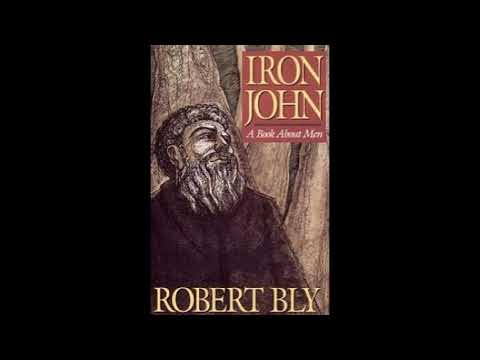
Robert Bly's Iron John: A Book About Men draws on a Grimm fairy tale to diagnose what modern men lack—authentic connection to the wild man archetype, the instinctual masculine force necessary for true maturation. Through Jungian psychology and mythological analysis, Bly argues that contemporary men are disconnected from the mentorship, initiation rituals, and shadow integration that once guided boys into manhood, leaving them domesticated, passive, and psychologically incomplete.

Lesen · 8 Abschnitte

Why Did Iron John Become a Bestseller?

When Robert Bly's Iron John spent 62 weeks on The New York Times Best Seller list in the 1990s, it tapped into a widespread uneasiness among men. The book addressed a gap that many readers felt but couldn't name. Unlike self-help literature that promised quick fixes, Bly offered something deeper: a return to ancient myth and fairy tale wisdom to understand what modern culture had stripped away from masculine development.

The original source material—a Grimm fairy tale called "Iron Hans" (published in 1812)—became, in Bly's hands, a map of psychological maturation. By applying Jungian psychology, folklore analysis, and mythological interpretation, Bly translated a story about a boy and a wild man into a diagnosis of modern masculinity's core problem.

What Is the Wild Man Archetype?

At the heart of Bly's work lies the concept of the wild man—not as a symbol of brutality or regression, but as an archetypal force necessary for healthy male development. In Jungian terms, this represents the instinctual, creative, energetic masculine principle that industrial and post-industrial society has systematically suppressed.

The wild man is not civilized aggression. Rather, he embodies authentic power, natural authority, and the capacity to act decisively from deep inner knowing. He exists outside the rules of "nice" culture—not to destroy it, but to give men access to dimensions of themselves that polite society demands they deny.

Bly's genius was recognizing that modern men don't lack intelligence or sensitivity. What they lack is permission and guidance to access their own vitality. The wild man in the story is not an enemy to be conquered but a mentor to be discovered. He represents the father figure, the initiator, the one who knows how to usher a boy into manhood.

How Does the Iron John Story Work as a Teaching?

In the fairy tale, a young boy living in a castle is too protected, too safe. When he discovers the wild man imprisoned in a cage—the wild man is locked up, contained, made harmless—he becomes curious. Eventually, the boy releases the wild man, and they leave the castle together. What unfolds is not a tale of corruption but of education. The wild man becomes the guide, teaching the boy skills, resilience, and the knowledge necessary to survive and thrive in the larger world.

The story works on multiple levels. The cage represents how modern culture, particularly in the domestic sphere, contains and neutralizes masculine energy. The release represents the boy's willingness to leave safety and embrace the unknown. The wild man's mentorship represents the archetypal father function—not biological fatherhood, but the initiatory role that introduces a young man to reality as it actually is.

What makes this relevant to Bly's diagnosis of modern masculinity is that many contemporary men never meet their wild man. They remain in the castle, psychologically. They are not initiated into manhood through ritual, mentorship, or intentional guidance. They drift into adulthood, still shaped by maternal and institutional forces, without accessing the grounded power and authenticity that characterizes mature masculinity.

What Has Modern Culture Removed From Male Development?

Bly's core argument rests on a historical observation: for most of human history, boys were initiated into manhood through rituals, mentorship from older men, and exposure to challenges that required them to develop courage, responsibility, and wisdom. These rituals varied across cultures—vision quests, hunting expeditions, ordeals, apprenticeships—but they shared a common structure: separation from the maternal world, testing, and reintegration as a recognized adult.

Industrial and post-industrial Western culture eliminated these rituals. Boys are now supervised by institutions (schools) run largely by women and bureaucratic rules. When they come home, they encounter a domestic sphere organized around comfort, safety, and emotional processing. Even their relationships with fathers are often shallow or absent—fathers work elsewhere, in a separate economic sphere.

The result, in Bly's analysis, is that modern men are domesticated but not mature. They may be polite, sensitive, and non-threatening, but they lack the grounded confidence, the capacity for decisive action, and the integration of their own shadow (the wild, instinctual parts they've been taught to deny) that characterizes psychological wholeness.

What Role Does Shadow Integration Play in Iron John?

Jungian psychology—the framework Bly uses throughout his analysis—emphasizes the shadow: the parts of ourselves that consciousness rejects or denies. In Bly's reading, the wild man is partly a shadow figure. He is what modern men have been conditioned to reject about themselves: aggression, sensuality, unpredictability, raw power.

But Jung's point, and Bly's point, is that denying the shadow doesn't eliminate it—it simply makes it unconscious and therefore unintegrated. An unintegrated shadow either erupts explosively (domestic violence, addiction, impulsive destruction) or atrophies (depression, passivity, inner emptiness).

The iron man's role in the story is to help the boy reclaim these denied aspects consciously and responsibly. The boy doesn't become wild or uncivilized. Rather, he develops the capacity to access his own power, to say no, to act from conviction rather than approval-seeking. He becomes whole—integrating both the civilized and the wild, the conscious and the shadow.

How Does Bly Analyze the Fairy Tale Through Multiple Traditions?

What distinguishes Bly's approach is his layering of interpretation. He doesn't read Iron John as a simple moral fable. Instead, he treats it as a repository of psychological and mythological wisdom that has been tested across centuries and cultures.

By drawing on Jungian psychology, various world myths, legends, and folklores, Bly shows that the pattern in Iron John—a boy in need of mentorship discovering a wild, powerful elder figure—recurs across human cultures. This suggests the pattern addresses something deep and universal in human psychological development, not merely Western or modern concerns.

This is a crucial move in Bly's argument. He's not inventing a problem or proposing an idiosyncratic solution. He's using the convergence of myth, psychology, and history to show that modern men are suffering from a genuine developmental deficiency: the absence of initiated entry into adult masculine consciousness.

What Does It Mean That Iron John Spent 62 Weeks on the Bestseller List?

The book's popularity suggests that Bly identified something real in the male experience. Thousands of men—many well-educated, successful, and outwardly functional—recognized themselves in Bly's diagnosis. They felt domesticated. They felt the absence of mentorship and initiation. They sensed that something necessary had been omitted from their development.

The book became a founding text of the mythopoetic men's movement, which attempted to restore ritual, mentorship, and mythological awareness to male development. Whether or not one agrees with all of Bly's conclusions, the book's reception confirmed that the problem he named was widespread and deeply felt.

Where to Go From Here

Readers interested in exploring Bly's full argument should engage directly with Iron John, where the fairy tale is unfolded in granular detail, with extensive commentary on its psychological and mythological dimensions. For those interested in Jungian psychology more broadly, Jung's own works on the shadow and the masculine archetype provide foundational context. Those curious about initiation rituals across cultures might explore Joseph Campbell's work on myth and the monomyth, or Victor Turner's anthropological analysis of ritual. And for those seeking to work with these ideas in contemporary contexts, men's groups and mythopoetic work continue to use Bly's framework as a starting point for exploring what mature, integrated masculinity might look like.
Comments

Loading the conversation…

Robert Bly
ArtistRobert Bly

Robert Bly (1926–2021) was an American poet, translator, and editor whose work in mid-century literature and the mythopoetic men's movement shaped both poetry and social thought. H…

Profil ansehenWebsite
Themen erkunden
Iron-johnMasculinityWild-manJungian-psychologyMale-initiation

Hast du Fragen?

Häufig gestellte Fragen

The wild man is an archetypal masculine force—instinctual, authentic, powerful—that Bly argues modern men have been taught to deny or suppress. Rather than representing brutality, he symbolizes the capacity for decisive action, genuine authority, and access to one's own vital energy. His role in the fairy tale is to mentor the boy, teaching him to move from psychological domestication into mature manhood.
Bly applies Jung's concepts of the shadow, archetypes, and psychological integration to the Grimm tale. He treats Iron John not as a simple story but as a symbolic map of male psychological development, where the wild man represents the shadow aspects of masculinity that culture demands men deny. The boy's journey with the wild man becomes a narrative of shadow integration and maturation.
Bly argues that modern men lack ritual initiation, mentorship from elder men, and intentional guidance into adult masculine consciousness. Without these elements, men remain psychologically domesticated—polite and non-threatening but lacking grounded confidence, the capacity for decisive action, and integration of their own instinctual power.
The book's bestseller status (62 weeks on the New York Times list) reflected widespread recognition among men that something essential was missing from their development. Bly's analysis of ancient myth to diagnose modern problems resonated deeply, suggesting the issue he identified was real and widespread.
Bly argues that traditional cultures used rituals, mentorship, and deliberate challenges to initiate boys into manhood, whereas modern Western culture has eliminated these practices. Boys now grow up in institutions and domestic spheres run by rules and comfort, never experiencing the testing and separation that signals entry into adult consciousness.
No. Bly distinguishes between unconscious wildness (which erupts destructively) and integrated wildness (where a man has conscious access to his own power and instinct). The goal is wholeness—integrating both civilized consciousness and instinctual vitality, not regressing to brutality.
The mythopoetic men's movement, which emerged partly from Bly's work, uses myth, ritual, and mentorship to help contemporary men reconnect with archetypal masculine wisdom and initiate themselves into mature adulthood. Bly's Iron John became a foundational text for this movement's attempt to restore intentional male development.

Weiterlesen

More from Robert

Alle anzeigen
Iron John: The Wild Man and Modern Male Initiation
Inspire

Iron John: The Wild Man and Modern Male Initiation

Robert Bly's Iron John explores how traditional myths and fairy tales offer men a path beyond both domineering patriarchy and passive softne…

1 min read
Iron John Story: Male Initiation and the Wild Man Archetype
Inspire

Iron John Story: Male Initiation and the Wild Man Archetype

Robert Bly retells the Grimm fairy tale of Iron John to explore male initiation, the separation from the mother, and the wounded masculine. …

1 min read
Minimal Vocalization as Spiritual Practice: Power in Simplicity
Inspire

Minimal Vocalization as Spiritual Practice: Power in Simplicity

A brief live vocal interlude demonstrates how devotional sound—stripped to its essence—can invoke presence and transformation through pure r…

1 min read
Govinda Jaya: How Sacred Sound Awakens the Heart
Inspire

Govinda Jaya: How Sacred Sound Awakens the Heart

Radhika Das channels the liberating power of mantra through a luminous kirtan performance at Medicine Festival, invoking divine names to pur…

1 min read

Weiter erkunden

Setze deinen Weg fort

Mehr Weisheit und Zusammenkünfte aus dem BrightStar-Verzeichnis.

Mehr Artikel

Durchstöbere die ganze Bibliothek an Lehren, Interviews und Leitfäden.

Zu allen Artikeln →

Lehrer & Künstler

Entdecke die Linien, Musiker und Wegbegleiter der bewussten Welt.

Künstler erkunden →

Event finden

Kirtan, Retreats, Klangbäder, Atemarbeit, Festivals — bald in deiner Nähe.

Events ansehen →