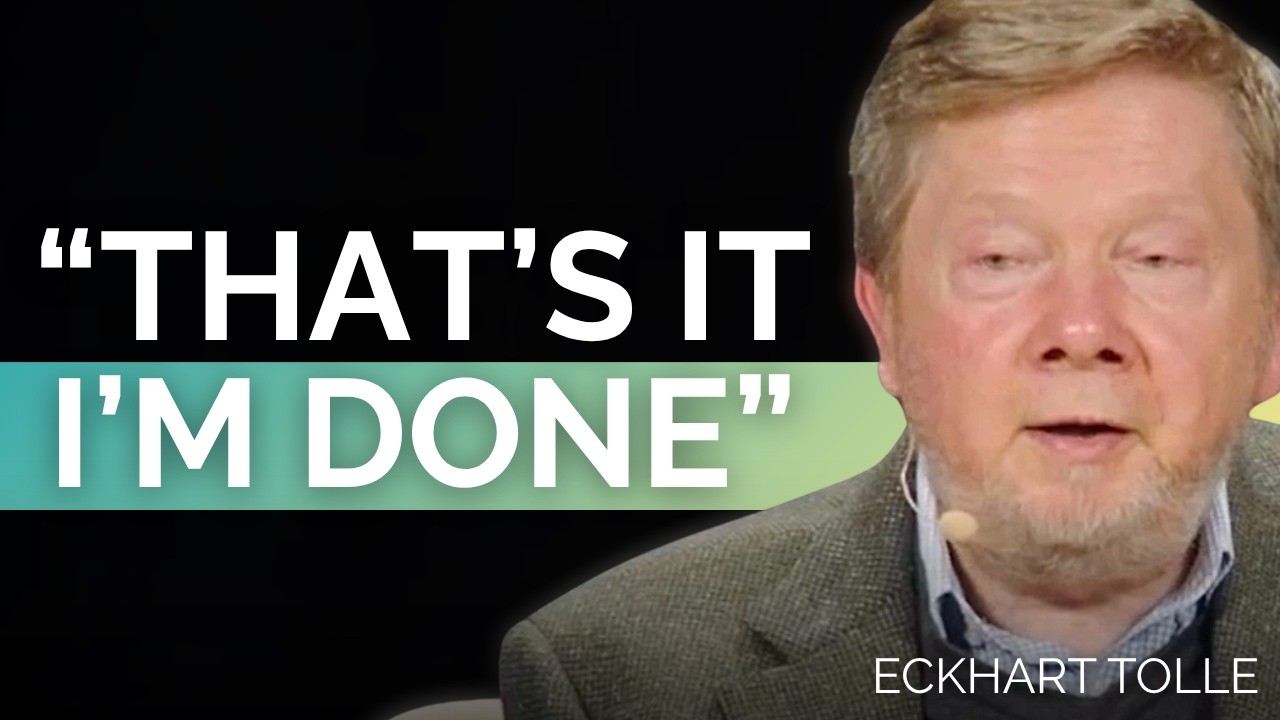
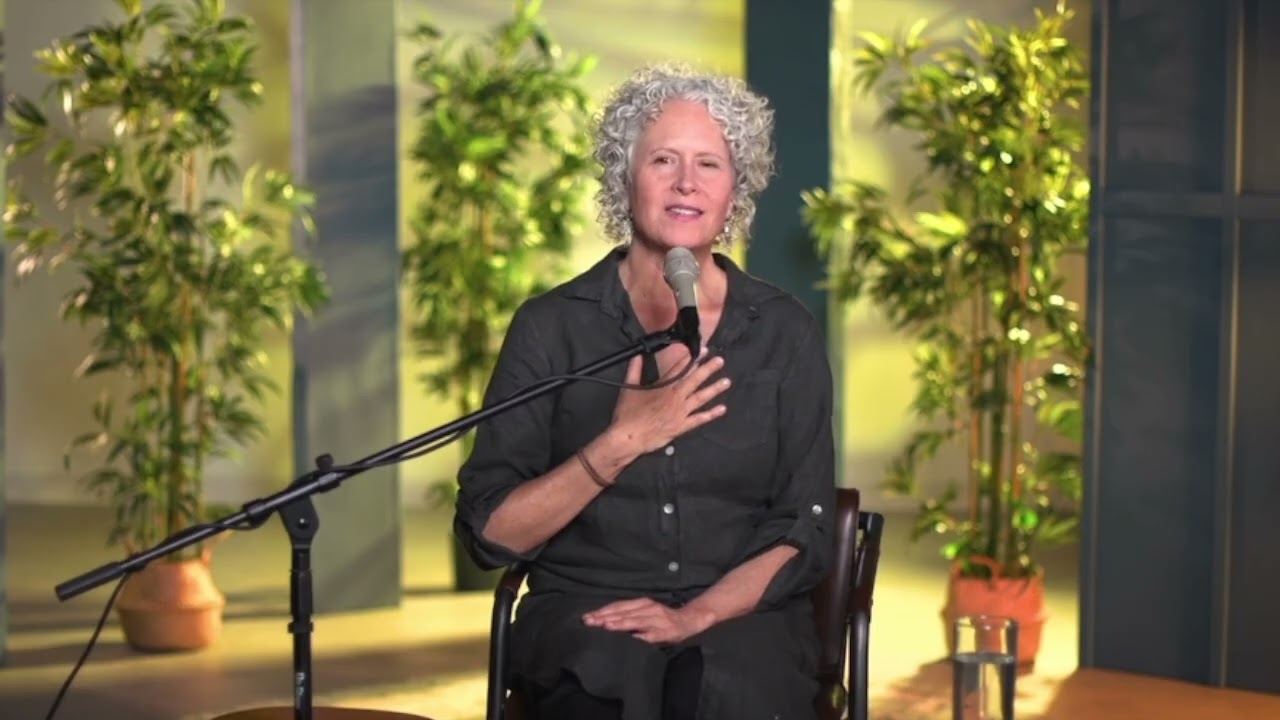
Imagine walking into a room where someone is napping, flinging the door wide, rattling the handle, flipping on the lights. Nobody in that room is enjoying it. That image is where Tenzin Wangyal Rinpoche goes first in a teaching recorded at Serenity Ridge Retreat Center on October 3, 2026, during a retreat on Sherap Chamma, and it holds the whole talk together. The way we treat our bodies, our habits and our attention is the way we treat that sleeper. Rinpoche asks listeners to bring the wisdom and love of Sherap Chamma into three levels of experience (body, energy and mind), to take seriously a body that is plainly asking for care, to notice how much authority we hand to the habitual, addictive mind, and then to look honestly at where our hours actually go. His conclusion is simple and uncomfortable: we keep knocking on closed doors while open ones stand unlatched. Walk toward openness, he says, toward those who love you, toward the light, toward where things flow easily and there is joy.
The teaching opens with its map. The first level is the physical body. The second is energy, which he describes through emotion and breath. The third is a deeper awareness of who you are. Rinpoche asks listeners to bring wisdom and love into each of these, and he frames the whole inquiry as a question of focus: when you say "I" or "we," what is your primary sense of self actually rooted in?
He makes an observation that is easy to recognize once it is named. Older people, whose bodies are hurting, tend to organize their identity around the pain. Younger people, whose minds are restless, tend to organize around the mind's noise and its constant plans. In both cases we swing between extremes. What he is asking for is the harder third option, which is care, attention and balance across all three levels rather than a retreat into whichever one is loudest at the moment.
The section on the body begins at about 2:00, and it carries the talk's most direct line: "This body clearly needs care and compassion." Rinpoche points out that the body's present condition did not arrive overnight. Every problem it has now has accumulated over time, through years of choices that were labeled as fun, joyful or exciting at the moment they were made. The lesson he draws is not that pleasure is the enemy. It is that a different kind of joy and a different kind of fun exist, and one of them leaves you healthier and more fit.
His practical suggestion is a one-to-one conversation with your body. Ask it how it is doing and how it is feeling. Ask what makes it feel good and what makes it feel bad. Because the body is a physical dimension, he says, it is more conditioned, and so it will tell you clearly what it needs. The harder step is listening, and his model for listening is specific. You acknowledge the habit without disowning the care: my bad habit is my bad habit, my addiction is my addiction, but I care about you. In that stance, he says, the body's need becomes the decision-making authority rather than the addiction.
"This body clearly needs care and compassion." (Tenzin Wangyal Rinpoche, "Walk Toward the Open Door," Ligmincha International, YouTube, 2026)
Rinpoche's most practical passage is about dinner, and it is worth reading closely because it refuses to pretend that discipline is easy. He describes an ongoing internal negotiation. The mind wants to eat. The heart and the sleep know they would be better off without the heavy meal. Sometimes you win and sometimes you lose. He is candid that the social cost is real: when everyone else is enjoying the food, being the only one who is not eating is harder.
The diagnostic question he asks is the most useful line in this section. Who is saying it is hard? Rinpoche's answer is that the mind is saying it, and that the mind can also make a different and clear statement: I am happy to take everyone out, and I am happier not to eat. The point is not to become a machine that overrides every craving. It is to recognize which voice is speaking and to stop mistaking the habit's commentary for your own verdict.
He extends the example to the body's rest. The heart is already slowing down before a heavy, late dinner. Once that meal arrives, the heart starts working harder and takes longer to settle, and sleep is affected as a consequence. This is why he asks about the gap between knowing and changing. People know the meal is bad for them. The habit keeps winning anyway. His answer is to bring care, love and attention to the body and to the habitual mind itself, rather than fighting it head-on.
At about 10:00 the teaching turns from the body to attention. Rinpoche names a practical resource that everyone shares: time. We have a limited number of hours for eating, sleeping, doing nothing and doing productive work. The question he puts to the listener is blunt. Do you spend your time where the world is open to you, where magic seems to be happening and things come easily? Or do you spend it where a miserable mind fixates on something that has never worked and never will, while you keep hoping it does?
His accounting is what makes the point land. The cost of this habit is not one hour or two. It is, in his words, "many, many hundreds and thousands of hours." Attention is not spent in a single bad decision. It is spent in repeated patterns that build up across years, the same way the body's condition builds up across them. Seeing your attention as a ledger, rather than as a mood, is the shift he is inviting.
The metaphor arrives at about 11:43 and it is his sharpest image: "When things are closed, you should be able to say goodbye." Why, he asks, do we keep trying to open something that is closed? And if things are open, why do we not move toward them? Why won't we walk toward the place where there is light, where there is dynamic energy and liveliness, where the qualities we need already exist for us?
Rinpoche's argument turns on effort as information. Where a door is open, he says, you do not need to strain. You do not have to push so hard to see things, because there is so much light. Obstacles appear smaller because things seem to be moving with you, like a thumbs-up that says, go ahead. Where you have to suffer a great deal just to make small things happen, that suffering is itself a signal worth taking seriously. He connects this to the way we chase single people or single opportunities. Waiting on one person, you lose many others. Trying to open one door, you shut down the rest. We fail to see the open doors, he suggests, because we have grown addicted to seeing closed ones: noticing them, engaging them, returning to them.
The closing movement, around 17:00, is the most generous part of the talk. Go toward where the dynamic energy is. Spend your time where love is. Rinpoche's point is that love is not a fixed commodity you either have or lack. It moves in both directions. Spending your attention among people who care for you and in places where life flows is not an escape from the work of growth. It is the environment in which that work becomes possible, and it is where he asks us to put our hours.
Rinpoche does not give a formal checklist, but his prompts translate easily into small daily practices that stay faithful to the talk. Each one below is a reading of his teaching, not a quotation of an instruction he gave by number.
- Check in with the body once a day, asking how it feels and what it needs, and listen for the answer before deciding anything.
- When an urge arises, ask which voice is making the argument, and whether your heart and body agree with it.
- Audit one week of your time. Mark the hours spent where things flow and the hours spent on a closed door that has never opened.
- Treat unusual strain as information. If something takes enormous effort again and again, consider whether the door is closed.
- Spend more of your evenings with people who love you and in places where your energy rises.
The full teaching runs about eighteen and a half minutes and is worth hearing in Rinpoche's own voice, especially for the pauses and the repeated questions that carry more weight than a summary can. Ligmincha International publishes it on YouTube under @ligmincha, with chapters at the three levels, the body, the addictive mind, attention, the open door, and love. The retreat was recorded at Serenity Ridge Retreat Center, and its updates appear on Instagram at @serenityridge_retreat_center and on facebook.com/serenityridgeretreats. Start with the body question tonight. Ask it how it is doing, and listen for the answer before you walk toward whatever door is open.