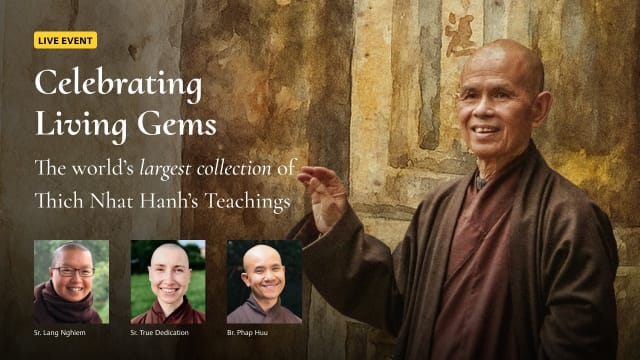
Thich Nhat Hanh, the Vietnamese Zen master, once said something that cuts to the bone: "The real miracle is not to walk on water. The real miracle is to walk on the earth." That single sentence contains everything—or nearly everything—about what's gone wrong with how we practice spirituality in the modern West, and everything about how to find our way back. It's a sentence that explains why a man who spent years identifying as a non-dual teacher had to step away from that label entirely, and why his journey backward is, paradoxically, a leap forward.
For decades, spiritual seekers have been told that enlightenment means transcending the human condition—shedding the body, quieting the mind, escaping suffering, ascending beyond the realm of thought and feeling and ordinary life. The allure is seductive. It promises an end to pain, a glimpse of something vast and eternal and untouched by the messiness of being alive. But there's a dark side to this promise, one that often goes unnamed in spiritual circles because naming it requires admitting that the very teachings meant to liberate us can become chains.
The journey into spirituality often begins with genuine hunger—a sense that something is missing, that beneath the surface of ordinary consciousness lies something more real, more true, more worth having. For many years, this hunger drove the search. Meditation cushions, retreats, teachers, altered states, the intoxicating taste of transcendent experience. The teachings promise that if you look deeply enough, you'll find that what you really are is not a separate self struggling through life, but pure awareness itself—pristine, unchanging, untouched by doubt or fear or the ravages of time. On one level, this teaching points to something real. Look for yourself through meditation, and you may indeed discover that the solid sense of "me" becomes less solid, that awareness itself has a quality of vastness and stillness. The words don't matter—"pure awareness," "Brahman," "the Godhead," "Buddha-nature"—they're all fingers pointing at the moon, as the Zen saying goes.
But fingers aren't the moon. And herein lies the problem: when a living truth hardens into dogma, when an opening becomes a cage, when a metaphor gets mistaken for reality itself, something corrupts. What began as an invitation to look directly at your own experience transforms into an identity, another resting place for the ego to lodge itself. "I am pure awareness," the seeker declares. "I am not my thoughts, not my body, not my story. I am untouchable consciousness itself." There's a beautiful truth buried in that statement. There's also a dangerous lie.
The danger emerges quietly, almost imperceptibly. A spiritual seeker who has glimpsed or deeply experienced the spacious awareness that non-dual teachings point toward begins to identify with it. The ego—that mechanism that creates a sense of separate self—doesn't disappear when you recognize pure awareness. It simply finds a new identity to cling to. "I am pure awareness," becomes the new ground, the new superiority, the new way of being special. The teachings that were supposed to dissolve the separate self instead furnish it with a more refined disguise, one that feels more spiritual, more evolved, more immune to criticism than the ordinary ego ever was.
The problem then becomes brutal: if you are pure awareness, if enlightenment is your true nature, then what do you do with doubts? What do you do with fears? What do you do with the very human feelings of rage, grief, jealousy, insecurity that still arise in your body and nervous system? The non-dual framework, when it becomes dogmatic, offers only one answer: deny them, transcend them, recognize them as illusion. Call them ego. Call them mind. But under no circumstances truly feel them, because that would contradict your new identity as perfect, pure, and awakened.
This is where the spirituality becomes toxic. Trauma gets suppressed rather than healed. Genuine human struggles get labeled as "spiritual bypassing" or "ego," as if naming the pathology magically resolves it. Students and partners of spiritual teachers who claim perfect enlightenment end up holding space for all the shadow material the teacher has disowned. The whole system becomes a kind of mutual agreement to pretend, and the cost is paid in human connection, in authenticity, in the very capacity for genuine love that most spiritual paths claim to be cultivating.
The reckoning comes when you finally spend unguarded time with the people who are supposed to embody these teachings. Not on stage, not in the formal teaching setting where image is carefully managed, but in the green room, at the dinner table, in the hours when no one is watching. What emerges is both humbling and strangely liberating: they're human. All of them. Every single one, without exception—the most famous, the most successful, the ones with the most devoted followings. They have doubts. They have fears. They get triggered. They carry unresolved trauma. Some of them are generous and honest about it. Others perform perfection so relentlessly that their partners and students absorb all the emotional toxicity they refuse to acknowledge in themselves.
This isn't meant as judgment. It's meant as medicine. Because once you realize that even the people who've taught non-duality to thousands still struggle with being human, something cracks open in you. You begin to see that the struggle itself isn't a sign of failure. That imperfection isn't a spiritual defect. That vulnerability isn't something to transcend but something to honor, even to revere. The irony becomes obvious: in the name of non-duality, many spiritual teachers were actually becoming deeply dualistic—separating themselves from ordinary humanity, creating a hierarchy where enlightened beings stood above normal people, claiming immunity from the very emotional and relational struggles that define being alive.
This gap between the teaching and the lived reality is where genuine transformation begins. Because no matter how sophisticated your spiritual concepts are, no matter how many retreats you've done or how deeply you've meditated, if you're not actually embodying those teachings in your daily life—in your relationships, your conflicts, your moments of fear—then what do those teachings really mean? If you believe in non-duality but treat your partner with contempt when you're triggered, you're not living non-duality. You're just performing it. If you teach that all thoughts are illusion but you're secretly consumed with anxiety about your image and reputation, you're not teaching non-duality. You're teaching dissociation dressed up in spiritual language.
The question that finally cuts through all the abstraction is this: where does spirituality actually live? Is it in the peak experience, in the profound meditation, in the concept you can articulate? Or is it in the way you show up when you're afraid? Is it in how you handle conflict? Is it in whether you can stay present with your own pain without bypassing it, and whether you can do the same for someone you love?
There is no transcendence of humanity that doesn't also include a passionate embrace of it. True spirituality isn't about eradicating vulnerability. It's about giving yourself—moment by moment—permission to be beautifully, wonderfully human. To have doubts and still be whole. To struggle and still be worthy. To make mistakes and still be divine. The ocean of awareness may be undying and unchanging, but you appear as a unique wave, with a particular body, a particular nervous system, a particular history. Those aren't obstacles to spirituality. They're its very substance.
This is where non-duality can finally breathe freely, when it stops being in war with duality. Yes, on the deepest level, we are all expressions of the same consciousness. And yes, you are also an individual human being having a unique experience that matters. These aren't contradictions. They're the paradox that life itself is built on. The sacred isn't somewhere else, some realm of pure awareness you have to escape the body to reach. It's here, in the earth, in the breath, in the ache in your chest when you're afraid, in the joy of connection when you let someone truly know you.
Thich Nhat Hanh understood this. Walking on the earth, feeling the ground beneath your feet, that's the miracle. Not because the earth is illusion and consciousness is real, but because consciousness is expressing itself as earth, as body, as these imperfect, struggling, beautiful human beings. When spirituality finally stops being at war with humanity, when it stops pretending that enlightenment means transcending our vulnerability and starts meaning that we can meet our vulnerability with love—that's when the real transformation begins. That's when the teaching becomes alive.
If you're drawn to spiritual practice, the question worth asking is not "How do I transcend my humanity?" but "How do I fall more deeply in love with my humanity?" This shifts everything. It means your doubts become valuable information, not spiritual defects. Your relational struggles become sacred ground for practicing presence and compassion, not shameful proof that you haven't awakened. Your body, with all its appetites and sensitivities and needs, becomes a temple to inhabit consciously, not a prison to escape.
The work then becomes not about achieving some future state of perfection, but about meeting what's alive in you right now with curiosity and kindness. That's where the real miracle is. That's where spirituality finally becomes useful—not as a way to transcend life, but as a way to be fully alive.