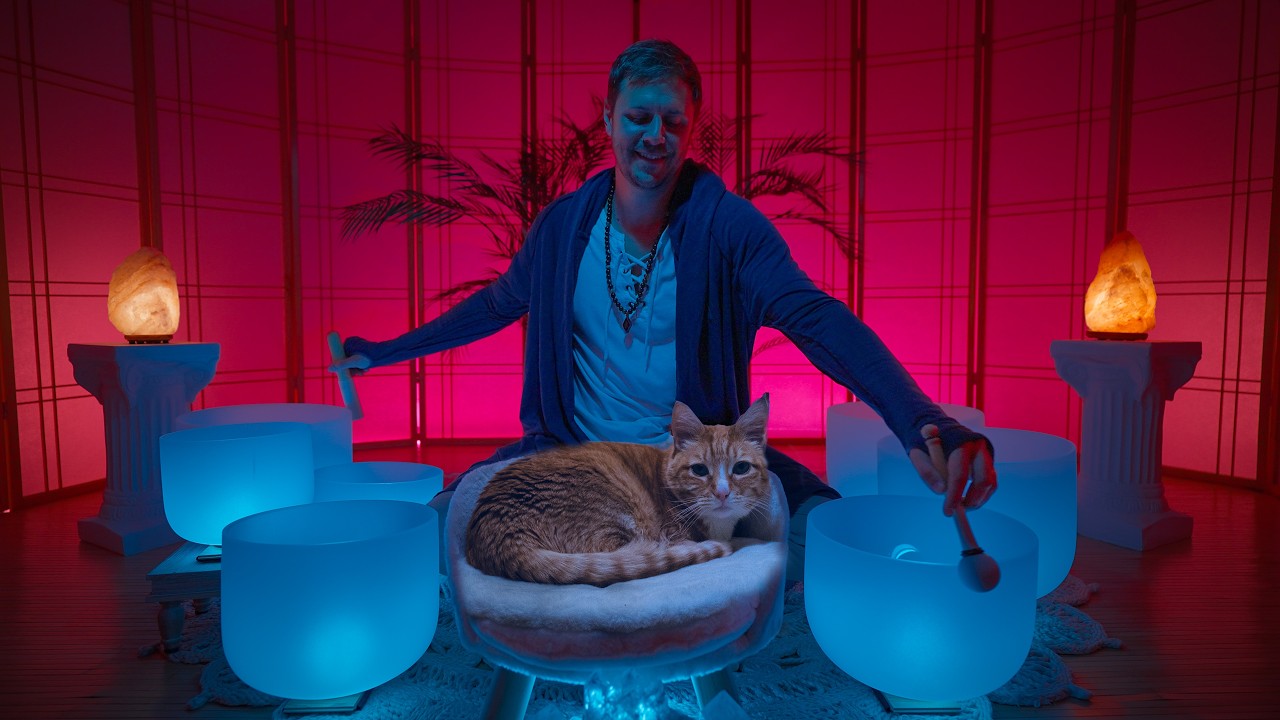
Your shoulders rise toward your ears even when you're sitting still. The base of your skull tightens. Breath becomes shallow, caught somewhere between your chest and throat. You've been holding this tension so long that you've stopped noticing it—until someone asks, "Are you okay?" and the question hits like cold water. The body remembers stress long after the moment has passed, storing it in the jaw, chest, stomach, and shoulders, anywhere the nervous system learned to brace. A somatic sound bath meets this stored tension not with force or analysis, but with gentle vibration and the invitation to notice—to let your nervous system find its way back to ease without needing to understand or solve anything first.
What is somatic healing, really?
The word "somatic" comes from the Greek soma—the body. Somatic healing is the principle that the body holds its own wisdom and its own wounds. Unlike approaches that treat mind and body as separate, somatic work acknowledges that emotions live in flesh. Anxiety doesn't just exist as a thought; it lives in your nervous system as a tendency to tense, to brace, to restrict your breath. Grief doesn't just exist as sadness; it may lodge in your chest as a heaviness or restriction. The body is not a passive container for the mind; it's an active participant in stress and healing.
Conventional talk therapy works primarily through language—you talk about what happened, gain insight, and through cognitive reprocessing, change your relationship to the experience. But somatic approaches recognize what neuroscience now confirms: the nervous system has a memory that exists beneath words. Even if you intellectually understand that you're safe, your body might still hold the protective bracing pattern it learned during a dangerous time. To access this deeper level, you need to work through the body itself.
Where does the body actually hold onto stress?
The places are consistent and revealing. When you face something frightening—a near-accident, harsh words, a looming deadline—your nervous system triggers an ancient survival response. Blood redirects toward your large muscles. Your breathing quickens. Your pupils dilate. Your jaw clenches. Your shoulders hunch. Your chest tightens. Your stomach knots. Most of the time, once the threat passes, your body releases this bracing. The parasympathetic nervous system activates and returns you to rest.
But sometimes the body doesn't get the signal that it's safe. Chronic stress, repeated activation, or unprocessed difficulty can leave your nervous system stuck in a low-level alert state. The jaw stays clenched. The shoulders stay hunched. The chest stays tight. The stomach stays knotted. The body has learned to brace, and it keeps doing so even in perfect safety—during a quiet evening, while lying down, while with people you love. As the session description notes, sometimes the body keeps holding on even after the stressful moment has passed.
Most people with chronic tension have become so adapted to the bracing that they don't feel it anymore. It's become baseline. This is why the first step in somatic release is noticing. You cannot soften what you don't feel.
Why does force actually create more tension?
Most wellness culture is built on the logic of force. You push through discomfort at the gym. You "work on" your tension. You "fix" your problems. Somatic sound baths introduce a radically different paradigm.
"You do not need to understand where every sensation came from or force anything to release. Let the sound bring your attention back into the body. Notice your breathing, the weight beneath you, and any places that feel ready to loosen a little. What changes may be subtle, and that is enough."
This is a profound shift. You're not trying to make anything happen. You're creating conditions where the body can naturally release what it's been holding. The nervous system, when it feels safe and receives gentle stimulus, will downshift on its own. Tension doesn't need to be conquered; it needs to be invited to relax.
Why does this matter? Because force creates resistance. If you try to aggressively release tension—pushing on tight muscles, forcing breath, commanding your nervous system to "relax"—you often just create more tension. You're essentially saying to your body: "I don't trust you; I need to control you." The body hears this and tightens more. But when you create a gentle, non-demanding space and simply notice what's there, your body can finally relax. You're saying: "I see you. You're safe. You can let go."
How does sound actually reach the nervous system?
A sound bath is an immersive sonic environment where frequencies wash over you for extended periods. The human body is roughly 60 percent water—a perfect conductor of vibrational frequency. When you immerse yourself in a sound bath, those frequencies don't just enter through your ears. They move through your entire system. They reach the vagus nerve, the longest nerve in your body, which is essentially the direct line to your parasympathetic nervous system. The parasympathetic system is responsible for rest, digestion, healing, and all the functions that can only happen when you feel safe.
In the presence of deep, pure tones sustained over time, the nervous system registers safety. Your physiology can downshift. Cortisol and adrenaline decrease. Inflammation naturally reduces. Tension has room to unwind. The body isn't being forced into relaxation; it's being invited into it by a signal it understands at the deepest level.
But there's another mechanism at work: the power of attention itself. The act of listening to a sound bath is a form of gentle, non-judgmental noticing. Instead of your mind racing through worries, instead of your body remaining caught in habitual tension patterns, the sound becomes an anchor for your awareness. You're invited to feel your breathing, the weight of your body, any places that feel ready to soften. In that presence—without analysis, without trying to fix anything—change can occur.
Why does duration matter for somatic release?
A three-plus-hour sound bath isn't a quick fix. It's an immersion. The duration allows your nervous system time to gradually downshift, layer by layer. If you lie down for ten minutes of soothing music, you might feel surface relaxation. But lie down for three hours in pure, supportive tones, and something deeper can shift. The bracing patterns that took months or years to establish can begin to unwind. The body gets time to register: okay, it's really safe now. I can really let go.
When does a sound bath become exactly what you need?
The session description identifies its ideal moments: use this experience when you feel emotionally full, physically tense, disconnected from your body, or simply in need of a deeper exhale.
Emotionally full means you've absorbed more than you can process—stress, grief, overwhelm, difficult conversations. Your nervous system is overloaded. Talking won't help yet; you need to come back into your body.
Physically tense means you carry the signature of stress in your musculature. Your jaw is tight. Your shoulders live near your ears. Your breathing is shallow. You might not even remember why you started bracing, but you can't stop.
Disconnected from your body means you've been living in your head for too long. Screens, thought, abstraction. You've lost the felt sense of being in your physical form. You need to come home to sensation.
A sound bath isn't presented as a replacement for clinical treatment, but it's a powerful complement—especially useful at the intersection of body and emotion, where the feeling is lodged somewhere in your physiology and words alone haven't shifted it.
The permission embedded in the experience
Perhaps the most radical element of a somatic sound bath is what it doesn't demand. You don't have to achieve any particular state of mind. You don't have to understand the source of your tension. You don't have to perform healing correctly. You simply show up, lie down, and let the vibrations meet you exactly where you are. The body knows what to do. The sound simply creates the conditions for that knowing to express itself.
Where to go from here
If you find yourself holding tension—and most of us do—the first invitation is to pause and notice. Before you try to force release, see if you can simply feel where you're braced. The body speaks in sensation, not words. A sound bath provides the conditions for listening deeply: time, vibration, safety, and permission to let change happen at its own pace. Whether you explore a full immersive sound bath or simply take a few minutes to bring awareness to your jaw, your shoulders, your chest, the practice is the same: notice without judgment, soften around the sensation, and trust that the body knows how to rest.