BrightStar

Alle Events durchsuchen

Bewusste Zusammenkünfte entdecken

events

Yoga
Meditation
Breathwork
Qigong
Tai Chi
Sacred Music
World Music
Medicine Music
Sound Healing
Ecstatic Dance
Beliebte Reiseziele
BaliSedonaLos AngelesCosta RicaNew YorkSan FranciscoAustinMiamiJoshua TreeTulum
Alle Kategorien anzeigenAlle Reiseziele anzeigen

Alle Funktionen entdecken

Leistungsstarke Tools für Ihre Veranstaltungen

Plattform-Funktionen

Intelligente dynamische Preisgestaltung
Ticket-Kategorien
Sitzplatzreservierung
Warenkorbabbruch-Wiederherstellung
Besucher-Wiedergewinnung
Spenden & Staffelpreise
Affiliate-System
Ticket-Scanner
Rabattcodes
Individuelle Fragen
Ticket-Teilen
Upsells & Extras
Analysen & Berichte
E-Mail-Sequenzen
Warteliste / Benachrichtigen / Erinnern
Menschen & Orte
Artists & TeachersEvent OrganizersVenues & StudiosKnowledge BaseGlossaryInspiration
Alle Funktionen anzeigenÜber uns
PreiseBlog
Language
Saved events
Alle Veranstaltungen durchsuchen

events

YogaMeditationBreathworkQigongTai ChiSacred MusicWorld MusicMedicine Music

Beliebte Reiseziele

BaliSedonaLos AngelesCosta RicaNew YorkSan Francisco

Menschen & Orte

Artists & TeachersEvent OrganizersVenues & StudiosKnowledge BaseGlossaryInspiration

Plattform-Funktionen

Intelligente dynamische PreisgestaltungTicket-KategorienSitzplatzreservierungWarenkorbabbruch-WiederherstellungBesucher-WiedergewinnungSpenden & StaffelpreiseAffiliate-SystemTicket-ScannerRabattcodesIndividuelle FragenTicket-TeilenUpsells & ExtrasAnalysen & BerichteE-Mail-SequenzenWarteliste / Benachrichtigen / Erinnern
Alle Funktionen anzeigenÜber uns
PreiseBlog
AnmeldenSuchendeKreative
  • Alle Events durchsuchen
  • Für Suchende
  • Yoga
  • Meditation
  • Breathwork
  • Qigong
  • Tai Chi
  • Heilige Musik
  • Weltmusik
  • Medicine Music
  • Klangheilung
  • Ecstatic Dance
  • Retreats
  • Workshops
  • Alle Kategorien →
  • Bali
  • Sedona
  • Los Angeles
  • Costa Rica
  • Tulum
  • Byron Bay
  • San Francisco
  • Austin
  • New York
  • San Diego
  • Denver
  • Seattle
  • Portland
  • Miami
  • Alle Städte →
  • Join the Movement
  • Sell Globally
  • Für Kreative
  • Für Teams
  • Für Autoren
  • Für Lehrer
  • Für Kirtan-Künstler
  • Für Studios
  • Für Festivals
  • Für Retreat-Zentren
  • Für gemeinnützige Organisationen
  • Markenbotschafter
  • Fallstudien
  • Kostenloses Ticketing
  • Elevate
  • Amplify
  • 500.000+ Käufernetzwerk
  • Warenkorbabbruch-Wiederherstellung
  • Intelligente dynamische Preisgestaltung
  • Ticket-Kategorien
  • Wiederkehrende Veranstaltungen
  • Sitzplatzreservierung
  • Affiliate-System
  • Warteliste / Benachrichtigen
  • Ticket-Scanner
  • Einbettungs-Widget
  • Event-Syndication
  • Nachrichten
  • Integrationen
  • Berichte
  • Alle Funktionen →
  • Über uns
  • Das Ökosystem
  • Blog
  • Glossar
  • Inspiration
  • Hilfe-Center
  • Kontakt
  • API-Dokumentation
  • Marken-Assets
  • Karriere
  • Presse
  • Nutzungsbedingungen
  • Datenschutzrichtlinie

Events

  • Alle Events durchsuchen
  • Für Suchende
  • Yoga
  • Meditation
  • Breathwork
  • Qigong
  • Tai Chi
  • Heilige Musik
  • Weltmusik
  • Medicine Music
  • Klangheilung
  • Ecstatic Dance
  • Retreats
  • Workshops
  • Alle Kategorien →

Reiseziele

  • Bali
  • Sedona
  • Los Angeles
  • Costa Rica
  • Tulum
  • Byron Bay
  • San Francisco
  • Austin
  • New York
  • San Diego
  • Denver
  • Seattle
  • Portland
  • Miami
  • Alle Städte →

Für Kreative

  • Join the Movement
  • Sell Globally
  • Für Kreative
  • Für Teams
  • Für Autoren
  • Für Lehrer
  • Für Kirtan-Künstler
  • Für Studios
  • Für Festivals
  • Für Retreat-Zentren
  • Für gemeinnützige Organisationen
  • Markenbotschafter
  • Fallstudien
  • Kostenloses Ticketing
  • Elevate
  • Amplify

Funktionen

  • 500.000+ Käufernetzwerk
  • Warenkorbabbruch-Wiederherstellung
  • Intelligente dynamische Preisgestaltung
  • Ticket-Kategorien
  • Wiederkehrende Veranstaltungen
  • Sitzplatzreservierung
  • Affiliate-System
  • Warteliste / Benachrichtigen
  • Ticket-Scanner
  • Einbettungs-Widget
  • Event-Syndication
  • Nachrichten
  • Integrationen
  • Berichte
  • Alle Funktionen →

Unternehmen

  • Über uns
  • Das Ökosystem
  • Blog
  • Glossar
  • Inspiration
  • Hilfe-Center
  • Kontakt
  • API-Dokumentation
  • Marken-Assets
  • Karriere
  • Presse
  • Nutzungsbedingungen
  • Datenschutzrichtlinie
BrightStar
© 2026 BrightStar. Alle Rechte vorbehalten.
Inspiration

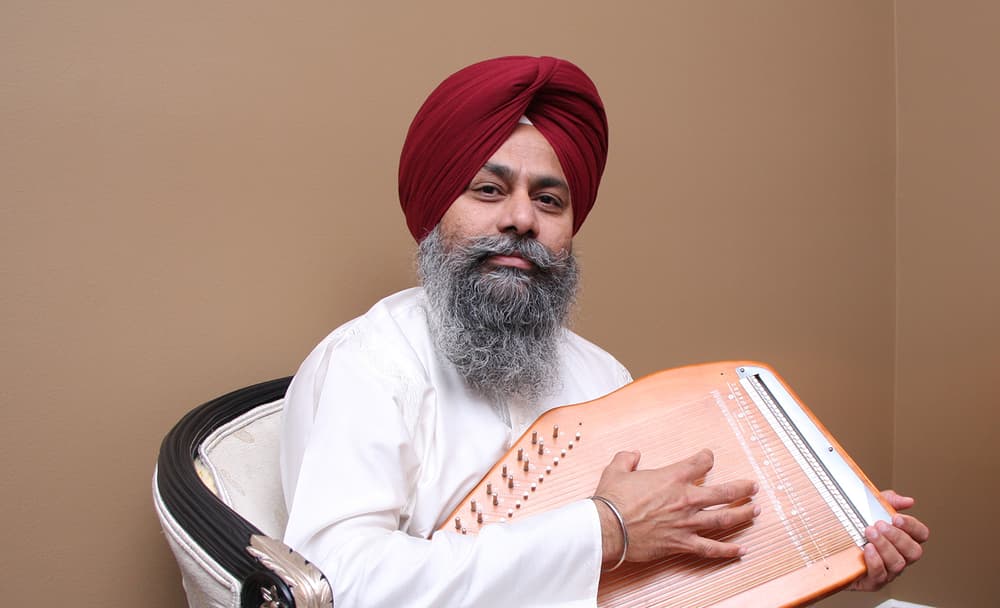
Raag Hameer: Radha's Dance in Madhuban with Krishna's Flute

Professor Paramjeet Singh
Apr 15, 2011
7 Min. Lesezeit
Ansehen · 5
Lesen · 7 Abschnitte

What is Raag Hameer and its devotional significance?

Raag Hameer is a classical Indian raga belonging to the Bilaval thaat, characterized by a majestic and contemplative mood. In this performance by Professor Paramjeet Singh, the raga serves as a vehicle for expressing one of the most enduring themes in Hindu devotional music: the divine love between Krishna and Radha, set in the mystical grove of Madhuban. Rather than a purely abstract musical exploration, this rendition weaves together the technical elements of the raga with narrative and emotional depth rooted in Krishna devotion.

The composition begins with a methodical exposition of the raga's scale—introducing the ascending and descending phrases that define Hameer's character. The opening phrase "Gam G Sa Raagh Mar M Ni Sa" (0:04–0:20) establishes the foundational notes, allowing the listener to ground themselves in the raga's fundamental tonal landscape. This methodical approach is typical of classical Indian music pedagogy, where the raga is first presented in its pure, abstract form before the emotional narrative is layered onto it.

How does the lyrical narrative develop the theme of divine love?

Once the raga's musical framework is established, Professor Singh introduces the composition "Madhubans Mein Radhika Nachee Re" (0:53), which translates to "In Madhuban, Radha danced." This simple yet profound statement anchors the entire performance in the bhakti (devotional) tradition, specifically the Krishna-centered mysticism of Braj. Madhuban—the forest of Madhuvana—holds a sacred place in Krishna consciousness as the site where Krishna played his divine leela (divine play), particularly his intimate exchanges with the gopis (cowherd girls) and most centrally with Radha.

The lyrical content develops a sensory and emotional portrait of this sacred encounter. References to "Giridhara ki murli" (Krishna's flute) appear repeatedly throughout the performance, invoking the auditory and spiritual power of Krishna's divine instrument. In Hindu devotional philosophy, the flute's sound represents the call of the divine to the soul—an irresistible pull toward union with the absolute. Radha's dance in response to this flute-call becomes a metaphor for the soul's yearning toward transcendence.

Additional lyrical elements paint this scene with intimate detail: "Pag mein ghoomkar bandh ke" (circling around with feet bound), "mukh par daal le" (placing upon the face), and "nainon mein gajra lagaay" (adorning the eyes with flowers). These images conjure a vision of Radha adorning herself for Krishna, beautifying herself with flowers and movement in anticipation of divine encounter. The repetition of these phrases—particularly "Madhubans mein Radhika nachee re"—creates a meditative loop that invites the listener deeper into the contemplative space.

What is the relationship between raga structure and emotional expression?

The power of this performance lies in how Professor Singh uses the structural possibilities of Raag Hameer to express escalating emotional intensity. Raag Hameer, with its serious and somewhat austere character, might seem an unusual choice for a love narrative. Yet this apparent tension actually deepens the meaning: the majestic, dignified qualities of Hameer elevate the love between Radha and Krishna from the merely romantic to the cosmically significant. This is not sentimental love-song; it is a meditation on the structure of divine relationship itself.

The raga's characteristic phrases—its murcchanas (melodic turns) and the specific handling of its ascending and descending scales—are employed to create moments of climax and resolution that mirror emotional peaks in the narrative. When the flute-call is invoked, the musical phrasing subtly shifts to capture the magnetism of that divine summons. When Radha's dance is described, the rhythm and ornamentation intensify, creating a sense of movement and animation within the otherwise formal raga structure.

How does repetition function as a spiritual technique?

One striking feature of this composition is its use of repetition—both musical and lyrical. Phrases like "Madhubans mein Radhika nachee re" return multiple times, as do references to the flute, to the adorning of the body, and to divine longing. This is not merely artistic choice; it reflects the fundamental bhakti practice of kirtan and japa (mantra repetition). In Hindu spiritual practice, repetition of sacred names and themes is understood as a path to deepened consciousness and union with the divine.

By returning again and again to the image of Radha dancing in Madhuban, and to the sound of Krishna's flute, the composition creates a recursive spiral of consciousness. The listener is not meant to progress linearly through a narrative arc, but rather to spiral deeper into the emotional and spiritual resonance of these archetypal images. Each repetition, like each turn of a prayer bead, invites fuller absorption into the devotional mood.

What symbolic meanings do the flute and dance carry?

The flute (murli) and the dance (nach) are not incidental details in this composition—they are central symbols of the Krishna tradition. The flute represents the divine call, the sound of the absolute pulling the relative individual soul toward itself. It is simultaneously a symbol of sweetness, of play, of the non-serious ease with which the divine moves through creation. When Krishna plays his flute in Madhuban, time suspends; the gopis forget their duties and surrender to the music.

Radha's dance, in response to this flute-call, symbolizes the soul's surrender and participation in the divine play. In the tradition of Gaudiya Vaishnavism and other Krishna-centered practices, Radha represents the supreme devotee, the model of total surrender and love for the divine. Her dance is not performance for an external audience but rather an expression of inner ecstatic state—a moving outward of the devotion that fills her being.

The decoration of the body—adorning with flowers, with bangles, with tilak and jewelry—represents the preparation of the individual self for encounter with transcendence. It suggests that even the physical body, the sensory apparatus, becomes an offering and an instrument of devotion when aligned with divine love.

What is the emotional arc of the performance?

As the performance progresses, emotional intensity gradually builds. The opening exposition of the raga is cool, abstract, mathematical—the listener is oriented to the tonal landscape. But as the devotional narrative layers in, the temperature rises. References to Madhuban, to the flute, to Radha's adorning and dancing, to the final invocation "Dosti dukh mukhda dikhlao" (friendship, sorrow, showing the face)—these accumulate emotional weight. By the final sections of the performance, the listener is immersed not in abstract musical form but in the felt sense of divine longing, of the soul's yearning toward union.

The final cadential passages, with their sustained tones and gradual resolution, suggest a movement toward peace, toward consummation of desire—though this remains more suggested than explicit. The raga concludes not with dramatic closure but with a gentle fading, as if the music itself dissolves back into silence, back into the inner space from which it emerged.

Where to go from here?

For those drawn to explore this tradition further, several paths open: First, deepen familiarity with Raag Hameer itself through other classical performances, understanding how different musicians interpret its formal structure. Second, study the Krishna literature from which these devotional themes emerge—the Bhagavata Purana, the Gita Govinda, and the poetry of saints like Surdas and Mirabai. Third, engage with live performance or recording of kirtan (devotional chanting), which operates in a similar emotional and spiritual register as this raga performance. Finally, consider the larger question this performance raises: how does formal artistic structure—whether musical or poetic—serve as a vehicle for spiritual experience? How can the rational mind, trained to analyze and categorize, dissolve into the direct perception of the sacred?

Comments

Loading the conversation…

Transcript

[0:00] [संगीत]

[0:04] गम ग सा राघ

[0:09] मर म नि सा नी नि म

[0:15] म

[0:16] मरे

[0:20] सा ग म धनी सा नी सा

[0:30] [संगीत]

[0:35] मधुबन मेरा

[0:37] दिखाना चरे मधुबन ध

[0:43] काची रे मधुबन मेरा

[0:48] [संगीत]

[0:53] काना मधुबन में राध का नाची रे मधुबन में

[1:01] का नाची रे रे र की मुरलिया बाजी

[1:09] [संगीत]

[1:12] रे मधुवन

[1:16] मेरा बु बन मेरा

[1:21] दे पग में घूमकर बांध के पग में घूमकर

[1:29] बांध

[1:32] टा मुख पर डार ले नैनों में गजना लगाए रे

[1:40] मधुबन में र का नाची रे मधुबन में राध का

[1:47] नाच रे गतर की मुरली

[1:52] आवाज

[1:53] [संगीत]

[1:58] रेर की आ बाज रे मधुबन

[2:04] मेरा ना रे

[2:10] मधुरे

[2:15] भन पग में गकर बाध के पग में गकर बाध

[2:26] के पग में

[2:38] के पग में

[2:56] गोर पग में बा

[3:01] टा मुख पर डाल के नैनों में गजरा

[3:07] लगाए मधुबन रा देगा नाचरे मधुबन रा देगा

[3:14] नारे गिरधर की मुरली आवाजी रे गिरधर की

[3:20] मुरली आवाजी रे

[3:26] मधुन मेंा यार आ मिया

[3:32] आया

[3:35] आया

[3:38] आया करन चंद

[3:42] [संगीत]

[3:44] मा करन जिंद मा

[3:48] कराया

[3:50] आनिया यारे

[3:55] आनिया मया

[3:58] [संगीत]

[4:00] दोस्ती दुख मुखड़ा दिखला जीन ना तरसा मिया

[4:07] मया

[4:10] आ

[4:25] आ सा

[4:38] रे सा

[5:06] आया

[5:35] आ

[5:43] [संगीत]

[5:45] आया

[5:48] आया

[5:51] [संगीत]

[5:57] [संगीत]

[5:59] आ i

Professor Paramjeet Singh
ArtistProfessor Paramjeet Singh

Professor Paramjeet Singh is an Indian classical vocalist and Sikh kirtan artist who has mastered over 125 ragas and devoted his career to preserving the devotional music of saints…

Profil ansehenWebsite
Themen erkunden
Raag-hameerKrishna-devotionMadhubanRadha-krishnaBhakti

Hast du Fragen?

Häufig gestellte Fragen

Raag Hameer is a classical Indian raga with a majestic and contemplative character. Its serious, dignified qualities make it ideal for elevating devotional themes from merely romantic to cosmically significant, as it underscores the spiritual depth of divine love between Krishna and Radha rather than treating the subject sentimentally.
The flute (murli) in Krishna tradition represents the divine call pulling the individual soul toward the absolute. It embodies both the sweetness and the irresistible power of the divine, and in this performance, its invocation (Giridhara ki murli) becomes the catalyst for Radha's dance and spiritual surrender.
Repetition of phrases like 'Madhubans mein Radhika nachee re' reflects the bhakti practice of japa (mantra repetition), where returning to sacred names and themes deepens spiritual consciousness. Rather than progressing linearly, the listener spirals deeper into devotional resonance with each repetition.
Radha's dance symbolizes the soul's surrender and ecstatic participation in divine play. In the Krishna tradition, Radha represents the supreme devotee model of total love, and her dancing in response to Krishna's flute expresses the inner bliss and devotion that overflow from union with the divine.
Professor Singh uses Raag Hameer's melodic phrases, ascending and descending scales, and rhythmic variations to mirror emotional peaks in the story of Radha and Krishna. The abstract musical form becomes a container for concrete spiritual experience, with the flute-call and dance invocations shifting the musical phrasing to heighten emotional intensity.
Madhuban is the mystical forest grove where Krishna performed his divine leela (play), especially his intimate exchanges with the gopis and Radha. It represents a sacred geography in devotional consciousness as the site of divine-human encounter and spiritual transformation.

Weiterlesen

More from Professor

Alle anzeigen
Raag-Based Gurbani Kirtan: The Beauty of Mere Laalan Ki Sobha
Inspire

Raag-Based Gurbani Kirtan: The Beauty of Mere Laalan Ki Sobha

Learn how raag-based Gurbani kirtan preserves authentic Sikh devotional music through the shabad "Mere Laalan Ki Sobha," performed in classi…

1 min read
Raag-Based Gurbani Kirtan: Tukhari, Bhairavi, and Classical Tradition
Inspire

Raag-Based Gurbani Kirtan: Tukhari, Bhairavi, and Classical Tradition

Experience the spiritual depth of Patiala Gharana kirtan through rare raags and Gurbani compositions. A live performance honoring classical …

1 min read
Bhaja Mana Radha Govinda Kirtan: Meaning and Practice
Inspire

Bhaja Mana Radha Govinda Kirtan: Meaning and Practice

A seven-minute London kirtan of the maha-mantra Bhaja Mana Radha Govinda, unpacked: its meaning, its call-and-response form, and the New Yor…

1 min read
Minimal Vocalization as Spiritual Practice: Power in Simplicity
Inspire

Minimal Vocalization as Spiritual Practice: Power in Simplicity

A brief live vocal interlude demonstrates how devotional sound—stripped to its essence—can invoke presence and transformation through pure r…

1 min read

Weiter erkunden

Setze deinen Weg fort

Mehr Weisheit und Zusammenkünfte aus dem BrightStar-Verzeichnis.

Mehr Artikel

Durchstöbere die ganze Bibliothek an Lehren, Interviews und Leitfäden.

Zu allen Artikeln →

Lehrer & Künstler

Entdecke die Linien, Musiker und Wegbegleiter der bewussten Welt.

Künstler erkunden →

Event finden

Kirtan, Retreats, Klangbäder, Atemarbeit, Festivals — bald in deiner Nähe.

Events ansehen →