
BrightStar

Alle Events durchsuchen

Bewusste Zusammenkünfte entdecken

events

Yoga
Meditation
Breathwork
Qigong
Tai Chi
Sacred Music
World Music
Medicine Music
Sound Healing
Ecstatic Dance
Beliebte Reiseziele
BaliSedonaLos AngelesCosta RicaNew YorkSan FranciscoAustinMiamiJoshua TreeTulum
Alle Kategorien anzeigenAlle Reiseziele anzeigen

Alle Funktionen entdecken

Leistungsstarke Tools für Ihre Veranstaltungen

Plattform-Funktionen

Intelligente dynamische Preisgestaltung
Ticket-Kategorien
Sitzplatzreservierung
Warenkorbabbruch-Wiederherstellung
Besucher-Wiedergewinnung
Spenden & Staffelpreise
Affiliate-System
Ticket-Scanner
Rabattcodes
Individuelle Fragen
Ticket-Teilen
Upsells & Extras
Analysen & Berichte
E-Mail-Sequenzen
Warteliste / Benachrichtigen / Erinnern
Menschen & Orte
Artists & TeachersEvent OrganizersVenues & StudiosKnowledge BaseGlossaryInspiration
Alle Funktionen anzeigenÜber uns
PreiseBlog
Saved events
Alle Veranstaltungen durchsuchen

events

YogaMeditationBreathworkQigongTai ChiSacred MusicWorld MusicMedicine Music

Beliebte Reiseziele

BaliSedonaLos AngelesCosta RicaNew YorkSan Francisco

Menschen & Orte

Artists & TeachersEvent OrganizersVenues & StudiosKnowledge BaseGlossaryInspiration

Plattform-Funktionen

Intelligente dynamische PreisgestaltungTicket-KategorienSitzplatzreservierungWarenkorbabbruch-WiederherstellungBesucher-WiedergewinnungSpenden & StaffelpreiseAffiliate-SystemTicket-ScannerRabattcodesIndividuelle FragenTicket-TeilenUpsells & ExtrasAnalysen & BerichteE-Mail-SequenzenWarteliste / Benachrichtigen / Erinnern
Alle Funktionen anzeigenÜber uns
PreiseBlog
AnmeldenSuchendeKreative
Tibetan BuddhistOm Mani Padme Hum · Om Mani Padme Hum · Om Mani Padme Hum · Om Mani Padme Hum ·
  • Alle Events durchsuchen
  • Für Suchende
  • Yoga
  • Meditation
  • Breathwork
  • Qigong & Tai Chi
  • Tai Chi
  • Heilige Musik
  • Retreats
  • Workshops
  • Alle Kategorien →
  • Bali
  • Sedona
  • Los Angeles
  • Costa Rica
  • Tulum
  • Byron Bay
  • San Francisco
  • Austin
  • Alle Städte →
  • Für Kreative
  • Für Teams
  • Für Autoren
  • Für Lehrer
  • Für Kirtan-Künstler
  • Für Studios
  • Für Festivals
  • Für Retreat-Zentren
  • Für gemeinnützige Organisationen
  • Markenbotschafter
  • Fallstudien
  • Kostenloses Ticketing
  • Elevate
  • Amplify
  • 350.000+ Käufernetzwerk
  • Warenkorbabbruch-Wiederherstellung
  • Intelligente dynamische Preisgestaltung
  • Ticket-Kategorien
  • Wiederkehrende Veranstaltungen
  • Sitzplatzreservierung
  • Affiliate-System
  • Warteliste / Benachrichtigen
  • Ticket-Scanner
  • Einbettungs-Widget
  • Event-Syndication
  • Nachrichten
  • Integrationen
  • Berichte
  • Alle Funktionen →
  • Über uns
  • Das Ökosystem
  • Blog
  • Glossar
  • Inspiration
  • Hilfe-Center
  • Kontakt
  • API-Dokumentation
  • Marken-Assets
  • Karriere
  • Presse
  • Nutzungsbedingungen
  • Datenschutzrichtlinie

Events

  • Alle Events durchsuchen
  • Für Suchende
  • Yoga
  • Meditation
  • Breathwork
  • Qigong & Tai Chi
  • Tai Chi
  • Heilige Musik
  • Retreats
  • Workshops
  • Alle Kategorien →

Reiseziele

  • Bali
  • Sedona
  • Los Angeles
  • Costa Rica
  • Tulum
  • Byron Bay
  • San Francisco
  • Austin
  • Alle Städte →

Für Kreative

  • Für Kreative
  • Für Teams
  • Für Autoren
  • Für Lehrer
  • Für Kirtan-Künstler
  • Für Studios
  • Für Festivals
  • Für Retreat-Zentren
  • Für gemeinnützige Organisationen
  • Markenbotschafter
  • Fallstudien
  • Kostenloses Ticketing
  • Elevate
  • Amplify

Funktionen

  • 350.000+ Käufernetzwerk
  • Warenkorbabbruch-Wiederherstellung
  • Intelligente dynamische Preisgestaltung
  • Ticket-Kategorien
  • Wiederkehrende Veranstaltungen
  • Sitzplatzreservierung
  • Affiliate-System
  • Warteliste / Benachrichtigen
  • Ticket-Scanner
  • Einbettungs-Widget
  • Event-Syndication
  • Nachrichten
  • Integrationen
  • Berichte
  • Alle Funktionen →

Unternehmen

  • Über uns
  • Das Ökosystem
  • Blog
  • Glossar
  • Inspiration
  • Hilfe-Center
  • Kontakt
  • API-Dokumentation
  • Marken-Assets
  • Karriere
  • Presse
  • Nutzungsbedingungen
  • Datenschutzrichtlinie
BrightStar
© 2026 BrightStar. Alle Rechte vorbehalten.
Inspiration

Prove Yourself vs. Improve Yourself:The Growth Mindset Shift

Mel Robbins
Mel Robbins
Aug 27, 2026
6 Min. Lesezeit
Ansehen · 7

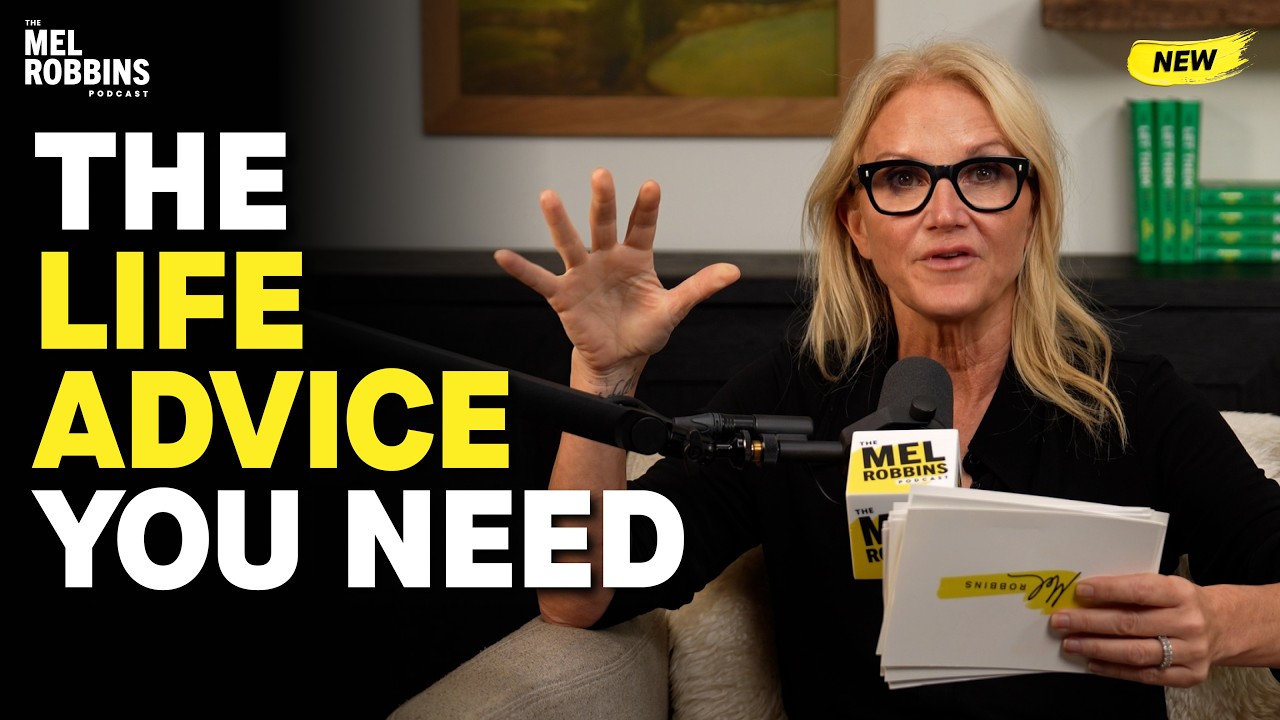
You can't learn from a mistake you're still defending. This simple truth, drawn from behavioral science, sits at the heart of a fundamental human problem: the difference between trying to prove yourself and trying to improve yourself. It's a distinction so obvious once you hear it that it's easy to miss how often you're doing the opposite—caught in the defensive crouch, protecting an image of competence rather than building actual competence.

The distinction matters because it determines whether you grow or stay stuck. A behavioral scientist studying why people resist change identifies this as the core mindset trap: "we get in a space of trying to prove ourselves rather than trying to improve ourselves." That shift in preposition—from to to towards—changes everything.

Lesen · 5 Abschnitte

The Proof Trap: Why We Defend Instead of Evolve

Consider a practical moment: you miss a deadline, or you interrupt someone during a conversation, or you lose your temper with a family member. The immediate impulse isn't neutral reflection. It's defense. You explain why the deadline was unrealistic. You point out that the other person was difficult to follow. You justify the anger as warranted. In these moments, you're not investigating what happened—you're building a case for why you were right, or at least not as wrong as it looked.

This defensive stance has a specific target, and it's often more insidious than external judgment. "The people we're trying to prove ourselves to are sometimes other people and defending, but sometimes it's ourselves," the researcher notes. It's the internal jury that's most demanding: Why didn't I get that right? Why didn't I know how to do that? Why am I so bad at this? Why can't I be as good as so-and-so at it? These aren't questions—they're accusations you're mounting against yourself.

The trap is especially tight when it comes to things we believe we should naturally know how to do. Being a good parent. Being a good partner. Being nice to people. Being disciplined about health. Because these feel like they should be intrinsic—a value you either hold or you don't—we experience failure as a character flaw rather than a learning opportunity. You're not bad at parenting; you're a bad parent. You're not struggling with listening; you're a bad listener. The identity gets locked in, and the defensive machinery kicks in to protect it.

The Paradox of "Being Good": Why Identity Kills Growth

Here's where it gets counterintuitive. We think that deciding "I'm a good person" is the foundation of actually becoming one. But the moment you lock yourself into that identity, you stop improving toward it and start proving you already are it. "As soon as we decide we're a good person, we're trying to prove it instead of trying to improve towards it," the behavioral scientist explains. "And this game never ends."

This is the paradox that undoes so many people. Life doesn't stop throwing challenges at you. Tomorrow's always a new day. Even if you crushed it today, even if you handled a difficult conversation perfectly or showed up as the parent you wanted to be, the next moment is a fresh test. If you've already decided you're good at it, you're in constant risk of exposure—one misstep and the whole identity feels threatened. So you double down on defense.

The alternative is radical in its simplicity: stop trying to decide you're a good person, and start treating growth as an ongoing skill. "We're not trying to prove we've already figured it out. We're trying to improve on an ongoing basis." This means reframing what "being good" means. It's not a destination you reach and then protect. It's a direction you keep moving in—sometimes smoothly, sometimes in fits and starts, but always in practice.

Reframing Skills as Learnable, Not Innate

The shift requires seeing virtues and capacities as skills rather than beliefs. "These are skills and skills require practice and improvement," the researcher emphasizes. You're not a bad parent because you yelled—you're practicing parenthood and that attempt didn't work. You're not a bad listener because you interrupted—you're developing listening as a skill, and that particular moment revealed an edge to work on.

This reframe does something crucial: it removes the shame that blocks learning. Shame says, You should know this already; if you were good you wouldn't have to work on it. Skill-building says, You're learning; of course you're going to find edges and mistakes along the way. That's the data.

It also transforms how you respond to feedback or failure. Instead of listening defensively for evidence that you're okay—that the mistake was small, or the critic unfair, or the circumstances impossible—you can ask the question that opens the door: What can I learn from this? Not as a performance of humility, but as a genuine inquiry. Because you're not defending a fixed identity anymore; you're gathering information for the next iteration of practice.

The Cost of Staying Defensive

The cost of remaining trapped in proof mode is steeper than it first appears. You don't just stay stuck—you actively prevent growth by filtering out the very feedback that would help you improve. You argue with your partner about why you interrupted instead of hearing that you interrupted. You explain why the project was doomed instead of examining what you'd do differently. You defend your parenting instead of asking what your child was trying to tell you in their behavior.

Every defensive move is also a move away from the person you actually want to become. The energy that could go toward genuine improvement gets spent on maintaining an image. And the people around you feel it—they sense they can't be honest with you, can't share what they really see, because it'll trigger your defense. Relationships shallow because truth-telling becomes too costly.

Where to Go from Here

The path forward asks something simple but not easy: the next time you feel the urge to defend, to explain, to prove why you were right or why it wasn't your fault—pause. Name what's happening. I'm trying to prove myself. Then ask: What would it look like to improve instead? That might mean admitting the mistake without the caveats. Asking what you missed instead of arguing about what was unfair. Treating the criticism as useful data rather than a threat.

Growth happens in that gap between the defensive impulse and a new choice. Not because you suddenly become good at everything, but because you stop treating growth as something you should have already figured out and start treating it as something you're actively learning. The paradox is that you become better—at parenting, listening, work, relationships—precisely when you stop trying to prove you already are.

Transcript

[0:00] You can't learn from a mistake you're

[0:02] still defending.

[0:04] We get in a space

[0:07] of trying to prove ourselves rather than

[0:09] trying to improve ourselves.

[0:12] >> Hold on, did you hear that?

[0:14] She said we get into a space where we

[0:16] try to prove ourselves

[0:18] instead of trying to improve ourselves.

[0:22] >> Right.

[0:23] >> Oh my gosh.

[0:25] I can think of a million examples where

[0:27] I got very defensive.

[0:28] >> Me too.

[0:29] >> Proving why this is too hard or why I

[0:31] couldn't follow through tonight or why

[0:33] >> Me too.

[0:34] >> We get into a space

[0:36] of proving ourselves instead of trying

[0:39] to improve ourselves.

[0:40] >> And by the way, Mel, the people we're

[0:42] trying to prove ourselves to are

[0:44] sometimes other people and defending,

[0:47] but sometimes it's ourselves. It's why

[0:50] didn't I get that right? Why didn't I

[0:51] know how to do that? Why am I so bad at

[0:54] this? Why can't I be as good as

[0:57] so-and-so at it? Why isn't my life like

[1:00] other person's?

[1:01] >> How do you get out of that trap?

[1:03] >> When I just say I study the psychology

[1:05] of good people, it's a little bit of a

[1:10] gotcha because

[1:12] my work focuses on helping people let go

[1:16] of being good people. Whatever that

[1:18] means to them. Going to the gym, being

[1:20] nice to neighbors, whatever it is

[1:23] that you need to let go of it in order

[1:26] to become better people.

[1:28] >> What does that mean? Cuz aren't we

[1:29] supposed to be good people?

[1:30] >> Of course we are. And the problem is as

[1:33] soon as we decide we're a good person,

[1:35] we're trying to prove it

[1:37] instead of trying to improve towards it.

[1:40] And this game never ends. Life goes on

[1:43] day after day throwing new challenges,

[1:45] new curveballs at us. Even if you

[1:47] thought you could did it today, you

[1:49] crushed it today, tomorrow's a new day.

[1:52] And so getting in a space where we

[1:55] realize this is an ongoing process for

[1:58] our self and for other people. We're not

[2:00] trying to prove we've already figured it

[2:02] out. We're trying to improve on an

[2:04] ongoing basis. We're not trying to see

[2:06] our self as good people. Especially

[2:08] things that are kind of got some moral

[2:10] charge to it like are you nice to your

[2:13] children? Are you a good parent? Like

[2:15] those things have a lot of moral charge

[2:17] to them and we feel like we should just

[2:19] know how to do it and you should just

[2:22] know how to do it. That's not good

[2:24] enough. These are skills

[2:26] and skills require practice and

[2:28] improvement. So good people things we

[2:31] tend to view as like it's a belief you

[2:33] should have. It's a value you should

[2:35] have. This This is how can you not know

[2:37] how to do that? How can you Why do you

[2:39] keep interrupting me? If you cared you

[2:41] wouldn't interrupt me. That's like a you

[2:43] should just know how to do it prove it

[2:45] to me.

[2:46] As opposed to you're trying to get

[2:49] better at it and it's a skill that

[2:51] you're working on.

Mel Robbins
AutorMel Robbins

Watch more from Mel Robbins on YouTube.

Profil ansehenWebsite
Themen erkunden
Mindset-shiftPersonal-growthDefensivenessSelf-improvementPsychology

Hast du Fragen?

Häufig gestellte Fragen

Proving yourself means defending your actions and identity to show you're already competent or good. Improving yourself means treating growth as an ongoing skill that requires practice and learning from mistakes. When you're in proof mode, you filter out criticism and block learning. When you're in improvement mode, feedback becomes useful data.
We defend because we've tied our self-worth to a fixed identity—I'm a good person, a good parent, a competent professional. When we stumble, it feels like evidence we're not what we claim to be, so we instinctively protect that image. Breaking the link between one mistake and your entire identity makes it safe to learn.
Notice the impulse to defend without acting on it. Reframe the feedback as information about a skill you're developing, not a character judgment. Ask yourself, 'What can I learn from this?' instead of 'How do I explain why they're wrong?' This shifts feedback from threat to resource.
Yes—in fact, the opposite is true. Admitting mistakes and working to improve is the actual definition of being good. Constantly defending and proving you're already good is the trap. Good is a direction you're moving in, not a destination you've reached.
Because skills can be practiced and improved; fixed traits supposedly can't be changed. If listening is a skill, then interrupting is a learning opportunity. If parenting is a skill, then losing patience is feedback, not failure. This removes shame and opens the door to actual practice.
When you're in prove mode, people sense they can't be honest with you about how you come across—it'll trigger defensiveness. When you're in improvement mode, you create safety for honest feedback and deeper connection. People trust that you can hear them without needing to protect yourself.

Weiterlesen

More from Mel

Alle anzeigen
Gut Health Beyond the Tube: 4 Systems Model Transforms Digestive Care
Inspire

Gut Health Beyond the Tube: 4 Systems Model Transforms Digestive Care

A board-certified integrative doctor reveals why standard tests miss chronic gut problems and shares a science-backed protocol for real heal…

1 min read
Stop Wasting Energy: Why People Resist Change and What Actually Works
Inspire

Stop Wasting Energy: Why People Resist Change and What Actually Works

A behavioral scientist reveals the neuroscience behind why loved ones won't change—and the evidence-based tools that actually work instead o…

1 min read
Who You Really Are Beyond Surface Identity
Inspire

Who You Really Are Beyond Surface Identity

You are not your body, name, or conditioned mind. Eckhart Tolle reveals the distinction between surface identity and deeper being.…

1 min read
What Really Happens When You Die: Beyond the Body
Inspire

What Really Happens When You Die: Beyond the Body

Consciousness survives death, but the personal self does not. Eckhart Tolle explains what actually persists and how recognizing your true na…

1 min read

Weiter erkunden

Setze deinen Weg fort

Mehr Weisheit und Zusammenkünfte aus dem BrightStar-Verzeichnis.

Mehr Artikel

Durchstöbere die ganze Bibliothek an Lehren, Interviews und Leitfäden.

Zu allen Artikeln →

Lehrer & Künstler

Entdecke die Linien, Musiker und Wegbegleiter der bewussten Welt.

Künstler erkunden →

Event finden

Kirtan, Retreats, Klangbäder, Atemarbeit, Festivals — bald in deiner Nähe.

Events ansehen →