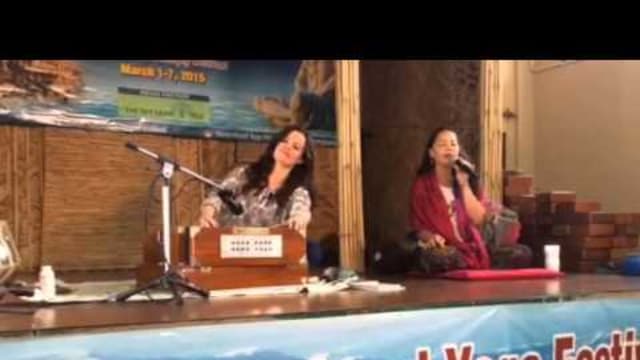
"Yay, aloha, namaste, and welcome to everyone." That is how Anandra George opens a 53-minute yoga of sound session for the Heart of Sound channel, and within the first few minutes she has asked the listeners to do something unusual: find a tiny strip of skin behind the upper front teeth, touch the tongue to it, and pay attention to what happens. The stated purpose of the practice is not vocal polish. It is what she calls mental first aid, a chant built around the idea that the mind, like the body, needs room to digest what it takes in. The mantra is Auṁ Namaḥ Śivāya, and across roughly twenty minutes of harmonium, singing, and spoken cues, she treats the repetition of its syllables as a kind of massage, one that works on tension, resistance, and the noise of a difficult season. What follows is a close reading of how that practice is built, why she frames it the way she does, and what a listener can take from it without ever touching a harmonium.
The session begins with a diagnosis rather than a melody. Anandra George grounds the practice in a principle she attributes to Ayurveda and to "every indigenous system of health": that health "is dependent on good digestion." If the system is out of order, the first task is to make space for digestion. Her move is to apply that logic to attention.
"There's external information and there's internal information." (Anandra George, opening of the Om Namah Shivaya session, around 2:18)
On the external side she names the constant flow of news, politics, science reporting, conspiracy theories, and "the massive amounts of often conflicting and confusing information" most people absorb daily. On the internal side she is more specific, and more personal. Narratives that are pleasurable or painful. Conversations a listener wishes they had with someone who has died. And the quietest and most persistent input of all: the running commentary people carry about themselves, the judgment that they are not doing enough, not being productive enough, not being happy enough.
Her proposed remedy is not analysis of these inputs. It is the cultivation of a capacity she calls self-awareness, spaciousness, and peace, and she names that capacity in Sanskrit. The word is Shiva. In her framing, Shiva is "that aspect of our self our own infinite awareness which is spaciousness and peace." The chant, then, is less a request for something external than a way of tuning toward a quality that is already present in the listener.
The method is repetition. She describes the mantra as something used "in a repetitive harmonic melodic way like a massage for the subtle bodies, a massage for the mind." That phrasing matters. A single hearing of a mantra is an event. The same syllables sung over and over, at a steady pace, create a field that the listener can settle into, and the practice asks for exactly that settling. Later she instructs the room to "settle into the rhythmic repetitive nature" of the chant, which is the closest thing the session has to a standing instruction.
The description attached to the video frames the same experience spatially. Ordinarily, it says, awareness is limited to sensations within the body. But "when we consciously enter sound, our awareness expands into the space within and surrounding our physical body." The resulting field becomes what the description calls a "sound body," and the movement it describes runs in two directions at once: "we can go within, to the point of emergence of sound. We can go without, to the infinity of expanding space." The session is designed to make both directions available to a listener who has never thought of their voice as a place to live.
Much of the session's craft lives in pronunciation, and Anandra George is precise about it. She explicitly withholds the lyrics from the screen. "I want this to be mouth to ear for you," she says, which tells you how the session is meant to be learned: by imitation and listening, not reading.
"Om" comes first, and she calls it "fairly easy." The distinctive instruction arrives with the next syllables. She asks the room to take the tip of the tongue to the back of the upper front teeth, to the small patch of tissue between the two front teeth, and to notice the sensation. She then asks listeners to move the tongue slightly away and return to it, comparing sensations as they go. Her justification is one of the most striking lines in the session:
"The position of the tongue in the mouth is designed for your most titillating vibrant sensory experience of the sound." (Anandra George, around 6:22)
She marks this as "the beauty and the brilliance of the Sanskrit language," and she is explicit that the tongue placement is the one pronunciation point listeners should keep. The second point is breath: she lets the breath out on the "nama" syllable, and invites those with spare attention to layer that onto the coordination of sound. Both points, she says, are a form of tuning. They "tune the dial to make more space for that vibration," which is her term for the shiva quality itself.
For readers who want to test this without the full session, the practical steps are simple. Say "Om" with the tongue relaxed. Then, on the syllable that follows, rest the tip of the tongue against the back of the upper front teeth, move it slightly, and come back. Notice whether the vibration changes. That small adjustment is the point of the exercise.
Whathappensinthewarm-upbeforethechantbegins?
Anandra George is careful to prepare the body before the mantra starts. The warm-up is a sequence of breath, release, and sustained vowel tone, and it is worth following closely. She asks listeners to let the breath move down the back of the body, to become aware of the skin along the spine, to relax the jaw, and to let the belly soften. On the next exhale she invites an audible release, "could be a yawn," and she repeats that a few times on the natural breath cycle.
Then the voice enters. She offers an open "ah" tone, sung three times, followed by a closing of the lips with the tongue floating toward the roof of the mouth, and a humming hold. The instruction to relax the hands, neck, and shoulders is repeated like a refrain. The warm-up is not decorative. It establishes the baseline state the chant will build on: open throat, soft jaw, breath as the engine rather than effort.
Whatisthechantitselfaskingofthelistener?
The main section runs close to twenty minutes. She plays the harmonium and sings, pausing at intervals to offer instruction "as I see necessary," and she gives the room a clear choice about how to participate. Listeners can "pay attention to me or go into your own world as you wish." That openness is central to the design. The practice is not a performance to be judged, and it does not require a trained voice.
She returns to this permission several times. Volume is adjustable: "If it feels right to you begin opening up into your medium to full voice," she says, adding that if the fuller sound feels too intense, the listener can stay soft. Her closing line on this point is the clearest statement of the ethic:
"This is your practice, your pleasure, your voice." (Anandra George, during the main chant)
Her cues throughout are about pleasure and sweet spots rather than correct technique. She invites listeners to "find the sweet spot, the pleasure point in the chant," to make things more comfortable, to relax the hips, neck, and jaw, and to smile. The smile is not a throwaway. It is one of the physical adjustments she uses to open the sound, and it reflects the practice's underlying bet: that a body at ease will let the vibration do more of the work.
Whatshouldyoudowhenthechanthitsresistance?
This is where the session shows its depth. Anandra George names a phenomenon that many chanters will recognize: "It's not uncommon to reach a kind of tension point where the vibration kind of becomes dissonant against something that's lodged deep in there or stuck." Rather than pushing through or retreating, she tells the room to stay with the massage of the sound and let whatever is held receive it, soften, and unwind. She trusts the listener's own judgment here, framing it as an appeal to "your own body, your own inner guru," and she gives explicit permission to stretch, shake out, or massage tension as needed.
Near the middle of the chant she names the mechanism behind this:
"It creates friction which creates heat which creates digestion, transformation." (Anandra George, around 31:58)
That sequence is the philosophical center of the session. Friction is not treated as failure. It is treated as the spark that makes digestion possible, the same way the opening framing treated input that had not yet been processed. If the mind is holding something, a dissonant vibration is the mechanism by which it begins to move. The instruction is therefore to lean in, not to escape, while keeping the sound gentle enough to remain a massage rather than an ordeal.
Whatdoesthevideodescriptionaddtothepractice?
The description attached to the session supplies the framing that the chant itself sometimes leaves implicit. It gives a poetic translation of the mantra as "our reverent salutation to the auspiciousness and peace of our true infinite nature." Within the session, Anandra George offers a parallel reading: the mantra is a reverent salutation "to that internal locus of spaciousness awareness and peace that is our own very true nature." The description also notes that the Heart of Sound channel presents its work as "a musical way of being in the world," and describes its teacher training as focused entirely on the transformational power of sound.
Those institutional details matter less than the practice they describe. The session is a working demonstration that a mantra can be taught through the body, through tongue placement, breath, and tone, and that the teacher's job is to make the room feel permitted rather than instructed.
Wheretogofromhere
If the session has been on your mind, the most useful next step is simply to try it. Set aside twenty minutes. Start with the warm-up: breath down the back body, a released yawn or sigh, the open "ah" tone sung three times. Then take the tongue to the back of the upper front teeth and chant "Om Namah Shivaya" at whatever volume feels comfortable, staying soft if a fuller sound feels too intense. When tension arises, give yourself the permission Anandra George gives: stretch, shake, or massage, and let the vibration keep working.
For a further step, the description points to a free Mantras for Peace e-book and to a free Yoga of Sound online event, both offered by Heart of Sound. Watching the full recording will also reward a second listen, particularly the stretches where the instructions fall away and the room is left to chant on its own. The practice asks for less understanding than attention, and the video is most useful as a companion to the sound itself.
Anandra George is a kīrtan artist, Sanskrit mantra teacher and sound yoga pioneer, based in Hawai'i and India, and the founder of Heart of Sound. A yoga therapist certified by the…
The video description gives a poetic translation: a reverent salutation to the auspiciousness and peace of our true infinite nature. Anandra George reads it in the session as a salutation to the internal locus of spaciousness, awareness, and peace that is our own true nature.
Anandra George says the tongue placement is the key point: touch the tip of the tongue to the back of the upper front teeth, on the strip of skin between them, and notice the sensation. She also lets the breath out on the 'nama' syllable, treating these adjustments as a way of tuning the sound.
In this session, mental digestion means creating space to process the inputs the mind receives, both external information like news and conflicting data, and internal narratives like self-judgment. Anandra George draws the idea from Ayurveda's principle that health depends on good digestion.
No. Anandra George repeatedly invites listeners to chant at whatever volume feels right, saying the practice is 'your practice, your pleasure, your voice.' She explicitly allows staying soft if a fuller sound feels too intense.
Anandra George advises staying with the sound gently and letting whatever is held receive the vibration, softening and unwinding. She also gives permission to stretch, shake out, or massage the tension, trusting your own body as your inner guru.
The main chant in this session runs about twenty minutes, with the harmonium played and instructions offered at intervals. It is preceded by a warm-up of breath, release, and sustained 'ah' tones that prepare the voice and body.