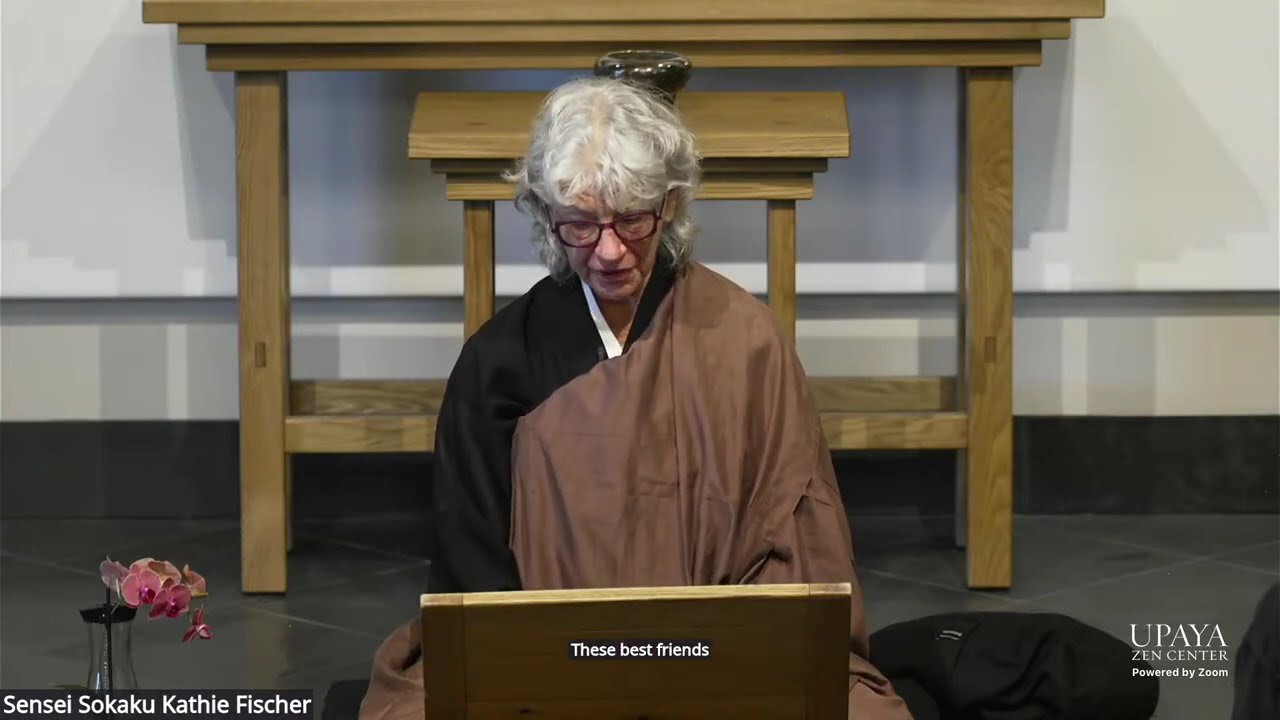
Fall Practice Period 2026 - Morning Zazen is a recorded sitting from Upaya Zen Center in Santa Fe, New Mexico, published to YouTube on October 15, 2026. The video runs one hour, seventeen minutes and fifty-five seconds, and at the time of writing it had 447 views. It is a quiet object: a block of seated meditation, offered inside a named season of practice, that anyone can sit alongside. This article explains what a practice period is, what zazen asks of the person sitting, how the center describes its own daily life, and how a reader who has never sat can take part from home. It does not summarize spoken teaching, because no transcript was available for the recording, and so it does not quote anyone from the session.
The phrase "practice period" points to a basic habit of Zen life: practice is not only something done on good days. Communities often mark out a stretch of weeks or months and give it a shared focus, so that a group sits, studies, and works in the same rhythm for a set time. Naming it by season, as Upaya has done with "Fall," gives the stretch a beginning and an end. A practice period is not a special state that arrives on schedule. It is a container for ordinary repetition, and the container matters because repetition is easy to abandon when no one else is doing it with you.
That shared container is one reason a recording like this one has value beyond the single sitting. A person who joins the morning sitting is not only meditating alone in a kitchen or a spare room. They are keeping time with a community that has committed to the same weeks.
Zazen is the central practice of Zen, and the word itself is simple: za means sitting and zen means meditation, so zazen is seated meditation. Across Zen traditions the form is recognizable even when the details vary. The sitter takes a stable seated posture, usually cross-legged on a cushion or upright on a chair, with the spine erect and the eyes lowered or partly open. Attention rests on the breath, or on the simple fact of sitting. When the mind wanders into plans, memories, or commentary, the practice is to notice that it has wandered and return, without a dramatic response to the wandering.
This is why zazen can look like very little from outside. There is no chanting or visualization in its basic form, and there is no goal being pursued on the cushion. Many practitioners describe the difficulty as the difficulty of staying with what is ordinary: an itch, a sound from the street, a sudden flood of worry. The morning setting makes that ordinariness especially visible, since the sitter arrives before the day's demands have begun and sees the mind's habits at their most unguarded.
A full recorded sitting of nearly eighty minutes asks for patience. Anyone trying this for the first time should not measure success by stillness. Sitting for a short time and returning to the breath is a complete practice; sitting longer adds endurance, not depth by default.
The video description gives a plain account of the center. As the description puts it, Upaya is "a Buddhist residential contemplative community in Santa Fe, New Mexico." The same text says the center offers "daily Zen meditation, weekly Dharma Talks, and programs on Buddhist teachings, Buddhist art, contemplative science, and social engagement."
That list shows how a Zen center can be more than a meditation room. The sitting is the daily core, but the surrounding programs reach toward teaching, art, science, and the social dimension of practice. A morning zazen recording sits at the most basic layer of that life. The talks, classes, and community work build outward from the same cushion.
The description includes a live option for people who cannot travel to Santa Fe. Upaya invites viewers to "join our zendo for daily practice on zoom," with a link to its zazen program page at upaya.org. Joining a live sitting differs from watching a recording in one important way: the sitting happens in real time with other people, and the schedule itself becomes a support. If you are new, start with the regular schedule, sit for a set number of minutes, and let the recording serve as a companion for days when the live session does not fit.
Practical notes for a first sitting: choose a quiet spot, sit upright with a cushion or firm chair, and set a timer so you are not checking the clock. Expect to get distracted. The return to the breath is the practice, not a failure of it.
The description also lists ways to contribute. Viewers can offer dana, the Buddhist practice of generosity, through the center's dana page for Dharma talks, or explore the wider ways to give and the membership options at upaya.org. Dana is a traditional term, and the center's invitation is an invitation, not a condition of practice. Many people sit with a community for years without giving money. Those who do give often describe it as part of keeping the teaching available.
If this recording brought you to the cushion for the first time, begin with a short daily sitting rather than the full seventy-eight minutes. If you already sit, the value of a practice period is in the shared commitment: pick a time, keep it, and let the season carry you through its quieter weeks. For the full schedule of programs, visit the live programs page at upaya.org/live-programs. To explore the center's written and recorded teachings, the Wisdom Library at upaya.org/wisdom-library is the next stop. To join the daily zendo, follow the link at upaya.org/program/zazen, and if you want to support the work, the giving page at upaya.org/giving holds the details.