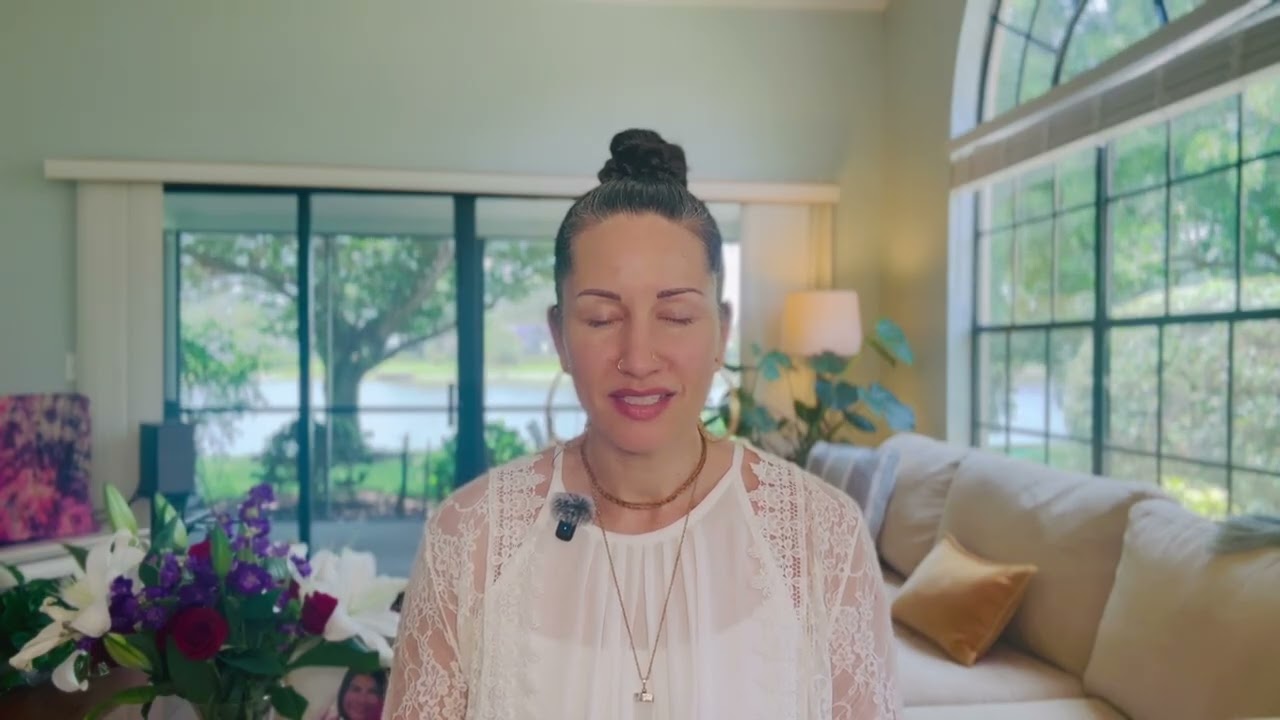
Lou Redmond begins his 2024 video the way a session musician might open a royalty statement: a dashboard on screen, a single number, and a plain-spoken promise to walk through every line. The number is just under $40,000, the amount he earned from teaching meditation on Insight Timer in 2023. What follows is a rare, granular look at how a long-tenured teacher on a meditation app actually gets paid: which income streams carry the weight, which ones are shrinking, how much a single reply is worth, and why he refuses to hand off the most personal part of the job. Redmond is clear that his purpose in sharing the figures is to show what is possible. Read closely, the breakdown also explains how the economics of a guided-meditation platform reward patience, consistency, and asynchronous work that keeps earning while the teacher sleeps.
Redmond frames himself as one of the platform's early teachers. He has been publishing on Insight Timer since 2016 and says he spent more than two years there before any money arrived. He describes a catalog of more than 200 tracks that have collectively logged about 2 million plays, seven courses that have enrolled over 65,000 students, and a lowest course rating of 4.81. Those are the details of someone who has been building in one place for a long time.
The dashboard he pulls up at about the two-minute mark shows a lifetime total of $172,700. He is careful to say he has not yet broken that lifetime figure down year by year, but the 2023 number is the one he wants to dissect. That year's total was roughly $2,000 lower than 2022, and the reason he gives is the single most important story in the video.
The lesson in that opening is not the size of the number. It is the framing. Redmond says he shares his revenue because "it's important to see what's possible," and because seeing a peer's concrete numbers lets a teacher think, "if they can do it, then I can too." That is a working musician's logic: look at the actual royalty statements from the people who played the same circuit, not the glossy version.
In 2023, Insight Timer launched a feature called premium tracks, with payouts beginning in May of that year. For a teacher whose income was built on courses, the change had an unexpected effect. Redmond explains that the courses had been funded from a shared premium pool, and that adding premium tracks "massively diluted" that pool. Many teachers, he says, watched their revenue fall, especially those whose premium tracks were not drawing much play.
He does not pretend the change was painless. He admits that as "an old head" with courses that had been out for years, he felt irritated that the work he had put into his courses was being spread thinner. But his conclusion is pragmatic. The platform's intention, as he understands it, was to add value to its premium subscription in hopes of selling more subscriptions. If the company's total pool grows, the per-play figure can shrink while the total sent out to teachers still rises. He compares it to a shift from $20 million to $30 million being handed to teachers: the per-play number looks smaller, but more money is moving.
Whether that math holds for every teacher is an open question, and Redmond does not claim it does. What he does show is the trend line. His income has been climbing slowly since May, and he has taken the lesson that premium-quality content is now where the platform is heading. "We gotta roll with the times," he says, in effect, and treat creating strong premium material as a priority rather than a grievance.
Redmond walks through his line items one by one, starting with the lowest-paying category. Free tracks earned him $1,083 across the year. Premium tracks, which he notes pay out on a similar basis to courses but were newer and took time to ramp, brought in $596.
The more surprising line is engagement. Insight Timer, he says, shares some of its revenue with teachers who reply to comments on their tracks. Based on his experience, a reply to a free track typically earns "maybe 75 cents or a dollar." He then runs the arithmetic out loud: if a reply takes around 30 seconds, the pay works out to roughly $80 to $90 an hour, which he describes as a rough estimate rather than a guarantee. That reframes the comment section from a chore into a paid activity, provided the teacher is present in it.
The catch is consistency. Engagement income swings with how much time he has in a given month. By his account, it can range from about $200 in a strong month to nothing in a month when he simply did not show up to reply. That volatility is a useful reminder: the platform pays for attention, and attention is a habit.
Courses are where Redmond makes the bulk of his money. He reports averaging just over $2,000 from play counts on his courses alone, and he points to a detail that matters for anyone building a catalog: the courses keep earning without new work. "It's amazing that that's just happening as I sleep," he says, describing asynchronous content as one of the real blessings of making work that people can enter at any hour.
He has three 21-day courses, and he is candid that longer formats are increasingly out of step with the app, where many creators now produce two- and three-day courses. He does not argue the trend away. Instead he makes a case for depth: a well-built 21-day course "takes people through a journey" that a short program cannot. He says people repeat those courses, which is why they keep generating plays long after launch. For a meditation teacher, that repetition is the closest thing to a catalog of residuals.
Courses also carry a second, less visible revenue layer through the course classroom. Redmond says the classroom pays him a percentage of the course-related premium pool for engagement, and that comments there average about $20 each. He prefers answering with audio rather than typed text, finding that speaking "is so much easier" and feels more like a real exchange. The payoff, he notes, is something he used to give away: for years he answered every comment on his tracks for free, because it was fulfilling to see people engage with what he had made.
This is the most human moment in the video. Redmond says he hired an assistant for a short stretch and had her respond to comments in the way he would. He stopped quickly. It was, in his words, "immediately" out of alignment. "If I'm someone receiving a comment back from who I think is Lou Redmond," he explains, "I wanted to feel like it actually came from Lou Redmond." Learning that the reply was not from him made it feel inauthentic, even though the replies were kind and the people receiving them were glad to hear back.
He knows other teachers outsource this work and understands the reasoning. But for him, the trade is not worth it. He acknowledges that he is giving up a few hundred dollars a year, and he would rather do the work himself in a way that feels aligned. In a creative field, that is the decision a musician makes about whether a session player can stand in for the bandleader on stage. Some things do not transfer without something real getting lost.
The most useful thread running through Redmond's video is that the income is not a single hit. He is openly skeptical of the idea that you need a viral track. His catalog of more than 200 tracks, which collectively reached 2 million plays, is evidence for the opposite approach. "You just need to continue to show up consistently," he says, and bring solid content to the work.
That consistency is what separates the lines on his statement. Free tracks, premium tracks, comments, and courses each respond to different inputs. Courses earn from people repeating them. Tracks earn from plays that keep arriving. Comments earn from presence. None of these is a jackpot. Together they add up to a living for someone who has stayed put for nearly a decade.
Redmond also says he expects the number to dip in the coming year, a candid forecast that tells viewers he is not presenting a steady upward line. He has also been developing a free course on writing unique guided meditations, a practical follow-up for teachers wondering how to make their scripts stand apart. The lesson is less about a number and more about craft: keep making things that are specifically yours, keep showing up, and let the income follow the work at its own pace.
If you are a meditation teacher thinking about building income on a platform like Insight Timer, Redmond's breakdown offers a concrete set of questions to ask yourself. Which of your offerings is asynchronous, and which needs your live time? Are your courses built to be repeated, or designed for a single pass? Are you willing to reply to comments yourself, knowing it pays but also knowing that a delegated reply can feel hollow? And are you prepared to track your numbers line by line, the way he does, so that a change in the payout structure shows up as a clear signal rather than a mystery?
To go deeper, watch the full video on Lou Redmond's channel, where he walks through each revenue line himself. His free Meditation Script Mastery course, linked in the video description, covers how to script original guided meditations, and his book Find Your Truth reflects the personal thread that runs through his teaching. Start with the question he returns to most often: what does it look like when you do the work in a way that feels truly yours?