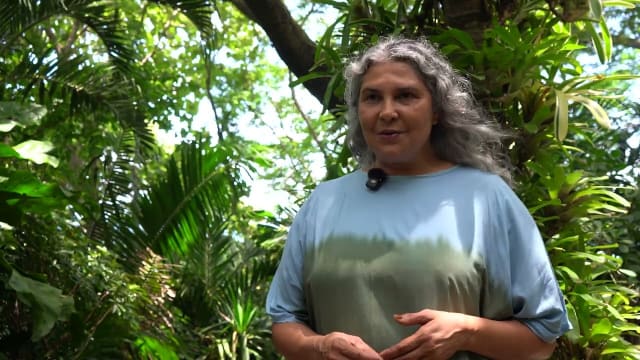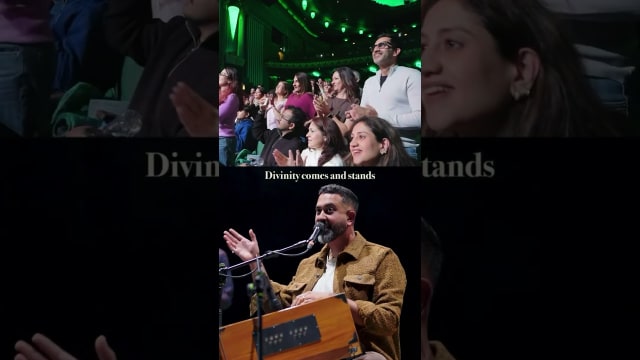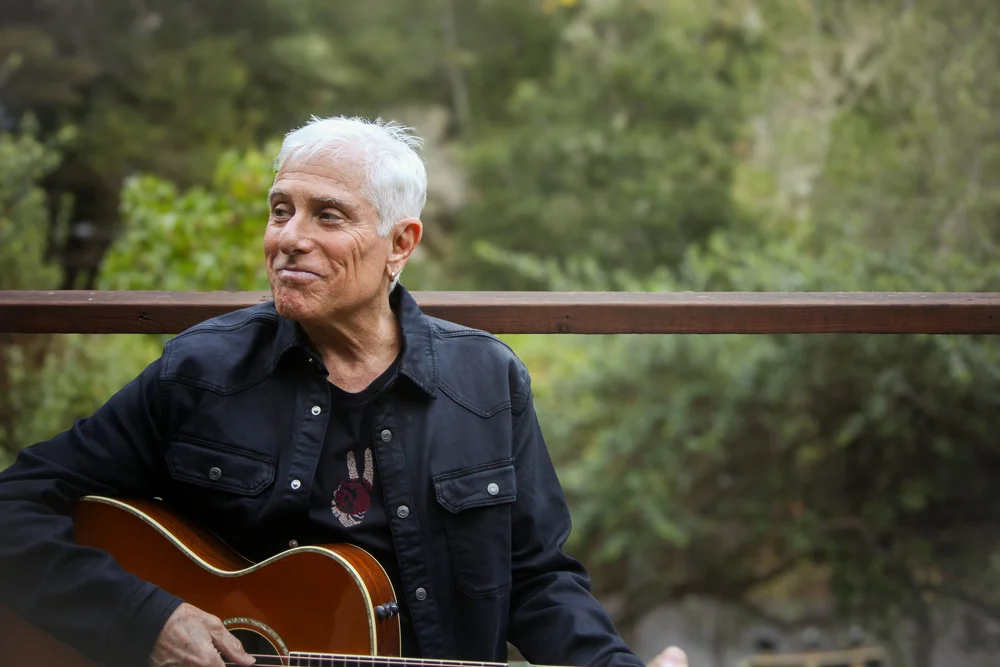
Two and a half minutes in, a drum is already doing the work. Before any price or itinerary appears, a man named Visvambhar Sheth, who introduces himself as Vish, stands in the Costa Rican heat and explains that he is co-facilitating a week-long kirtan retreat at Blue Spirit in Nosara. The dates are July 24 to 31, 2027, and the teacher at the center is Jai Uttal. The video is a short promotional clip for Jai Uttal's Summer Kirtan Camp, built from brief passages of music and two spoken introductions. It is slight, and this article will be honest about that. But it does lay out a clear design: kirtan, the devotional group singing at the heart of bhakti, taught alongside yoga movement, breathwork, and drumming, in a jungle-and-ocean setting that the retreat presents as part of the practice.
Kirtan is devotional singing, usually done together, with a leader sounding a phrase and the room answering it. The repetition builds until the singing becomes a shared state rather than a performance. The retreat's own description puts the tradition in plain terms: participants will spend "hours to singing kirtan and to learning deeply about the ancient practices of Kirtan and Bhakti (Love)." That parenthetical matters. Bhakti is commonly rendered as devotion or love, and the framing here treats the singing as a way of practicing that love rather than a skill to be graded.
Jai Uttal gives the most direct account of what he thinks kirtan is, in the retreat description:
"Kirtan is the calling, the crying, the reaching across infinite space — digging into the heart's deepest well to touch and be touched by the Divine Presence."
— Jai Uttal, retreat description on the Summer Kirtan Camp YouTube page
Read slowly, the line describes a practice with two directions. The singer digs downward into "the heart's deepest well," and also reaches outward "across infinite space." The phrase "to touch and be touched" makes the exchange mutual. The singer is not only acting on the Divine but receiving from it. For someone who has never sat in a kirtan circle, this is the most useful idea the video offers: the aim is openness, not perfect pitch.
The retreat is pitched to two kinds of people. The description says it is "for those who wish to enhance their Yoga teaching with chanting and for those who simply wish to immerse themselves in the vast ocean of Bhakti." The schedule reflects both audiences. Each morning includes a yoga and dance session with Nubia Teixeira, and there are separate Bhakti Yoga sessions with Visvambhar Sheth. In the video, Vish folds all of it into one description: "Add that with Jai's beautiful, heart-touching music, Kirtans, and teachings and Nubia's movement and breathwork, it's just a full experience."
The structure is worth noticing. Movement and breath sit beside the chanting as parts of one program rather than as warm-ups or extras. Yoga teachers who want chanting in their classes and newcomers who simply want to sing are both placed inside that same week.
Vish's introduction gives the drummer two jobs. At about 0:33 he says: "I am drumming for Jai Uttal as well as sharing teachings of Bhakti and some techniques on how to deepen your own Bhakti and Kirtan practices." Keeping time under the singing is one role. Teaching is the other. The audio in the clip keeps a pulse under nearly every passage, with sung responses rising and falling over it. Pairing the teacher who drums with the teacher who explains devotion puts the rhythm and the teaching under one roof.
At about 1:04, Vish describes the place: "The atmosphere here is it's called a blue zone," and the atmosphere has "an energy of healing for the body, mind, and spirit." The video does not define the term beyond that, so this article will not define it either. What it does make clear is that the setting is offered as part of the experience. The retreat description fills in the landscape, promising "the ever blooming landscape of the tropical jungle and the sweet, warm waters of the nurturing, ever changing ocean." It also states the purpose of that setting: to "go inward and expand outward in song, celebration and invocation."
The material gives these details, and only these:
- Dates: July 24 to 31, 2027
- Location: Blue Spirit, Nosara, Costa Rica
- Format: a week-long immersion with daily morning yoga and dance sessions led by Nubia Teixeira
- Teaching: Jai Uttal leads the kirtan; Visvambhar Sheth leads Bhakti Yoga sessions and drums
- Registration and full details: the retreat page linked in the video description, bluespiritcostarica.com/retreat/kirtan-camp-jai-uttal
The description states the hoped-for outcome: that "everyone will leave this retreat with the inner experience and knowledge that we are all able to dive into this world of devotion and sing and share our hearts with others." The video does not list prerequisites, singing experience, or cost, so those questions belong on the retreat page. The clip was published in November 2026, roughly eight months before the retreat dates, which gives prospective participants time to plan.
If you are curious about the practice, start with the retreat page for the official schedule and registration, and with Jai Uttal's own words in the description, which are the clearest statement of what he means by kirtan. If you teach yoga and already work with breath and movement, the description names chanting as a way to deepen that teaching, and the week is built with that audience in mind. If you are new to devotional singing, treat the central idea from the video as your guide: the singing is meant to reach out and to receive, and you do not need to arrive with a finished voice to take part.