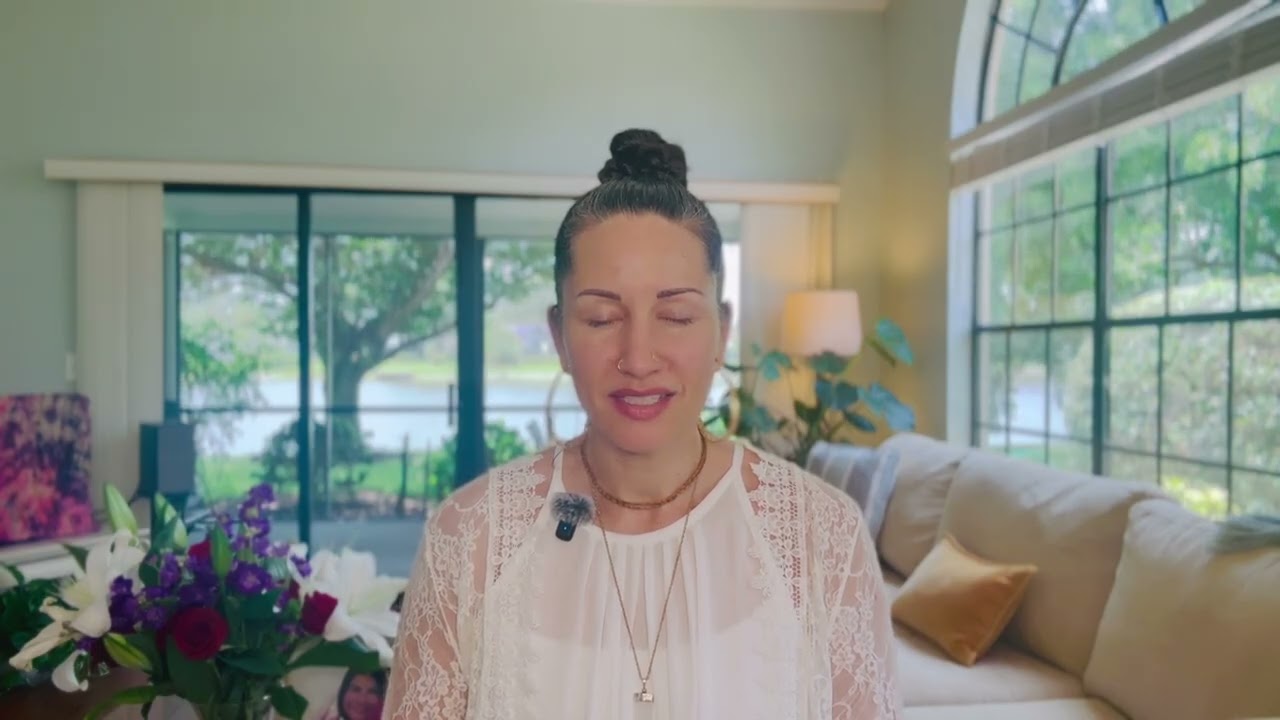
Picture a bench at the edge of a field, an hour before the whistle. An athlete sits with eyes closed, shoulders dropped, jaw loose, and listens to a calm voice walk them through the next few hours inside their own head. That is the scene Amanda Sellers builds in "Game Day Meditation - Preparation for Athletes," an eight-minute-and-change guided practice for the gap between warm-up and start time. The video moves in a clear order: a breath cycle that clears the slate, an instruction to rehearse the whole event in sensory detail, a single outcome to hold onto, a palm-tree image for resilience, a set of spoken affirmations, a mirror cue for the pregame routine, and a countdown that brings the body back to the field. Nothing in it is complicated. What makes it worth a close listen is how deliberately each stage sets up the next.
Sellers opens with instructions for the body before she says anything about the game. Sit in a chair with feet on the ground, lie in the grass, or perch on a bench. Close the eyes, relax the shoulders, soften the jaw. Then she names the posture she wants: relaxed, but sitting with purpose.
"We sit with purpose because we are filled with purpose." (Amanda Sellers, guided meditation, 0:43–0:51)
That line does quiet work. Athletes often arrive at a competition either wound too tight or slumped in anxiety. Asking for relaxed alertness, rather than limp rest, sets up the mental state the rest of the practice depends on.
The breath instruction follows at 0:57. Inhale slowly through the nose, fill the lungs, hold at the top, then release. Sellers repeats the cycle so the listener does it twice, and the second pass is slower. The point is less the technique than the pause at the top of the breath, which gives the mind a moment of stillness before the exhale.
Then comes the instruction that frames the whole practice: "Right now, your only job is to focus on your breath" (1:36). The breath is paired with two intentions that move in opposite directions. On the inhale, bring in peace and calm. On the exhale, let go of whatever needs releasing. A second pair follows: inhale strength and resilience, exhale everything but the present moment. Her closing statement of the section, "This moment right now is all that matters" (2:13), makes the logic explicit. Much of pregame anxiety lives in two places, the mistake already made and the outcome not yet decided. The breath is a way to set both down for a few seconds.
At 2:19 the practice turns from breath to picture. "Now I want you to imagine your event happening, what you're about to go to. From your warm up to the moment it starts." The sequence is chronological on purpose. The athlete is asked to walk through the warm-up, the first whistle or starting gun, and the unfolding of play, the way a musician might run a set in their head before stepping onto a stage.
The instructions are open questions rather than scripts: "What do you see? How are you moving through this game? What are you doing?" Sellers leaves room for the athlete to author the scene. Then she pushes toward a specific kind of ideal: "Imagine your body moving and excelling in ways you couldn't have imagined" (2:39). The images that follow are about ease as much as power: "everything is working out in your favor" and "an effortless flow of grace and strength."
There is a craft point here worth noticing. Visualization that only pictures a perfect result can feel abstract. Sellers keeps returning to movement and sensation, asking what the body is doing, how it moves through the event, what it looks like from inside. The picture is physical before it is emotional.
The next move narrows the focus. "Now focus in on something incredible that you want to happen during your performance. What is that?" (4:07). The question is open, but it asks for one thing, not a catalog of outcomes. Picking a single moment gives the mind something concrete to return to when the game is loud and unpredictable.
Then the emphasis shifts from seeing to feeling: "Imagine the feeling of succeeding. How does that feel? Feel the feelings of this happening. Celebrate it! It's all happening now." Sellers adds a line that sums up the logic of the whole practice: "If you believe it, so you will see it" (4:46). Whether or not one takes that as a literal promise, the instruction is clear. The athlete is asked to inhabit the outcome emotionally before it happens.
Gratitude follows immediately. The athlete is asked to feel thankful for "those around you who helped make this happen," and for the body itself. Teammates, coaches, and the physical instrument that will do the work are brought into the picture. That turns what could be an ego-driven fantasy of victory into something collaborative and grounded.
At 5:15 Sellers offers a metaphor for the kind of resilience she wants athletes to carry: "Like a big palm tree in the wind that cannot be knocked over. You go with the flow, but your roots remain grounded and strong." The image holds two qualities that often pull against each other. Flexibility lets the tree bend. Deep roots keep it from falling.
For athletes, that tension is the working problem. A bad call, a hostile crowd, or an early error can knock a performer off rhythm. The palm tree is a way of rehearsing that disturbance in advance: you will be moved, and you will still be standing. The line also reconnects to the breath. The grounding comes from the same settled posture the practice began with.
At 5:44 Sellers invites the listener to "repeat these mantras out loud or in your head." The affirmations are short, first-person, and present-tense:
- I am confident in my abilities.
- I am protected.
- I am prepared.
- I stay calm and focused under pressure.
- I maximize every moment.
- I thrive in competition.
The sequence is deliberate. The visualization has just built a picture of effortless performance, and the mantras translate that picture into a statement of identity. The phrase "under pressure" is the one that does the most practical work, because it anticipates the exact condition athletes fear. The option to say them silently matters too. A locker room or a team bench is not always a place for speaking aloud, and the practice acknowledges that.
Perhaps the most practical instruction in the video comes at 6:30. "As you go about your pregame routine, if you see a reflection of yourself in a mirror or window, when you glance at yourself, you're reminded of your greatness, your pure potential." Sellers asks the athlete to turn a passing glance into a cue. Athletes already check their reflection while they lace boots, adjust gear, or pass a window on the way to the field. The meditation hands that ordinary moment a new job.
The description she offers for that reflection is blunt and vivid: "You see strength, leadership, adversity. The one who never backs down. Never gives up." It is an identity statement, delivered in the second person, and it ends with the line that reads most like a coach's pep talk: "You are a warrior, a force, a champion, and you've never been more ready."
The closing section matters as much as the opening one. At 7:07 Sellers counts down from five to one, and each number carries its own cue. At five, "You've never felt more focused, more energetic or more ready." At four, the body is "coming back into your body and feeling the fire within." At three, the instruction is physical: move the fingers and toes, head to toe. At two, take the deepest breath available. At one, hold it, then open the eyes and "take in your surroundings."
The re-entry is not a footnote. A visualization that never ends can leave a performer floating above their own body. Sellers' structure does the opposite. The practice moves from abstract calm, through vivid imagery and emotion, and finally back into the hands, feet, and room. The closing words, "There is no better time than right now. You were made for this. You are ready," give the athlete a last sentence to carry out the door.
The video's YouTube description makes the framing explicit: "Well-being is critical for peak performance so prioritizing meditation can really benefit your performance." That is a claim about priorities, not a clinical promise, and the guided practice itself does not cite research. What it does offer is a sequence an athlete can repeat. The video has drawn close to 400,000 views, which suggests many people are finding that sequence useful before their own events.
It is also worth noting what the practice is not. It does not tell the athlete how to train, which tactics to use, or how to handle a specific opponent. It asks for a mental state, built in a particular order, at a particular point in the day.
The simplest way to test the practice is to run it in the same place before the same kind of event. Repetition is the mechanism the video relies on: the breath, the picture, the mantras, and the mirror cue are meant to become familiar enough that a few seconds of them can bring the whole sequence back. Start with the breath and the countdown, then add the visualization once those feel natural.
For more from Sellers, the description points to her Instagram at instagram.com/missamandasellers and a 10-day meditation course at missamandasellers.com/10-day-meditation-course. Those are the places to go if this eight-minute practice becomes part of a longer routine.