The day leaves residue in the body—tension pooled in the shoulders, breath held shallow in the chest, the nervous system still cycling at noon velocity when it's time for sleep. A bedtime yoga flow offers something simple but radical: permission to shift gears, to signal to your body that the workday has ended and rest is now the assignment.
The instinct to "wind down" before bed is sound. But most people interpret that as collapse—flopping onto the couch with a screen. Gentle yoga, by contrast, is active recovery. It uses intentional movement and breath to discharge the nervous system's held charge, creating the conditions for genuine sleep rather than mere exhaustion-fueled unconsciousness.
A short sequence—two minutes, even—is enough to:
- Release muscular tension accumulated across the day
- Slow the breath and activate the parasympathetic nervous system (the "rest and digest" mode)
- Signal to your body that the transition to sleep has begun
- Calm a racing mind by anchoring attention to breath and body
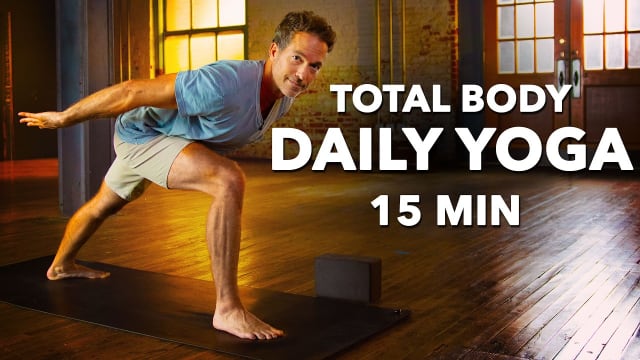
A bedtime flow differs from morning vinyasa or power classes in both pace and intention. The goal is not to build heat or strength but to move toward stillness. Poses are typically held longer, transitions are slower, and the breath becomes the primary focus. Forward folds dominate—they naturally draw attention inward and activate the parasympathetic nervous system. Twists aid digestion and release spinal tension. Restorative postures, often supported by pillows or blankets, allow the body to genuinely rest while still engaging gently with movement.
The timing matters. Yoga performed too close to bed can still leave you wired if the practice is vigorous. A gentler, shorter sequence—especially one lasting just a couple of minutes—offers enough activation to complete the wind-down without overshooting into stimulation.
In any yoga practice, breath is the bridge between body and mind. In bedtime yoga, it becomes even more essential. Slow, deliberate breathing—especially exhales longer than inhales—is a direct trigger for relaxation. When you extend the exhale, you activate the vagus nerve, the primary circuit of the parasympathetic nervous system. This is neurobiology, not mysticism: longer exhales literally tell your body it's safe to rest.
For many practitioners, the breath work alone—even without movement—can be enough to shift state before sleep. Pairing it with gentle asana (yoga postures) amplifies the effect by grounding the breath in sensation and releasing held tension simultaneously.
Consistency matters more than duration. A two-minute flow you do every night will condition your body to recognize the sequence as a sleep signal. Over time, your nervous system learns: when this practice begins, rest is coming. That conditioning becomes increasingly powerful the more regularly you practice.
The ideal timing is 10 to 30 minutes before bed—enough space to let the relaxation deepen without so much lag time that your mind reactivates. Many practitioners find it useful to practice on a yoga mat or carpet rather than a bed, which keeps the space between "active practice" and "sleeping space" distinct. Once the practice ends, moving directly to bed signals the final transition.
A bedtime yoga flow is ultimately an act of self-respect—a small ritual that says your sleep matters, your rest is worth protecting, and your body deserves conscious care. In cultures where evening yoga is more normalized, it's understood not as optional wellness optimization but as basic hygiene for the mind. The practice is both humble and powerful: a few minutes of intention, a few slow breaths, and the day can finally release.
If you're new to bedtime yoga, start with the two-minute sequence and notice what happens over a week of consistent practice. Pay attention to sleep quality—how quickly you fall asleep, how rested you feel on waking. Many practitioners find they need less overall sleep when the sleep they do get is deeper and more restorative. From there, you might extend the practice to five or ten minutes, exploring which postures and breath work resonate most for your body. The best practice is the one you'll actually do, so keep it simple, keep it honest, and let the body guide you toward what works.