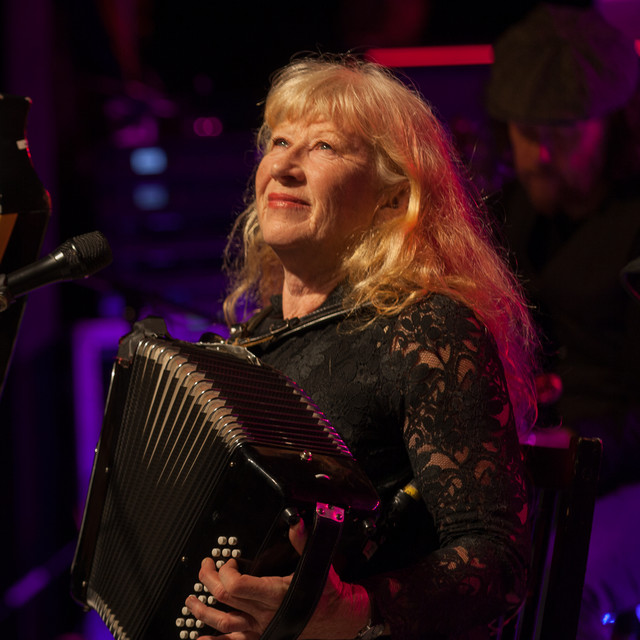
A four-minute clip can carry more than its running time suggests. Loreena McKennitt's live performance of "A Hundred Wishes," filmed for the Télé-Québec program Belle et Bum and aired on October 26, 2019, is a plain, unhurried document of a song drawn from her 2018 recording Lost Souls, performed alongside long-time musical colleague Brian Hughes. The video was posted to YouTube on November 20, 2019, and has since drawn more than half a million views. Yet the most revealing text attached to it is not about the music at all. Alongside the performance sits a statement, credited to Quinlan Road and Loreena McKennitt, explaining why the artist does not treat social media as a default way to reach her audience, and why she would rather her listeners find her through an email list.
The public record attached to this video is specific but compact. "A Hundred Wishes" is a track from Lost Souls, a 2018 recording. The performance on the video was not a studio session; it was recorded live for a television broadcast, which places it in a different tradition from the album take. A live television recording asks a performer to deliver a song inside someone else's frame: a set, a schedule, a camera that is not thinking about the music the way an engineer thinks about a microphone. The result is often more direct than a polished master, because there is less room to hide behind production.
The credit to Brian Hughes is worth lingering on. The description calls him a long-time musical colleague, and that phrase points to a working partnership rather than a one-off session. When two musicians have played together over many years, the performance tends to carry a shorthand that cannot be manufactured for a camera: the way one player leaves space for the other to enter, the way a phrase is allowed to breathe because both people trust where it is going. A four-minute clip cannot show the whole history of that partnership, but it does show the result of it.
What the material does not tell us is important to state plainly. The sources attached to this video do not describe the lyrical content of "A Hundred Wishes," the arrangement choices behind it, or the story of how the song came to be written. Any account of those would be guesswork. What we can say with confidence is the chain of facts: a 2018 album, a live performance by its artist and her colleague, a Québec broadcast in October 2019, and a YouTube upload a few weeks later.
This is where the video's context becomes the real story. The statement posted with the clip is blunt. "While we periodically reach out through social media, it's something we do by default," it reads. "In general, we do not endorse social media." The reasoning is not framed as a personal grievance but as an argument about the health of public life. The statement points to what it describes as the unregulated era of technology, which it says has "all but decimated traditional media, which we feel is more accountable to a civil society."
The statement also makes an environmental claim. Its authors write that they are "learning that digital technologies are responsible for 4% of greenhouse gas emissions, a figure expected to double by 2025." That is a striking figure to find attached to a music video, and it reframes the ordinary act of sharing a clip. The argument is that every feed, every autoplay, every notification has a material cost, and that a responsible relationship between an artist and her audience should account for it.
The alternative the statement offers is modest in form. Rather than chasing the algorithm, it asks listeners to "stay in touch through the closest and most direct method possible, our email list." The position is not anti-technology in a sweeping sense. It is a choice about channels: a direct line from artist to listener instead of a platform standing between them. It also commits the artist to what the statement calls "a responsible and accountable media in whatever form that may take," which leaves room for the form to change while the principle holds.
There is a quiet logic in the pairing of the two things. A live broadcast performance is an artifact that exists on its own terms, shot for one program and then released into the wider world. Its value does not depend on a feed, a like count, or a daily post. It is a song, performed, captured, and offered. The statement's preference for direct contact over constant circulation fits a view of music as something you go to and return to on purpose, not something that arrives in an endless scroll.
That tension is worth holding onto if you are a listener. The video has been watched by a large audience, and it is easy to think that reach is the point. The statement suggests a different measure: whether the people who want the music can find it cleanly, through a channel the artist controls and can stand behind. For a performer who has spent years building a body of work, a mailing list is a kind of archive of intent. The people on it chose to be there.
"We therefore plan to continue advocating for a responsible and accountable media in whatever form that may take." (Statement posted with the video, credited to Quinlan Road / Loreena McKennitt)
Start with the performance, and give it the attention a live recording deserves: listen for the spaces between phrases, the moments where the two musicians seem to read each other, the way a song sounds when it is not being protected by studio layers. Then go back to the statement and read it as a document about how this music is meant to be encountered. You do not have to agree with every claim in it, and the 4% figure is one the statement itself frames as something it is "learning," but the underlying question is a serious one: what does it cost to share music, and what is lost when the channel between artist and listener is handed to a platform?
If the argument lands, the practical step is simple. The statement invites listeners to the email list, and the store link attached to the video points to where the music itself can be bought. Both are direct routes. Neither requires a feed.
Watch the live performance of "A Hundred Wishes" with headphones if you can, and then listen to the 2018 album Lost Souls, where the song first appeared in the recorded form the broadcast version grew out of. If you want to stay in touch the way the artist asks, join the email list at loreenamckennitt.com/community/. For the music itself, the LM Store is linked from the video at lnk.to/LMStore. And if the statement's argument about media and emissions interests you, read the full text alongside the performance rather than skipping to the song. The two belong together in a way that a four-minute clip, on its own, only begins to suggest.


