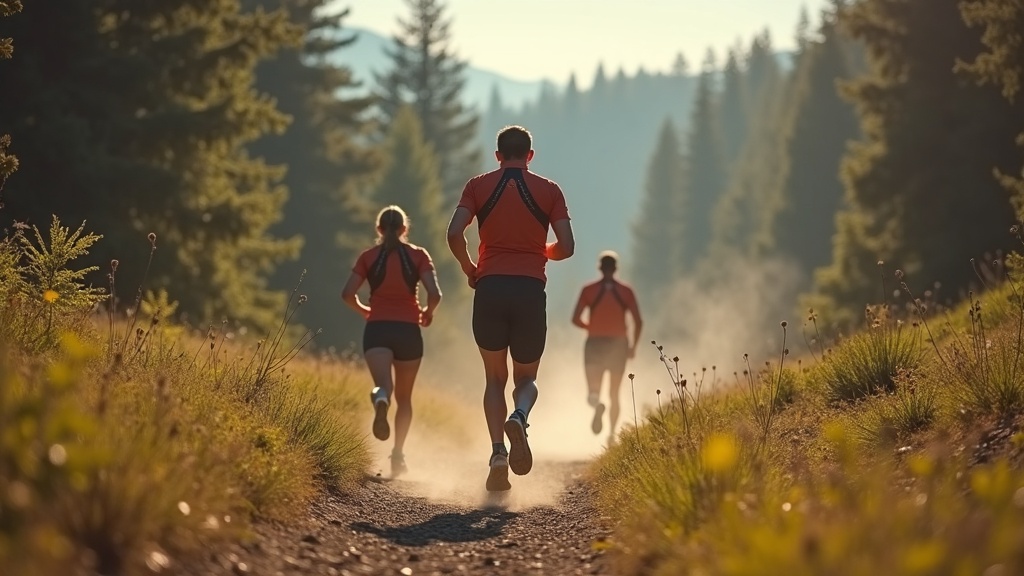
Trail running gear follows a simple philosophy: carry as little as possible, but everything you need. On a 10K trail race, that might mean just shoes, shorts, and a handheld bottle. On a 100-miler, you're carrying weather layers, calories for 24+ hours, and mandatory safety gear. Here's what you actually need.
Road shoes on trails are a recipe for twisted ankles and zero traction. Trail shoes differ in three key ways: aggressive lugs for grip, rock plates for protection, and reinforced uppers for durability.
- Salomon Speedcross 6: The classic trail shoe. Deep chevron lugs eat up soft terrain — mud, sand, loose dirt. Not ideal for rocks. Great for: shorter trails, cross country
- Hoka Speedgoat 6: Maximum cushioning with Vibram Megagrip outsole. The go-to for 50K+ ultras. Great for: long-distance trails, rocky terrain
- La Sportiva Bushido III: Low-profile, aggressive grip, bomber construction. Great for: technical mountain running
- Altra Lone Peak 8: Zero-drop, wide toe box, balanced cushioning. The cult favorite for ultra runners who prefer a natural feel. Great for: long ultras, foot-shaped comfort
Choosing Lugs
Deeper lugs (5mm+) for soft, muddy terrain. Shallower lugs (3-4mm) for hardpack and rocks. If your race has mixed terrain, go middle-of-the-road.
For trails over 60 minutes, you need to carry water. Your options:
- Handheld bottle: Simple, light, perfect for short trails (under 2 hours). Brands: Nathan, Salomon
- Hydration vest: Essential for long runs and races. Carries 1-2L of water plus nutrition, phone, layers. Top picks: Salomon ADV Skin, Nathan VaporAir, Ultimate Direction Ultra Vest
- Sizing tip: A vest should be snug when full. Bounce test: if it moves when you jump, tighten the straps
A trail GPS watch with breadcrumb navigation can be a lifesaver — literally.
- Garmin Fenix 8: The gold standard. Topo maps, multi-band GPS, 48+ hour battery. Premium price but unmatched features
- COROS APEX 2 Pro: Best value for serious trail runners. Outstanding GPS accuracy, 75-hour battery, offline maps
- Suunto Vertical: Solar charging, free offline maps, rugged build. Great for multi-day adventures
- Budget pick: COROS PACE 3 — accurate GPS, excellent battery, under $230
For any race that might extend into darkness — or pre-dawn starts — a headlamp is mandatory.
- Petzl NAO RL: Reactive lighting adjusts brightness automatically. 1,500 lumens on max. The best for night running
- BioLite HeadLamp 800: Lightweight, moisture-wicking headband, great spread. Budget-friendly
- Tip: Carry a backup light (small clip-on or second headlamp) for ultras. Batteries die at the worst times
Once considered cheating, poles are now standard in mountain ultras. They save your quads on descents and power you up climbs.
- When to use: Races with 10,000+ feet of elevation gain. UTMB, Hardrock, and most 100-milers
- Folding vs. fixed: Folding (Black Diamond Distance Z, Leki Micro Trail Pro) pack into your vest. Fixed are slightly more rigid but harder to stow
- Practice: Train with poles before race day. The rhythm takes practice
Most trail races (especially ultras) require specific gear. Common mandatory items include:
- Emergency whistle and space blanket
- Minimum water capacity (usually 1L)
- Rain jacket (waterproof, not just water-resistant)
- Headlamp with extra batteries for overnight races
- Phone with emergency contacts
- Cup (many races are cupless to reduce waste)
Gear up and find your next trail race on EnduranceFinder — we list trail running events from local 10Ks to 100-mile ultras.