Listening Journey
Sound Journey
Discography
Albums & Releases





Watch


Songwriter
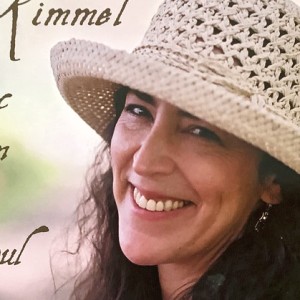
Sandi Kimmel is a songwriter, author, speaker and self-described practical mystic. Her work is devoted to helping people trust their own inner knowing and recognize the sacred hidden within everyday life. "It is my intention to point people toward their inner knowing in everything I say, everything I sing, everything I write and everything I do," she writes on her website.
For more than three decades she has written songs, stories and reflections about healing, grief, gratitude, authenticity, awakening and the quiet ways love continues to find us. Her music is meant for seekers, feelers and questioners: people walking through grief, navigating change, searching for meaning, or longing for stillness in a noisy world. Her Insight Timer page notes that her music is often described as "a filling station on the highway of life."
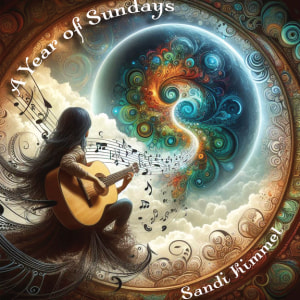
She has released six albums, each a different chapter of the journey: Transitions: Music to Soothe the Soul, Music in My Soul, Reach Up, Soul Feathers, A Year of Sundays, and Practical Mystic. A Year of Sundays was born in the wake of personal loss. Practical Mystic is a sequenced album of songs and chants meant to lift the energy gently and bring listeners back to breath, center and inner light. She recorded it with producer Thomas Barquee at Toesy Studios in Temecula, California.
Sandi also writes about synchronicity, unexpected teachers, nature, loss and joy. Her book, Practically Mystical: Stories, Songs & Signposts for the Spiritual Path, gathers many of these reflections. She describes a practical mystic as someone who learns to trust their own inner knowing and leave a trail of light for others to follow.
Listening Journey
Discography
Watch
Worth Knowing
Sandi Kimmel is a songwriter, author, and speaker who calls herself a practical mystic, and over more than three decades she has written songs, stories, and reflections on healing, grief, gratitude, authenticity, and awakening. Her work is aimed at seekers, feelers, and questioners, including people moving through grief or change and people who want stillness in a noisy week. Her stated intention, from her website, is to point people toward their inner knowing in everything she sings, writes, and does, and that thread runs through all six albums and her book. What distinguishes her from more abstract spiritual songwriting is her focus on the small signs of meaning inside ordinary days, which is what the phrase practical mysticism is meant to capture. Her Insight Timer page describes her music as a filling station on the highway of life, a phrase that fits the restorative, functional tone of most of her catalog. Her Spotify footprint is small, so most of her audience finds her through meditation platforms and word of mouth rather than playlists.
The material available does not name a lineage teacher or a formal school, and Sandi Kimmel does not position her work inside a named guru-disciple line in what she publishes. The most accurate frame is the broader devotional-song and contemplative tradition, in which chanting and sung prayer carry teaching, and her chants on Practical Mystic sit within that voice-led practice. The term practical mysticism is her own coinage, and it signals a mysticism concerned with daily life rather than monastic withdrawal or ecstatic experience. Her writing on synchronicity and unexpected teachers draws on a long Western interest in meaningful coincidence, but she treats attention to such moments as a practice rather than a doctrine. Readers expecting a traceable lineage will find the absence notable, and it reflects how she presents herself: as a songwriter and reflective writer first. Where documented lineage details emerge, they should be checked against her website, sandikimmel.com, which is the primary source for her own account of her path.
For most newcomers, the best entry point is Practical Mystic, the most recent album, released in 2026 with 13 tracks and sequenced as a single listening arc. Sandi Kimmel recorded it with producer Thomas Barquee at Toesy Studios in Temecula, California, and its stated aim is to lift energy gently and return listeners to breath, center, and inner light. If grief is the reason you are searching, A Year of Sundays from 2024 is the stronger first listen, since it was born in the wake of personal loss and runs 14 tracks. Listeners who prefer prose before song can begin with Practically Mystical, her book, which gathers many of the same reflections on synchronicity, nature, loss, and joy. Those who want to trace her development can go back to Transitions: Music to Soothe the Soul from 2000, the earliest album in the catalog. Starting with a single such as Blessing or Shine Your Light from 2011 is also reasonable, though singles give a narrower view of how her albums are built.
Many songwriters in the contemplative space aim for expansive, cathartic moments, but Sandi Kimmel's albums favor restraint and a gradual return to the body and breath. Her catalog is organized as chapters, with each album framed as a different stage of the same journey, which is why listening to them in order reads as a narrative rather than a set of unrelated songs. She works across songs, chants, and written reflections, so the same ideas appear in the music, the book, and her essays on synchronicity and unexpected teachers. The practical mystic framing is the distinguishing idea: rather than promising transcendence, she describes a person who learns to trust their own inner knowing and leaves a trail of light for others. Her treatment of grief and gratitude sits side by side in the same albums, which is less common than songs that address only one emotion. The result is music that rewards repeated listening over the single exposure that most playlist-driven artists depend on.
Listeners who want high-energy production, driving rhythms, or dance-oriented devotional music will find Sandi Kimmel's catalog too gentle and too spacious for their purposes. Anyone looking for formal lineage instruction, structured curricula, or doctrinal teaching will not find it here, since her work is reflective and song-based rather than systematic. Those who expect a strong hook-driven pop structure may find the sequencing of albums like Practical Mystic unhurried, because the aim is to settle the listener rather than capture attention. Readers who want dense theological argument will find the book more personal and anecdotal than scholarly. The discography is also modest in size, with six full albums and a handful of singles, so listeners hungry for a large back catalog will reach the end of it relatively quickly. The music suits people who are already drawn to contemplative listening and are willing to let a record unfold at its own pace.
No upcoming events were crawled for this profile, so there are no confirmed dates, cities, or retreats to list at this time. The most reliable place to check is her website at sandikimmel.com, which is where she publishes her own statements of intention and where any event information would be posted first. Her YouTube channel at youtube.com/@sandikimmel and her Spotify and Apple Music artist pages are the other places where new releases would appear. Release cadence has been slow, with Soul Feathers arriving in 2015, A Year of Sundays in 2024, and Practical Mystic in 2026, so full albums have historically come years apart rather than on a fixed schedule. Singles have appeared in clusters, such as the five released in 2011 and 2013, so a new track could arrive without an album around it. Anyone who wants notification of new material should follow the Spotify and Apple Music artist pages directly rather than waiting for press coverage, which has been limited.
The available data does not itemize instrumentation for her albums, so the most accurate description concerns the voice, arrangement approach, and pacing that the records document. Her singing is the center of the work, and the songs are built to carry reflection rather than to showcase virtuosity or production effects. Practical Mystic is described as a sequenced album of songs and chants meant to lift energy gently, which tells you the pacing is deliberate: the record moves from grounding toward a sense of inner light rather than building to a climax. The aesthetic is restraint rather than exuberance, and the songs leave space for the listener to pause between lines. Recording took place at Toesy Studios in Temecula, California, with producer Thomas Barquee, which points to a studio-centered, controlled production approach. Because individual instruments are not listed in the available material, listeners who want specific timbres should confirm credits on Spotify or Apple Music before buying or committing to an album.
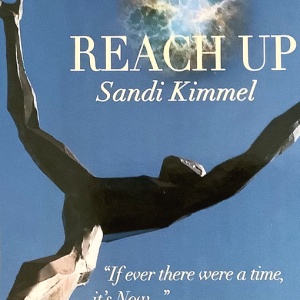
Sandi Kimmel has released six albums, and each represents a different phase of her work, so the essentials depend on what the listener needs. Transitions: Music to Soothe the Soul (2000, 15 tracks) is the earliest entry and the most direct statement of her soothing intent. Music in My Soul (2002, 13 tracks) followed two years later and extends that early focus on inner stillness. Reach Up (2008, 10 tracks) is the shortest full album in the catalog and carries a more outward, aspirational title. Soul Feathers (2015, 12 tracks) marks a longer gap before her next release and sits in the middle of her body of work. A Year of Sundays (2024, 14 tracks) is the essential record for anyone walking through loss, since it was made in the wake of personal grief. Practical Mystic (2026, 13 tracks) is the most complete statement of her current approach, combining songs and chants in a sequence built to return listeners to breath and center.
The only named collaborator in the available data is producer Thomas Barquee, who worked with Sandi Kimmel on Practical Mystic at Toesy Studios in Temecula, California. Beyond that credit, no other musicians, engineers, or session players are named in the material, so there is no verified roster to cite. Her albums span from 2000 to 2026, and the data does not indicate whether Barquee produced earlier records or whether the same studio was used throughout. The absence of a listed band suggests a songwriter-centered approach, with the voice and the song structure carrying most of the weight. Listeners interested in the specific instruments on each track should check the liner credits on Apple Music or Spotify, since those credits are more reliable than secondhand descriptions. Where new collaborators are documented in future releases, they will be the place to look for changes in arrangement style.
Practical Mystic is the strongest candidate for meditation and ceremonial use, because its stated purpose is to lift energy gently and bring listeners back to breath, center, and inner light. Its 13 tracks combine songs and chants, which makes the album usable as a continuous sequence for a sit or a closing ceremony rather than a set of separate tunes. A Year of Sundays suits quieter, reflective sessions, especially for those working through grief, since the album grew out of personal loss. Singles such as Blessing and The Spirit of God, both released in 2011, and Shine Your Light, from the same year, are short enough to function as openings or closings in a practice. The available data does not describe these tracks in terms of tempo or movement suitability, so yoga teachers should audition specific songs before building a sequence around them. Chant-based material is generally more useful for seated meditation or ritual than for physically demanding practice.
Discover More
Continue your journey
BrightStar is the global directory of artists, teachers, and healers in the wellness and spiritual movement. Find your next experience — or add yourself.
Browse 14,000+ curated profiles across kirtan, yoga, meditation, and beyond.
Explore directory →Kirtan, retreats, sound baths, breathwork, ceremonies — happening this week.
Browse events →Are you an artist, teacher, or healer? Get listed — free, AI-assisted, live in minutes.
Get started →


