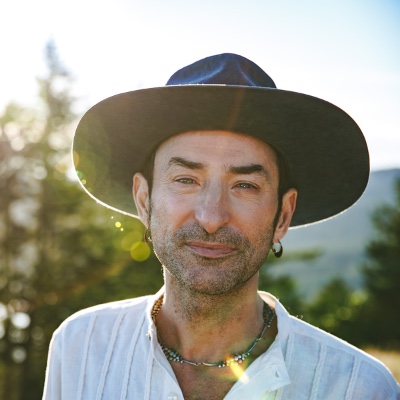
Rafe Pearlman occupies an unusual position in contemporary music—an artist who has deliberately chosen depth over reach, crafting work that serves transformation rather than mere entertainment. In an era when streaming numbers often substitute for artistic legitimacy, Pearlman has built their practice around a different proposition: that music can be a genuine tool for inner work, a vehicle for meditation and embodied presence, not simply a backdrop to it.
This isn't background music for wellness culture. What distinguishes Pearlman's approach is a refusal to reduce the work to utility. The sonic palette they've developed operates simultaneously as serious musical composition and as functional sound for contemplative practice—a balance few artists successfully maintain. Their recordings find homes in yoga studios and on meditation cushions, but they also reward the kind of focused listening typically reserved for more traditional artistic forms.
Pearlman's discography reflects a patient, deliberate creative process. Rather than chasing trends within the expanding wellness music market, they have developed a coherent artistic vision that remains recognizable across their releases. The music synthesizes influences into something cohesive—not fusion for its own sake, but a genuine musical language suited to the work it's meant to do.
The production choices reveal this commitment. Where much meditation music opts for ambient wash and minimal structure, Pearlman's compositions maintain melodic and rhythmic integrity. There's architecture here, careful attention to how sound moves through time and space. This makes the work viable for extended listening in contexts beyond the yoga mat—a test that much genre-adjacent music fails.
With approximately 1,260 followers on Spotify, Pearlman exists well outside mainstream visibility. But these numbers, modest by platform standards, represent something the metrics don't capture: a devoted community of practitioners and listeners who actively engage with the work, who return to it repeatedly, and who introduce it to others through direct recommendation rather than algorithmic suggestion.
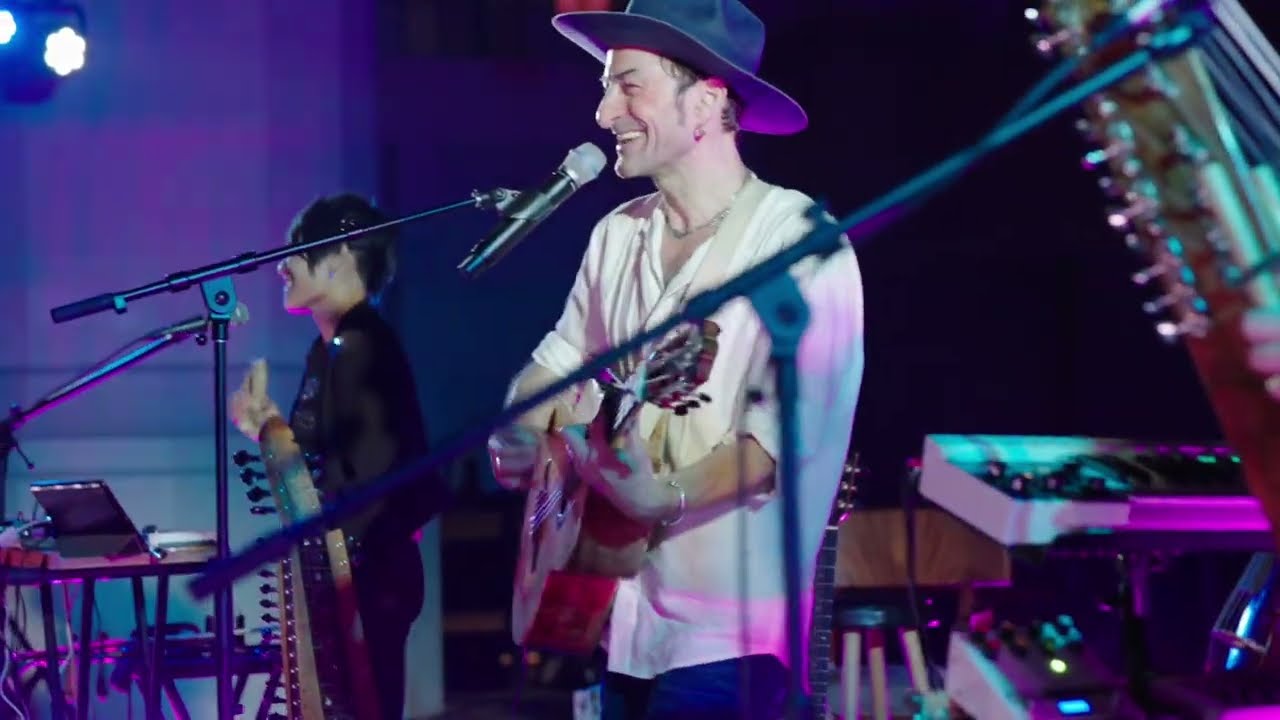
Pearlman's live performances constitute a crucial dimension of their artistic practice. Those who have attended describe something qualitatively different from typical concerts—events structured less as entertainment spectacle and more as shared ceremonies, spaces where performance and participation blur.
This approach to live work makes particular demands on both artist and audience. Pearlman must maintain musical excellence while creating conditions for collective presence, holding space that allows individual experience without directing it. The commitment to this form—challenging to scale, difficult to monetize in traditional ways—speaks to priorities that extend beyond conventional career metrics.
These concerts attract audiences already familiar with meditation or yoga, but also music lovers drawn to the quality of the work itself. The overlap between these groups—practitioners seeking artistry, listeners seeking substance—defines much of Pearlman's listenership. They've found people unwilling to settle for merely adequate sound in their inner practices, who believe the music accompanying transformation should itself be transformative.
Pearlman's work arrives at a particular cultural moment. As meditation and contemplative practices have migrated from counterculture to mainstream, as yoga has become a multi-billion dollar industry, questions about authenticity and commercialization have intensified. Within this context, Pearlman represents an artist genuinely committed to serving the practices rather than simply profiting from the market around them.
This isn't to claim purity politics or anti-commercial stance. Rather, the work demonstrates that artistic integrity and functional utility need not oppose each other. Music can serve meditation without abandoning musical values. Composition can facilitate inner states while remaining compositionally rigorous.
The cultural significance lies precisely here: in proving that conscious music can be serious music, that the growing community of practitioners deserves—and will support—work of genuine artistic merit. Pearlman reaches seekers and music lovers alike, those drawn to transformational experiences who refuse to check their aesthetic standards at the studio door.
Pearlman continues actively creating and performing, releasing new recordings while maintaining a touring schedule that brings the work to audiences in person. Each release deepens the established sonic territory while exploring new possibilities within it—evolution without abandonment of core vision.
The current chapter of their work unfolds against a shifting landscape. The conscious music field continues expanding, drawing new artists and listeners even as questions about the category's boundaries and definitions remain productively unresolved. Within this context, Pearlman's sustained commitment to a coherent artistic vision provides valuable continuity.
What emerges from sustained engagement with Pearlman's body of work is a sense of an artist playing a long game, building something meant to endure beyond trend cycles and platform changes. The music serves audiences seeking presence, practitioners exploring inner landscapes, listeners who understand that transformation requires more than algorithm-generated playlists. In choosing this path—narrower but deeper than conventional routes—Rafe Pearlman has created work that matters, finding their community and serving it with dedication and craft.