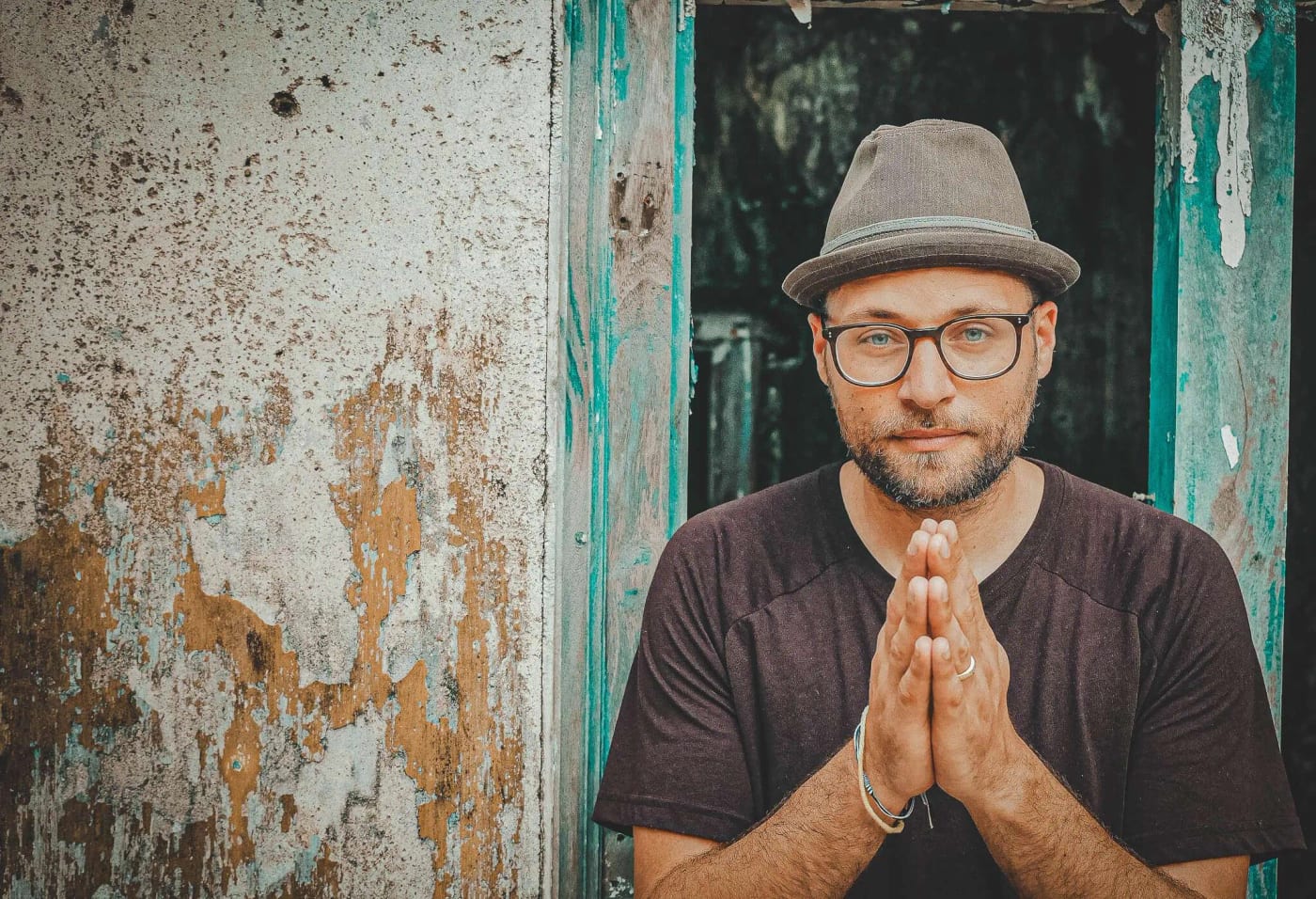

Where the Path Bends Inward
Released in April 2025, Buddha Prayer (Yogi Edit) arrives at a fascinating juncture in MC YOGI's artistic evolution. After years of bridging the seemingly disparate worlds of hip-hop swagger and devotional surrender, this single-track offering represents a crystallization of his practice—both musical and spiritual. It's not an album designed to showcase range or variety, but rather a sustained meditation, a mantra set to rhythm. For an artist who emerged from San Francisco's graffiti culture and hip-hop underground before discovering yoga as a teenager, this release feels like coming home after a long journey. The "Yogi Edit" in the title suggests refinement, a distillation of something previously explored, now honed to its essential elements. This is MC YOGI stripping away excess, offering a prayer polished by repetition.
The Sound of Devotion in Motion
The sonic character of Buddha Prayer (Yogi Edit) occupies a liminal space between movement and stillness. The production layers traditional kirtan elements—harmonium drones, finger cymbals, perhaps hand percussion—beneath contemporary hip-hop production techniques. MC YOGI's voice alternates between melodic chant and rhythmic speech, honoring both the call-and-response structure of bhakti devotional music and the wordplay of his rap roots. The pacing is deliberately hypnotic, built for sustained listening rather than quick consumption.
The mood is reverent without being solemn, accessible without pandering. There's warmth in the mix, a sonic embrace that invites rather than demands. Instrumentation breathes, leaving space for silence to do its work between phrases. This isn't background music for casual yoga classes, nor is it purely devotional kirtan that requires cultural context to appreciate. Instead, it exists in the fertile ground between, where East meets West not as collision but as conversation. The track's length and structure suggest it's meant to accompany practice—whether seated meditation, vinyasa flow, or contemplative movement through daily life.
The Signature Offering
With only one track, Buddha Prayer (Yogi Edit) stakes everything on a single vision. What makes it land is its refusal to overcomplicate. The piece builds gradually, allowing listeners to settle into its rhythm before introducing variations. MC YOGI's delivery carries conviction earned through years of practice—this isn't cultural tourism but lived experience translated into sound. The prayer itself, whether mantric Sanskrit syllables or English invocations (or both woven together), becomes a vehicle for transformation through repetition.
The production choices reveal maturity: knowing when to add elements and, more importantly, when to pull back. There are moments of pure voice and drone, then sections where subtle beats enter to energize without overwhelming. This dynamic range within a single piece demonstrates sophisticated understanding of how attention works during extended listening. The track doesn't demand you follow a narrative arc; instead, it creates a container for whatever arises.
Rooted in Tradition, Reaching Forward
Buddha Prayer (Yogi Edit) sits squarely within the contemporary Western kirtan movement while maintaining deep respect for its bhakti roots. Kirtan—call-and-response devotional singing—has been adapted by Western practitioners for decades, often blending traditional Indian instruments and melodies with Western harmonies and production. MC YOGI's contribution adds another layer: hip-hop's rhythmic innovation and urban grit.
This places the work in conversation with artists who've modernized devotional music without diluting its power. The "prayer" in the title signals intent—this isn't mere world music fusion but a genuine offering, a practice made audible. The track belongs to the lineage of mantra music that serves dual purposes: cultural artifact and functional tool for consciousness shifting. It's devotional music for the post-genre era, where authenticity matters more than purity.
For Whom This Prayer Sounds
Buddha Prayer (Yogi Edit) lands hardest for listeners navigating their own synthesis of seemingly contradictory identities. If you've felt torn between spiritual seeking and urban living, between ancient wisdom and contemporary expression, this track speaks directly to that tension. It's for yoga practitioners who grew up on hip-hop, for meditators who need rhythm to anchor their wandering minds, for anyone who's discovered that the sacred doesn't require abandoning where you came from.
The track particularly resonates during transitional life moments—when you're shedding old skins, when daily practice feels like the only stable ground, when you need something to hold onto that's both ancient and immediate. It's for the convert, the questioner, the seeker who refuses easy answers.
How to Listen
Approach Buddha Prayer (Yogi Edit) as practice, not entertainment. This track deserves headphones, evening light, and your full attention—at least the first time through. Sit or move slowly. Let it loop if needed; repetition is the point. The piece works beautifully in ritual contexts: before meditation, during solo practice, or as a transition between worlds when you come home and need to shed the day.
Don't multitask. This prayer asks to be met halfway, to be participated in rather than passively consumed. Close your eyes. Let the rhythm regulate your breath. Notice what arises.