What's Happening
Coming Up
Listening Journey
Sound Journey
Discography
Albums & Releases

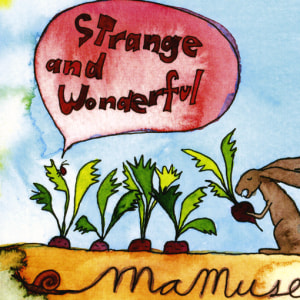

Watch


Conscious Music Artist
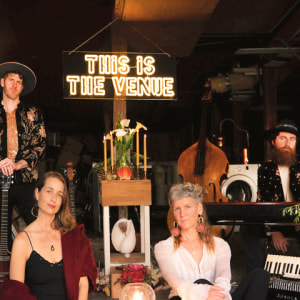
MaMuse is a folk-soul duo — Sarah (Sorah) Nutting and Karisha Longaker — making harmonic, uplifting music rooted in the folk and gospel traditions. Based in the United States and touring broadly, they describe their work as "a musical tune-up for the heart," weaving brilliant and haunting harmony with lyrics born of emotional intelligence to inspire the opening of the heart.
The duo's sound is wholeheartedly fed by folk and Americana roots, playing a family of varied acoustic instruments including upright bass, guitar, mandolins, and flutes. Their seventh full-length album, This Is the Venue, marks their first studio recording with a full band: Nate Dittle on piano and organ, Scott Elliott Ferreter on guitar, and producer Nino Moschella on percussion, production, and choir-like harmonies. The album was made possible through a community crowdfunding campaign and was written and shaped by Sorah Nutting and Karisha Longaker. It embraces a richer, soul-infused sound while holding the folk and Americana roots that have long defined their music — songs born, as they describe it, from both the heartbreak and the beauty of living in an unraveling world.
Beyond recording and touring, MaMuse has been weaving song into the heart of community for nearly two decades. Their workshops and retreats are explicitly participatory: not performances, but immersive experiences grounded in the belief that singing is a birthright — a practice that grounds, heals, and reconnects people with themselves and one another. Community Singing Workshops run two to three hours, featuring songs easy to learn and rich with harmony, with no musical experience required; all voices are welcome. Weekend and multi-day retreat formats extend into vocal empowerment, song-catching, harmony work, deep listening practices, storytelling, and creative exploration.
Past workshop settings have included Esalen Institute in Big Sur, California; Cedar Springs Retreat Center in Santa Cruz, California; Four Springs Retreat Center in Middletown, California; River's Bend Retreat Center in Philo, California; and a family-friendly canoe and song-circle adventure on the Green River in Utah. MaMuse has appeared as faculty alongside community song leaders such as Melanie DeMore, Barbara McAfee, Maggie Wheeler, Kate Munger, Lydia Violet, and Arnae Baston, among others. Their Song Village gatherings are described as uplifting and informal settings for people of all ages who love to sing, consciously facilitated so that every participant feels connected and included.
MaMuse also offers personalized songs, private events, and a choir programme with its own login for members. Their gatherings draw people seeking joy, emotional restoration, resilience, and a sense of belonging — from experienced vocalists to those rediscovering their voice for the first time. The community that forms around their music and workshops is as central to their work as the songs themselves.
What's Happening
Listening Journey
Discography
Watch
Worth Knowing
MaMuse is a conscious music artist who has built a dedicated following of over 39,000 listeners on Spotify by creating music that serves as a vehicle for transformational experience rather than mere entertainment. Their work occupies a distinct position in the conscious music landscape—not ambient background score, not devotional chant in a single tradition, but a synthesized sonic approach that speaks to seekers across multiple communities. What draws listeners is the clarity of intention: MaMuse creates music specifically designed to hold and deepen practice, whether that's yoga, meditation, or ceremonial gatherings. Their presence at yoga festivals and retreat centers signals something the streaming numbers alone don't capture—this is an artist whose impact is measured in the quality of presence they facilitate, not just plays. For audiences accustomed to generic wellness playlists, MaMuse's work registers as distinctly *crafted*, with attention to how sound can create and consecrate sacred space.
While the conscious music category has grown crowded with ambient healers and yoga compilations, MaMuse's approach stands out through synthesis rather than imitation of a single lineage or tradition. Many conscious music artists lean heavily on a recognizable aesthetic—Tibetan bowls, didgeridoo, heavy reverb—but MaMuse has developed a sonic palette that feels integrated and purposeful rather than assembled from a catalog of spiritual sound effects. What distinguishes their work is a commitment to creating atmosphere and emotion through deliberate compositional choices rather than relying on the inherent resonance of exotic instruments or well-worn devotional forms. They bring the rigor of a musician who understands their craft, not just someone channeling 'healing vibrations.' For listeners fatigued by yoga music that feels designed by algorithm, MaMuse offers evidence of an artistic vision—choices made about arrangement, voice, pacing, and when to create space versus when to fill it. This is conscious music made by someone who listens critically, not someone assembling product.
The most direct entry point is MaMuse's Spotify catalog, which clusters their releases and allows listeners to move through their sonic landscape without commitment. Starting with a full album listen—rather than shuffle or individual tracks—gives the best sense of how MaMuse approaches structure and pacing; their work is sequenced with intention, meaning later songs often deepen or recontextualize earlier material. YouTube offers another valuable angle, particularly for viewers who respond better to the visual dimension of performance; seeing MaMuse in live settings communicates something about presence and craft that studio recordings alone cannot convey. For those drawn to the artistic statement as a whole, visiting mamuse.org provides context on their approach and ongoing work. The ideal entry experience is probably one live performance if possible—MaMuse's concerts are consistently described by dedicated fans as transformative precisely because the full impact of their artistry registers differently in person than through headphones. If live attendance isn't feasible, begin with one complete album on Spotify, move to a full YouTube performance, and then return to Spotify with a clearer sense of what you're listening for.
MaMuse's method rests on a specific understanding: that music can function as a tool for deepening presence and practice when it's composed and performed with that intention woven into every choice. Rather than relying on the passive 'healing' association of certain sounds or instruments, their approach demands active artistry—decisions about arrangement, voice, silence, and emotional arc that guide listeners into states of genuine presence rather than mere relaxation. Their work appears regularly at yoga festivals and retreat centers not because it provides pleasant background sound, but because it actually creates sacred space; there's a difference between music that doesn't distract from practice and music that actively supports and consecrates it. MaMuse demonstrates an understanding that transformational music requires both technical skill and spiritual intention—you need to know how to compose, how to use your voice, how instruments interact, and you also need clarity about *why* you're making each sound. This dual commitment—craft plus consciousness—is what separates their work from the broader category of 'wellness music.' They represent the artist who understands that authentic transformation cannot be faked through reverb and minor keys alone.
MaMuse's music will not satisfy listeners seeking high-energy dance music, rhythmic driving grooves, or the kind of beat-forward electronic production that modern wellness culture often defaults to. Those approaching conscious music as aesthetic preference rather than functional tool—people who want beautiful background music while cooking dinner—will likely find MaMuse's work demands more attention and presence than they're prepared to give. Similarly, listeners devoted to a single spiritual tradition may find the synthesized approach either too eclectic or not sufficiently rooted in their particular lineage; this is not devotional chant in the classical sense, and it's not strictly aligned with any one path. The work also won't appeal to those uncomfortable with vulnerability or emotional directness in music; MaMuse creates space for genuine feeling rather than bypassing it with ethereal detachment. For seekers requiring explicit instruction, teaching, or narrative guidance, the instrumental and vocal approach here is more suggestive than didactic. Importantly, this isn't a weakness—it's a clarity about what MaMuse offers and to whom. The music works precisely *because* it doesn't try to be everything to everyone.
The primary resource is mamuse.org, where tour dates, new releases, and announcements appear as MaMuse develops and shares new work. Following their Spotify artist page ensures that new music releases appear in your library the moment they drop, and setting notifications there captures album drops before word-of-mouth spreads. YouTube subscription offers another reliable pathway, particularly for performance footage and behind-the-scenes content that contextualizes the recordings. MaMuse maintains an active presence across streaming platforms—Spotify, Apple Music, and YouTube all host their catalog and are worth following through your preferred listening app. For those integrated into yoga festival and conscious music communities, word-of-mouth and festival lineups themselves serve as reliable indicators of where MaMuse will appear; the retreat centers and yoga event organizers who book them are generally well-coordinated. Social media presence varies by platform, so checking mamuse.org directly remains the most reliable single source for both confirmed tour dates and the broader context of what MaMuse is creating next. Unlike touring musicians who maintain constant social updates, MaMuse appears to prioritize the work itself over promotional overhead, so following through the official website and streaming platforms captures the authentic information.
For musicians, MaMuse demonstrates a rare integration of technical skill with spiritual intention; this is someone who understands voice, arrangement, compositional structure, and how to use silence as actively as sound, while also maintaining absolute clarity about *why* each choice serves transformation rather than ego. Other conscious music artists recognize the craft immediately—how MaMuse handles transitions, builds emotional arc, and resists the temptation to overfill space with production. For dedicated conscious music listeners accustomed to genuinely transformative performance experiences, MaMuse registers as an artist who takes their audience's practice seriously; the music doesn't condescend to 'healing' as passive wellness but meets listeners as practitioners engaged in genuine work. What surprises newcomers is often the directness—there's no elaborate production masking compositional choices, no reliance on reverb and delay to create false depth. The synthesized sonic palette means MaMuse won't sound exactly like any other conscious music artist, which both attracts those fatigued by repetition and deters those seeking specific familiar aesthetics. Within yoga communities and retreat spaces, MaMuse has earned a reputation as someone who understands the difference between music that accompanies practice and music that actually creates the conditions for deeper practice to occur.
MaMuse functions within yoga communities as a reliable creator of conscious music—an artist whose presence on a festival lineup or retreat schedule signals intentionality about the sonic and ceremonial dimensions of practice. Yoga festivals increasingly recognize that sound design matters as much as teacher quality, and MaMuse represents the caliber of musician that conscious retreat organizers actively seek out. Their work doesn't exist in isolation; it participates in a larger ecosystem of teachers, facilitators, and artists committed to creating genuinely transformational experiences rather than commercialized wellness events. What retreat centers know about booking MaMuse is that their music will deepen rather than distract from whatever else is happening—whether that's asana practice, meditation, ceremonial work, or community gathering. This positioning reflects something important: MaMuse has built trust within these communities through consistent quality and alignment with values, not through aggressive marketing. The 39,000+ Spotify followers and regular retreat appearances together suggest an artist who has found genuine fit within conscious music communities while remaining independent of major label machinery. For festival organizers and retreat directors, MaMuse represents the kind of artist whose presence communicates something about the entire event's integrity and commitment to authentic transformation.
In recorded form, MaMuse's music functions as a carefully composed and sequenced object—something you can return to repeatedly, study, allow to become familiar and intimate through repeated listening. The Spotify catalog and recorded albums exist as fixed artistic statements, with every production choice intentional and repeatable. Live performance, by contrast, introduces the dimension of genuine presence; dedicated fans consistently describe MaMuse's concerts as transformative in a way that headphone listening, no matter how attentive, cannot fully replicate. The live setting allows for genuine connection between artist and audience, for responsive improvisation within structure, and for the accumulation of emotional intensity that only happens when humans are actually gathered in the same physical space with shared intention. This is why MaMuse's live appearances at yoga festivals and retreat centers function differently than their recorded work—the music becomes a vehicle for co-created experience rather than a finished product being consumed. For serious listeners, experiencing MaMuse live at some point is genuinely worth prioritizing; the recordings will deepen afterward in ways they couldn't have before. This distinction between recorded and live is not unique to MaMuse, but it's particularly pronounced for conscious music artists whose work depends on creating and holding sacred space—something that requires presence in actual time.
For those encountering conscious music for the first time, MaMuse offers an entry point that avoids some of the category's most alienating tropes—there's no reliance on exotic instruments deployed without context, no appropriation of devotional forms from traditions the artist hasn't studied, no heavy-handed use of 'mystical' production effects designed to manufacture pseudo-spiritual experience. Instead, what newcomers encounter is music made by someone who understands contemporary compositional and production craft, applied in service of genuine intention. This accessibility matters: a listener new to conscious music won't feel required to adopt a particular spiritual framework or cultural context to understand what MaMuse is doing. The work speaks through emotional and sonic clarity rather than asking you to decode cultural references or accept borrowed spiritual authority. For people exploring conscious music seriously for the first time, MaMuse demonstrates that the category can contain genuine artistry rather than just algorithm-driven wellness playlists. The music demands presence and attention without demanding belief in anything specific. For beginners, this is both permission and invitation: you can experience transformational music without needing to join any particular tradition, adopt any belief system, or pretend to depths of practice you don't yet possess.
Discover More
Continue your journey
BrightStar is the global directory of artists, teachers, and healers in the wellness and spiritual movement. Find your next experience — or add yourself.
Browse 14,000+ curated profiles across kirtan, yoga, meditation, and beyond.
Explore directory →Kirtan, retreats, sound baths, breathwork, ceremonies — happening this week.
Browse events →Are you an artist, teacher, or healer? Get listed — free, AI-assisted, live in minutes.
Get started →


