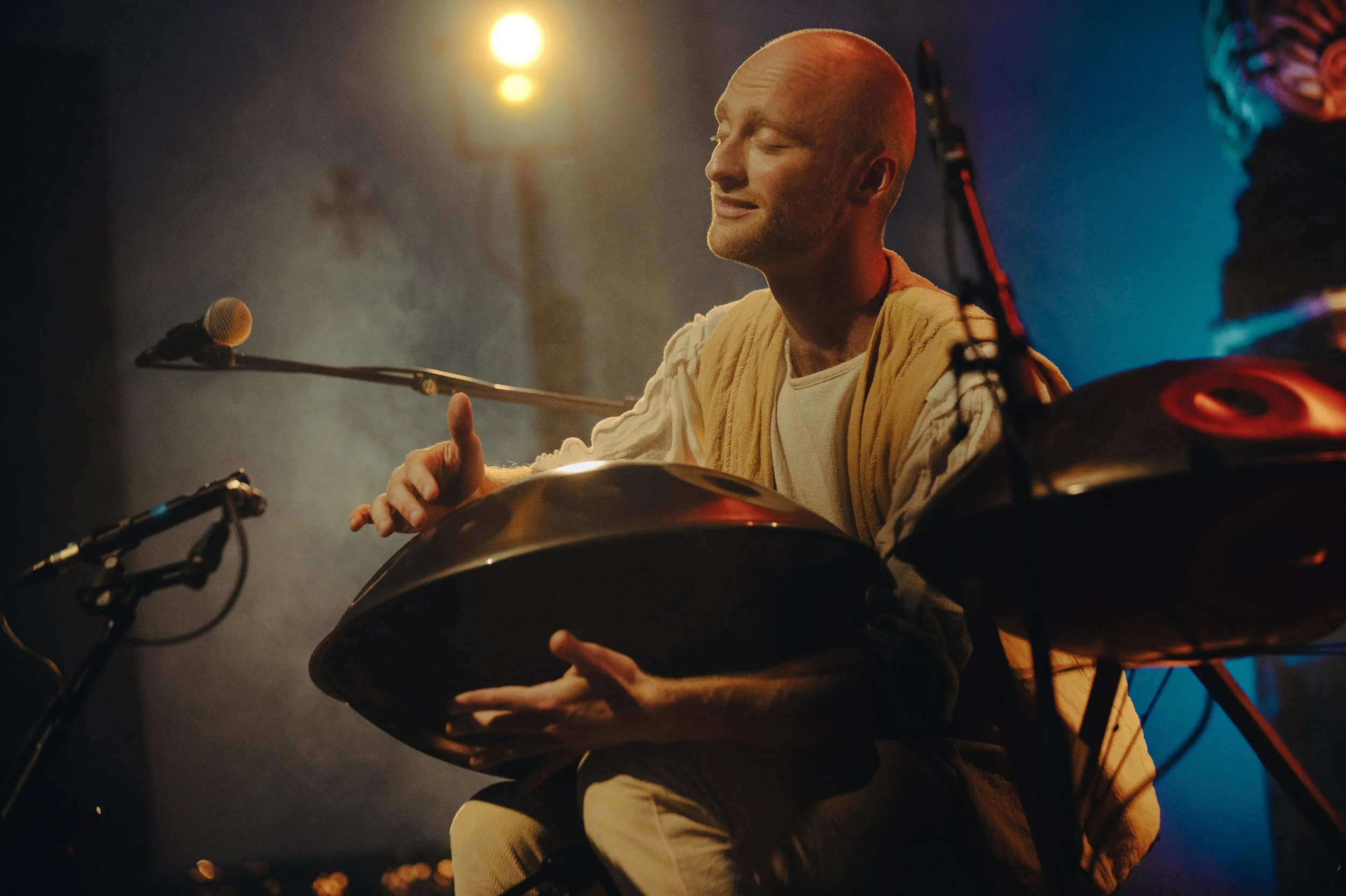

Out of the Dark (1111 Hz) arrived on May 16, 2025, as a single with one track. It belongs to the busiest stretch of Malte Marten's solo career. The handpan player and teacher began that career in 2021, after his duo Yatao ended its musical project, and the catalogue has grown quickly since. By the facts available, fourteen singles appeared in 2025 alone, many tagged with frequencies such as 777 Hz, 999 Hz and 1111 Hz. This one sits among them, a few weeks before the albums Path to Inner Peace (June 6) and Roots of Hope (June 27).
The path to this point is unusual. In 2014 he saw a video of the duo Hang Massive, sold the equipment he owned as a beatmaker and DJ, and bought his first handpan. He played on the streets of Berlin, toured with Yatao from 2015 to 2020, and taught alongside performing. A single like this one is the distilled result: one instrument, one idea, one sitting.
The music is handpan-centred, and the available materials list no other instruments or vocalists, so expect no band arrangement and no sung text. The instrument's round, resonant tones carry everything. Pacing is slow and deliberate, favouring long tones and gradual shifts over melodic hooks or verse-chorus structures.
There is a quiet legacy of his past in this approach. His origin as a beatmaker helps explain the rhythmic patience that feels built rather than improvised. Even without drums or electronics, the underlying sense of pulse and construction remains. The mood is contemplative rather than virtuosic. His YouTube channel describes the music as music to relax and release, and that is the most accurate shorthand for what this single is after.
Because this release has one track, the title track is the whole story. Out of the Dark (1111 Hz) carries a title that suggests movement from heaviness toward light, and the frequency tag signals contemplative intent. That reading comes from the title, not from any stated programme by the artist, so treat it as an invitation rather than a claim.
What makes a single-track release land is focus. There is no sequencing to navigate and no second idea competing with the first. For a listener testing the mood before committing to a full record, this is the point. The faq guidance for newcomers notes that frequency-tagged singles work as short one-track listens, and this is exactly that: a low-commitment way to learn whether his stillness suits you.
The frequency label is also the feature most likely to divide listeners. It is a stylistic choice. Those who expect it to function as a scientific claim may find the framing overstated, while those who take it as a mood marker will likely find it useful.
The materials do not name a formal tradition for Malte Marten, and this guide will not assign one. The most accurate frame is the modern handpan lineage that begins with the Hang, the instrument whose video set his path in motion. Within it, he works as a player-teacher.
That matters for how to hear the piece. It is not bhakti or kirtan, and nothing in the record presents it as devotional music in a formal sense. It sits instead in the contemporary ambient-leaning world of handpan, where meditation and rest are the common uses. His approach, as he describes it, comes from experience rather than fixed rules, and his Malte Marten Method centres on accessing deep feelings and expressing them musically. This single is best heard as an example of that principle: feeling first, display second.
This single suits listeners who are tired, overstimulated or working through something difficult and want sound that asks nothing of them. He has said that what moves him most is hearing that his music helped people through personal challenges and brought them clarity, so the audience he describes is people in transition.
It will also appeal to newcomers who want a short introduction before moving to Path to Inner Peace, the recommended starting album. It is not for those who want driving grooves, high-BPM energy or varied song structures. The slow, open-ended pacing will not hold their attention.
Listen alone, and listen in the evening if you can. Headphones are worth using, since the handpan's resonance and the decay of each note are the substance of the piece. Dim the room, silence your phone and let the track play once through without doing anything else.
If you want to use it in a meditation or rest practice, treat that as your own reading. The materials list no designated ritual or ceremonial use for this track, and his own guidance should be checked before building a ritual around it. Pay attention to how the long tones open and settle, and notice where your attention drifts. Since it is a single, a second listen costs little. Hear it once for mood, then again for detail.


