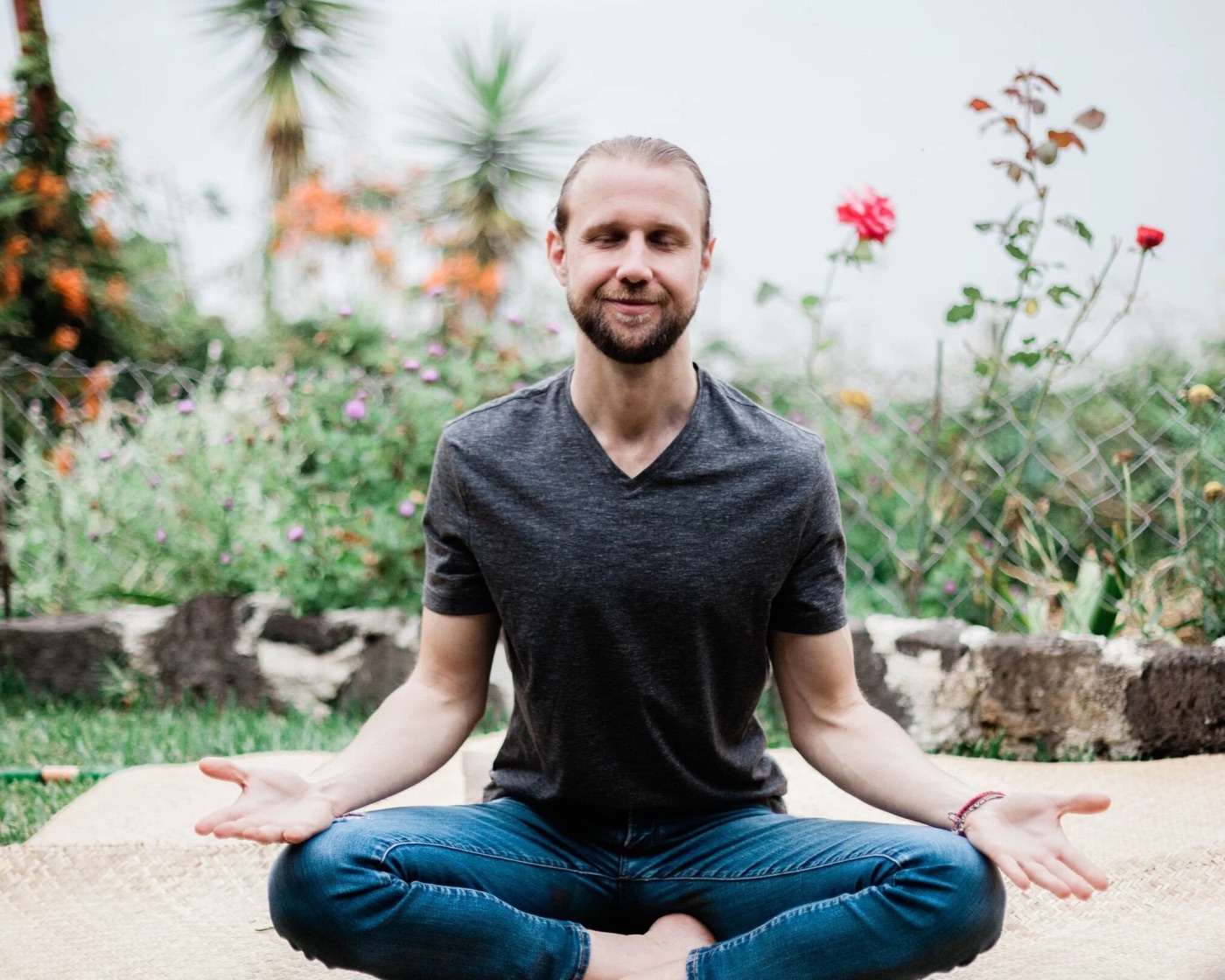

Lou Redmond is a transformation coach, speaker, author, and meditation guide. His meditations have been listened to more than 2 million times, and his online courses have enrolled over 75,000 students. Those numbers show reach, not depth. What follows concerns the teaching itself, and where the public record is thin, this piece says so.
The public material describes Redmond's positioning more than it transcribes his sessions, so any account of what a session feels like has to be partly inferential. What is documented points to a coaching-flavored approach rather than a doctrinal one. He says his work is about helping people trust themselves, love the process, and bring their gifts into the world. The teacher in that model is a mirror and a guide, not a dispenser of teachings to be absorbed.
His formats are varied: recorded meditations for solo practice, self-paced online courses, a podcast, a weekly newsletter, talks, and retreats. He has said his retreats bring together guests from across the political spectrum, which suggests a room designed for connection across difference rather than a gathering of the already like-minded. No schedule, venue, or session structure is documented, so a reader should not assume a particular daily rhythm.
The central theme is that difficulty is part of the path, not a delay before it begins. Redmond has written about battling insecurity, jealousy, fear, and doubt after a spiritual awakening at 25 led him to leave his corporate job. By his own account he had no idea what he was doing. He has described leaning on mentors, guides, and a trust that he would be supported if he kept following his heart. His own account of his early years, in other words, is one of uncertainty rather than mastery.
A second theme is the link between inner practice and livelihood. Purpose, meaningful work, and sustainable work with integrity recur across his book, Find Your Truth: A Modern Day Story About Finding Life's Purpose, and his teaching for other meditation teachers, coaches, and spiritual guides. He teaches them to write clear, grounded meditations and to build a working life, including through Insight Timer. According to his own sources, he left corporate life in 2015 and spent more than four years in financial precarity before the work became sustainable. Money and practicality are treated as legitimate subjects of spiritual teaching rather than distractions from it.
A third thread is access. He founded One Mindful Education, which brings meditation, yoga, and mindfulness into schools across the country.
The sources do not list his formal questions, so none will be invented. The themes imply a cluster of them: What would it mean to trust yourself? What is your work, and what is it costing you to avoid it? Can you stay with fear and doubt without treating them as proof you are on the wrong path? Can you love the process, not only the outcome? His book subtitle and coaching frame point toward purpose and self-discovery as the live inquiry, and his knowledge areas include self-inquiry. The questions are practical and personal rather than metaphysical.
He describes his approach as honest and relatable and calls himself "a friend on the journey." That phrase is the clearest key to his voice. Expect plain language, personal story, and candor about struggle rather than ceremony or mystique. His book is part memoir and part teaching text, so story is evidently a main vehicle.
What the record does not establish is how much humor, silence, or scripture he uses. No sacred texts are cited in the available material, and his teaching in schools suggests secular, accessible phrasing over technical vocabulary. Anyone looking for a particular rhythm of silence or a recurring comic register will have to sample the recordings and judge for themselves.
It is likely to land for beginners, for people who distrust guru dynamics, and for those at a career or purpose crossroads who want a guide who admits to having been lost. People weighing a leap away from conventional work may find his four-year story more useful than a polished success narrative. Meditation teachers and coaches trying to build a business without selling false certainty are an explicit audience.
It may not suit those who want guaranteed transcendence, intensity, or a quick breakthrough. Seekers who want dense lineage transmission, esoteric frameworks, or immersion in a traditional devotional practice are unlikely to find it here. People who want spirituality to lift them out of practical life, not engage with it, may find the emphasis on livelihood and sustainability too earthbound. The candor about struggle also cuts the other way: a listener who wants a meditation to feel purely serene may find the personal framing more than they came for.
The bio names no lineage, school, or teacher. It mentions "mentors, guides" without identifying them, and he explicitly declines the guru role. The most that can be said is that his work sits within the contemporary, accessible meditation, mindfulness, and coaching world, one that includes online platforms like Insight Timer and school-based programs. His formal training and the specific meditation traditions behind his methods are not stated in the available material, and a reader who needs that answer should look to his website or podcast.
That absence is itself part of the profile. Redmond's authority rests on lived experience, reach, and candor rather than inherited credential. For some students that is the appeal. For others it will be the limit.