Read
Books
Bibliography coming soon.


Spiritual Teacher
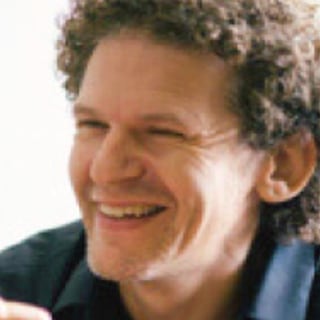
Dr. Kristin Neff is a researcher, teacher, and author recognised as a pioneer in the scientific study of self-compassion. Her website, self-compassion.org, serves as the primary home for her work, bringing together research, guided practices, and a growing community centred on the cultivation of self-compassion.
The pages provided by the site name three interlocking elements of self-compassion as the foundation of Neff's framework, alongside a distinct strand she calls Fierce Self-Compassion — a more active, protective dimension of the practice. The site also addresses common myths about self-compassion and presents an extensive body of research, including publications by Neff herself, publications on Mindful Self-Compassion (MSC), and work by other researchers, as well as validated scales and mood induction tools for academic use.
What Neff offers spans free and structured learning. Free resources include guided practices, self-compassion exercises, tips for practice, blogs on practice, and a 5-Day Self-Compassion Challenge created with Sounds True. For those seeking deeper engagement, the site offers a 6-Week Foundations Course, workshops, a Self-Compassion Intro Course, a short topical video library, audio and video courses, and life coaching through trained self-compassion life coaches. Researchers have their own dedicated section with publications, scales, and FAQs.
The site is organised around a membership community that unlocks a fuller Practice Toolkit, Gatherings with Kristin, Guest Conversations, Drop-in Mentor Sessions, an Event Recordings Archive, and discounted access to training. The Center for Mindful Self-Compassion is listed as a related resource, pointing to the broader MSC training programme that Neff co-developed.
The material provided does not include biographical details such as Neff's location, academic institution, teachers, or personal history, so those elements are not included here. What the pages make clear is that Neff's work reaches people across a wide spectrum — from complete beginners taking a free starter session to researchers publishing peer-reviewed studies — and that her platform is built to support ongoing practice rather than a single encounter with the subject.
Lineage & Inspiration
The teachers, lineages, and practices that shape Kristin Neff's path.
Practice
Core Buddhist meditation practice she has practiced since 1997, foundational to her work

Zen Buddhist Teacher
Taught in tradition emphasizing self-compassion that first introduced her to the concept

Psychologist and Meditation Teacher
Co-developed Mindful Self-Compassion program and co-founded Center for Mindful Self-Compassion with Neff

Insight Meditation Teacher
His book A Path with Heart was an especially important influence

Insight Meditation Teacher
Her book Loving-Kindness was an especially important influence on defining self-compassion

Tradition
Self-compassion is a central construct she empirically examined from this tradition
Practice
Key component of her Mindful Self-Compassion framework integrated with self-compassion practices
Worth Knowing
Dr. Kristin Neff describes herself on her website as a pioneer in self-compassion research, and that research is the foundation of everything she publishes and teaches. Her work asks what self-compassion actually is, breaks it into its component elements, reviews the evidence behind it, and examines the myths that tend to cluster around the idea. Much of her appeal to spirituality and mindfulness audiences comes from treating self-compassion as a trainable skill rather than a personality trait or a passing mood. Her site turns the research into practice through free guided practices, exercises, practice tips, and blog posts, so a reader can move from an academic claim to a short exercise without leaving the page. She also writes about fierce self-compassion, a more assertive strand of the practice that her site presents as the protective, motivating side of self-kindness. Readers who arrive from contemplative circles often note how precise she is about what the evidence does and does not show, which sets her apart from more loosely framed wellness content.
Our directory does not name a specific teacher, ordination line, or formal lineage for Kristin Neff, so the most accurate way to place her is by the sources her work visibly draws on. Her approach sits within contemporary mindfulness, a field that broadly descends from Buddhist contemplative traditions of compassion and loving-kindness but translates those practices into secular, research-based language. Her framework is built on academic psychology, with self-compassion defined through its elements and tested empirically rather than transmitted through ritual or initiation. The Mindful Self-Compassion (MSC) program, which her site covers and links to the Center for Mindful Self-Compassion, is the most formal institutional expression of that approach. The honest description is a hybrid: contemplative roots, a research-driven structure, and an audience that often arrives through spirituality and mindfulness rather than through any single religious community.
A newcomer should begin with the overview material on her website, which explains what self-compassion is, outlines its elements, summarizes the research, and addresses common misconceptions. From there, the free guided practices and exercises offer a low-stakes way to test whether the framework fits. Blog posts and practice tips fill in the gaps between those exercises and help clarify how the ideas apply to everyday moments of self-criticism. Anyone who wants more structure can move to the six-week foundations course, which is the most sequenced entry point the site offers. Workshops and the membership community, which includes gatherings with Kristin and guest conversations, make sense after that foundation is in place. Because the early material is largely practical and free, it works as a sampler before any paid commitment.
Many meditation teachers in the mindfulness and spirituality space are primarily experiential guides, while Kristin Neff holds the dual identity of Meditation Teacher and Researcher, and that combination is what sets her apart. Her public work repeatedly circles back to evidence, asking what self-compassion is, what the studies show, and which popular beliefs do not hold up. She also builds in an explicit counterweight to the softness that some self-compassion material is accused of, through fierce self-compassion, which emphasizes protectiveness, motivation, and action. Her site serves two audiences at once: practitioners who want guided exercises and courses, and researchers who can use her publications and scales. The Mindful Self-Compassion program gives the work an institutional pathway that extends beyond her own site. Teachers who rely more on devotional chant, ritual, or personal mystical experience will offer a very different texture than the research-first voice she brings.
Kristin Neff's work is not well suited to people seeking devotional, ecstatic, or ritual-heavy spirituality, since her material is structured around exercises, research, and clearly defined concepts rather than liturgy or mystical revelation. Readers who want a fast emotional release or a quick fix for deep-seated distress may find the pace slow and the exercises demanding, because self-compassion is framed as a skill that develops with repetition. People who are in acute crisis, or who are dealing with trauma or serious mental health conditions, should seek qualified clinical care alongside or before any self-directed practice, and her site does not position itself as a replacement for therapy. Listeners who prefer warm, inspirational content over methodological precision may find her careful distinctions and myth-busting slightly dry. Anyone expecting a discography of music or a recorded album catalog will also be disappointed, since her output is practice- and course-based rather than musical.
BrightStar does not currently have any upcoming events crawled for Kristin Neff, so no dates, cities, or tour schedules are listed on this profile at the moment. The most reliable source is her official website at self-compassion.org, which covers workshops, the six-week foundations course, life coaching, and membership gatherings with Kristin and guest conversations. Anyone following her work should check that site directly for current offerings, since course and workshop schedules change. The site also points to the Center for Mindful Self-Compassion for information about the Mindful Self-Compassion (MSC) program, which can be a useful source for training events tied to the broader framework. Because the directory has no release or album data for her, there is no recording calendar to track. Checking the website's blog and practice pages is the best way to catch new written material and guided exercises as they are published.
Kristin Neff's teaching is structured, research-informed, and built around guided practice, which is apparent in how her website organizes free exercises, practice tips, and sequenced courses. The six-week foundations course gives students a defined arc, moving from understanding what self-compassion is toward applying its elements in daily life. Workshops and the membership community add a live, communal layer, with gatherings that include Kristin and guest conversations, so the experience tends to combine instruction with discussion. Our directory does not contain first-hand accounts of in-room atmosphere, so claims about tone or pacing should be checked against participant reports and the official site. What the published material does make clear is a preference for clarity over mysticism, with concepts defined before they are practiced. Students who want open-ended contemplation may find the format more directive than they expected.
The central theme in Kristin Neff's teaching is self-compassion itself, defined by its component elements and examined through the research that supports it. A second recurring thread is the myth-busting impulse, where she addresses popular misconceptions about self-kindness, including fears that being gentle with oneself leads to laziness or self-indulgence. Fierce self-compassion appears as a distinct theme, pointing to a more protective and motivating form of the practice that can coexist with warmth. Guided practices and exercises form a third strand, translating abstract ideas into repeatable steps that students can use in moments of difficulty. The Mindful Self-Compassion (MSC) program represents a fourth theme, offering a structured, group-oriented way to build the skill over time. Taken together, the work treats self-compassion as an evidence-based capacity that grows with consistent practice, rather than as a feeling to be summoned.
The directory does not currently list any recorded talks, lectures, or video series by Kristin Neff, so no specific titles can be recommended from this profile. What is documented is a substantial body of free, self-directed material on her website, including guided practices, exercises, practice tips, and blog posts. These resources allow a reader to study the core framework at their own pace without enrolling in a course. Researchers have a separate set of resources, including publications and scales, which the site makes available for academic use. For a deeper formal study route, the six-week foundations course and the Mindful Self-Compassion program offer structured alternatives to independent reading. Anyone looking for audio or video talks should confirm current availability directly on her website, since the directory does not verify formats.
No formal background is required to begin with Kristin Neff's teaching, and her free guided practices and overview material are written to be accessible to people with no prior meditation experience. The concepts of self-compassion and its elements are introduced from the ground up, so a newcomer can follow the framework without knowing the academic literature. Familiarity with mindfulness helps, since the broader field shapes how many of her exercises are structured, but it is not a prerequisite. Readers who want to engage with the research itself, or who plan to use her publications and scales, will get more out of the material with some grounding in psychology or research methods. The six-week foundations course offers a structured route for those who prefer guided sequencing over independent study. For anyone with a history of trauma or significant emotional difficulty, pairing the practices with professional support is a sensible precaution rather than a barrier to entry.
Discover More
Continue your journey
BrightStar is the global directory of artists, teachers, and healers in the wellness and spiritual movement. Find your next experience — or add yourself.
Browse 14,000+ curated profiles across kirtan, yoga, meditation, and beyond.
Explore directory →Kirtan, retreats, sound baths, breathwork, ceremonies — happening this week.
Browse events →Are you an artist, teacher, or healer? Get listed — free, AI-assisted, live in minutes.
Get started →