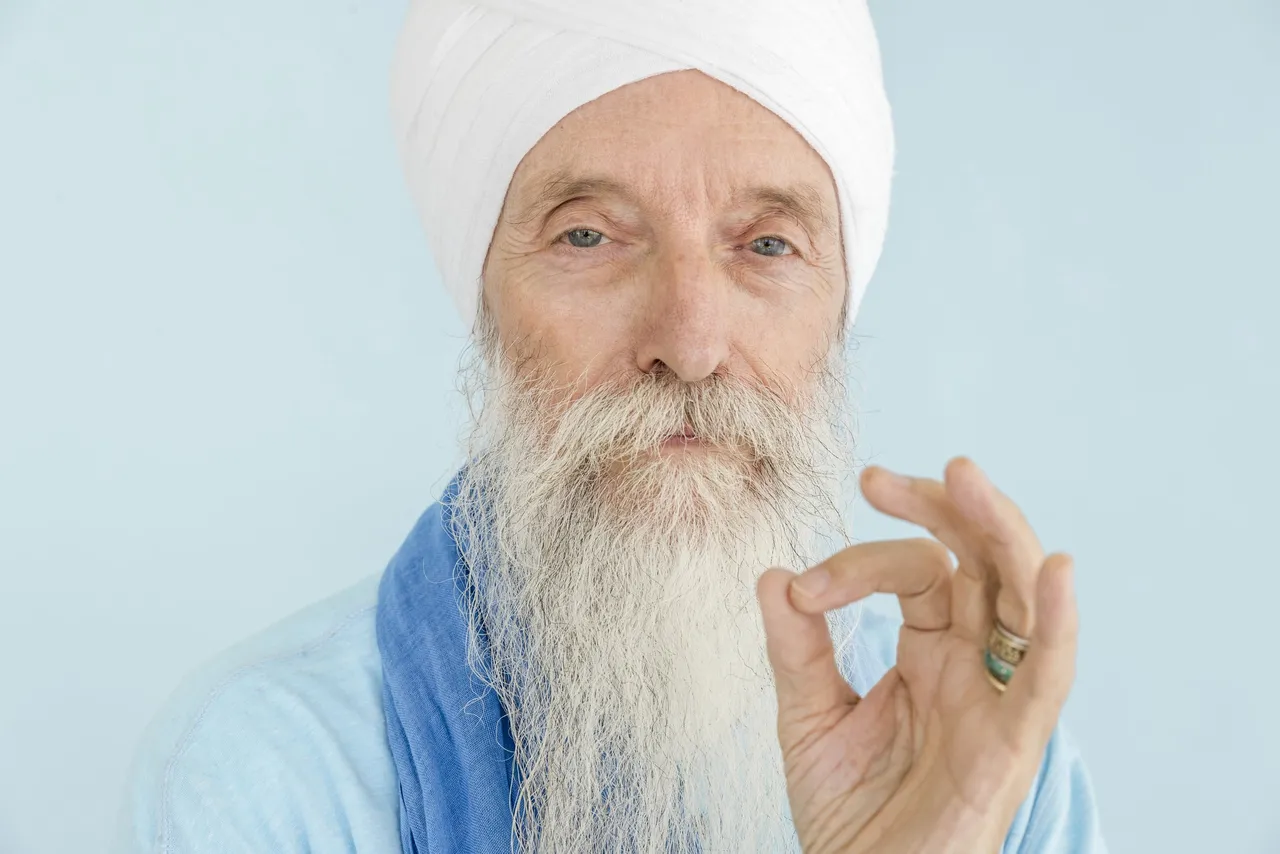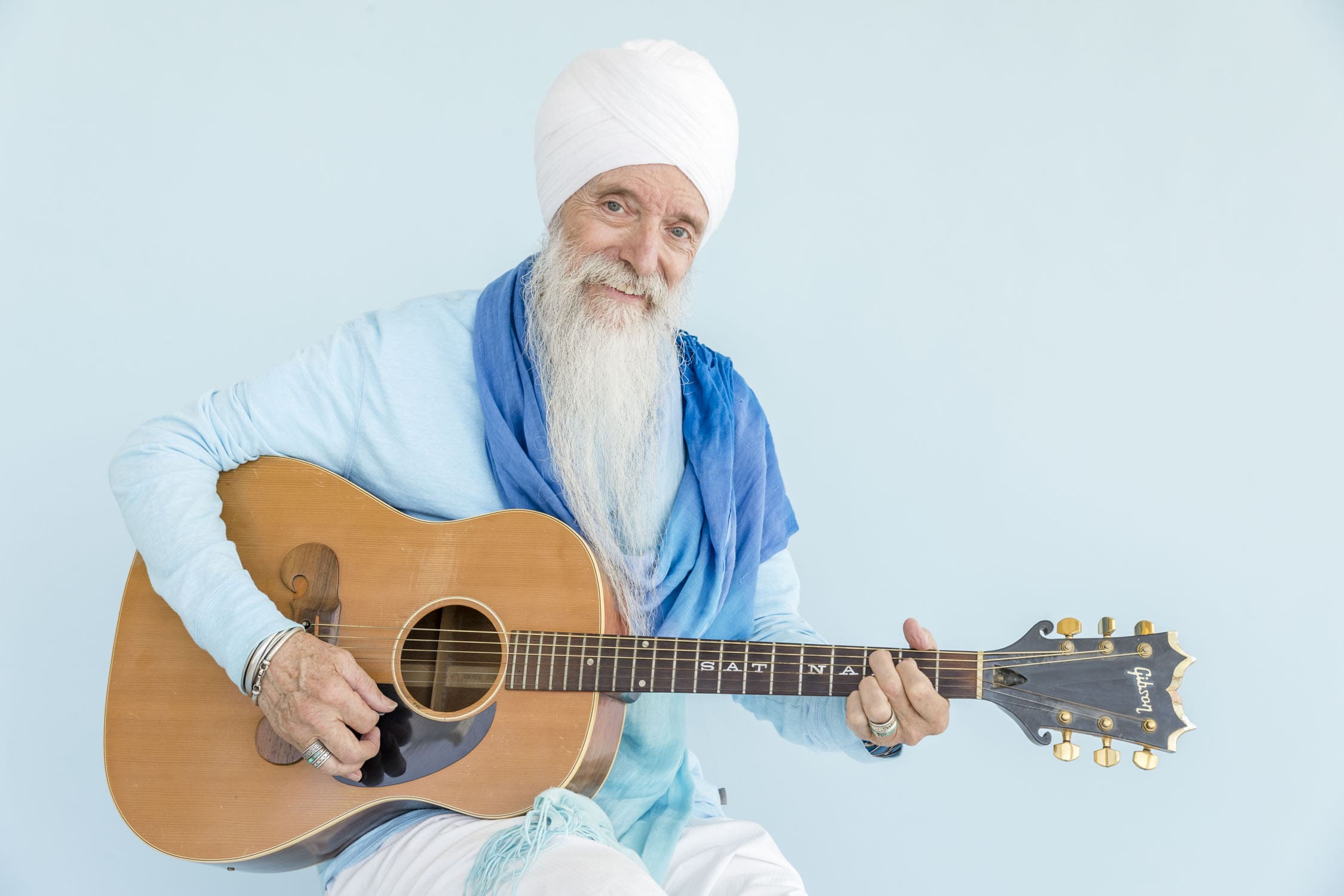

For more than four decades, Guru Singh has occupied a distinctive position in the landscape of Western yoga: not quite guru in the traditional sense, not quite wellness instructor in the contemporary mold, but something in between—a translator of esoteric practice for seekers navigating modernity without a map. As a Kundalini yoga teacher and spiritual guide, he has built his work on the foundation laid by Yogi Bhajan, who brought Kundalini yoga to North America in the late 1960s, while adapting its teachings for students who come to the mat seeking something beyond physical fitness.
Born into a family already connected to yogic lineages, Guru Singh entered this work with an unusual inheritance—a childhood proximity to practices that most Westerners discover only as adults. This early exposure positioned him not as a convert but as a native speaker of the tradition's symbolic language, someone who could move fluidly between the cosmology of ancient texts and the psychological vocabulary of contemporary students.
The 1970s marked a period of intense spiritual experimentation in North America. Eastern philosophies were no longer exotic imports but part of a broader cultural conversation about consciousness, meaning, and alternatives to institutional religion. It was during this fertile moment that Guru Singh began formal study, entering the world of Kundalini yoga when the tradition was still crystallizing its Western form.
Unlike many yoga teachers who came to the practice after careers in other fields, Guru Singh's path appeared to unfold with a certain inevitability. The details of his turning point remain less documented than the consistency of his commitment—a four-decade tenure that has outlasted waves of trends and the rise and fall of countless wellness movements.
What distinguishes Guru Singh's work is his refusal to dilute Kundalini yoga into purely physical practice. While contemporary yoga often emphasizes asana—the postural dimension—his teaching draws heavily on the elements that casual practitioners find most foreign: Sanskrit mantras, pranayama (breathwork), and kriyas, those precise sequences of posture, sound, and breath designed to redirect energy through what the tradition calls the subtle body.
His classes function as living philosophy seminars, weaving chanting and meditation with instruction on yogic cosmology. Where many teachers offer stress relief or flexibility, Guru Singh offers something more demanding: a comprehensive system for understanding consciousness itself. This approach attracts students who sense that their restlessness or dissatisfaction runs deeper than what a fitness routine can address—people searching for spiritual tools outside formal religious structures.
The techniques he teaches—breathwork that alters nervous system states, mantras whose repetition is said to rewire thought patterns, meditations that cultivate witness consciousness—are presented not as mystical abstractions but as practical technologies. This pragmatic mysticism has become his signature: honoring the tradition's metaphysical claims while grounding them in embodied experience.
Guru Singh's book Buried Treasures represents his effort to distill yogic philosophy into written form, offering both conceptual frameworks and practical guidance for integrating meditative awareness into daily life. The title itself suggests his pedagogical approach: these are not new ideas being invented but ancient wisdom being excavated and made legible to modern readers.
Beyond the written word, he is closely associated with Kundalini University, an educational platform that extends beyond basic teacher certification into what might be called the graduate-level study of Kundalini practice. While many yoga teacher trainings focus on sequencing classes and anatomy, Kundalini University reflects Guru Singh's commitment to preserving the philosophical and energetic dimensions of the tradition—the elements most at risk of being lost as yoga becomes increasingly commercialized.
His teachings circulate through workshops, retreats, and recorded lectures that have found audiences far beyond those who can attend his classes in person. In an era of digital spiritual seeking, these recordings function as a kind of remote transmission, carrying the particular quality of his instruction—equal parts scholarly and devotional—to practitioners around the world.
Today, Guru Singh continues teaching while contending with the same tension that has always defined his work: how to maintain the integrity of a demanding spiritual practice while making it accessible to people whose lives look nothing like those of traditional yogis. The students who seek him out now are navigating information overload, political anxiety, and what might be called the spiritual consequences of late capitalism—a different set of obstacles than those faced by seekers in the 1970s, but perhaps no less urgent.
His modest Spotify following of 3,300 listeners suggests someone whose influence operates outside mainstream metrics, reaching a specific community rather than chasing mass appeal. This seems appropriate for a teacher whose work has always prioritized depth over breadth.
Guru Singh matters because he represents a particular answer to a persistent question: what happens when ancient spiritual technologies meet contemporary seekers? His four decades of teaching demonstrate that rigorous traditional practice can find purchase in modern life without being reduced to self-help platitudes or wellness consumerism.
For students seeking alternatives to both religious orthodoxy and secular materialism, teachers like Guru Singh offer what might be called a third path—practices rooted in lineage and tradition but freed from cultural contexts that can feel inaccessible or alienating. His work suggests that the tools for transformation don't need to be reinvented for each generation, only re-contextualized, translated with care from one world into another.