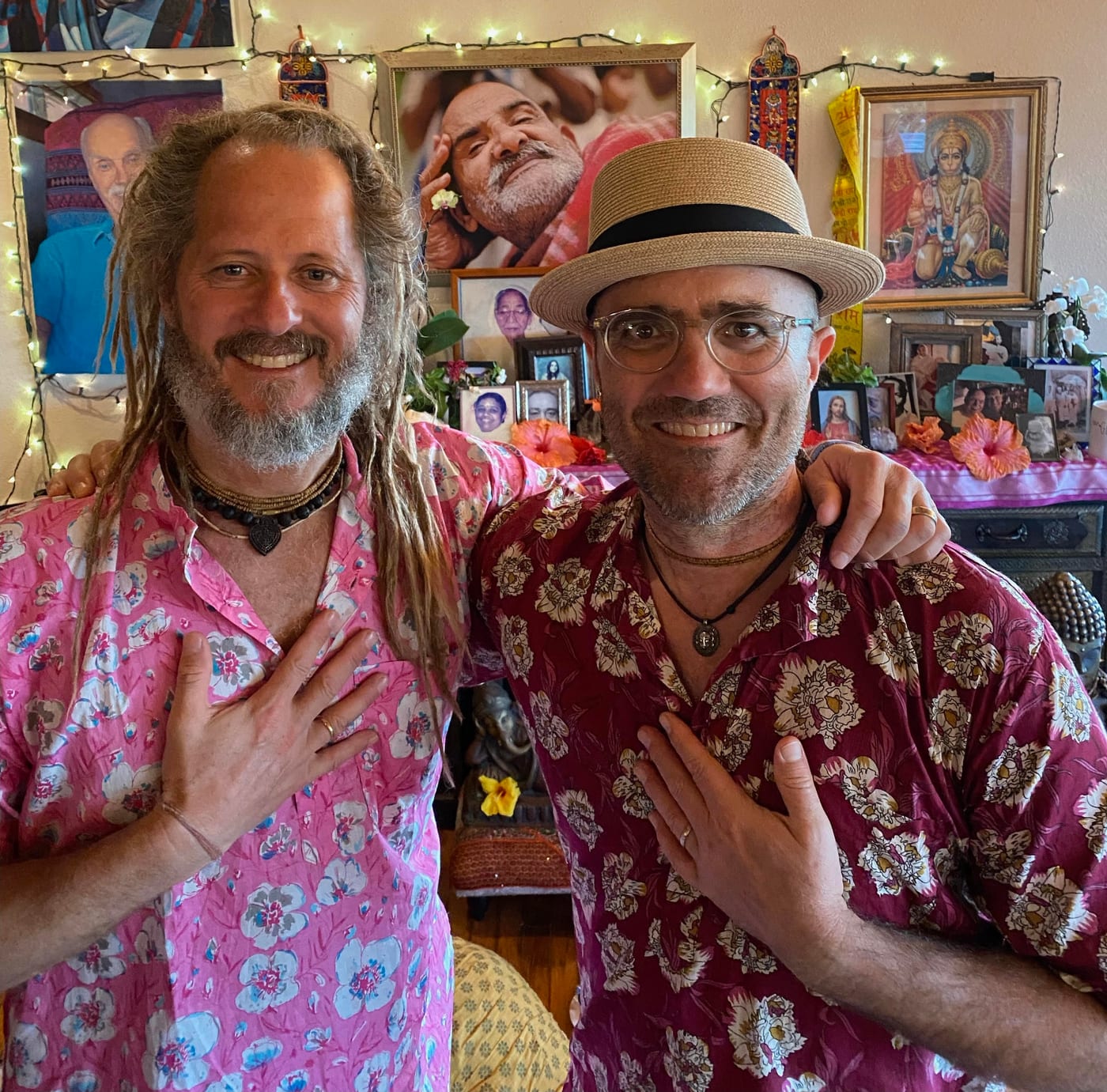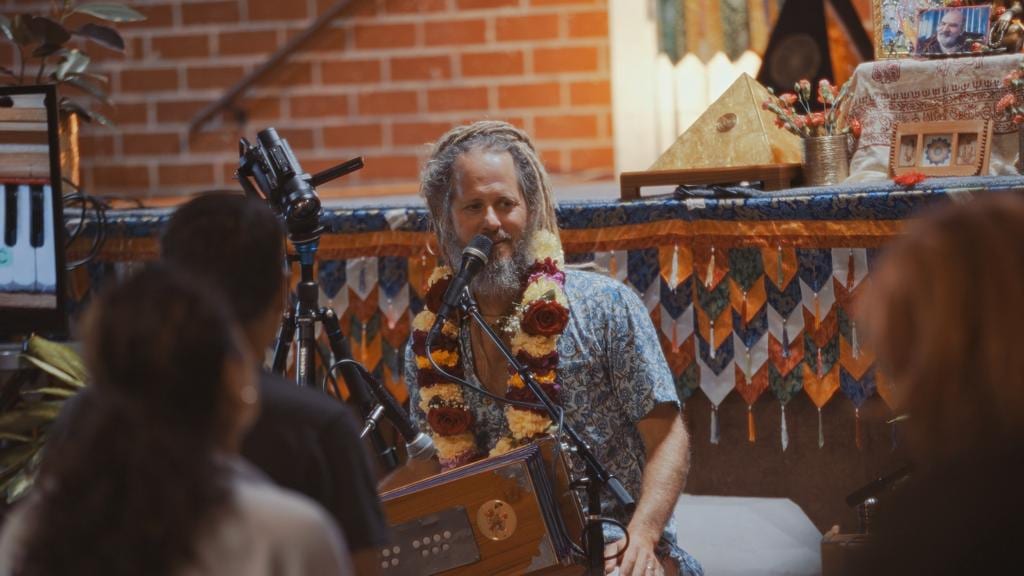

There is no album or book to point you to. The profile lists no discography and no books, so the single best entry point is a kirtan session, in person if you can manage it. Kirtan is call-and-response singing: a short phrase is sung, and the room answers. The role of Govind Das's harmonium, which he has played for more than twenty years, is far easier to understand when you are sitting in the sound than when you are hearing it through speakers.
Govind Das is the director of Bhakti Yoga Shala, a community built around Bhakti Yoga, the yoga of love, gratitude and devotion. If a kirtan evening feels like a big first step, the Shala also offers gentler doors in, such as restorative yoga. Check bhaktiyogashala.com for current schedules, since no upcoming events are listed on his profile. If you are not near the Shala, its online studio, Portal to the Path of Devotion, lets you join from elsewhere.
1. The Spotify page and YouTube channel. Once you have felt a live session, recordings make more sense. The Spotify artist page and the YouTube channel linked from his profile give the clearest sense of his voice and harmonium. No individual track titles are listed, so browse freely rather than hunting for a particular record.
2. The Love Everyone Podcast. Co-hosted with Rama Chandra Das, this is the best window into his thinking. Each episode takes one line of the Hanuman Chalisa and talks through it in conversation, touching on Bhakti Yoga, kirtan, Neem Karoli Baba and walking the path of devotion in daily life. Because it moves line by line, you can study the text gradually.
3. A Shala class or the India retreats. Yin, restorative, breathwork, trance dance and sound healing are all on offer. If you fall for the work, the retreats, running since 2005 through Rishikesh, Kainchi Dham and Vrindavan, are the deep end: early-morning meditation and kirtan, Bhakti Vinyasa yoga, temple visits, vegetarian food and satsang.
Expect repetition. Kirtan is sparse: a short melodic phrase, sung and answered, building gradually instead of changing suddenly. The harmonium is reedy and breathing, and in his hands it grounds the chant rather than decorating it. The aim is restraint and absorption, not virtuosity. You will not be an audience member watching a stage; you will be part of the instrumentation. You do not need Sanskrit or any background in Hinduism, because the call-and-response structure teaches the phrases quickly.
You should also expect the religious framing to be explicit. The Shala follows the teachings of Neem Karoli Baba, who celebrated all Gods as one, and it welcomes anyone, but it does not hide its lineage.
Treating it as a concert. Kirtan is participatory. Sitting back and evaluating the performance misses the point.
Hearing repetition as a flaw. The same phrase deepens across cycles. That is the design.
Expecting secular mindfulness. The vocabulary of love, gratitude and devotion is central. If you want yoga stripped of religious context, this will be a poor fit.
Expecting a big recorded catalogue. His streaming footprint is modest, about 12,300 Spotify followers, and his reputation rests on in-person kirtan and the Shala community. Starting with a recording undersells the work.
Assuming it is only music. He also teaches the philosophy behind the chants, and he teaches kirtan leading, with chants learned on the harmonium alongside the philosophy of Bhakti Yoga.
It tends to land hardest when you want something more participatory than a studio class: if yoga has started to feel like exercise and you are looking for the devotional root of it, or if you are drawn to community and shared practice over solo practice. It also suits people ready for a slower, quieter register, and those who feel pulled toward India as a source of the practice. The retreats suit people who want immersion more than comfort and can handle early starts and a full daily schedule.
It lands less well if you are skeptical of devotion, want fast or heavily produced music, or need a purely secular approach.
Day 1: Open the Spotify page or YouTube channel and listen to one piece of kirtan with no agenda. Notice the repetition without judging it.
Day 2: Listen to the first episode of The Love Everyone Podcast. Note one idea about the Hanuman Chalisa line discussed.
Day 3: Pick one short mantra or phrase from your listening and repeat it quietly for a set time. A single mantra for a fixed period serves home practice better than skipping among many songs.
Day 4: Take a restorative or yin class, in person or through Portal to the Path of Devotion.
Day 5: Listen to a second podcast episode. Look up the terms bhakti and mantra if they are unfamiliar.
Day 6: Attend a kirtan session, ideally live. Sing along even if you feel awkward; participation matters more than accuracy.
Day 7: Reflect. Did the repetition settle you or irritate you? If it settled you, check bhaktiyogashala.com for the next class or retreat. If it irritated you, try one more short kirtan before deciding.