
Origins and Formation
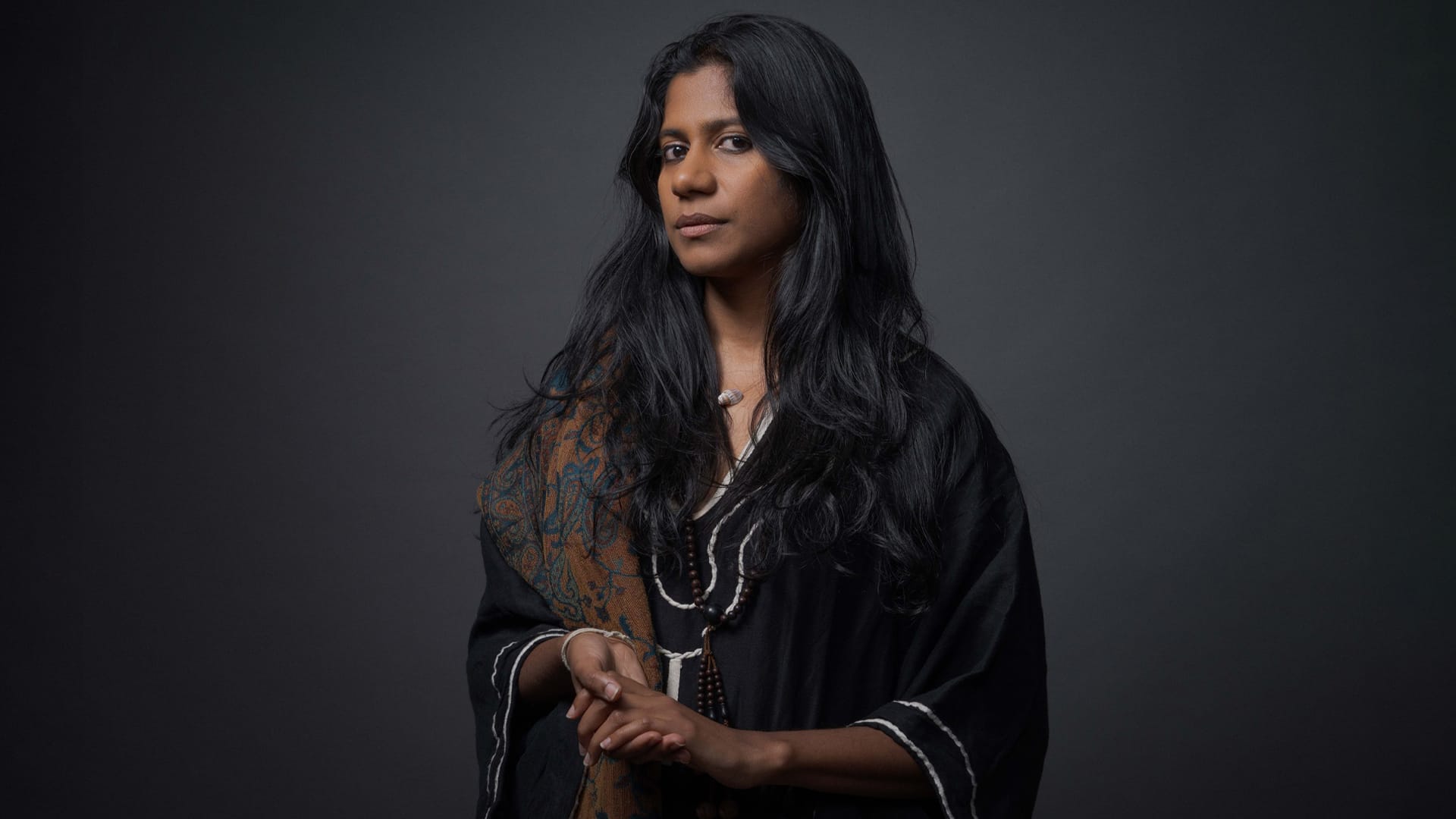
Ganavya Doraiswamy emerged from a lineage steeped in devotional and musical tradition. Born into a Tamil Brahmin family, she was trained from childhood in Carnatic music—the classical tradition of South India known for its complex rhythmic structures and emphasis on vocal ornamentation. This early formation planted seeds that would later blossom into something harder to categorize: not quite jazz, not quite devotional music, not quite contemporary classical, but a practice that draws from all three.
Her formal education took her to the New England Conservatory of Music, where she studied within the jazz and contemporary improvisation departments. It was a turning point—the moment when rigorous classical training met the open-ended inquiry of improvisational practice. Rather than abandoning one tradition for another, she began to ask what might emerge if the precision of Carnatic music could breathe within the spaciousness of jazz, if the voice could become not just an instrument of beauty but a tool for presence.
The Convergence of Sound and Silence
What distinguishes Ganavya's trajectory is her parallel commitment to contemplative practice. She has spoken openly about years of engagement with Vipassana meditation and Advaita Vedanta philosophy—non-dual traditions that investigate the nature of consciousness itself. These aren't cosmetic influences. She has described opening recording sessions with group meditation, using improvisation as a form of inquiry rather than performance, treating silence not as the absence of sound but as its foundation.
This integration sets her apart in a landscape where spirituality is often deployed as aesthetic seasoning. For Ganavya, the practice shapes the process. The voice becomes a vehicle for exploring what she calls presence, inner peace, and meaningful connection—not as concepts to sing about, but as states to inhabit while singing. The result is music that operates on multiple registers: as composition, as meditation, as ritual.
Recorded Work and Collaborations
Her discography reveals an artist moving fluidly across contexts. The 2021 album like the sky i've been too quiet, created in collaboration with drummer and composer Shabaka Hutchings, stands as a central statement. The record weaves together improvisation, devotional text, and electronic texture into something that resists easy categorization—songs that feel both ancient and radically contemporary.
She has also released solo work including Daughter of a Temple and Aikyam: Oneness, the latter featuring interpretations of Sanskrit mantras and Tamil devotional poetry. These recordings don't simply present traditional material; they recontextualize it, asking what happens when centuries-old invocations meet the harmonic language of jazz and the production values of experimental electronic music.
Her collaborative reach is wide. She has contributed to albums by pianist Vijay Iyer, composer Nico Muhly, and the ensemble Ancestors—a cross-generational collective that brought her work to broader attention. In 2022, she performed at Carnegie Hall as part of a commission with Iyer and appeared at the Big Ears Festival in Knoxville, Tennessee, a gathering point for artists working at the edges of genre.
A Practice of Authentic Relating
What Ganavya offers is harder to quantify than album sales or festival appearances. With over 92,000 followers on Spotify—a meaningful but not massive audience—her cultural significance lies elsewhere. She reaches listeners who are hungry for music that doesn't separate aesthetic experience from inner life, who understand that the quality of attention a musician brings can matter as much as technical virtuosity.
Her work matters because it proposes an alternative to the relentless productivity and self-promotion that dominates contemporary music culture. By centering contentment, presence, and authentic relating, she models a different relationship to creative work—one where the goal isn't accumulation but clarity, where success is measured not in reach but in depth.
Current Chapter and Cultural Resonance
Ganavya continues to work at the intersection of performance, composition, and contemplative practice. She is not building a brand so much as tending a lineage—carrying forward the devotional music of her Tamil Brahmin upbringing while remaining open to the collaborative possibilities of jazz, contemporary classical, and experimental improvisation.
Her significance extends beyond music into broader conversations about how ancient wisdom traditions can inform contemporary art. In an era when mindfulness has been commodified and spiritual practice often flattened into self-help, she offers something more rigorous: a demonstration that tradition and innovation need not be opposed, that devotion can coexist with experimentation, that the voice can be both instrument and inquiry.
For those who encounter her work, the experience is less about listening to songs and more about entering a particular quality of attention—one where melody becomes mantra, where improvisation reveals structure, where silence holds as much meaning as sound. This is the legacy she is building: not a catalog of compositions, but a way of being present with voice, breath, and the space between.