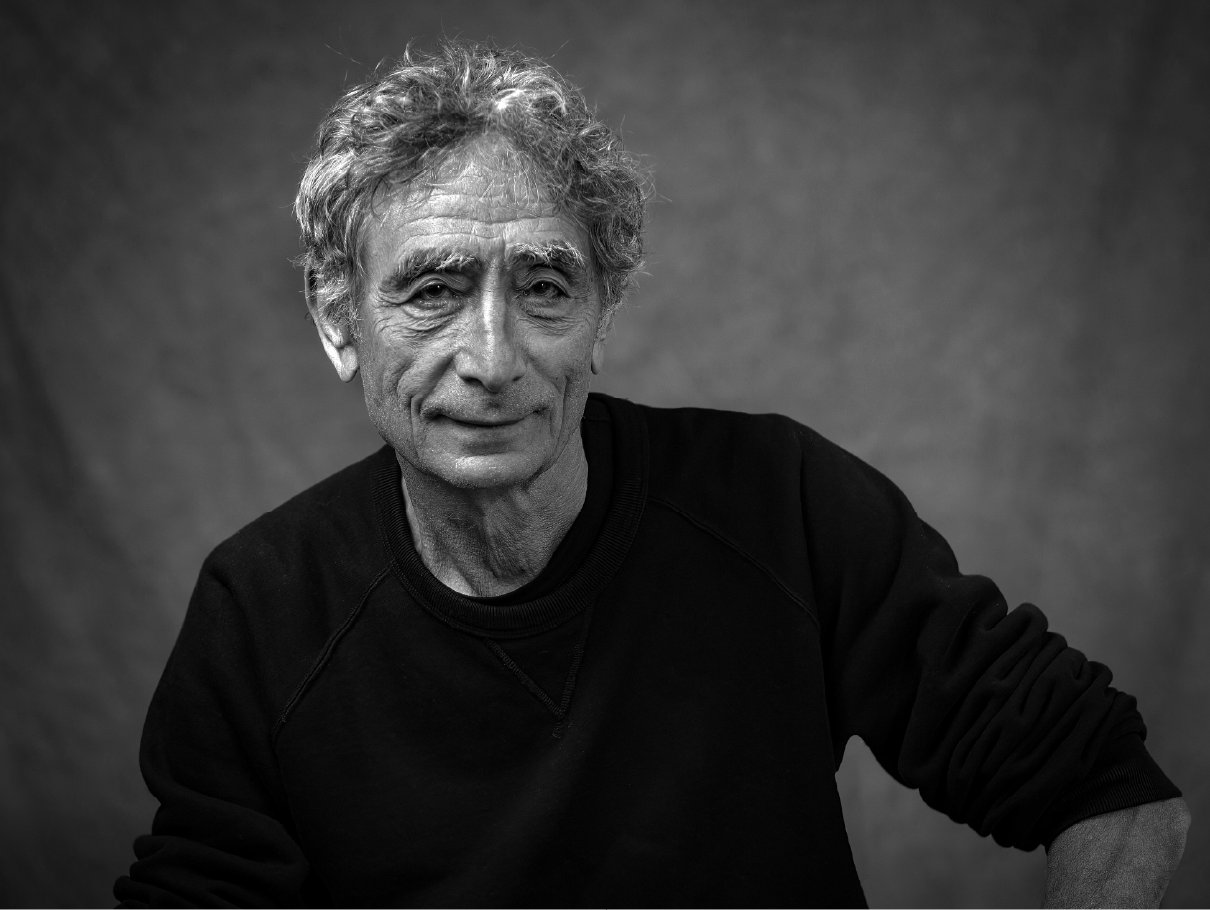

Start here: "When the Body Says No"
Your entry point into Gabor Maté's work should be his book When the Body Says No: Understanding the Stress-Disease Connection. This is where his thinking crystallizes most accessibly. Maté examines how repressed emotions and unprocessed trauma manifest as physical illness—autoimmune diseases, cancer, chronic pain. He tells the stories of real patients, including himself (he has Parkinson's), which grounds abstract concepts in lived experience. The book reads like detective work, tracing back from symptoms to their emotional origins. You'll recognize yourself or someone you love in these pages within the first chapter.
After that: The progression
Once When the Body Says No clicks, move to In the Realm of Hungry Ghosts, his book on addiction. Here Maté deepens everything from the first book but narrows the lens to his years working with drug users in Vancouver's Downtown Eastside. The revelation: addiction isn't about substances but about trauma and the desperate attempt to soothe unbearable pain. Even if you've never touched drugs, you'll see your own addictive patterns—to work, phones, busyness, approval—reflected back.
Then tackle The Myth of Normal, his most recent and comprehensive work. This is Maté's magnum opus, pulling together decades of thinking about how modern society itself is traumatizing. It's his most ambitious and political book, arguing that what we call "normal" is actually pathological. Read this third, after you've absorbed his foundational ideas, or it may feel overwhelming.
What to expect on first encounter
Prepare to feel exposed. Maté has an uncanny ability to name things you've felt but never articulated. You'll likely experience moments of recognition that are simultaneously relieving and uncomfortable. His voice is compassionate but unsparing—he doesn't let you off the hook for your own denial or self-abandonment.
His writing is clear and jargon-free, built on case studies rather than dense theory. He weaves together neuroscience, psychology, and storytelling in a way that feels more like conversation than lecture. Expect to cry at least once, probably more.
Common misunderstandings
Beginners often mistake Maté for saying "it's all in your head" when he discusses mind-body connections. He's saying the opposite: your body is telling the truth your mind won't face. He's not blaming sick people for being sick; he's pointing to the emotional and societal conditions that make us vulnerable to illness.
Another misconception: that his work is only for people with severe trauma or addiction. Everyone has trauma, he argues—it's about what happened in you, not just what happened to you. The person with the perfect childhood who can't say no and develops chronic migraines? That's Maté's territory too.
People also sometimes reduce his message to "stress causes disease." It's more specific: the chronic suppression of authentic needs and emotions, particularly anger and boundaries, disrupts our physiology over time.
When this work lands hardest
Maté's work tends to hit when you're already breaking open. When conventional medicine has failed you. When you've been in therapy for years but still can't shake your patterns. When someone you love is destroying themselves and nothing you do helps. When you're successful by every external measure but feel hollow. When you're newly sober and asking "now what?" When you've just become a parent and suddenly understand your own childhood differently.
His work is particularly powerful during life transitions—illness diagnoses, divorces, career collapses—when your old operating system has clearly stopped working.
One-week starter plan
Days 1-3: Read the first 100 pages of When the Body Says No. Journal about which patient stories resonate and why.
Day 4: Find and watch a Maté interview or talk online (search for his name plus "trauma" or "addiction"). Notice what shifts when you hear his voice and cadence.
Days 5-6: Finish When the Body Says No. Make notes on your own patterns of stress suppression and people-pleasing.
Day 7: Sit with one question he raises repeatedly: "When did you stop being yourself to be loved?" Write whatever comes.
Then decide whether you're ready to go deeper.