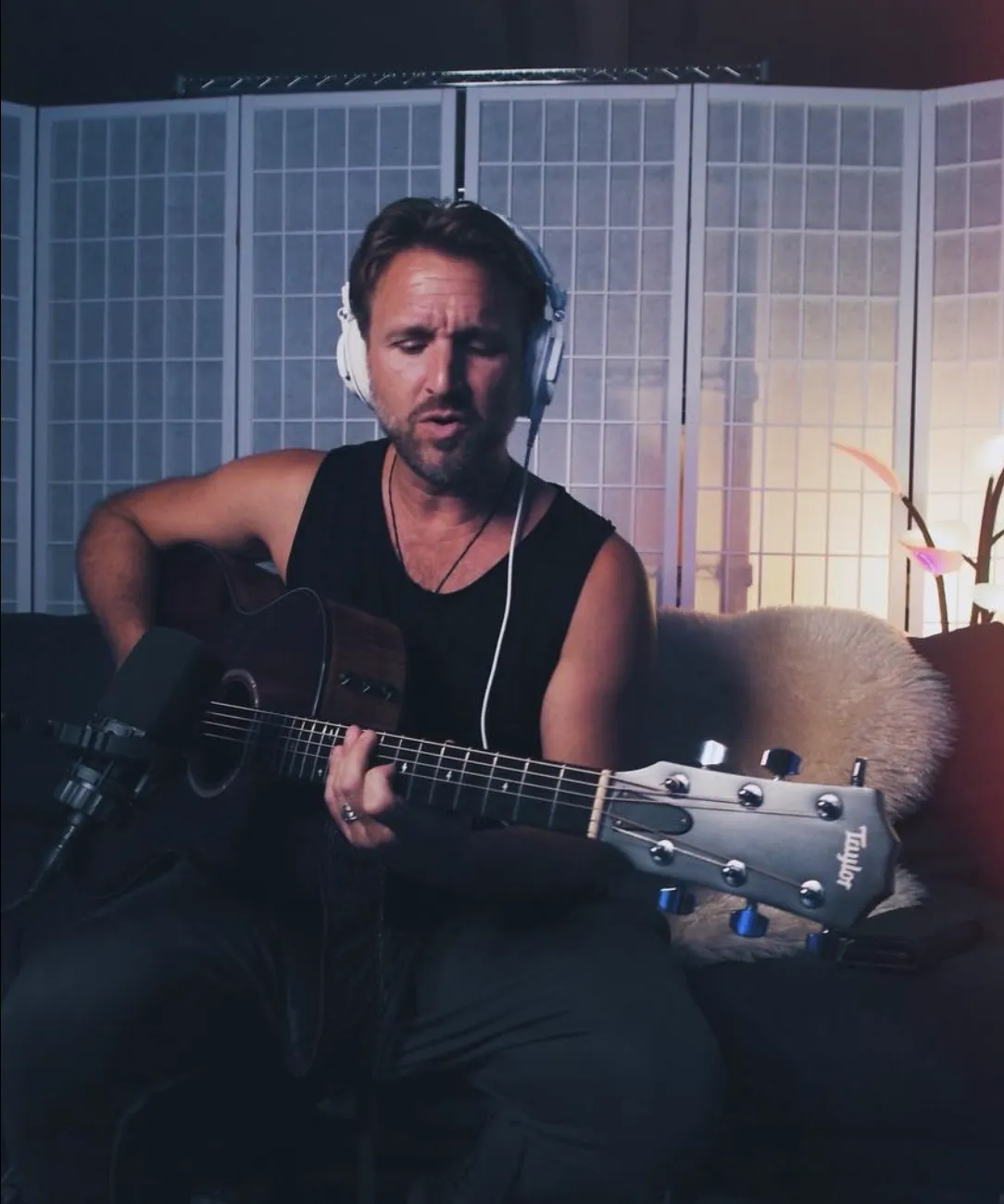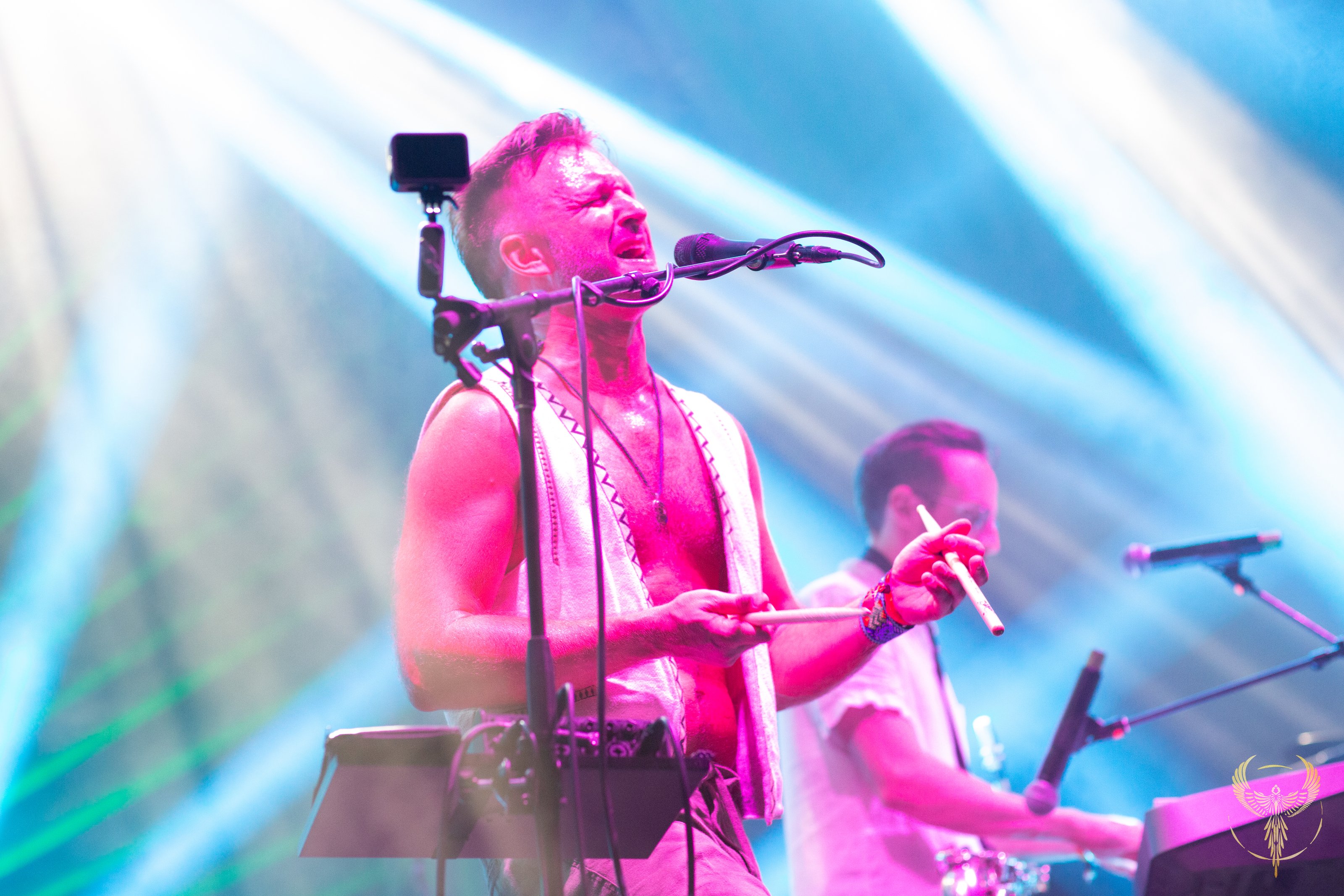

Elijah Ray's Teaching: Approach, Method, and Voice
Elijah Ray's teaching operates at the intersection of sonic practice and what he terms consciousness exploration—a deliberate pairing that shapes every session he leads. Whether in a weekend retreat format through his Sonic Explorer Mystery School or in the more condensed framework of a SoundLight & Jewel Juice immersion, the structure remains consistent: sound first, concept second, integration last. Participants don't begin with lecture or theory. They begin with their voices, with listening, with the disorienting task of sitting inside a sustained tone until the mind stops narrating and the body starts responding. Only after that threshold is crossed does Ray introduce language, and even then, sparingly.
The shape of a Ray session is cyclical rather than linear. A typical gathering might open with extended vocal toning—participants guided to hold single pitches, layer harmonies, or explore microtonal shifts without the scaffolding of melody or lyric. This can last twenty minutes or longer, an expanse of time that tests patience and reveals who is ready for the work and who expected something more palatable. From there, Ray may move to piano, offering what he calls "anchor tones"—repeating harmonic patterns that serve as a trellis for spontaneous vocal exploration. The room becomes less classroom and more laboratory. Silence is frequent and unforced. When Ray does speak, it's often in fragments: directives, invitations, occasionally a story drawn from two decades of his own practice. He does not perform teaching in the traditional sense. He demonstrates, then asks others to enter the same territory.
Recurring Themes and Core Questions
Ray returns again and again to the notion of sound as experiential tool rather than artistic product. This is not music therapy, nor is it performance training. It's something else—closer to embodied research. He asks students to consider: What happens when you stop singing about something and let the voice become a direct expression of interior states? What intelligence lives in the body that language obscures? He speaks of "shamanic awareness," a term he uses without mysticism or New Age vagueness, referring instead to a cultivated sensitivity to non-verbal information streams—vibration, resonance, the felt sense of harmonic relationship.
Another persistent theme is what Ray calls "mineral intelligence activation," a concept that appears in his SoundLight & Jewel Juice offerings. Here, sound immersion is paired with the presence of stones, crystals, and other mineral forms, not as symbols but as what he describes as vibrational partners. The inquiry is less "what do these objects mean?" and more "what shifts in perception when we treat them as co-participants in sonic space?" It's an approach that asks participants to suspend disbelief long enough to engage the experiment, which is precisely where some will exit.
Aesthetic and Delivery
Ray's aesthetic is austere but not cold. He uses humor rarely, and when he does, it's dry, almost aside. Silence is structural, not ornamental. He does not rely on scripture, though his language occasionally borrows from religious idiom—"awakening," "call," "initiation." His primary rhetorical mode is invitation: "Try this. Notice what happens. Stay with it." He does not interpret participants' experiences for them, which can feel withholding to those accustomed to immediate feedback or validation.
Story appears in his teaching, but not as narrative cushion. When Ray shares moments from his own decades-long practice, they arrive as data points, evidence of process. He does not mythologize his journey. The stories serve to normalize difficulty, to establish that disorientation and discomfort are stages, not failures.
Who It Lands For, Who It Doesn't
This teaching is for people willing to work without immediate resolution. It attracts musicians tired of conventional vocal pedagogy, meditation practitioners looking for embodied rather than seated practice, and those drawn to somatic exploration who find language-based therapies insufficient. It will frustrate anyone seeking entertainment, catharsis on demand, or a charismatic guru figure. Ray does not perform authority in the expected ways. His voice—both literal and pedagogical—is steady but not commanding. He holds space without filling it.
Tradition and Context
Ray situates himself within no single lineage, which is both a strength and a complication. His work shares DNA with the vocal exploration traditions of Pauline Oliveros and the Deep Listening Institute, the improvisational ethos of free jazz, and the ceremonial use of sound in various indigenous practices—though he does not claim those practices as his own. The Band of Light, his community vehicle since 2004, functions as both performance collective and spiritual laboratory, a hybrid form that resists easy categorization. He belongs to the wider field of sound healing and consciousness work, but remains at its edges, more interested in rigor than popularity, more committed to the question than the answer.