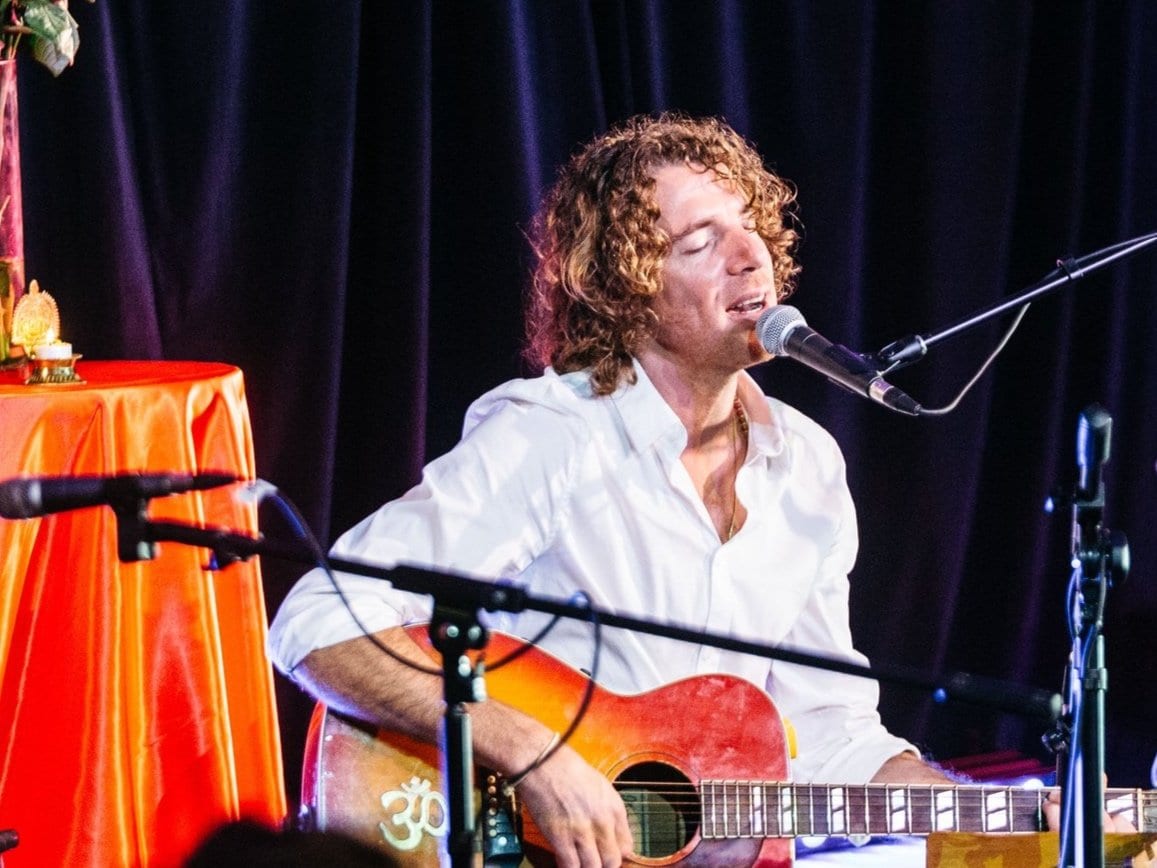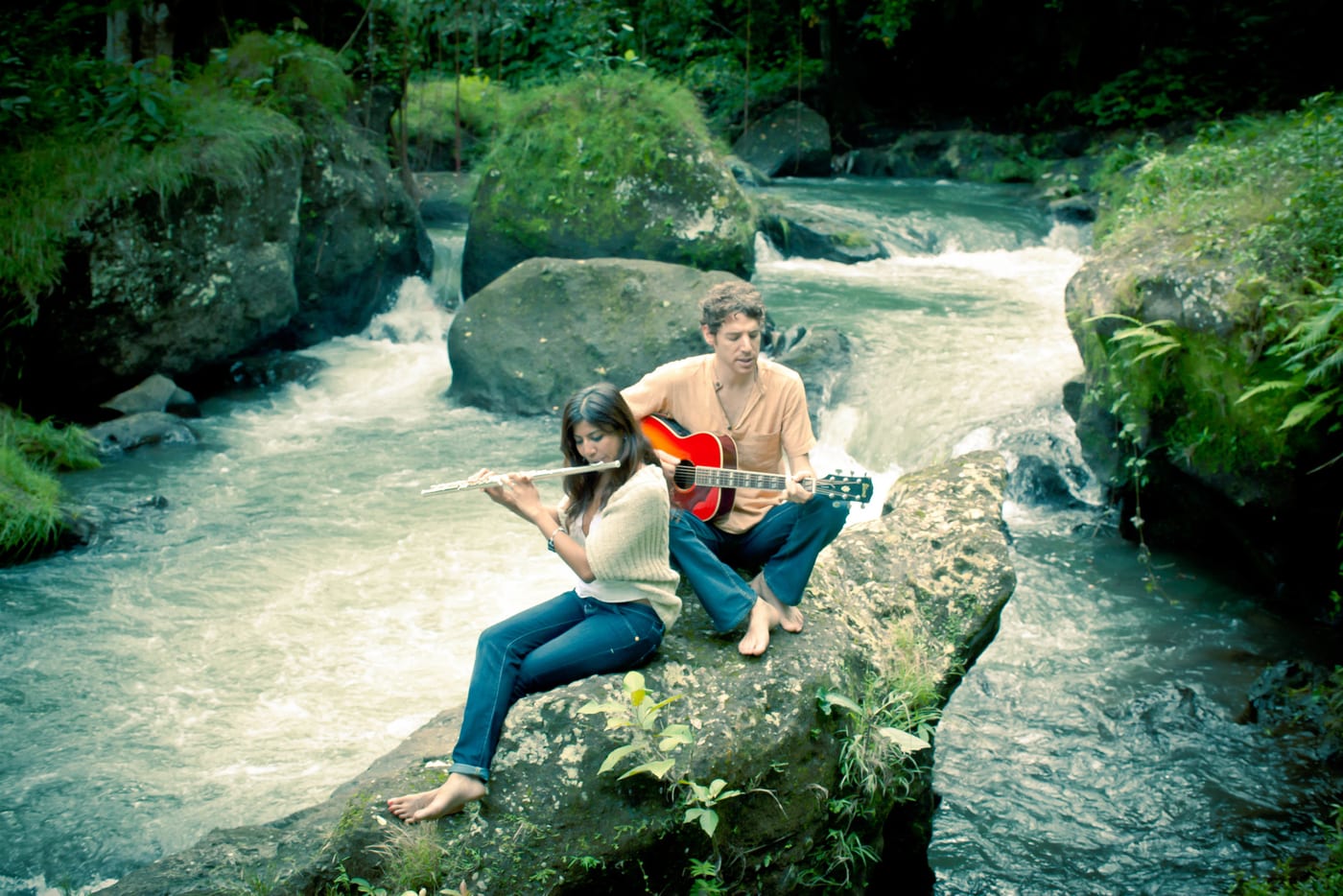

Edo & Jo were an Australian duo of singer-songwriters, mantra musicians and yogis. Between 2008 and 2015 they toured extensively through Australia, South-East Asia, India and America, building a body of work that mixed Eastern mantra with Western pop. Their own site describes the result as both soothing and uplifting, a fair summary of music that aimed to make ancient devotional practice approachable without draining it of purpose.
The duo was made up of Edo Kahn and Jo Mall Kahn. Their story is also one of loss: Jo died in September 2015, shortly after a cancer diagnosis, and the work that followed has been shaped by that fact.
The sources do not document where either of them grew up, so this profile begins with what each brought to the partnership.
Edo Kahn came from rock. He was signed to Virgin/EMI with his bands Gelbison and Kahn Brothers, and he is an APRA award-winning songwriter. That is a conventional music-industry pedigree, and it matters here because it shaped the duo's instincts. Their records are built on song craft: clear arrangements, melody that carries, and structure that a first-time listener can follow.
Jo Mall Kahn was a singer-songwriter, a classically trained musician and a qualified yoga teacher. Her training gave the pair a grounding in both musical discipline and yoga practice. Where Edo's history lay in the commercial rock world, Jo's lay in formal musicianship and the embodied teaching of yoga. Together these backgrounds gave the project both its sound and its practical framework.
The available record does not describe a single dramatic moment that redirected the pair, and it would be wrong to invent one. What can be said is that they moved from songwriting into kirtan and mantra, and that their stated aim became the blending of Eastern mantra with Western pop. By 2008 they were touring under the Edo & Jo name, and the path they chose placed them within bhakti, the devotional tradition in which repeating divine names is the central act.
That choice was deepened by their relationship with their teacher, Sakthi Amma, who initiated them into a mantra meditation practice. They shared that practice through their music and teaching. The named transmission matters: it places their work inside a lineage rather than treating mantra as a spiritual aesthetic.
Most kirtan artists come to the form as devotional leaders first. Edo & Jo came to it as songwriters. That difference is their distinguishing contribution. They treated the repetition at the heart of chant as something that could sit inside song-based arrangements, and they kept the mantra at the center rather than burying it under production.
The approach also reached beyond recordings. Their Sound Yoga workshops combined asana, mantra, chakra meditation and sound relaxation in a single session, so the albums worked as companions to a practice rather than standalone products. Sound Yoga, also known as Nada Yoga, treats sound itself as a route into meditative absorption, and it became a central idea in their later work.
Their first album, Kirtan Alive (2012), is one of Australia's best-selling kirtan CDs. It is the natural entry point: mantra carried by clean arrangements, accessible to listeners who have never sat in a kirtan circle. It works best heard as a complete record, since its pacing shows how repetition can become meditative.
Bliss followed, extending the same approach to devotional song. Chakra Meditation came next and is the most purposeful record in the catalogue, designed around the chakra system for listeners seeking stillness and inner focus.
The third album draws on Sound Yoga and shares the mantra meditation practice they were initiated into by Sakthi Amma. It is the most explicit statement of their spiritual grounding and leans furthest toward the meditative end of their range. Its title is not recorded in the material used for this profile, so the official site is the place to confirm the full discography.
Their live history spans a wide circuit. They played Byron Spirit Festival, Sydney Spirit Festival, Bhakti Bliss, Bodhi Festival and Bali Spirit Festival. From 2012 to 2014 they held monthly residencies at Ubud Yoga Barn in Bali, which gave their teaching a sustained home rather than a string of one-off appearances.
They also led yoga retreats and Sound Yoga workshops. Newcomers could expect practice-led sessions in which chanting is participatory rather than performed, with movement preparing the body and sound work leading toward stillness.
Edo and Jo co-founded A Sound Life, a charity that brings music and yoga free of charge to people in health care and underprivileged communities. It extends the logic of their teaching outward: if sound and breath can steady a practitioner in a studio, they can do the same in a hospital or in a community with few resources.
After Jo's death, the charity became the clearest vehicle for carrying her voice, spirit and songs forward. It is not a retail channel for the recordings, but it is arguably the most direct expression of what the duo valued.
Active touring ended around 2015, and the duo no longer exists as a working partnership. No upcoming events were available when this profile was compiled. What continues is the recorded catalogue, the archived material, and the work of A Sound Life. The official website at edoandjo.com and the YouTube channel at youtube.com/@edoandjo are the primary places to hear the music and follow developments.
Edo & Jo reached people who might never have entered a traditional kirtan circle: yoga students, festival audiences, and listeners drawn to soothing, melodic music with a devotional core. Their recognition is documented in two places: Edo's APRA award and the commercial success of Kirtan Alive. Press coverage is not catalogued in the sources used here, so claims about it would be speculation.
The music is not for everyone. Listeners wanting high-energy electronic sound will find it measured, and purists who prefer long, unadorned call-and-response may find the pop framing too polished. Those seeking scholarly engagement with Sanskrit texts will find songs rather than lectures.
For the people it does suit, the catalogue offers something durable: devotional listening for practice, ceremony or quiet evenings, made by two musicians who took both craft and practice seriously. Their significance lies in that combination, and in a legacy that continues through recordings and a charity bringing music and yoga to people who might otherwise go without.