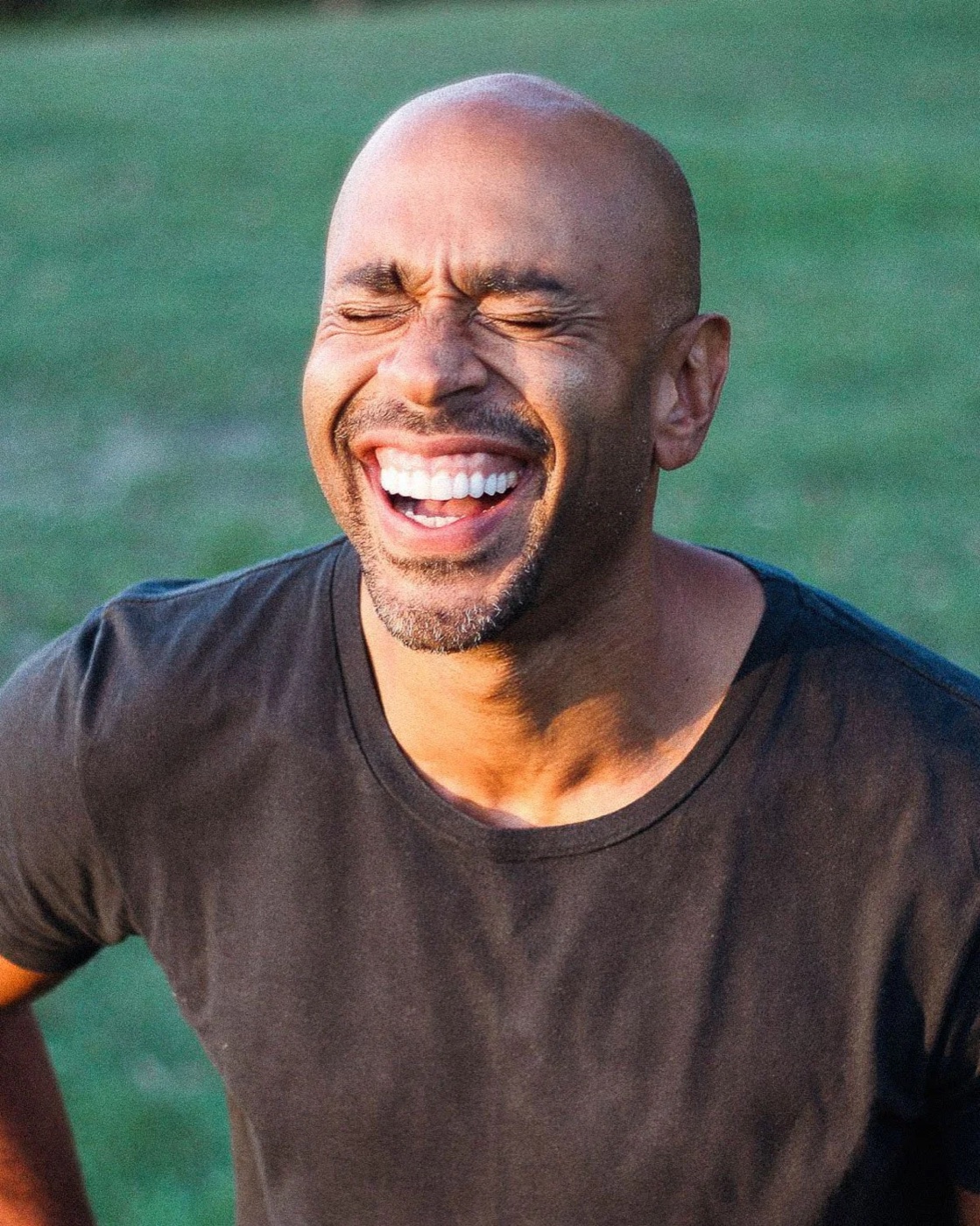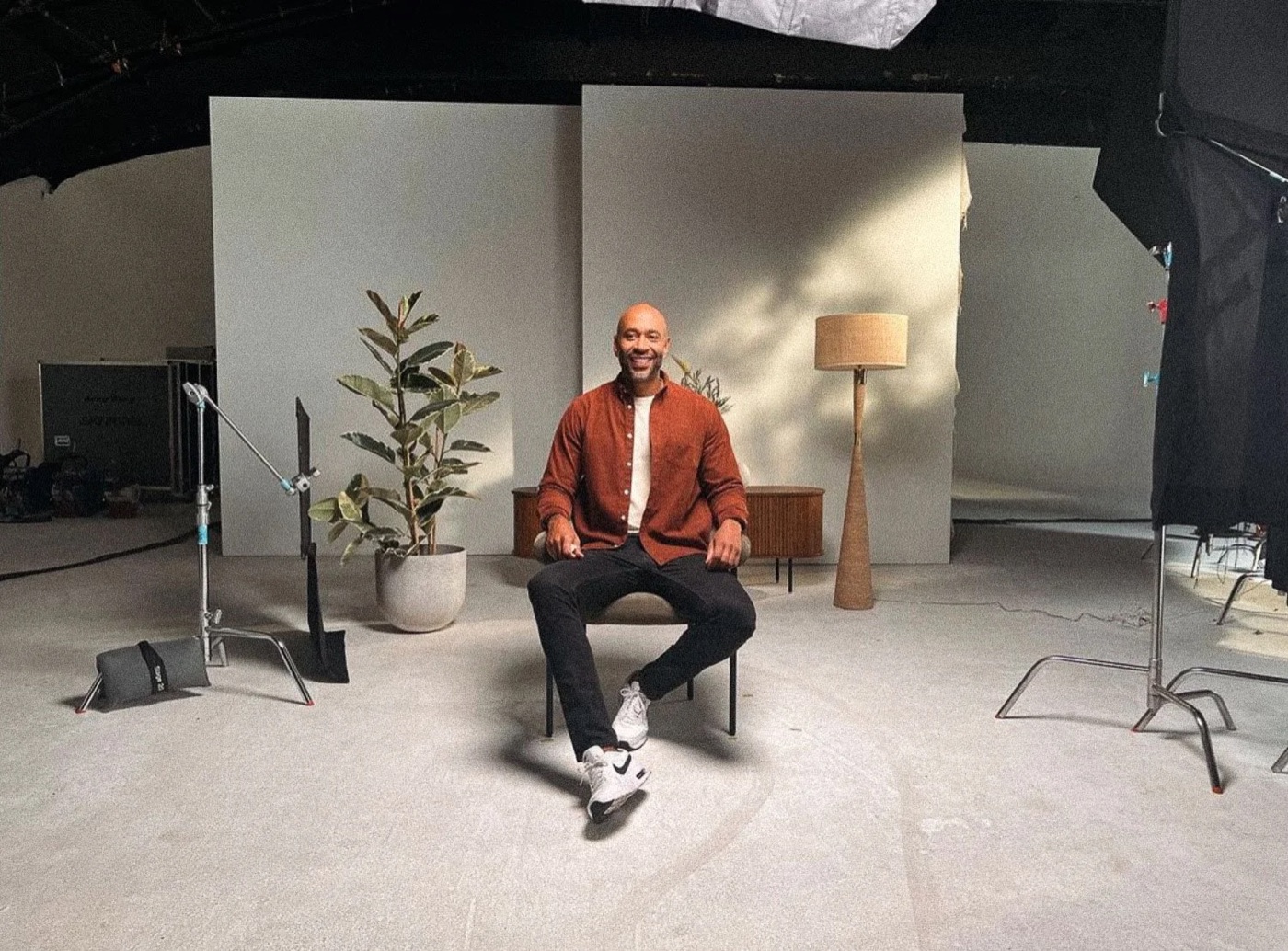

Chibs Okereke describes himself in two phrases that tell you most of what you need to know about his approach: a "former founder" and a "reformed striver." He is a stress and burnout coach and a qualified mindfulness facilitator, and his work is aimed at a particular kind of person: the capable, ambitious professional who has pushed past the point of sustainability and is only now noticing the cost. His teaching reaches a large audience, from millions of listeners of his sleep meditations on YouTube to the people who encounter him as a meditation instructor on the Calm app.
What makes his work worth a closer look is how plainly it is grounded. He does not offer transcendence or spiritual escape. He offers practical tools for a nervous system stuck in overdrive, delivered by someone who has been there.
The documented record of Okereke's early life is thin, and this profile does not guess at it. His hometown is not recorded, and there are no verified accounts of his childhood. What the record does establish is the event that reshaped his working life.
Okereke was a founder who experienced a severe burnout, one that took a serious toll on his mental health. He left the corporate world to reset and recover. During that period he found science-backed tools for managing stress, anxiety, difficult emotions, negative thinking and overthinking. What began as a personal recovery became a mission: sharing those tools with other people.
That origin matters because it shapes the credibility of everything that followed. His audience is made up largely of people who recognise the pattern he lived through: the drive that once felt like an asset turning into something that erodes sleep, focus and health. He speaks from inside that experience rather than observing it from a distance.
Okereke backed his personal recovery with formal study. He holds an MSc in Organisational Psychology, a postgraduate diploma and a BA (Hons). He is a qualified Mindfulness-Based Stress Reduction (MBSR) teacher, trained at the Center for Mindfulness at the University of Massachusetts Medical School, the institution where the MBSR programme was developed. He is also a certified clinical hypnotherapist.
His own framework combines three strands: MBSR techniques, methods from positive psychology, and years of hands-on experience working with the vagus nerve and the nervous system. That last element sets his teaching apart from a straightforward MBSR course. Rather than treating stress as an abstract mental state, he frames it as something the body holds and can learn to release, and he teaches practical ways to shift out of a stressed, hypervigilant state. The framework has been described as Mindfulness for Strivers, a name that states its audience without apology.
The tradition he works within is the secular, clinically oriented one of MBSR. His teaching does not rest on devotional practice or religious lineage, and it is best understood as a contemporary synthesis built from his training and his own recovery rather than as the inheritance of a particular school.
Okereke is best known for his sleep content. His sleep meditations and sleep hypnosis recordings on YouTube reach millions of people, and they are the most common way newcomers meet his voice. These sessions suit exhausted listeners: no prior experience is needed, and falling asleep is the intended outcome rather than a failure of practice.
He is also a meditation instructor on the Calm app, which places his teaching in front of an audience that may never visit his own channels. Alongside the recordings, he writes a blog and sends a weekly email of neuroscience-backed tools for calmer days and better sleep.
Beyond free recordings, Okereke's work takes several more structured forms:
- Corporate workshops and keynotes, in which he helps organisations, teams and individuals use practical mindfulness, mindset and productivity tools to reduce stress and prevent burnout.
- Courses on stress and burnout, along with an eight-week MBSR meditation programme.
- Tired & Wired, his membership community, which houses those courses. Members get a weekly live group call and access to his full meditation library.
The stated promise of this work is notable for its modesty: to reduce stress, prevent burnout and help people get more done in less time. It is productivity-adjacent by design, and it does not pretend otherwise. The framing meets high-achievers where they are, offering rest as something that supports good work rather than competing with it.
The record does not show any published books, and this profile does not claim any. His teaching is carried by recordings, courses, workshops, writing and the community he runs.
At present, Okereke's work runs along two tracks. One is public and wide: sleep recordings on YouTube, teaching on Calm, a blog and a weekly email. The other is more involved and personal: the Tired & Wired membership with its live calls and structured MBSR course, plus the workshops and keynotes he delivers to organisations. No upcoming tour dates or retreats are documented, and anyone seeking current offerings is best served by checking his website, chibs.co, or his YouTube channel directly.
Okereke matters because of whom he reaches and how. Much of the wellness world speaks to seekers, people looking for meaning, awakening or a spiritual home. Okereke speaks instead to the person who is simply tired, whose mind will not switch off at night, and who may be wary of anything that sounds mystical. For that listener, a teacher with clinical training who explains the nervous system in plain terms can be far more approachable than one who speaks in the language of transformation.
His story also reflects a wider cultural reckoning with burnout in professional life. A founder who burned out, stepped away and returned with training and tools represents a path many people recognise or hope to follow. By making his work available at the lowest-friction point, a free recording to fall asleep to, he lowers the barrier for people who would never sign up for a retreat or sit in a meditation hall.
It is worth being clear about the limits. His approach is secular and focused on stress and burnout; it is not a substitute for therapy or clinical care, and it will not satisfy those looking for ritual, devotional practice or lineage-based teaching. Its strength is its specificity. Okereke knows whom he is speaking to, and he offers them something practical: ways to downshift, to sleep, and to work without wearing themselves out.
For a newcomer, the sensible place to begin is the simplest: close your eyes, press play on one of his sleep recordings, and see what happens. The deeper material of his courses, community and workshops is there for those who find the first step useful.