Open the Heart
Mantra Library
Discography
Albums & Releases






Watch


Musician
Ananda Monet is an artist and certified sound practitioner who shares mantra music and healing sound experiences. She offers kirtan, sound baths and mantra meditation, including concerts and retreats in conscious, arts and wellbeing spaces in the UK and internationally.
She was raised in a family of musicians practising bhakti yoga, and was introduced to sacred music and mantra from an early age. She was educated at a school in Moscow where mantra chanting, kirtan, meditation, yoga and Vedic philosophy were part of the daily curriculum. That environment shaped her interest in the relationship between sound, voice and inner experience.
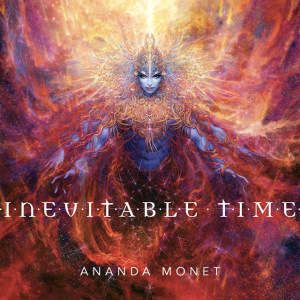
Her artistic path combines training in traditional folk music and contemporary vocal styles with ongoing study and practice of mantra. After graduating from music college as a singer, she released her debut album in 2007. In 2015 she released a Sanskrit album, Inevitable Time, inspired by the epic Mahabharata. She performed its songs for large audiences and in intimate settings across the UK, Europe, the USA and Russia, as part of the acclaimed stage production Atma by Samadhi Dance Company.
Ananda has released several singles on Mantra Lounge compilations and independently, and has collaborated with artists including Jahnavi Harrison, Radhika Das and Gaura Vani. For over a decade she served with Kirtan London, a non-profit dedicated to making kirtan accessible to all. In 2022 she co-founded Sound Spa, offering wellbeing retreats and sound baths in London and around the UK.
Today she continues to share her voice and experience, supporting others in reconnecting with their inner voice and authentic expression.
Open the Heart
Discography
Watch
Worth Knowing
Ananda Monet is a musician working in the conscious and spiritual music space, featured on BrightStar's directory of contemporary artists exploring contemplative practice through sound. The artist maintains a streamlined digital presence—a website, Spotify catalog, and YouTube channel—prioritizing direct engagement with listeners over the traditional press-and-festival apparatus. This approach reflects a broader shift among spiritual musicians who build audiences through word-of-mouth and algorithmic recommendation rather than institutional gatekeeping. People drawn to Ananda Monet tend to value artists who invest in the work itself rather than heavy promotional machinery or complex back-story narratives. The most genuine answer to "why people care" is discovered through listening directly, which requires visiting the official channels (anandamonet.com, Spotify, YouTube) rather than relying on filtered interpretation. For seekers exploring contemporary spiritual and contemplative music, Ananda Monet represents the kind of artist who emerges through recommendation precisely because the work speaks for itself.
Newcomers should begin at Ananda Monet's official website (anandamonet.com) to see how the artist frames their own work and intention. From there, the Spotify artist page provides the most comprehensive access to available music, with all releases in one place and algorithmic suggestions for related artists if you want to explore the broader spiritual music ecosystem. YouTube's channel offers a different dimension—often featuring video performances or visual elements that audio-only streaming doesn't capture. Start with whatever format appeals to you first (pure audio via Spotify, visual performance via YouTube, or the artist's own curation on their website), then explore the others; there's no single correct entry point. Spiritual music often resonates differently depending on your current mindset and what draws you in the moment. The key is starting with official sources rather than secondhand descriptions, since the direct experience of the work matters more than any intermediary interpretation.
The most reliable way to stay informed is through Ananda Monet's official website (anandamonet.com), which typically hosts tour dates, new release announcements, and retreat or event information before they appear elsewhere. Enabling notifications on Spotify and following the YouTube channel provides real-time updates whenever new music arrives or videos are posted. Many spiritual artists in this space maintain presence on additional platforms—checking the artist's official website will direct you to whichever channels Ananda Monet actively uses. While no tour dates are currently visible in aggregated event databases, this is common for independent artists who promote events primarily through their own channels rather than Ticketmaster or major festival listings. For seekers interested in attending teachings, workshops, or live performances, patience and direct attention to these primary sources is essential; announcements tend to appear there first. Set a reminder to check anandamonet.com periodically if you want consistent updates on what's coming next.
Ananda Monet's music is available on Spotify at the artist's dedicated page (https://open.spotify.com/artist/07mJSgpDMzNvAB1TYCe9h3), where you can stream the full catalog with any subscription level or free account. The artist's official website (anandamonet.com) may offer direct purchase options, downloads, or exclusive formats not available through streaming services alone—visit it directly to see what's available for digital or physical purchase. YouTube (https://www.youtube.com/c/AnandaMonet) offers video performances and potentially exclusive content, also available without cost to viewers. For those looking to support the artist beyond streaming (which provides minimal revenue to musicians), the website is the place to check for merchandise, direct downloads, or donation options that benefit the artist more substantially than Spotify plays. The broad streaming availability suggests accessibility was a priority in the artist's distribution strategy, while the website likely offers deeper engagement for listeners who want more direct connection.
The immediate answer comes from listening directly on Spotify or YouTube, where instrumental choices, vocal approach, and production aesthetic become apparent. Beyond the sonic specifics, what distinguishes Ananda Monet in the broader landscape of spiritual musicians is the deliberate minimalism of public presence: no Wikipedia entry, no major press coverage, no visible label apparatus—a choice that reflects an aesthetic and ethical stance about the relationship between artist and audience. This contrasts with spiritual musicians actively pursuing festival circuits, Grammy recognition, or celebrity status; Ananda Monet's approach suggests inward focus rather than external ambition. The relative absence of secondary sources (interviews, think pieces, critical profiles) means you're encountering the artist's own curation and intention rather than mediated interpretation through gatekeepers. This directly-to-listener orientation is itself increasingly distinctive in an era of algorithm-driven discovery and influencer-driven recommendation. For listeners valuing artistic integrity and direct connection over hype, this approach is itself the answer: Ananda Monet operates on the artist's own terms, not the industry's.
Listeners seeking extensive artist biography, interviews, or "behind the scenes" content will find little available beyond what Ananda Monet directly shares on the official website and channels—the mystique is maintained by design. If you want to understand an artist's entire lineage, training, influences, and life story through documented profiles and media coverage, you'll need to be comfortable with mystery and gaps; this artist doesn't answer those questions publicly. Casual listeners looking for background ambience or mood-setting music in the contemporary playlist algorithmic style may find the work demands more intentional attention than typical streaming consumption. Those who distrust artists without major media validation or institutional backing may struggle with the independent, deliberately non-promotional approach; proof of worth through press coverage or festival selection simply won't be available here. Similarly, spiritual seekers specifically looking for explicit lineage affiliation (a particular guru, tradition, or well-known teaching lineage) won't find that documented in publicly available sources. Ananda Monet's work is for listeners willing to meet the artist on the artist's own terms—through direct listening, without requiring explanatory apparatus or institutional endorsement to validate the experience.
The specific lineage, if any, is not documented in readily available sources, which is meaningful in itself—some contemporary spiritual artists deliberately avoid explicit lineage affiliation, preferring to synthesize multiple traditions or work independently. Exploring this question requires direct investigation through interviews or biographical information shared on anandamonet.com or in video content on the YouTube channel. The artist's name, "Ananda," carries significant meaning across multiple spiritual traditions (especially Hindu and Buddhist contexts, where it typically refers to bliss or joy), but this alone doesn't specify a single lineage. What can be said is that the inclusion on BrightStar indicates work engaged with contemplative or devotional practice in some form. Understanding the deeper traditions informing Ananda Monet's work requires moving beyond aggregated data and into direct sources—reaching out to the artist, listening closely to thematic and sonic elements in the music, and exploring any teachings or writing shared through official channels. This independent research is part of the path that spiritual music offers: not passive consumption of pre-vetted information, but active engagement with the artist's intention and expression.
Ananda Monet currently appears in the BrightStar directory, which represents curation within the conscious and spiritual arts community. No major Wikipedia entry, Grammy nominations, or major press coverage are readily visible in aggregated media sources, which may reflect either early career status or a deliberate choice to avoid mainstream media attention. Many respected spiritual artists maintain low media profiles by design; the absence of celebrity status or critical reviews in major publications doesn't indicate obscurity in communities of practice—in fact, it often signals the opposite. For documentation of recognition, teachings, or performances, check the artist's official website (anandamonet.com), which may host testimonials, writing, or records of impact within spiritual communities. The most meaningful recognition in contemplative music often emerges through direct testimonials from students and listeners rather than institutional validation. This is typical in spiritual and conscious music, where word-of-mouth credibility and community respect often matter more than press validation or industry awards.
Ananda Monet's music appears designed for direct accessibility—available on free Spotify and YouTube means there's no institutional gatekeeping or prerequisite study required to encounter the work. Whether you have deep familiarity with Hindu or Buddhist terminology, mantra practice, and spiritual lineages, or you're exploring conscious music for the first time, the initial listening requires only openness and attention. That said, the deeper layers of any spiritual artist's work often reveal themselves over time as you develop familiarity with the tradition, practice, and intention underlying the music. Beginners might simply listen and notice how the work makes them feel; practitioners in established spiritual disciplines might recognize specific lineage markers or invoke contexts that deepen appreciation. The beauty of spiritual music positioned on accessible platforms is that it can function on multiple levels simultaneously: as pleasant listening for newcomers, and as specific technology or support for advanced practitioners. No prerequisites exist; meet the work where you are, and it will meet you there.
Kirtan is a call-and-response devotional chanting practice rooted in the bhakti yoga tradition of India. A leader (or group) sings Sanskrit mantras and the audience repeats, creating a meditative, communal experience. Sessions can last anywhere from 30 minutes to several hours and are usually accompanied by harmonium, tabla, and other Indian instruments.
Discover More
Continue your journey
BrightStar is the global directory of artists, teachers, and healers in the wellness and spiritual movement. Find your next experience — or add yourself.
Browse 14,000+ curated profiles across kirtan, yoga, meditation, and beyond.
Explore directory →Kirtan, retreats, sound baths, breathwork, ceremonies — happening this week.
Browse events →Are you an artist, teacher, or healer? Get listed — free, AI-assisted, live in minutes.
Get started →


