
N&

Nitya & Ninad
Musician
Über
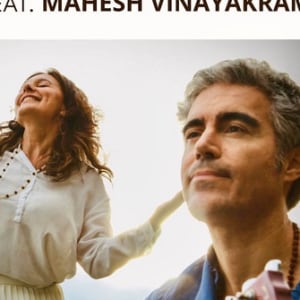
Nitya & Ninad are spiritual teachers and the founders of DASA, the Devotional Advaita School of Awakening. For twenty years they have created spaces for clarity, depth and healing, and for reconnecting people with the meaning and potential of their lives.
Nitya & Ninad are spiritual teachers and the founders of DASA, the Devotional Advaita School of Awakening. For twenty years they have created spaces for clarity, depth and healing, and for reconnecting people with the meaning and potential of their lives.
Their school holds that awakening is not a matter of techniques to learn. It happens through closeness with someone who lives this truth and can transmit it. Their path brings together devotion and knowledge, which they call the two wings that carry a person home.
Mantra is central to their work, alongside satsang, guided meditation, teachings and energetic techniques. Through these they join the paths of Bhakti and Jnana Yoga. Mantra singing is part of the practice, and others describe their kirtan and songs as devotional and heartfelt. For twenty years they have accompanied people in Italy and abroad through this process, and their retreats are held in Italian and English.



Questions
Nitya & Ninad are spiritual teachers and musicians who founded DASA, the Devotional Advaita School of Awakening, and have spent roughly two decades creating retreats, satsang spaces, and kirtan performances rooted in the marriage of devotion (bhakti) and wisdom (jnana). They don't market themselves as entertainers or lifestyle gurus—retreat participants describe a calm and clarity that persists long after the session ends, and they've built a following precisely because they teach not through techniques to be learned, but through direct transmission from teachers who embody the non-dual truth they speak. Their work appeals to serious practitioners of mantra and meditation who aren't looking for surface-level spiritual content, but instead seekers hungry for authentic lineage teaching paired with musical expression. The endorsement from Grammy-nominated kirtan artist Jai Uttal—noting they sing "drawing from the deep wells of their heart" with rich musicality and sweet devotion—signals their credibility within devotional music and teaching circles. Their retreats remain largely word-of-mouth rather than algorithm-driven, which means their audience is typically composed of people who have already done some inner work and are ready for a more rigorous path.
Nitya & Ninad teach within a non-dual Advaita framework, specifically through what they describe as the Devotional Advaita School of Awakening (DASA), which bridges two seemingly opposing paths: Jnana Yoga (the yoga of wisdom and self-inquiry) and Bhakti Yoga (the yoga of love and devotion). This is not a modern syncretism—Advaita Vedanta's greatest teachers, including Sri Ramakrishna Paramahamsa and Ramana Maharshi, themselves taught that devotion and knowledge are not contradictory but complementary, "the two wings that carry a person back home," as Nitya & Ninad describe it. The lineage is transmitted through direct encounter—their teaching model emphasizes that awakening cannot be downloaded or learned from a YouTube video, but requires energetic transmission and guidance from those who live the truth they teach. This explains why their primary modality remains retreat-based, satsang circles, and live kirtan rather than a scaled online course model. The integration of mantra, guided meditation, satsang dialogue, and ecstatic dance in their retreats reflects a classical approach to non-dual awakening that predates modern spiritual wellness by centuries.
Start with their album "Devotion" (2021), which serves as a clean entry point to their musical work—eight tracks of mantra and spiritual songs that showcase their philosophy without requiring prior knowledge of Sanskrit or Advaita philosophy. Their earlier albums "Jai Ma: Mantra Songs with Nitya and Ninad" (2013) and "One Love: Mantra Songs with Nitya & Ninad" (2014) operate as extended meditations, best approached after "Devotion" has familiarized your ear to their vocal tone and harmonic approach. Newcomers should also explore their YouTube channel, which hosts recordings of satsang talks and live concert performances—these offer insight into how they weave teaching and music together, and many tracks are explicitly designed to bring listeners "directly into silence and truth." For those geographically able, attending one of their introductory satsangs or shorter workshops is far more valuable than passive consumption; the energetic quality of their transmission is not captured in recordings alone. Finally, their website (nityaninad.com) lists retreat schedules and workshop topics, allowing newcomers to find events matching their spiritual readiness and geographic location.
What separates Nitya & Ninad from the crowded field of mantra musicians and meditation teachers is their refusal to treat these as separate pursuits—their music is not performance art, and their teaching is not divorced from song. They position music as part of the teaching itself, not as decoration or mood-setting, which aligns them more closely with the guru-disciple model of Vedic and Tantric traditions than with modern kirtan as entertainment. Unlike many Western spiritual teachers who cherry-pick from Advaita or bhakti traditions, Nitya & Ninad have structured their entire mission (DASA) around the integration of jnana and bhakti, making their approach theoretically rigorous as well as devotionally authentic. The fact that they maintain retreats in both Italian and English, and travel between Italy, India, and the USA, signals they are not bound to a single ashram model or digital empire—their work remains rooted in human encounter rather than scalability. Finally, the restraint in their musical arrangements—sparse production, emphasis on mantra accuracy and devotional depth rather than instrumental virtuosity—reflects a pedagogical choice: the music serves the transmission of truth, not the artist's ego or the listener's entertainment appetite.
Nitya & Ninad's work is not suited for listeners seeking high-production-value mantra music designed for playlist consumption or casual meditation background. If you want to encounter their teaching or music, you must be willing to slow down, sit in silence, and remain uncomfortable—their retreats are not wellness retreats with spa amenities, but intensive spiritual practices that demand real engagement. Those drawn to charismatic, personality-driven spiritual teaching will find Nitya & Ninad less concerned with creating devotion around themselves than in pointing to the underlying truth beyond personality. Similarly, practitioners of purely intellectual Advaita (who believe reading non-dual philosophy is sufficient for awakening) will chafe at their emphasis that transmission requires the presence of a teacher—this is not aligned with the "self-study and solitude" model some seekers prefer. Their work also demands comfort with Sanskrit terminology, mantra recitation, and the philosophical frameworks of yoga—there is minimal accommodation for complete beginners seeking surface-level spiritual inspiration. Finally, Nitya & Ninad are not a name-brand associated with celebrity endorsement or mainstream media coverage, so those seeking confirmation from viral recognition or press mentions will not find it here.
The most direct way is through their official website (nityaninad.com), which lists upcoming retreat dates, workshop schedules, and their current travel itinerary. Their Spotify artist profile provides immediate access to their discography and allows followers to be notified of new releases—their recent trajectory shows singles like "Gurudev" (2023) and earlier collections of mantra recordings like "Ganesha Mantra" and "Gayatri Mantra," suggesting ongoing studio and live recording activity. Their YouTube channel (youtube.com/@nityaninad) hosts live satsang recordings, kirtan performances, and teaching talks, making it a free archive for followers who want to deepen their understanding between retreats. Given that many of their retreats are advertised word-of-mouth and filled by returning students, joining their email list via their website is essential—many intensives and specialized workshops are not heavily publicized outside their existing community. For those following their musical releases, new singles have appeared consistently on Spotify with gaps of a few months to a year, suggesting they maintain an active recording and performance schedule.
Nitya & Ninad's music is decidedly devotional and minimal—the architecture is mantra-centered, with Sanskrit chants as the primary content, harmonium as the foundational instrument, and their own voices (notably clear and emotionally restrained) carrying the melody without embellishment. The overall aesthetic is one of restraint: there are no drum loops, no world-music production flourishes, no attempt to make ancient mantras palatable to contemporary pop tastes. Instead, they allow long stretches of silence within recordings, creating what might feel sparse to ears trained on densely layered sound, but which their own materials describe as a pathway "directly into silence and truth." Jai Uttal's endorsement—praising their ability to sing "drawing from the deep wells of their heart"—points to an emotional sincerity that comes through precisely because they are not hiding behind production. The combination of mantra accuracy, rich musicality, and what they describe as "sweet devotion" creates something closer to a meditation practice than a performance; listening to "Devotion" or "Jai Ma" is less like enjoying music and more like sitting in a satsang session that happens to be recorded.
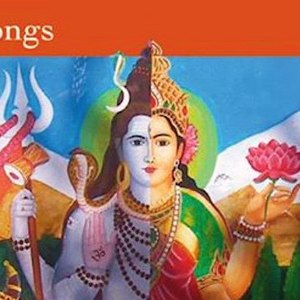
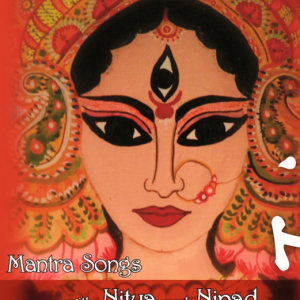
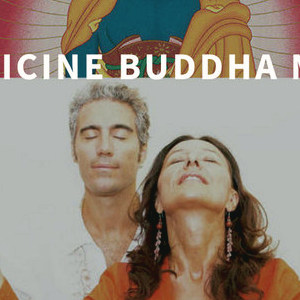
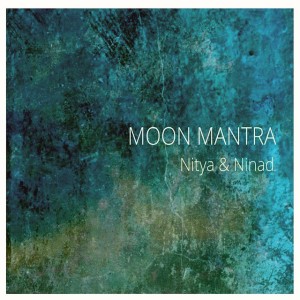
"Devotion" (2021) is the most accessible and complete statement of their current work, containing eight tracks that exemplify their integration of bhakti and jnana—it serves as the natural starting point. "Jai Ma: Mantra Songs with Nitya and Ninad" (2013) represents their earlier work and offers six deeply devotional pieces centered on the Divine Mother; this album rewards repeated listening and works beautifully for dedicated meditation practice. "One Love: Mantra Songs with Nitya & Ninad" (2014) extends their catalog with nine tracks and deepens the sonic and spiritual vocabulary established in "Jai Ma." Beyond these three core albums, their singles released since 2019—including "Sarasvati Sloka," "Moon Mantra," "Medicine Buddha Mantra," "Ganesha Mantra," and "Gayatri Mantra"—represent their ongoing work with specific mantra traditions and can be sampled individually or as a body on Spotify. The progression from "Jai Ma" through "One Love" to "Devotion" shows artistic consistency and deepening refinement, suggesting listeners who wish to trace their evolution should explore these three in chronological order.
The central thread throughout their work is the non-dual Advaita teaching that awareness itself—not concepts about awareness, not experiences of awareness, but the pure consciousness underlying all experience—is the true nature of each person. However, they refuse to treat this as a dry philosophical assertion; instead, they emphasize that devotion and inquiry (bhakti and jnana) are complementary paths to recognizing this truth, and that the presence of a realized teacher accelerates the recognition in students. Another recurring theme is the inadequacy of technique-based spirituality—they explicitly teach that awakening does not come through accumulating practices or meditation experiences, but through direct transmission and resonance with one who embodies non-dual truth. Their retreats integrate mantra (a devotional practice), meditation (a contemplative inquiry), satsang dialogue (a teaching method), and ecstatic dance (a dissolving of individual boundaries), suggesting they understand spiritual awakening as multifaceted rather than exclusively intellectual. They also emphasize that this work is about "coming back home"—suggesting awakening is not the acquisition of something foreign, but the removal of false identification and the recognition of what has always been true.
Nitya & Ninad's teaching method is rooted in the guru-disciple model, emphasizing that authentic awakening cannot be mediated by technique alone but requires the presence and transmission of a teacher who lives the truth being pointed to. Their retreats and intensives combine several modalities—satsang (a teaching dialogue where questions and insights are explored), guided meditation, mantra singing, and what they describe as "ecstatic dance"—creating a multisensory environment designed to dissolve the usual boundaries of the thinking mind. Retreat participants consistently report a residual calm and clarity that persists after the retreat ends, suggesting their work operates at both the cognitive and energetic levels. Because their retreats are held in both Italian and English, they serve European and international seekers, and the format appears to combine lecture-style teaching with intimate group work, allowing both collective transmission and individual inquiry. The absence of marketing hyperbole around their work, coupled with their emphasis on depth over rapid expansion, suggests they prioritize quality of student-teacher relationship over enrollment metrics—retreats fill through word-of-mouth recommendation and returning participants.


Bist du das? Diese Seite beanspruchen ›
There's more where this came from.
BrightStar is the global directory of artists, teachers, and healers in the wellness and spiritual movement. Find your next experience — or add yourself.
Discover More Artists
Browse 14,000+ curated profiles across kirtan, yoga, meditation, and beyond.
Explore directory →Find an Event Near You
Kirtan, retreats, sound baths, breathwork, ceremonies — happening this week.
Browse events →Add Your Profile
Are you an artist, teacher, or healer? Get listed — free, AI-assisted, live in minutes.
Get started →