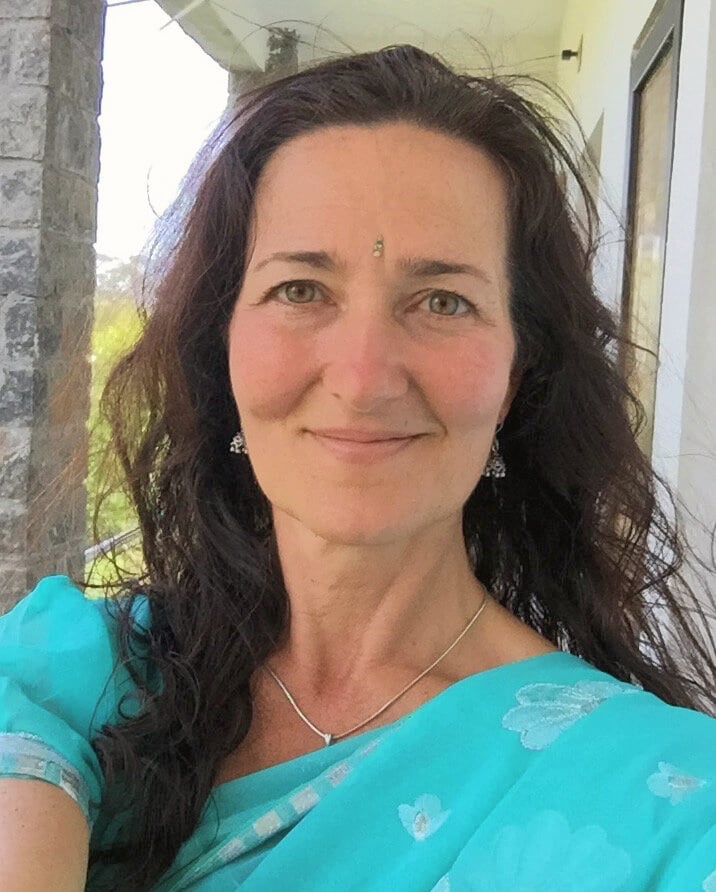
KO

Katie O'Connell
Spiritual Music Artist
Über
Katie O'Connell is a sound healer and meditation teacher whose practice centers on the integration of mantra chanting, guided meditation, and spiritual music rooted in Eastern philosophy. Raised in a family of artists, she grew up in an environment where creative expression and spirituality were inseparable, a foundation that would shape the trajectory of her work. Her early fascination with music and the contemplative traditions laid the groundwork for a career dedicated to using sound as a vehicle for inner transformation.
Katie O'Connell is a sound healer and meditation teacher whose practice centers on the integration of mantra chanting, guided meditation, and spiritual music rooted in Eastern philosophy. Raised in a family of artists, she grew up in an environment where creative expression and spirituality were inseparable, a foundation that would shape the trajectory of her work. Her early fascination with music and the contemplative traditions laid the groundwork for a career dedicated to using sound as a vehicle for inner transformation.
O'Connell's approach draws from a range of spiritual traditions, including Eastern philosophies and indigenous practices, which she weaves into her teaching and recordings. Unlike many contemporary sound healers who favor either purely ambient soundscapes or devotional kirtan, O'Connell bridges the two, creating guided experiences that blend mantra repetition with melodic composition and silence. Her work honors the lineage of spiritual teachers and musicians who preceded her while adapting their teachings for a modern audience seeking accessible entry points into meditation and self-inquiry.
Her discography includes albums built around soothing instrumental arrangements and vocal mantras designed to support meditation and inner stillness. These recordings reflect her commitment to spiritual growth and serve as tools for listeners cultivating a regular practice. The music avoids ornamentation in favor of clarity, allowing space for the listener's own contemplative process to unfold.
O'Connell came to this work through sustained study of sound healing modalities and meditation techniques, training that she now shares through workshops and retreats. These gatherings are known for their emphasis on experiential learning, where participants engage directly with chanting, breathwork, and creative expression as pathways into their own spiritual inquiry. Her teaching style is participatory rather than prescriptive, creating environments where individuals explore their relationship to sound, silence, and the body.
She has built a following among practitioners of Vipassana, yoga, and other contemplative disciplines who value the role of sound in deepening meditation. Her workshops attract students seeking not only relaxation but also a more embodied understanding of how voice, rhythm, and resonance can shift interior states. O'Connell's ability to work with diverse groups—from beginners to experienced meditators—has made her a sought-after facilitator in retreat centers and wellness spaces.
Currently, O'Connell continues to lead retreats and record music that supports meditation and healing practices. Her recent work focuses on making the tools of sound healing and mantra accessible to those new to spiritual practice, while maintaining the depth and rigor that seasoned practitioners expect. She remains active in the broader conversation about the role of art and creativity in spiritual life, contributing to a growing movement that sees contemplative practice not as withdrawal but as engaged presence.
For someone discovering her work today, O'Connell offers a grounded, practice-oriented entry into sound healing and meditation that respects tradition while inviting personal exploration.
Lineage & Inspiration
Spiritual Influences
The teachers, lineages, and practices that shape Katie O'Connell's path.

Paul Dugliss
Ayurvedic Physician & Teacher
Katie's primary Ayurveda teacher; she quotes him and studies under him at New World Ayurveda

Bernie Clark
Yin Yoga Master Teacher
Katie is a long-time student of Bernie Clark, one of three primary Yin Yoga teachers in the West

Marc Halpern
Ayurvedic Educator
Katie studied Ayurveda Yoga Therapy with Dr. Halpern at California College of Ayurveda

Paula Tursi
Yoga Teacher
Lead faculty for Katie's foundational 200+300 hour yoga teacher training at Reflections Yoga

Ayurveda
Traditional Medicine System
Katie is an Ayurvedic Health Practitioner with over 1,000 hours of study, traveling to India annually

Yin Yoga
Practice
Central practice in Katie's teaching; she is a long-time student of Bernie Clark

Bhakti Yoga
Tradition
Katie practices Bhakti yoga and references it in her teaching and spiritual practice

Heart Based Meditation
Practice
Katie is certified as a Heart Based Meditation teacher, a practice developed by Dr. Paul Dugliss
Worth Knowing
Questions
Katie O'Connell is a spiritual music artist, meditation teacher, and sound healer working at the intersection of Eastern philosophy, indigenous wisdom, and contemporary spiritual practice. Her work has drawn attention from listeners and students seeking solace through guided meditation, mantra chanting, and sonic healing—practices rooted in lineages that stretch back centuries but applied to modern life. With 7,200 Spotify followers and a discography spanning singles and compilation placements from 2020 onward, O'Connell has carved out a presence in the spiritual music space at a time when listeners are actively searching for alternatives to secular wellness. What distinguishes her appeal is the seriousness with which she treats the integration of sound, meditation, and Eastern philosophy—not as trend or aesthetic, but as a coherent path toward inner peace and spiritual connection. Her workshops and retreats are recognized for creating spaces where participants move beyond passive listening into active spiritual exploration. In a landscape cluttered with surface-level "wellness" content, O'Connell's work offers depth and lineage awareness.
Katie O'Connell's practice draws from multiple wisdom lineages, particularly Eastern philosophies and indigenous traditions, which she weaves together into her own distinctive approach rather than adhering to a single denominational path. Her biography emphasizes respect for the teachings of spiritual teachers and musicians who preceded her, suggesting study or apprenticeship within systems that value ancestral knowledge—a hallmark of serious mantra and sound healing practice. The bio notes her integration of both Eastern and indigenous elements, indicating exposure to traditions like Advaita Vedanta, yoga philosophy, or Tantric approaches on one hand, and potentially shamanic or earth-based practices on the other. This eclecticism is deliberate: rather than marketing a fusion or hybrid spirituality, O'Connell appears committed to honoring each tradition's specificity while making these teachings accessible to contemporary seekers who may not have formal lineage connection. Her work in guided meditation and mantra chanting suggests familiarity with pranayama and devotional practices core to Bhakti and Hatha yoga lineages. The emphasis on sound healing as a modality—distinct from singing or music performance—indicates training in vibrational medicine, which crosses Eastern, indigenous, and contemporary somatic traditions.
O'Connell distinguishes herself through her deliberate integration of lineage awareness with accessibility—she draws from established Eastern and indigenous traditions without exoticizing or commodifying them, and her teaching emphasizes honoring her predecessors while making their wisdom relevant to contemporary listeners. Many spiritual music artists in the current market lean toward atmospheric or ambient production that prioritizes mood over meaning; O'Connell's approach centers the voice, mantra, and sonic intentionality, which suggests she views sound healing and chanting as practices with specific effects, not merely as pleasant background. Her background in a family rooted in the arts and her exposure to diverse cultural influences from childhood shaped an aesthetic sensibility distinct from artists who came to spirituality later—there is no retrofitted quality to her work, but rather an organic integration of creativity and spiritual inquiry. While her Spotify presence is modest compared to mainstream wellness influencers, the specificity of her discography (guided meditations, mantra recordings, sound healing sessions) indicates she is serving students and practitioners rather than chasing viral reach. The emphasis in her bio on workshops and retreats—not just recorded content—signals that O'Connell views her work as relational teaching, not solo artistry, which creates a different accountability and depth than artist-to-audience streaming relationships alone. Her commitment to making teachings accessible to contemporary audiences while respecting the depth of their source traditions sets her apart from both appropriative wellness practitioners and overly dogmatic lineage keepers.
O'Connell's work is not suited for listeners seeking high-energy, rhythmic, or upbeat music—her aesthetic is built on spaciousness, simplicity, and introspection, which can read as slow or understimulating to those accustomed to electronic dance music, pop production, or even contemporary ambient electronic work. While her discography includes placements on compilation albums like "Outertone 016 - Evolve" and vocal EDM collections, her core work in guided meditation and mantra chanting operates in a different register entirely, and listeners drawn to those compilations expecting a consistent style of uptempo or beat-driven music will be disappointed. Skeptics of Eastern philosophy or those uncomfortable with Sanskrit, devotional language, or non-Western spiritual frameworks will find her mantra and meditation work philosophically misaligned with their worldview. People seeking quick fixes or surface-level wellness—"biohacking" or productivity-focused meditation apps, for instance—are not her audience; her practice emphasizes depth, lineage, and spiritual connection over measurable, instrumental outcomes. Those who prioritize novelty in production, celebrity, or viral culture will find O'Connell's modest Spotify following and lack of mainstream press coverage unremarkable. Additionally, listeners with a strong attachment to a single spiritual tradition (whether strict Hindu Vedanta, Christian contemplative prayer, or secular mindfulness) may find her eclecticism—drawing from multiple Eastern and indigenous lineages—either diluted or theologically uncommitted. Her work demands patience, openness, and a genuine interest in inner work rather than entertainment or passive listening.
Currently, Katie O'Connell's primary platform for discovery and engagement is Spotify, where she maintains a verified artist profile with 7,200 followers and an active discography spanning releases from 2020 through 2023. Listeners can follow her on Spotify to receive notifications of new releases, though this platform does not typically surface tour dates or workshop schedules. Her website URL listed in her professional profiles is ratemyprofessors.com, which suggests an institutional or academic teaching affiliation, though this may not be the primary source for spiritual music releases or retreat announcements. For workshop and retreat information, interested practitioners should search for her name combined with terms like "spiritual retreat," "meditation workshop," or "sound healing session" to locate any dedicated landing pages or event listings that may exist beyond Spotify. Email newsletters, if she maintains one, would be the most direct channel for announcements about upcoming teaching events, but this information is not currently visible in her public profiles. At present, there are no upcoming tour dates or events in the crawled data, which suggests either that her teaching and performance schedule is seasonal, retreat-based, or promoted primarily through direct channels to existing students rather than public ticketing platforms. Following her Spotify artist page is the most reliable current method of staying informed about new releases and any linked content or announcements she shares there.
O'Connell's sound is characterized by restraint and clarity: her voice carries the primary weight of her recordings, whether in guided meditation or mantra chanting, with instrumental accompaniment kept minimal and intentional rather than decorative. The production aesthetic favors spaciousness over density—guided meditations often feature her voice with subtle background tones (possibly harmonium or ambient drones) that create a sonic container for meditation without demanding attention. Her vocal quality is clean and grounded, neither theatrical nor overly processed; she uses her voice as a tool for transmission—of Sanskrit syllables in mantra, of guided instruction in meditation—rather than as an instrument for virtuosity or emotional display. Instrumentation, when present, likely includes traditional instruments associated with Eastern spiritual practice such as harmonium or Tibetan singing bowls, selected for their vibrational and meditative properties rather than their musical complexity. The pacing is deliberately slow, with extended silence and breath space—this is not music designed for active engagement but for receptive listening, dissolution of boundary between listener and sound. Production values are clean and professional but not polished to the point of slickness; there is an earthy, direct quality that respects the speaker and the listener's attention. Her placement on compilations like "Outertone 016 - Evolve" and collections focused on vocal content suggests her voice carries significant presence in the mix, making her a recognizable presence even in ensemble contexts. Overall, the listening experience is meditative, grounding, and purposeful—audio designed to facilitate inner work rather than entertain.
Given O'Connell's explicit focus on guided meditation and sound healing as core practices, her entire body of work intended for these modalities—guided meditations are by definition designed for seated meditation practice, while her mantra chanting recordings are suited for both personal chanting practice and group ceremony. Guided meditation recordings are the most obvious choice for those looking to support a sitting practice; these are engineered with pacing, voice tone, and soundscape design that support deepening focus and awareness over the course of a session. Her mantra chanting work—while less represented in the publicly visible discography—would be appropriate for both personal devotional practice and group settings; mantras are traditionally repeated for specific durations and intentions, making them ceremonially flexible. For yoga classes, particularly restorative or yin-style sessions that emphasize inner focus, her meditation-centered work would complement the practice more naturally than high-energy music would. Her sound healing practice, though not detailed extensively in available discography, presumably consists of recordings using specific frequencies, instruments, or vocal tones intended to support healing or vibrational alignment—these would be suited for sound baths, healing circles, or private therapeutic sessions. The compilation placements across various mood-based and vocal collections suggest her work appears in contextual playlists; searching Spotify for playlists tagged "meditation," "mantra," "sound healing," or "yoga" will likely surface her recordings in curated contexts where her work has already been positioned by streamers. Newcomers should listen intentionally to a full 20-40 minute session rather than sampling, as the cumulative effect of guided meditation or mantra practice is where the benefit lies.
Based on currently available data, no major press coverage or formal awards are documented in O'Connell's public profiles, which suggests either that significant media features have not yet been published or that her public-facing recognition has been limited to niche spiritual and wellness communities rather than mainstream outlets. Her modest Spotify following (7,200) and zero Spotify popularity score indicate she operates primarily within communities of direct seekers and practitioners rather than through algorithm-driven discovery or viral reach, which is typical of serious spiritual teachers whose work spreads through word-of-mouth and retreat networks. The lack of Wikipedia, major music publication features, or formal institutional recognition does not diminish the legitimacy or depth of her work—many respected meditation teachers, mantra practitioners, and sound healers deliberately avoid mainstream publicity, viewing their role as service to sincere students rather than brand building. Recognition in her field likely manifests through repeat student attendance at workshops and retreats, recommendations within spiritual communities, and word-of-mouth reputation among practitioners—metrics that don't appear in standard media databases. Interested practitioners seeking validation of her credibility would benefit from seeking testimonials and recommendations from students who have engaged with her teaching directly, and from examining the lineage and training that inform her practice, rather than relying on major media mentions as a proxy for legitimacy. The absence of press coverage should not be interpreted as lack of impact; many of the most substantive spiritual teachers operate intentionally below the threshold of mainstream visibility.
Katie O'Connell's primary platform for streaming and discovery is Spotify, where her verified artist profile hosts her complete discography spanning singles and compilation appearances from 2020 through 2023. Her Spotify URL (https://open.spotify.com/artist/5OoMuNsIYZT4RlSl46Pa2V) provides access to all her available recordings, including singles like "The King" (2020), "Dreamer" (2020), "Waterfall" (2020), "Close My Eyes" (2021), and "Coward In The Dark" (2022), as well as her placements on curated compilations. Individual tracks and albums link directly to purchase or pre-order options through Spotify's integrated store, with pricing and availability varying by territory and distributor. Beyond Spotify, her work may be available on other major streaming platforms (Apple Music, Amazon Music, YouTube Music) though these URLs are not currently documented in her public profiles; searching her name directly on these platforms should surface her catalog if distributed there. For direct purchase or independent releases outside streaming platforms, her website or social channels would be the most reliable sources, though these are not currently listed in her accessible profile information. Students and practitioners interested in purchasing exclusive recordings, meditation guides, or workshop materials directly may benefit from reaching out through any workshop or retreat contexts where she teaches, as teachers often offer physical media or direct-sale recordings not available through commercial streaming. Given her current discography is entirely hosted on Spotify with strong placement across vocal and meditative compilation albums, that platform remains the most accessible and comprehensive entry point for new listeners.
Katie O'Connell's bio explicitly identifies indigenous practices as a core influence on her work, placing them alongside Eastern philosophies as foundational sources she draws from—a deliberate choice that signals respect for earth-based, non-Western epistemologies in her spiritual framework. The integration of indigenous wisdom is framed not as appropriation or dilution but as part of her commitment to honoring "the wisdom of her predecessors" across multiple traditions, suggesting she has engaged seriously with indigenous knowledge keepers or teachings rather than extracting isolated techniques. Her use of sound healing—a modality that crosses Eastern, indigenous, and contemporary somatic lineages—likely incorporates indigenous understandings of vibration, ceremony, and the healing power of voice and instruments rooted in place and relationship. The emphasis in her biography on growing up in a vibrant, culturally diverse community suggests early exposure to and respect for multiple knowledge systems, which shaped her understanding of spirituality as inherently pluralistic rather than singular. Listeners and students should recognize that her integration of indigenous elements carries responsibility: she presumably sources and credits these teachings appropriately, and frames them within their original contexts rather than as generic "spiritual" material. For practitioners interested in how she specifically engages with indigenous wisdom, direct inquiry during workshops or retreats, or seeking out any written or recorded teachings where she discusses lineage and sourcing, would provide clarity on this crucial dimension of her practice. This commitment to indigenous wisdom sets her apart from artists or teachers who draw exclusively from commercialized Eastern spirituality.


Bist du das? Diese Seite beanspruchen ›
Continue your journey
There's more where this came from.
BrightStar is the global directory of artists, teachers, and healers in the wellness and spiritual movement. Find your next experience — or add yourself.
Discover More Artists
Browse 14,000+ curated profiles across kirtan, yoga, meditation, and beyond.
Explore directory →Find an Event Near You
Kirtan, retreats, sound baths, breathwork, ceremonies — happening this week.
Browse events →Add Your Profile
Are you an artist, teacher, or healer? Get listed — free, AI-assisted, live in minutes.
Get started →