Coming Up
Coming Up
What's Happening


Breathwork Facilitator
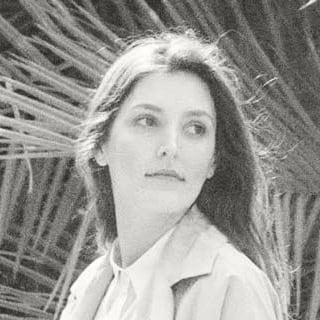
Jasmine St Cliere is a trauma-informed somatic practitioner who works with breath, movement and sound. Her practice, Finding Balance with Jasmine, is built around guiding people back into connection with their bodies. She uses movement to shift physical tension and discomfort in the tissues, breathwork to release emotional patterns stored in the subconscious, and sound therapy to harmonise the nervous system and energy.
Jasmine St Cliere is a trauma-informed somatic practitioner who works with breath, movement and sound. Her practice, Finding Balance with Jasmine, is built around guiding people back into connection with their bodies. She uses movement to shift physical tension and discomfort in the tissues, breathwork to release emotional patterns stored in the subconscious, and sound therapy to harmonise the nervous system and energy.
Movement was her first love. After graduating with a First Class BA Hons Degree in Contemporary Dance, she found that teaching, and guiding others into their bodies, was her true calling. She soon left the mirrors behind and began moving with her eyes closed, attuning to something deeper.
Her path widened into holistic and therapeutic work. She first qualified as a yoga teacher in India, then trained in Reiki, Sound Therapy and Somatics. That work has taken her across the globe, facilitating wellbeing programmes in the Caribbean, Asia and Europe. She has now spent over a decade in the wellness industry. She weaves together principles from movement therapy, Eastern philosophy and modern anatomy, and says her approach is personal partly because the body has not always felt like a safe place to be.
Jasmine holds experiential sessions for studios, offices and private clients around London, and she also teaches online. Whether in workshops, trainings or retreats, her intention stays the same: to bring people back into connection with themselves, supported by embodied tools and rooted in a felt sense of safety and presence. She also writes about nervous system regulation, stress and the difficulty of slowing down.
Worth Knowing
Jasmine St Cliere is a London-based Breathwork Facilitator, Somatic Practitioner and Yoga Teacher who works with breath, movement and sound through her practice, Finding Balance with Jasmine. She began as a dancer, graduating with a First Class BA Hons Degree in Contemporary Dance, and moved away from performance toward guiding others into their own bodies, at one point moving with her eyes closed to attune to something deeper. Her framework is specific: movement to shift physical tension held in the tissues, breathwork to work with emotional patterns she describes as stored in the subconscious, and sound therapy to harmonise the nervous system. Over more than a decade in the wellness industry she has facilitated programmes across the Caribbean, Asia and Europe, and she holds experiential sessions for studios, offices and private clients around London. What sets her apart in the field is that she states the personal stake openly, saying her approach is shaped partly by the fact that the body has not always felt like a safe place to her. Her writing on nervous system regulation, stress and the difficulty of slowing down shows how she reasons about the work. Her reputation rests on sustained practice and training rather than a large public catalogue.
Her public profile does not name a single lineage or a teacher whose line she formally carries, so any claim of a guru-to-student transmission would be invented. What can be documented is the set of traditions she has trained in: she first qualified as a yoga teacher in India, then trained in Reiki, Sound Therapy and Somatics. Her framework weaves together movement therapy, Eastern philosophy and modern anatomy, which places her in the cross-disciplinary somatic and holistic wellness current rather than one devotional or ritual school. Her Contemporary Dance background is the other root, and it explains why her cues concern how movement feels from inside the body rather than how it looks. The yoga training from India and the Somatics work are the two most visible anchors in her development. Anyone expecting a strict lineage with formal initiations will not find that structure in her publicly described training. The honest description is a trained, cross-disciplinary practitioner whose method is assembled from several streams rather than inherited from one.
The most direct starting point is her website, findingbalancewithjasmine.com, where her practice and current offerings are described. Because her method is built around guided embodiment rather than instruction on paper, a newcomer will get the most from attending an experiential session. Studio-based group sessions and online teaching are the formats that keep her approach intact for a first encounter. Private sessions suit people who want the movement, breathwork and sound therapy elements addressed around their own circumstances. Her writing on nervous system regulation, stress and slowing down is the best text-based route into the reasoning behind the practice. Her emphasis on felt safety suggests newcomers should expect to be guided through breath and movement at a steady, grounded pace rather than an intense sequence. Combining one session with her written thinking gives a fuller picture than either alone.
Many breathwork facilitators lead with intensity, but Jasmine St Cliere's stated priority is felt safety and presence as the foundation, rather than a peak experience. Her distinctiveness comes from combining three modalities in one session, with movement to shift physical tension, breathwork for emotional patterns, and sound therapy to harmonise the nervous system, instead of treating breath as a standalone tool. Her Contemporary Dance training means she reads bodies through movement quality, which is less common among breathwork-only trainers. The yoga teacher qualification from India gives her practice a postural and philosophical grounding that many short breathwork courses lack. Her decade-plus of wellness work across the Caribbean, Asia and Europe shapes how she adapts sessions for different groups. The result sits closer to somatic practice than to high-intensity breath events. Direct comparison is limited, because the public record includes no reviews or press coverage against which to test the claims.
Her work is not well suited to people seeking high-intensity breath events, hyperventilation-style sessions, or a fast workout framed as healing. Because the approach centres on regulation and felt safety, someone who wants to be pushed through emotional release at speed will likely find it slower than expected. Students looking for a fitness-oriented yoga class will find the sessions more reflective, with movement chosen for its effect on tissue and the nervous system rather than for strength or sweat. People seeking clinical treatment should understand that her practice is described as trauma-informed somatic work, not a substitute for therapy or medical care. Those who prefer a fixed lineage with formal initiations will not find that structure in her publicly described training. Anyone in acute distress may need professional support first, since the practice is not positioned as a replacement for it. The approach suits people who value gentle embodiment and are comfortable with a slow, deliberate pace.
No upcoming events have been crawled for her, so no specific dates can be given here. The most reliable place to follow her is her website, findingbalancewithjasmine.com, which carries her current offerings for studios, offices, private clients and online teaching. Her London base means in-person sessions for studios and offices cluster in that city, while online teaching lets a wider audience follow her work. Her linked Spotify show is another way to keep up with what she publishes, though its episode details are not described in the available data. Because no third-party listings or articles are on file yet, checking her site directly is more dependable than aggregators. Event details can change, so confirm dates with her directly before travelling. Following the website and the show gives the clearest signal for new workshops, trainings and retreats.
Her sessions are experiential rather than lecture-based, guiding people back into their bodies through movement, breath and sound within a single sitting. Movement is often the entry point, used to shift physical tension and discomfort held in the tissues before breathwork begins. Breathwork then turns to emotional patterns she describes as stored in the subconscious, and the session closes with sound therapy intended to harmonise the nervous system and energy. The pace is steered by attention to felt safety rather than by a demand for a peak experience. Her teaching spans workshops, trainings and retreats, and the intention stays constant across formats. Newcomers often find that much of the session is about noticing sensation rather than performing a shape or breath pattern correctly. Studio, office, private and online settings all carry the same embodied logic.
The central theme is reconnection, bringing people back into a felt relationship with their own bodies. Nervous system regulation runs through both her teaching and her writing, particularly the difficulty of slowing down in a stressed life. Stress, tension held in the tissues and emotional patterns stored in the subconscious recur as the problems her methods address. A second thread is presence and safety, which she treats as the foundation for any embodied work. Her Contemporary Dance background shows up in an emphasis on moving with attention rather than for appearance. Eastern philosophy and modern anatomy supply the explanatory frame for these themes. Students of her work will see a consistent logic across yoga, breathwork and sound therapy: regulate first, then open.
The available data lists no recorded talks, courses or published books, so claims of a lecture catalogue would be invented. What is documented is that she writes about nervous system regulation, stress and the difficulty of slowing down, which makes her written work the most direct route to studying her thinking independently. This material can be found through her website, findingbalancewithjasmine.com. The Spotify show linked on her profile is a possible audio source, though its episode contents are not described in the data. Her writing addresses the same problems her sessions target, so it works as a text-based companion to the practice. Independent study is most useful when paired with some embodied practice, since her approach is built on felt experience rather than concepts alone. Anyone seeking a structured home study programme should ask her directly what is currently available.
No formal background is required to follow her teaching, as her sessions are framed as accessible embodied tools for people reconnecting with their bodies. Her practice is trauma-informed, which means sessions are designed around safety and choice rather than prior experience. Familiarity with yoga or breathwork helps, but it is not a prerequisite for a first session. Her own training, a First Class BA Hons Degree in Contemporary Dance and a yoga teacher qualification from India, is more advanced than most students will bring, so the teaching is built to meet beginners where they are. People with a history of trauma or a medical condition should speak with their own clinician before attending, because the work engages nervous system responses. Those hoping to train as practitioners should ask directly about prerequisites, since the available data does not specify them.
Bist du das? Diese Seite beanspruchen ›
Continue your journey
BrightStar is the global directory of artists, teachers, and healers in the wellness and spiritual movement. Find your next experience — or add yourself.
Browse 14,000+ curated profiles across kirtan, yoga, meditation, and beyond.
Explore directory →Kirtan, retreats, sound baths, breathwork, ceremonies — happening this week.
Browse events →Are you an artist, teacher, or healer? Get listed — free, AI-assisted, live in minutes.
Get started →