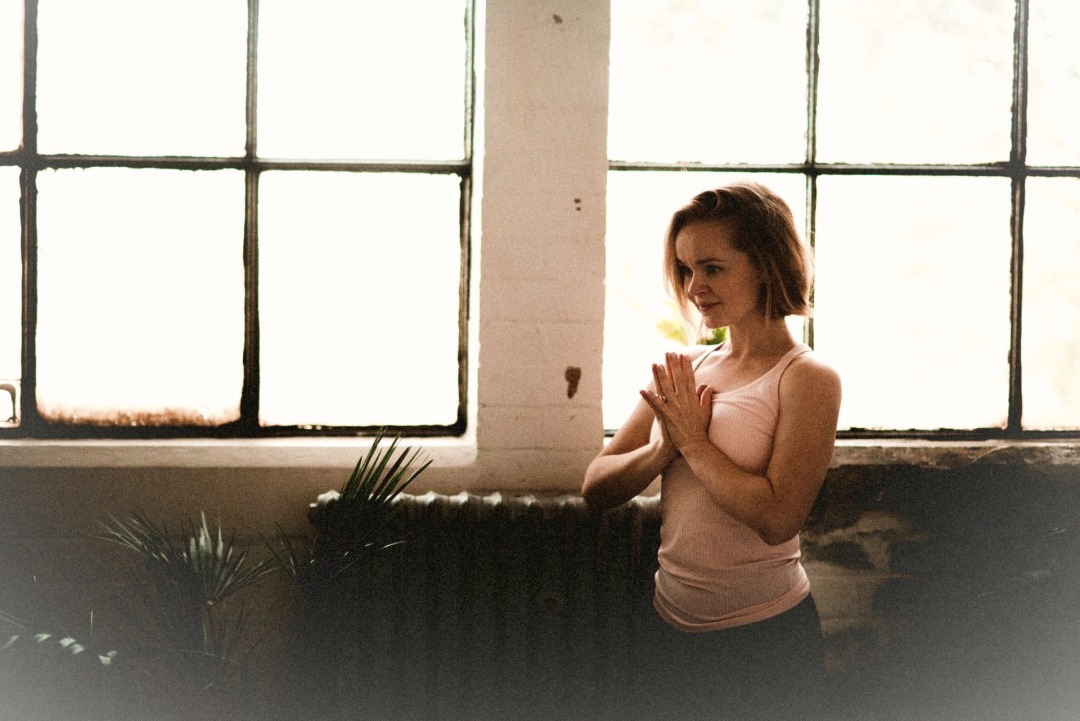

Clare Connolly
Yoga Teacher
Über
Clare Connolly is a London yoga and meditation teacher who has practised yoga for 20 years. Her own pages say she has taught for 15 to 17 years. She describes herself as a daily meditator, a voice over artist, a science geek and an animal lover.
Clare Connolly is a London yoga and meditation teacher who has practised yoga for 20 years. Her own pages say she has taught for 15 to 17 years. She describes herself as a daily meditator, a voice over artist, a science geek and an animal lover.
Her teaching brings yoga, meditation and breathwork together. She links them to ideas from science, including epigenetics, endocrinology and neurology, and says she is fascinated by how our environment and behaviours shape the way we think and feel. The stillness of meditation, she explains, helps release limiting thoughts, while the movement of yoga helps release tightness and stagnation in the body, so that energy and life-force (prana) can flow more freely. She aims to create a nurturing, safe space where people can learn to relax and tune in to the whole body and mind. Her motto is "Your health is my mission!"
Clare has taught online, one to one, in the corporate world and in London yoga studios and gyms, including Indaba Yoga Studio. She has also taught for the AdiaHealth fertility app and for myparla.com, a women's Fem-Tech wellness company. Her meditations have been broadcast on BBC Radio London and are shared on Insight Timer and YouTube. There she also offers guided breathing practices such as alternate nostril breathing and Kapalabhati, along with yoga for the upper back, neck and shoulders. She is the author of the book "Meditations for a Powerful You".
She has led week-long yoga and meditation retreats in Mallorca, with earlier retreats planned in Kenya. Her sessions draw on styles including Dharma Mittra, Vinyasa Flow, Ashtanga and Tibetan Yoga, with silent and guided meditation, Yoga Nidra and pranayama. She also teaches yoga for kids.
FAQ
Questions
Clare Connolly is a London-based yoga and meditation teacher with two decades of personal practice and 15+ years of teaching experience who has built a following by refusing to separate yoga from real physiology. Rather than treating these practices as purely metaphysical, she grounds her teaching in how the body actually responds to movement and breathwork—linking yoga postures to nervous system regulation, pranayama to endocrine function, and meditation to neuroplasticity. Her motto, "Your health is my mission," isn't marketing language but a statement of method: she designs sequences and meditations specifically to help students release physical tension and mental stagnation so that energy can move through the body with minimal obstruction. Students engage with her because she speaks the language of both the mat and the lab—someone who can explain why alternate nostril breathing affects your cortisol levels, not just that it feels good. After years teaching in London studios, corporate environments, and online platforms, she's developed a reputation for creating genuinely nurturing spaces where both scientific curiosity and spiritual openness have room to exist.
Clare's teaching draws from multiple established yoga lineages rather than a single guru-centered tradition—she incorporates Dharma Mittra, Vinyasa Flow, Ashtanga, and Tibetan Yoga into her sessions, suggesting an eclectic but disciplined approach that values the strengths of each method. Her grounding in pranayama and Yoga Nidra places her within the broader Tantric and Hatha lineage that emphasizes systematic work with breath and subtle body energetics, though her explicit connection of these practices to Western neuroscience, epigenetics, and endocrinology represents a contemporary reframing rather than a rejection of lineage work. She is not aligned with a single contemporary guru or teacher-lineage visible in her public work, which means she has had to synthesize her own coherent approach from multiple sources—a path that works well for students who are skeptical of hierarchical spiritual authority but want legitimate, time-tested technique. This multi-lineage positioning makes her work accessible to practitioners who might be turned off by strict dogmatism, though it also means she occupies a middle space rather than representing the deepest tradition of any single lineage.
The most direct entry point is Clare's YouTube channel (@clareconnollywellness), where she offers guided breathing practices like Nadi Shodhana (alternate nostril breathing) and Kapalabhati that are short enough for a first-time practice and practical enough that results are noticeable within a single session—ideal for someone curious about pranayama but uncertain whether formal meditation or asana is their path. Her book "Meditations for a Powerful You" serves as a companion guide that grounds meditation practice in the same scientific framing she uses in her live teaching, making it less intimidating for readers accustomed to evidence-based health information. For those who prefer audio and already have some meditation experience, her meditations on Insight Timer and BBC Radio London broadcasts offer zero-commitment entry to her particular teaching voice and pacing. If you're someone who benefits from real-time feedback and adjustment, a single one-to-one session or an online class through her website (clareconnollyyoga.com) would let you experience her gift for meeting students where they actually are rather than where they think they should be. Skip the week-long retreats until you've experienced at least one form of her teaching; they're designed for people who already understand what her approach offers.
Most yoga teachers working in London and the digital space fall into one of two camps: those who prioritize the spiritual and philosophical dimensions and treat science as optional flavoring, and those who embrace fitness-first yoga where the body is treated as a machine to optimize rather than as a consciousness to attune to. Clare occupies a genuinely different space by treating science not as an excuse for spiritual bypass but as a tool for deeper practice—she can explain why a particular breathing pattern shifts your autonomic nervous system, then guide you into meditation where you feel that shift directly, which deepens both understanding and embodied experience. Her specific expertise in epigenetics and endocrinology—fields most yoga teachers don't mention—means she can explain how trauma lives in the body in specific ways and design sequences that address those patterns rather than just generically "opening the hips." She brings unusual breadth: her voice-over background means her guided meditations have a precision of diction and pacing that prevents drift into generic wellness-speak, while her work with AdiaHealth and myparla.com shows she can meet specific populations (fertility support, women's hormonal health) with tailored offerings. Finally, her teaching of yoga to children suggests a commitment to accessibility across age ranges rather than chasing the affluent adult-retreat demographic that dominates high-profile yoga teaching in London.
Clare's emphasis on the scientific mechanisms underlying practice will feel like unnecessary intellectualizing to students who want to experience yoga or meditation as pure devotional surrender—if you're seeking transcendence through chanting lineages, complex mythology, or guru-centered transmission, her evidence-based framing might feel reductive rather than revelatory. Her teaching is calibrated for people with some body awareness; if you've never done yoga and come in hoping to "fix yourself" through a single class, you may find her approach too nuanced and individualized rather than prescriptive enough. Her retreats in Mallorca and Kenya are week-long commitments, which eliminates anyone looking for weekend workshops or hour-long intensive immersions. Since much of her teaching happens online or in London-based studios, seekers outside the UK and Europe have fewer in-person opportunities, though her YouTube and Insight Timer presence partially compensates. Finally, if you're drawn to high-energy power yoga, fast-paced vinyasa flows, or the cardio-workout dimensions of contemporary yoga, her approach privileges calm, regulation, and restoration over intensity—she's not the teacher for someone looking to sweat through a challenging asana sequence.
Her primary online hub is her website, clareconnollyyoga.com, which hosts information about private sessions, group classes, and retreat offerings with scheduling details. Her YouTube channel (@clareconnollywellness) is regularly updated with new guided practices, breathing techniques, and meditation recordings, making it the primary place where new free content appears. Insight Timer hosts her meditations and allows followers to subscribe to her profile for notifications of new guided uploads. For those based in London, Indaba Yoga Studio and other London yoga venues where she teaches regularly are worth checking for her current class schedule. Her social presence on Instagram and other platforms provides the fastest way to learn about new retreat dates—she has led week-long retreats in Mallorca and has earlier retreats planned in Kenya, which typically require significant advance booking. If you prefer direct contact, her website includes pathways to book private consultations or inquire about upcoming offerings not yet publicly announced. Retreat timelines typically suggest planning 2-3 months in advance, so checking her channels monthly during retreat season is advisable.
A session with Clare tends to begin with explicit context-setting—she'll explain why you're doing a particular practice, often referencing the neurological or physiological principle at work, which immediately signals that this isn't going to be mystique-heavy mysticism or command-based authority but collaborative learning. In group classes, she prioritizes creating what she describes as a "nurturing, safe space," which means significant attention to individual variation—she offers modifications not as afterthoughts but as equally valid paths through the same underlying principle, and she watches carefully to discern who needs encouragement to stay present versus who needs permission to rest. Her sequences tend toward the deliberate rather than the flowing; expect sustained holds in asanas where you can genuinely feel release happening in real time, rather than rapid transitions designed for aesthetic flow. In meditation and breathwork sessions, her voice-over background becomes obvious—her diction is clear, her pacing is precise, and she rarely falls into the hushed-reverential tone that many meditation teachers adopt; instead she sounds like someone speaking to an intelligent peer who happens to be in a quiet room. Retreats in Mallorca and other locations amplify this: a week with Clare involves daily asana, pranayama, and Yoga Nidra sessions, but also substantive teaching talks grounded in both yoga philosophy and contemporary science, plus the kind of learning that happens in small-group conversations when a teacher actually knows her students' names and particular edges.
The central theme across all her work is the idea that the body and mind are a unified system shaped by both our habitual patterns and our conscious choices—hence her emphasis on how environment and behaviors shape the way we think and feel. She returns consistently to the concept of prana (life-force energy) and how modern life creates stagnation—sitting, stress, shallow breathing—that blocks its flow; yoga and meditation aren't luxuries but essential clearing practices. Resilience is another through-line; her teaching title itself—"Meditations for a Powerful You"—reflects her belief that stillness and strength work together, not opposed. She frequently explores the nervous system's role in lived experience, articulating that you can't think your way out of dysregulation, but you can breathe your way out or move your way out, which keeps her teaching grounded in somatic reality rather than cognitive override. There's also a strong thread of scientifically-informed self-compassion: she references epigenetics to help students understand that they're not broken, that limiting thoughts and holding patterns are adaptations their system made for good reasons, which makes release and change feel like evolution rather than judgment. Finally, across kids' yoga, fertility work with AdiaHealth, and general teaching, there's an implicit commitment to meeting people in their specific life circumstances rather than imposing a one-size-fits-all path.
Yes, her book "Meditations for a Powerful You" is the primary written resource and appears to be her most formal published teaching—this is where students can access both meditation practice instructions and the underlying concepts she draws from science and yoga philosophy. She has recorded extensive guided meditations and breathing practices available on multiple platforms: her YouTube channel (@clareconnollywellness) hosts a growing library of free guided sessions, Insight Timer features her meditations for subscribers, and BBC Radio London has broadcast her meditations, though access to archived recordings depends on the BBC's platform. Her teaching talks—the kind of substantive philosophical and scientific instruction she delivers during retreats—appear not to be available as standalone recordings based on current information, which means in-person retreats or one-to-one work offer access to those dimensions her independent recordings don't capture. Her YouTube channel does include recorded sessions that contain teaching components mixed with guided practice, so there is some pedagogical content beyond pure meditation, but if you're seeking a recorded lecture series in the style of teachers like Pema Chödrön or Thich Nhat Hanh, that doesn't appear to be a product she's released yet. For students wanting the most complete independent resource, pairing "Meditations for a Powerful You" with her YouTube library and Insight Timer meditations creates a reasonably comprehensive self-study path.
No formal background is necessary, but her teaching is calibrated for adults with at least a basic openness to the idea that the body and mind are interconnected systems—if you approach yoga purely as physical exercise or meditation purely as thought-stopping, her emphasis on understanding the mechanisms might feel like unnecessary explanation rather than useful context. Her breathwork instruction assumes no prior pranayama experience; she teaches foundational techniques like Nadi Shodhana and Kapalabhati as entry points, so complete beginners to breathwork can follow. Her meditation guidance similarly welcomes meditators with no prior practice, though people with some experience in sitting or body awareness tend to progress more quickly in understanding her subtler layers. Her frequent references to endocrinology, neurology, and epigenetics are explained in accessible language, but they do assume you're comfortable with scientific vocabulary and concepts—if phrases like "nervous system regulation" or "autonomic response" feel off-putting rather than clarifying, her teaching might feel more technical than meditative. Her work with specific populations (fertility support through AdiaHealth, women's health through myparla.com) suggests she offers specialized sequences for those demographics, but her general teaching is inclusive and doesn't require prior experience with any particular yoga lineage or spiritual tradition. The one genuine prerequisite is curiosity: she teaches to people who want to understand not just how to practice but why it works.




Bist du das? Diese Seite beanspruchen ›
There's more where this came from.
BrightStar is the global directory of artists, teachers, and healers in the wellness and spiritual movement. Find your next experience — or add yourself.
Discover More Artists
Browse 14,000+ curated profiles across kirtan, yoga, meditation, and beyond.
Explore directory →Find an Event Near You
Kirtan, retreats, sound baths, breathwork, ceremonies — happening this week.
Browse events →Add Your Profile
Are you an artist, teacher, or healer? Get listed — free, AI-assisted, live in minutes.
Get started →