BrightStar

Alle Events durchsuchen

Bewusste Zusammenkünfte entdecken

events

Yoga
Meditation
Breathwork
Qigong
Tai Chi
Sacred Music
World Music
Medicine Music
Sound Healing
Ecstatic Dance
Beliebte Reiseziele
BaliSedonaLos AngelesCosta RicaNew YorkSan FranciscoAustinMiamiJoshua TreeTulum
Alle Kategorien anzeigenAlle Reiseziele anzeigen

Alle Funktionen entdecken

Leistungsstarke Tools für Ihre Veranstaltungen

Plattform-Funktionen

Intelligente dynamische Preisgestaltung
Ticket-Kategorien
Sitzplatzreservierung
Warenkorbabbruch-Wiederherstellung
Besucher-Wiedergewinnung
Spenden & Staffelpreise
Affiliate-System
Ticket-Scanner
Rabattcodes
Individuelle Fragen
Ticket-Teilen
Upsells & Extras
Analysen & Berichte
E-Mail-Sequenzen
Warteliste / Benachrichtigen / Erinnern
Menschen & Orte
Artists & TeachersEvent OrganizersVenues & StudiosKnowledge BaseGlossaryInspiration
Alle Funktionen anzeigenÜber uns
PreiseBlog
Language
Saved events
Alle Veranstaltungen durchsuchen

events

YogaMeditationBreathworkQigongTai ChiSacred MusicWorld MusicMedicine Music

Beliebte Reiseziele

BaliSedonaLos AngelesCosta RicaNew YorkSan Francisco

Menschen & Orte

Artists & TeachersEvent OrganizersVenues & StudiosKnowledge BaseGlossaryInspiration

Plattform-Funktionen

Intelligente dynamische PreisgestaltungTicket-KategorienSitzplatzreservierungWarenkorbabbruch-WiederherstellungBesucher-WiedergewinnungSpenden & StaffelpreiseAffiliate-SystemTicket-ScannerRabattcodesIndividuelle FragenTicket-TeilenUpsells & ExtrasAnalysen & BerichteE-Mail-SequenzenWarteliste / Benachrichtigen / Erinnern
Alle Funktionen anzeigenÜber uns
PreiseBlog
AnmeldenSuchendeKreative
  • Alle Events durchsuchen
  • Für Suchende
  • Yoga
  • Meditation
  • Breathwork
  • Qigong
  • Tai Chi
  • Heilige Musik
  • Weltmusik
  • Medicine Music
  • Klangheilung
  • Ecstatic Dance
  • Retreats
  • Workshops
  • Alle Kategorien →
  • Bali
  • Sedona
  • Los Angeles
  • Costa Rica
  • Tulum
  • Byron Bay
  • San Francisco
  • Austin
  • New York
  • San Diego
  • Denver
  • Seattle
  • Portland
  • Miami
  • Alle Städte →
  • Join the Movement
  • Why we list
  • Sell Globally
  • Für Kreative
  • Für Teams
  • Für Autoren
  • Für Lehrer
  • Für Kirtan-Künstler
  • Für Studios
  • Für Festivals
  • Für Retreat-Zentren
  • Für gemeinnützige Organisationen
  • Markenbotschafter
  • Fallstudien
  • Kostenloses Ticketing
  • Elevate
  • Amplify
  • 500.000+ Käufernetzwerk
  • Warenkorbabbruch-Wiederherstellung
  • Intelligente dynamische Preisgestaltung
  • Ticket-Kategorien
  • Wiederkehrende Veranstaltungen
  • Sitzplatzreservierung
  • Affiliate-System
  • Warteliste / Benachrichtigen
  • Ticket-Scanner
  • Einbettungs-Widget
  • Event-Syndication
  • Nachrichten
  • Integrationen
  • Berichte
  • Alle Funktionen →
  • Über uns
  • Das Ökosystem
  • Blog
  • Glossar
  • Inspiration
  • Hilfe-Center
  • Kontakt
  • API-Dokumentation
  • Marken-Assets
  • Karriere
  • Presse
  • Nutzungsbedingungen
  • Datenschutzrichtlinie

Events

  • Alle Events durchsuchen
  • Für Suchende
  • Yoga
  • Meditation
  • Breathwork
  • Qigong
  • Tai Chi
  • Heilige Musik
  • Weltmusik
  • Medicine Music
  • Klangheilung
  • Ecstatic Dance
  • Retreats
  • Workshops
  • Alle Kategorien →

Reiseziele

  • Bali
  • Sedona
  • Los Angeles
  • Costa Rica
  • Tulum
  • Byron Bay
  • San Francisco
  • Austin
  • New York
  • San Diego
  • Denver
  • Seattle
  • Portland
  • Miami
  • Alle Städte →

Für Kreative

  • Join the Movement
  • Why we list
  • Sell Globally
  • Für Kreative
  • Für Teams
  • Für Autoren
  • Für Lehrer
  • Für Kirtan-Künstler
  • Für Studios
  • Für Festivals
  • Für Retreat-Zentren
  • Für gemeinnützige Organisationen
  • Markenbotschafter
  • Fallstudien
  • Kostenloses Ticketing
  • Elevate
  • Amplify

Funktionen

  • 500.000+ Käufernetzwerk
  • Warenkorbabbruch-Wiederherstellung
  • Intelligente dynamische Preisgestaltung
  • Ticket-Kategorien
  • Wiederkehrende Veranstaltungen
  • Sitzplatzreservierung
  • Affiliate-System
  • Warteliste / Benachrichtigen
  • Ticket-Scanner
  • Einbettungs-Widget
  • Event-Syndication
  • Nachrichten
  • Integrationen
  • Berichte
  • Alle Funktionen →

Unternehmen

  • Über uns
  • Das Ökosystem
  • Blog
  • Glossar
  • Inspiration
  • Hilfe-Center
  • Kontakt
  • API-Dokumentation
  • Marken-Assets
  • Karriere
  • Presse
  • Nutzungsbedingungen
  • Datenschutzrichtlinie
BrightStar
© 2026 BrightStar. Alle Rechte vorbehalten.
Inspire

What Is Spiritual Transfiguration? A Movie-Screen Teaching

Rupert Spira
Rupert Spira
Oct 10, 2026
9 Min. Lesezeit
Ansehen · 7

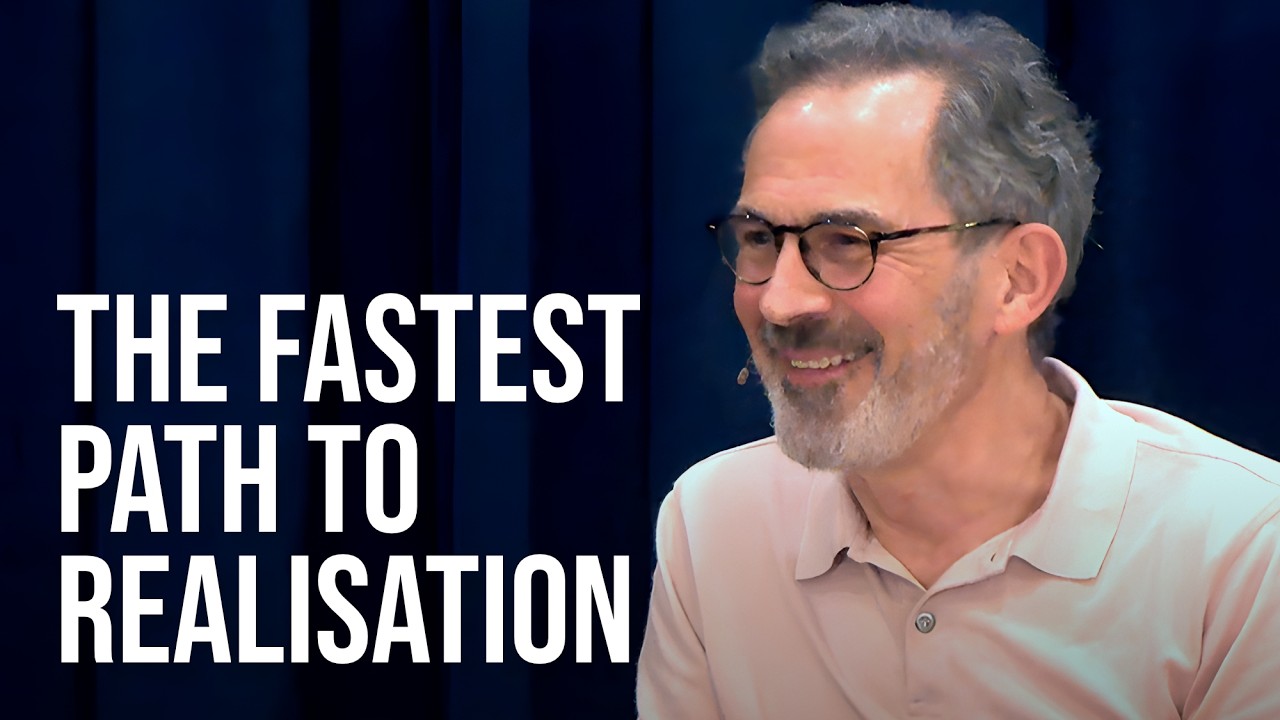
Spiritual transfiguration, in the account given by the contemplative teacher Rupert Spira, is not a miracle that happens to the world but a change in how the world is seen. Through a movie-screen analogy, he argues that the physical landscape we live in has never been the problem; the problem is the belief that it is solid, separate and self-existing. As that belief loosens, the world does not vanish. It becomes transparent, and what shines through it is reality itself. A second question, asked during the same retreat meditation, pushes the teaching further: if being is one, is it wrong to experience a sudden, ecstatic love for God as a beloved other? Spira's answer is that such love need not come from separation at all, and that divine love has its own reason for taking the form of two. This piece walks through both ideas, which come from one of his in-person retreats at San Damiano, held 15–22 March 2026.

Lesen · 7 Abschnitte

What does a movie have to do with spiritual transfiguration?

Spira begins with an image almost anyone who has watched a film will recognise. When you are absorbed in a movie, you forget that you are watching a movie. The drama feels real, and the landscape on screen appears to be an actual place. Then, between films, you switch the picture off and glimpse the screen behind it. Once the movie is back on, something has shifted. "The movie no longer has the capacity to veil the screen. You still see the landscape, but you no longer believe it's a real landscape." (Rupert Spira, YouTube retreat talk, 0:00)

The screen was there the whole time. What changed is the belief. This is the hinge of his entire account of transfiguration: nothing in the image has to be destroyed for the deeper reality to show. It is simply no longer mistaken for the whole.

Spira then maps the analogy onto ordinary life. If we believe we are a temporary, finite self made of mind, he says, the inevitable corollary is a world outside us made of matter, populated by separate objects and people, with ourselves as one more item in the list. That belief is the drama we have mistaken for the landscape. Through inquiry and meditation, it usually subsides gradually and occasionally all at once, the way a viewer's conviction about a film can quietly dissolve in the middle of a scene.

How does the world become transparent to God?

The moment that gives the teaching its name comes when Spira describes what happens once the belief starts to fall away. "As soon as we cease believing the apparent evidence of sense perception, the reality of the world, which was previously veiled by the world, now begins to shine through the world. The world loses its concealing power, and it becomes a revealing power." (Rupert Spira, YouTube retreat talk, 2:49)

This is the transfiguration. Nothing is added to the world and nothing is subtracted from it. The same forms, faces and objects are still there. What alters is their capacity to hide what they are made of. In his words, the world becomes increasingly transparent to its reality.

Spira translates this into the language of religious tradition. He describes it as the progressive permeating of the world by God's presence, a process in which the world that once seemed to veil God's presence begins to shine and become transparent. He points to the Sufi formulation of the same movement, that wherever you look, you see the face of God. Spira is not offering a new doctrine here so much as naming an old destination in plain terms: the seeing does not change so much as what is seen through it.

A useful way to hold this is that transfiguration is a subtraction of obstruction rather than an addition of something exotic. The world was never the enemy. The belief in its solidity was the veil.

Is mystical love blasphemous if it feels like two?

The second question came from a retreatant who described a familiar and often confusing experience. Sometimes, during meditation, in nature, or watching a baby smile, there is spontaneous ecstasy: a knowing that there is only one being, and alongside it an arising of mystical love in which the mind starts speaking to something as my beloved, my sweetheart, my father. The retreatant worried that this was blasphemous, because it seemed to be two.

Spira's first response was reassuring. If the understanding manifests in your mind as mystical love, he says, allow your mind to take that shape. "Even if it involves objectifying infinite being as 'my beloved' or 'thou', it does not necessarily come from a felt sense of separation." (Rupert Spira, YouTube retreat talk, 4:10 and following) He does not treat the impulse as a lapse to be corrected. He treats it as the form that a particular conditioned mind uses to receive what it has glimpsed.

This is the central distinction of the exchange. There is a dualism that comes from the sense of being a separate self, and there is a dualism that is a movement inside unity. They look similar from the outside, since both involve addressing God as another. Spira insists they come from different places. One is a defence of the separate self. The other is an overflow.

Why did Meister Eckhart pray to be rid of God?

To make his case, Spira turns to Meister Eckhart, who in an earlier meditation had been cited as saying that it is always one, and that thinking two is blasphemous. The retreatant had worried they were misquoting him. Spira confirms the principle and then explains the logic behind it.

Thinking of God as an infinite distance from oneself, Spira argues, allowed Eckhart to keep a subtle belief that he himself was a temporary, finite being. But to think of yourself as finite while placing God elsewhere is to set up two beings. And if there are two beings, neither can be infinite. "Meister Eckhart realized that to retain the sense of himself as a finite being was to deny God's infinite being. And that's blasphemy." (Rupert Spira, YouTube retreat talk, 5:23)

This reframes Eckhart's famous prayer that God rid him of God. Spira's reading is that Eckhart did not truly want to lose God. He wanted to be rid of the separate self that held God at a distance. The prayer is aimed at the boundary, not the divine.

Read this way, the blasphemy is not about speaking to God as two. It is about the conviction that one's own finitude is real. Mystical love that arises from unity, by contrast, does not need to erase the difference of address. It simply does not carry the claim that a separate person is standing somewhere else, cut off from the infinite.

Why would divine love want to create a form to adore?

The most original part of Spira's answer is his account of why love takes the form of relationship at all. He describes the mystical love as coming from unity, with an overflowing of love inside it. "That love wants to make a form to adore. Divine love wants to express itself, celebrate and worship, so the mind projects God outside itself." (Rupert Spira, YouTube retreat talk, 7:48, as summarised in the video's description)

He reaches for a human parallel and asks to speak on behalf of women: a mother's wish to have a child may partly come from an immensity of love that wants a form to adore. Love, in his telling, is the natural movement toward manifestation. It gives itself a face so it can be received and returned. Spira's formula is that love is always unity, and relationship is always between two. The attractive force within relationship is love, which is why the division of two can feel like an expression of the one.

From this, his conclusion is direct and generous. "This is like a kind of divine duality. You don't get rid of that." (Rupert Spira, YouTube retreat talk, 8:59) The practitioner who prays, adores, and feels gratitude to God is not making an error to be corrected on the way to the truth. That devotion is the truth moving in its own way.

What does this teaching ask of a practitioner?

Taken together, the two halves of the exchange offer a practical stance. The first half asks you to notice the screen behind the picture, letting the belief in a solid, separate world loosen until the world becomes transparent. The second asks you not to police the shape your love takes. If you find yourself calling God my beloved in a moment of ecstasy, Spira's advice is to keep doing it, provided you are honest about where it comes from.

The distinction he draws is between devotion that props up a separate self and devotion that pours out of a self that has already been seen through. The first defends the drama. The second is the screen shining through the film.

Where to go from here

The clearest way to test these ideas is in your own sittings. Begin with the movie analogy: notice moments when a sense of solid, separate things relaxes, and look for the awareness that was present behind them. Watch whether the world seems to lose some of its concealing power, and whether it begins to feel like a surface through which something more shows.

For the question of devotion, Spira's account is worth reading slowly. Do not hurry to classify your own love as either mature or immature. Ask where it feels like it begins. If it arises from a sense of distance and lack, it may be worth inquiring into the separate self holding that distance. If it overflows from a felt sense of unity, you may simply let it take the form it wants.

Rupert Spira's full talk, along with his other retreats and teachings, is available through his own channels, including the events page at rupertspira.com/events and his video archive at rupertspira.com/subscriptions. This article draws on a single short exchange from the San Damiano retreat, so the best next step is to hear the full words in his voice and sit with them over time.
Comments

Loading the conversation…

Transcript

[0:00] Today morning during meditation, I got

[0:03] two questions. The first meditation, you

[0:07] mentioned the term transfiguration.

[0:10] Can you give me more understanding of

[0:12] what transfiguration is?

[0:15] >> Yes. Um

[0:22] If you're If you're watching a a movie

[0:26] and you're so engrossed in the movie

[0:28] that

[0:29] you forget that you're watching a movie

[0:32] and you feel that

[0:34] that the the drama is is is real and

[0:38] you

[0:39] that belief and so now you you no longer

[0:44] you think you're seeing a a real

[0:46] landscape because you're completely lost

[0:49] in the drama of the movie.

[0:51] So, the landscape is not just a movie.

[0:53] You feel it's real. You're immersed in

[0:55] it, yeah? And because of that, you seem

[0:58] to cease seeing the screen.

[1:01] You feel it's a real landscape, yeah?

[1:04] Now,

[1:06] as you explore, particularly in between

[1:09] movies, you turn the movies off, you see

[1:11] the screen behind.

[1:14] So, you keep getting glimpses of the

[1:16] screen behind the movie and then after a

[1:18] while, when you turn the movie back on,

[1:21] the movie no longer has the capacity to

[1:23] veil the screen.

[1:25] You still see the landscape, but you no

[1:27] longer believe it's a real landscape. As

[1:30] soon as that belief goes,

[1:33] you watch the movie, but you still see

[1:35] the screen. So, the screen you feel the

[1:38] screen pervading the movie.

[1:42] Yeah?

[1:43] It's the exactly the same here.

[1:46] If we believe that we are a temporary

[1:49] finite inside self made out of mind, the

[1:52] inevitable

[1:54] the corollary of that belief is that

[1:56] outside of us there is a physical world

[1:59] made out of matter, separate objects,

[2:01] people, things, and we are one of those

[2:03] separate elements. Now, as we begin to

[2:05] explore our experience as we do here,

[2:09] we recognize

[2:10] um

[2:11] our true nature. We explore

[2:14] this understanding that

[2:17] our belief that the world is a solid

[2:20] physical world made out of matter

[2:22] begins usually gradually, occasionally

[2:25] suddenly begins to subside.

[2:28] Well, that's like the subsidence of the

[2:30] belief that the landscape in the movie

[2:32] is a real landscape.

[2:34] As [snorts] soon as you cease believing

[2:36] that in the in the movie, you start

[2:39] seeing the screen seem to start seem In

[2:41] fact, you were seeing it all along, but

[2:43] you you begin to feel that you're seeing

[2:44] the screen. The screen begins to pervade

[2:46] the landscape. Exactly the same thing

[2:49] happens here. As soon as we start cease

[2:52] As soon as we cease believing

[2:54] the apparent evidence of sense

[2:56] perception,

[2:57] the reality of the world, which was

[3:00] previously veiled by the world, now

[3:02] begins to to shine through the world.

[3:06] The world loses its concealing power,

[3:09] and it becomes a revealing power. It

[3:11] begins to shine with its reality,

[3:14] whereas it previously obscured its

[3:16] reality. That's the transfiguration.

[3:19] That the In religious language,

[3:22] um

[3:22] >> [clears throat]

[3:23] >> the the the the the progressive

[3:26] >> [snorts]

[3:27] >> permeating of the world by God's

[3:30] presence.

[3:32] The world which once seemed to veil

[3:34] God's presence

[3:37] now begins to

[3:39] shine It becomes transparent, but the

[3:41] world becomes increasingly transparent

[3:43] to its reality. In religious language,

[3:45] to God's presence until, like the Sufis

[3:47] say,

[3:49] wherever you look, you see the face of

[3:50] God. That's the transfiguration in in in

[3:53] Sufi in Sufi language.

[3:57] >> Thank you.

[3:58] My second question

[4:01] is um

[4:02] >> [snorts]

[4:03] >> Um I know beingness is love, peace, joy.

[4:09] Um [snorts] but sometimes there is

[4:10] spontaneous ecstasy.

[4:13] Um mystical love. Um it just happens

[4:17] during meditation or in nature or seeing

[4:21] a baby smile or you talking sometimes.

[4:24] And

[4:26] during that that

[4:28] moment

[4:29] there is knowing and understanding. It's

[4:32] oneness. It's only one being.

[4:35] But there's also this arising of

[4:39] that mystical love where

[4:41] there is a feeling of two where you

[4:44] start talking to yourself like my

[4:46] beloved, my sweetheart, my father. Dye.

[4:50] You know,

[4:51] is this mystical love considered

[4:53] blasphemous? Because

[4:56] it's two.

[4:56] >> Keep keep doing it.

[4:58] >> Okay.

[4:58] >> It's fine. If if if [laughter] if if

[5:00] that is the way this understanding

[5:02] manifests in your mind because of your

[5:04] conditioning and

[5:06] and then then just allow your mind to to

[5:09] to take the shape of this mystical love

[5:11] and if that involves objectifying

[5:15] infinite being as

[5:18] my beloved or thou or then then just

[5:21] allow that. Absolutely.

[5:23] >> The reason I was asking that question

[5:26] was in the second meditation

[5:28] um you mentioned Meister Eckhart and he

[5:31] will and you were saying

[5:33] it is always one and um

[5:37] it's blasphemous to think two.

[5:39] So

[5:41] probably I was misquoting or

[5:42] misunderstanding.

[5:44] >> That's right.

[5:46] Um

[5:53] But but in your case

[5:57] this apparently dualistic relationship

[6:00] with

[6:03] with with the beloved with with thou

[6:07] with God

[6:09] um does not come in you from the

[6:13] felt sense of separation. It is just um

[6:19] It's a in a way your mind, your being

[6:23] projects

[6:25] God's infinite being outside of yourself

[6:28] in order to give you something to adore

[6:30] and be grateful for.

[6:32] Well, that doesn't come from the sense

[6:34] of separation. It's only

[6:36] Meister Eckhart realized that

[6:39] thinking of God as God at an infinite

[6:42] distance from himself allowed him to

[6:44] maintain

[6:46] the subtle belief that he was a

[6:48] temporary finite being.

[6:50] And in order to think of yourself as a

[6:52] temporary finite being, you're you're

[6:53] you're setting up two beings, God's

[6:55] being and your being. Well, if there are

[6:57] two beings

[6:59] then neither can be infinite.

[7:01] So, Meister Eckhart realized that to

[7:03] retain the sense of himself as a finite

[7:06] being was

[7:08] to deny God's infinite being.

[7:11] And that's blasphemy.

[7:13] So, that's that's [snorts] why he

[7:15] prayed to God to rid him of God. He

[7:17] didn't really want to be rid of God. He

[7:18] wanted to be rid of the

[7:21] separate self

[7:24] that

[7:27] um held God at a distance. So, what

[7:29] you're describing although it's still

[7:32] an apparently dualistic relationship

[7:34] comes from a completely different place

[7:36] in yourself. It doesn't come from the

[7:37] felt sense of separation. On the

[7:39] contrary, it comes from unity. But in

[7:41] this unity, there is this

[7:44] um overflowing of love. And that love

[7:48] wants to make a form

[7:50] to adore.

[7:53] It's why if I might speak on behalf

[7:57] of a woman, that's why

[8:00] a woman

[8:02] one of the reasons

[8:04] perhaps

[8:05] why a woman wants to have a child

[8:07] because there is this immensity of love

[8:09] in her.

[8:10] She wants to give it a form to be able

[8:13] to adore it.

[8:15] That's the natural movement of love to

[8:17] to manifest itself. So, love sacrifices

[8:20] itself

[8:22] and creates relationship because love is

[8:25] always unity and relationship is always

[8:27] between two. That's why the attractive

[8:30] force in relationship is love.

[8:32] So, you have this this divine love in

[8:35] your heart.

[8:36] And

[8:39] the

[8:40] divine love wants to express itself. It

[8:42] wants to adore. It wants to show it

[8:45] wants to celebrate it. And so, in order

[8:47] to do that, your mind projects God

[8:51] outside of yourself and then you can

[8:54] worship God, adore, worship, adore God,

[8:57] be grateful to God, and so on. So, so

[8:59] no, this is like a

[9:01] um like a kind of divine duality. You

[9:04] don't don't don't

[9:06] get rid of that.

[9:08] >> Thank you.

[9:10] >> [snorts]

Rupert Spira
ArtistRupert Spira

British non-dual teacher and ceramic artist. His teaching, deeply influenced by Francis Lucille and the lineage of Atmananda Krishna Menon (Direct Path), is unusually clear and pre…

Profil ansehenWebsite
Themen erkunden
Spiritual-transfigurationMystical-loveRupert-spiraMeister-eckhartNon-dual-awareness

Hast du Fragen?

Häufig gestellte Fragen

Spira describes transfiguration as the world losing its power to conceal reality and beginning to reveal it. It happens as the belief that the world is a solid, separate physical place subsides, so that the world becomes increasingly transparent to God's presence. He compares this to a movie in which the screen behind the picture becomes visible once you stop believing the landscape is real.
Spira compares experience to a film: when you are absorbed in a movie you take the landscape to be real, but when you glimpse the screen behind it, the picture no longer veils the screen. The screen was always there, and only the belief changes. He uses this to explain how the world can keep appearing while its apparent solidity falls away.
Spira says no, as long as the experience does not come from a felt sense of separation. If mystical love arises from unity, the mind can take the shape of 'my beloved' or 'thou' without claiming a finite self standing apart from the infinite. He advises allowing the mind to take that form rather than correcting it.
According to Spira, Eckhart was not really asking to lose God. Holding God at an infinite distance kept alive the belief that he himself was a finite being, which denies God's infinite being. Eckhart wanted to be rid of the separate self that held God at a distance.
Spira argues that love overflowing from unity wants to express and celebrate itself through a form to adore, so the mind projects God outside itself. He compares this to a mother's wish to have a child as a form for her love. He calls it a kind of divine duality that does not need to be gotten rid of.
Spira points to where the love arises. Love rooted in a felt sense of separation defends a finite self standing apart from God, while love that overflows from unity needs no such defence. Practitioners are encouraged to inquire honestly into where their devotion begins.

Weiterlesen

More from Rupert

Alle anzeigen
Finding Your True Nature Without Leaving Your Life
Inspire

Finding Your True Nature Without Leaving Your Life

Busy life doesn't prevent self-realization. Rupert Spira reveals how five-second pauses between thoughts, emails, and patients can awaken yo…

1 min read
Teaching Non-Duality: Finding Your Voice Beyond Imitation
Inspire

Teaching Non-Duality: Finding Your Voice Beyond Imitation

How spiritual teachers develop authentic language while sharing non-dual understanding—and why repeating the same concepts across generation…

1 min read
Chanting as Home Base: Faith, Thought, and the Restless Mind
Inspire

Chanting as Home Base: Faith, Thought, and the Restless Mind

Krishna Das explains why chanting steadies a restless mind, how faith grows from lived experience, and what "vote" we really have over the t…

1 min read
Hare Krishna Mantra: Sound as a Path to Inner Awakening
Inspire

Hare Krishna Mantra: Sound as a Path to Inner Awakening

The maha-mantra awakens the heart to its divine nature through transcendental sound. A live kirtan at World Yoga Festival explores mantra as…

1 min read

Weiter erkunden

Setze deinen Weg fort

Mehr Weisheit und Zusammenkünfte aus dem BrightStar-Verzeichnis.

Mehr Artikel

Durchstöbere die ganze Bibliothek an Lehren, Interviews und Leitfäden.

Zu allen Artikeln →

Lehrer & Künstler

Entdecke die Linien, Musiker und Wegbegleiter der bewussten Welt.

Künstler erkunden →

Event finden

Kirtan, Retreats, Klangbäder, Atemarbeit, Festivals — bald in deiner Nähe.

Events ansehen →