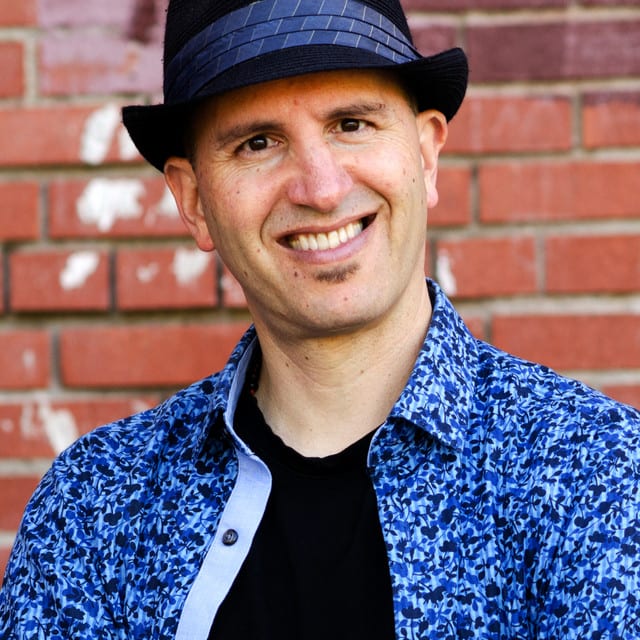

Released on June 4, 2024, Forgiveness is a single with one track, and it is best heard as a chapter in a larger sequence rather than a standalone statement. Jim Gelcer, the Toronto-based musician, composer and yoga teacher, born in Cape Town and trained in jazz at the Eastman School of Music, began his recording career in kirtan with Bhagavan in 2010. He followed it with Bhakti Groove Machine (2013), Cape Town to Kolkata (2019) and, in 2025, the album Quiet Expanse.
Around 2024 and 2025, he released a run of thematic singles whose titles read like a vocabulary of inner work: "Healing," "Hope," "Compassion," "Resilience," "Letting Go," "Authenticity," "Warrior Spirit," and this one, "Forgiveness." Taken together they suggest a deliberate arc addressing personal struggle and shared grief. Forgiveness is the one that asks for the hardest kind of release.
I'll be plain about what can and cannot be said here. The facts available describe Gelcer's work in general, not a track-by-track account of this release, so what follows is the sound you can reasonably expect from him, and your own ears should confirm it.
His voice is a warm, precise alto that sits in the mid-register. It doesn't chase virtuosity; the priority is clarity of the Sanskrit and sincerity of feeling. Harmonium is the usual heart of his kirtan, and his jazz background shows in chord voicings, unexpected harmonic movement, and room for drums or keyboards. Pacing in his recent work is deliberate and often slow, sometimes staying with one phrase for minutes. There are no stadium drums or synth swells and no call-and-response built to whip up a crowd. The feel is closer to chamber music: intimate, conversational, literate without showiness.
Because this release has a single track, the guide has a single signature piece: "Forgiveness." What makes a piece like this land is the subject meeting the method. Forgiveness is rarely a quick or triumphant act, and Gelcer's habit of holding one phrase without decoration suits it. Repetition lets a feeling be revisited rather than resolved on schedule. His improviser's instinct for space and silence means the pauses can matter as much as the sung lines.
Listen for how restraint is handled. A less disciplined treatment might swell toward catharsis. Gelcer's approach, as heard across his recent work, tends to let the music stay level and invite you to do the emotional work yourself.
Gelcer's practice sits within the Sivananda Yoga lineage. He completed teacher training at the Sivananda Ashram Yoga Retreat in the Bahamas in March 2006, and kirtan came to him when he was invited to chant in the temple at the Sivananda Ashram in the Laurentian Mountains. That context matters: bhakti, the path of devotion, is one of the integrated paths the Sivananda approach emphasizes, alongside asana, pranayama and meditation.
He is known for blending traditional kirtan with jazz, R&B and rock, and he is open about that blend rather than presenting kirtan as a pure tradition he has discovered. So Forgiveness belongs to devotional chanting, but in a Western, jazz-literate dialect. It is not ecstatic group kirtan, and it is not ambient background music either. It asks for engagement with language as practice.
This single is for listeners in the middle of something unresolved: an estrangement, a grievance carried too long, or the quieter task of forgiving yourself. It suits people who already have some relationship with mantra or meditation and want a companion rather than a performance.
It is less suited to anyone seeking high-energy kirtan, dense production or propulsive rhythm. Listeners who want entirely secular wellness music may also find the Sanskrit and devotional framing more than they bargained for.
Take it alone, ideally in the evening, with headphones so the small details of voice and harmony come forward. Give it your full attention at least once, with no other task running. Then play it again as part of a sitting practice, perhaps after a few minutes of breathing, and let the repetition do its work.
Because the release is a single track, it is short enough to return to. Treat it less as something to finish than something to revisit, as the theme itself tends to require. If it opens something, Gelcer's daily yoga class on Insight Timer offers another way into his unhurried presence and voice.