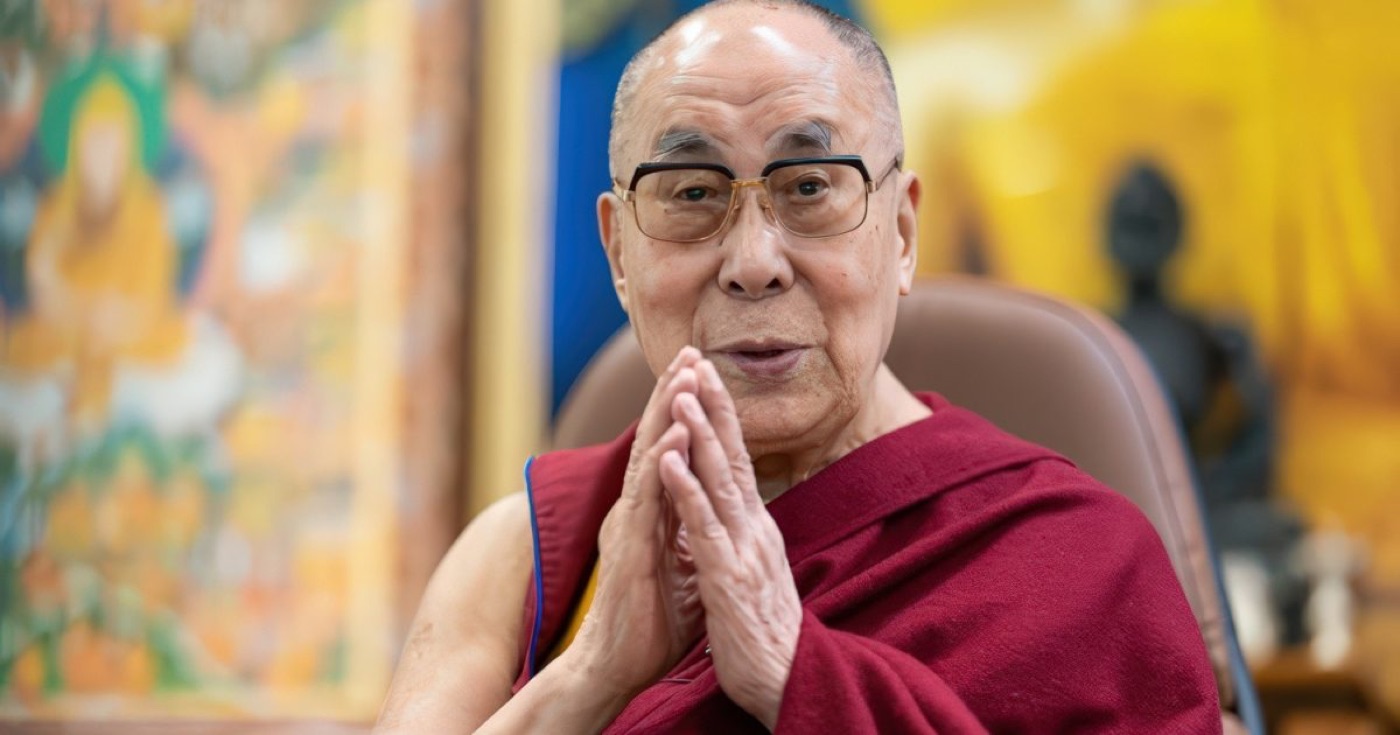

The 14th Dalai Lama, born Lhamo Thondup in 1935, is the spiritual leader of the Tibetan people and head of Tibetan Buddhism. He is a monk of the Gelug school, a Nobel Peace Prize laureate (1989), and a teacher whose public work ranges from plain-spoken talks on human values to the tantric Kalachakra initiations. That range is the first thing a newcomer needs to know, because where you enter decides whether the experience feels welcoming or overwhelming.
One practical note up front: the directory lists no books or albums under his name. His teaching is not sold, since he has a long-standing policy of accepting no fees for talks. The material lives in free archives, so this guide points to those rather than to specific titles.
Start with his secular ethics material, in the form of short public talks and messages on the dalailama.com news archive, maintained by the Dharamshala office. He frames secular ethics as basic human values in the service of human happiness, and you do not need any Buddhist vocabulary to follow it. It is also the first of the three commitments he says guide his life, so it is the clearest door into everything else.
Pick one short session, not a multi-day event. Avoid the Kalachakra teachings at the start. They are advanced and presuppose a serious commitment to Buddhist practice.
1. His stance on nonviolence. Once you have a feel for his voice, nonviolence is the natural thread to follow. He presents it less as sentiment than as a practical ethical position that can be argued and tested. It is also tied to the Nobel Peace Prize he received in 1989.
2. His dialogue with scientists. He engages neuroscientists and physicists on their own terms, asking how contemplative insight relates to the empirical study of the mind, without dropping the Gelug framework. Look for recorded sessions on the official YouTube channel.
3. A full-length dharma talk. When the shorter sessions feel comfortable, try a longer webcast recording. These are the most substantial material available. Check whether translation is provided alongside the video.
Expect conversation, not spectacle. His style is direct and explanatory, with humor and direct address to the audience. He often returns to a few core ideas rather than offering a long list of techniques.
Many talks are delivered in Tibetan with live translation into English, so the pacing is measured and unhurried. Sentences are built for interpreters. Because his teaching draws on Gelug scholarship, sessions tend to follow a text-based structure instead of open-ended discussion. A slower reading pace and a notebook help with the more philosophical passages.
Expecting a meditation method. His work is not suited to anyone wanting a short, technique-only practice to absorb in one sitting. The material is mostly ethics, explanation and philosophy.
Expecting Tibet politics. Listeners who come mainly for geopolitical commentary often find the teaching more concerned with ethics and compassion. That is a deliberate choice on his part.
Treating it as pure self-help. Secular ethics is the accessible doorway, but the wider teaching rests on doctrine and monastic study. Terms such as karma, emptiness and the bodhisattva path come up often, and the lamrim stages of the path can be dense. A brief glossary helps.
Assuming the Kalachakra is the place to begin. Those gatherings drew international crowds, which makes them look like the headline. They are tantric events that build on prior commitments.
Buying "his teaching." Because the office accepts no fees, anything sold as his teaching, or any ticketed appearance, should be checked against official channels first.
The material tends to hit hardest for people who are patient with long-form talk and comfortable with ideas built step by step. It suits readers moving from secular mindfulness who want an ethical grounding, and anyone thinking seriously about compassion, conflict or nonviolence as practical questions. It also suits people interested in how contemplative traditions and science might speak to each other. It is a poor fit for those wanting high-energy, fast-cut spiritual content.
Day 1: Visit dalailama.com and choose one short talk or message on secular ethics. Listen once, then write down in a notebook the single idea you would repeat to a friend.
Day 2: Listen to a second short session on the same theme. Following one theme across several talks works better than sampling at random.
Day 3: Find a talk or message on nonviolence. Note how he argues for it, not only what he concludes.
Day 4: Read the biography piece, "Who Is Dalai Lama? Life, Work, and Legacy," to place the exile in 1959, the government in Dharamshala and the 2011 retirement from political office in context.
Day 5: Watch a recorded session on his dialogue with scientists from the official YouTube channel.
Day 6: Try one longer dharma talk or webcast. Use the translation, go slowly, and write down any unfamiliar terms such as karma or emptiness.
Day 7: Review your notes. Decide which thread to pull next: ethics, nonviolence, science or the longer dharma format. Check dalailama.com for announced webcasts, and verify any dates with the official source.