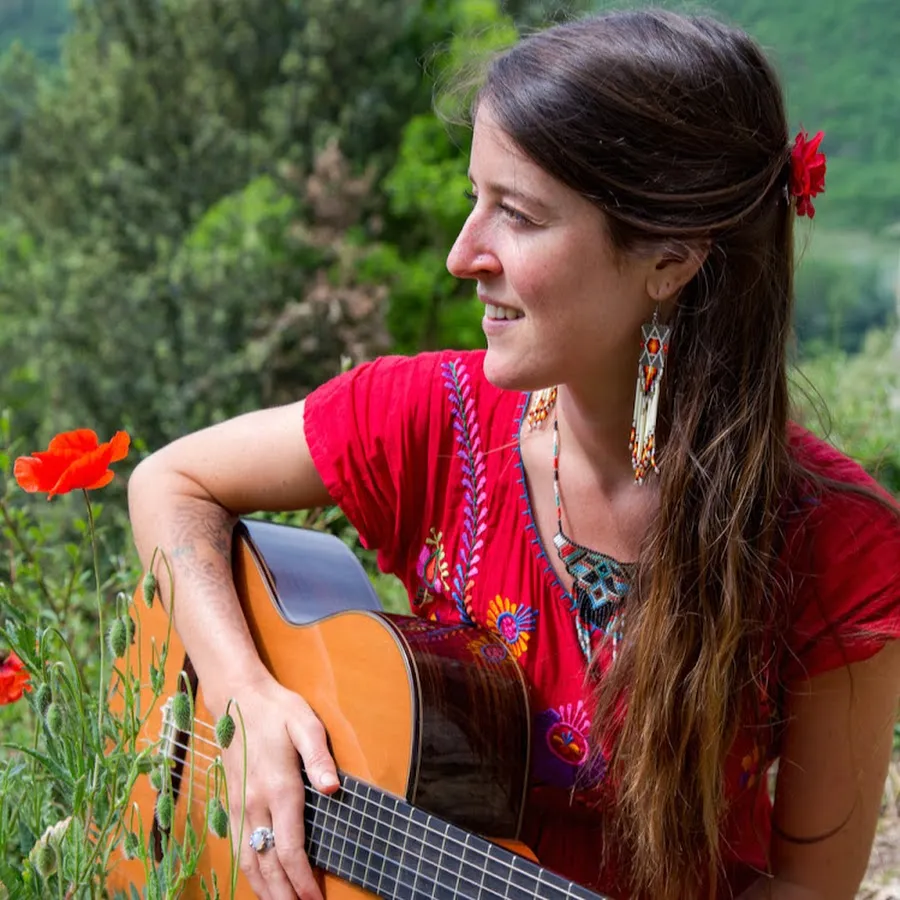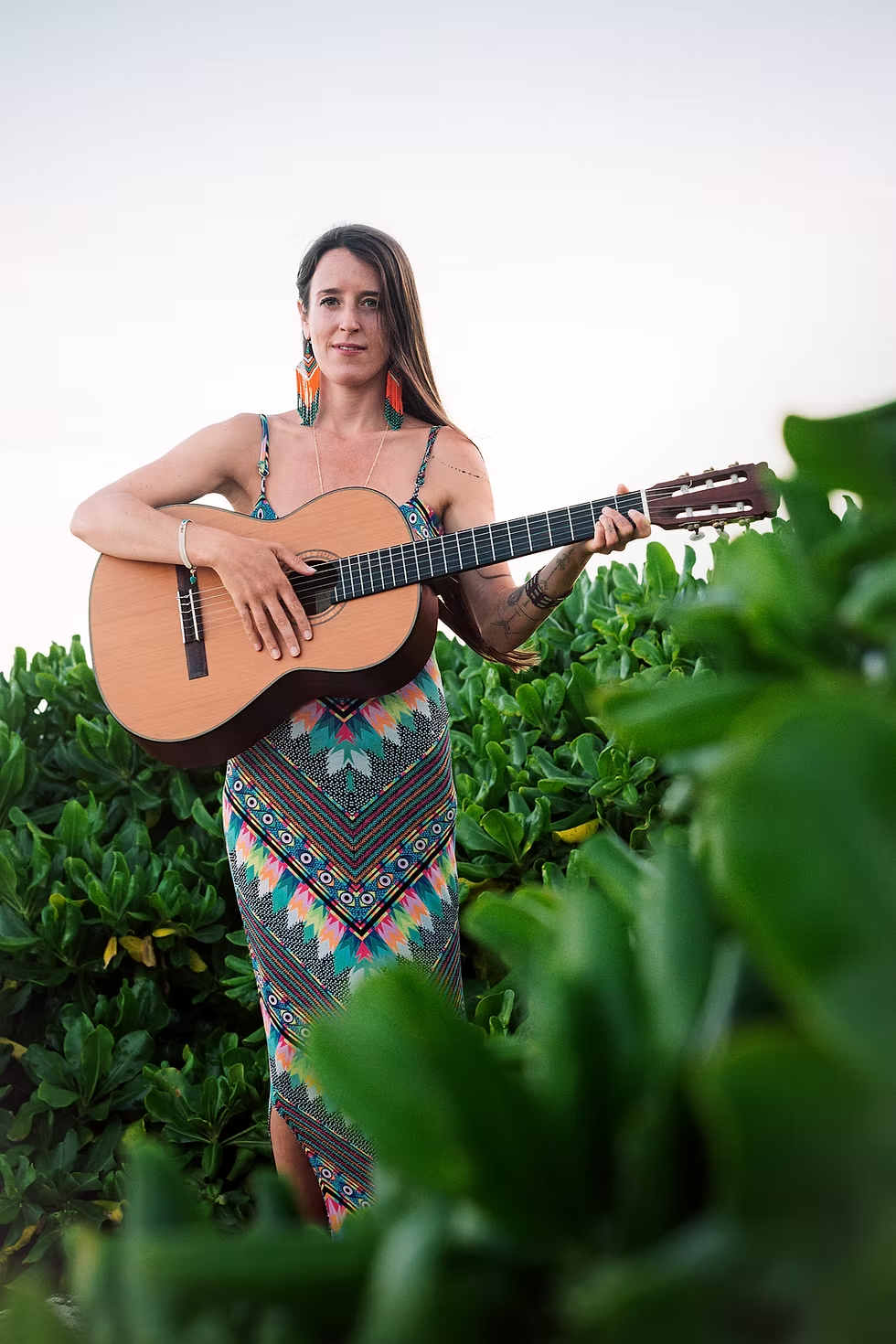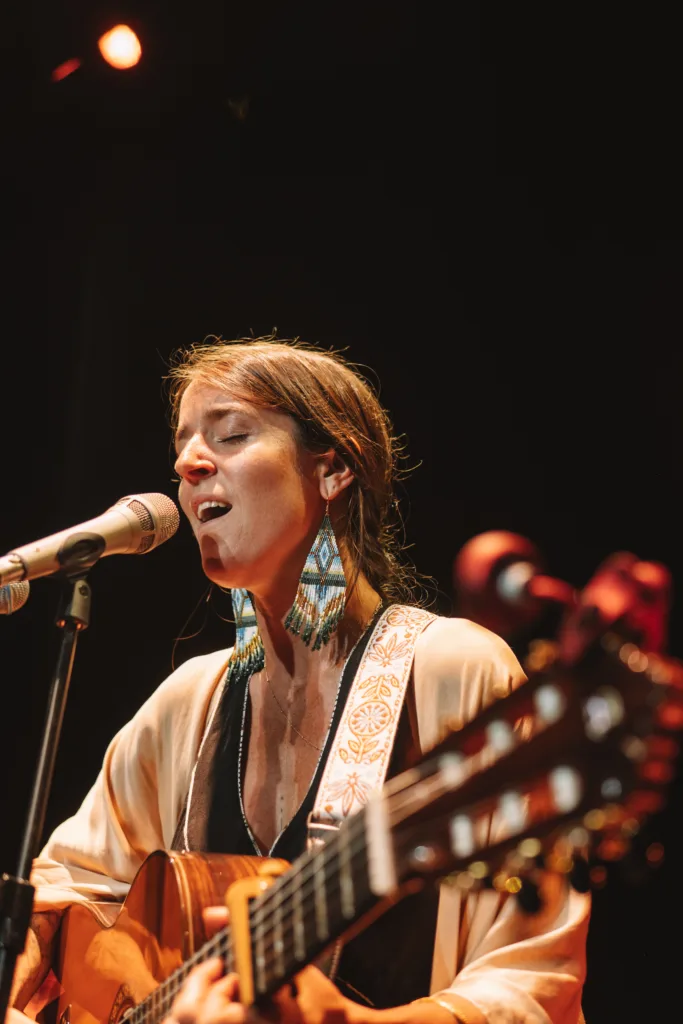

River of Soul arrived on November 28, 2025, a ten-track album from Ayla Schafer, the multilingual world folk singer-songwriter and ceremonial musician who lives among the wild lands of Dartmoor and is described as a "Voice of the Earth." Her path to it is a long one. She began performing at sixteen and worked the UK festival scene. A journey through South America in 2010 became a turning point, and the years she spent away from home shaped her writing. There she explored the inner landscape and learned from various indigenous traditions about the healing power of song.
Seen against that history, a ten-song album called River of Soul reads as a gathering point. Her stated concerns are memory, remembrance, presence and the earth, and the title's image of water, moving and carrying things along, suits them. Listen for an artist consolidating what travel, motherhood and years of ceremonial work have given her.
I won't pretend to itemize the album's instrumentation, because the details of the arrangements aren't something I can verify. What can be said comes from how Schafer describes and shapes her work. The voice is the center of it. She sings in Spanish, English and Proto-Celtic, the reconstructed ancestral language of the Bronze Age, so expect shifts of language to change the texture of the music as much as the meaning. Not understanding a word is part of the design. Her songs are framed as "medicinal song," music meant to do something to the listener rather than simply entertain.
Expect a mood of remembrance rather than spectacle. Her bio speaks of "the beauty, shadow and rawness of human experience," which suggests an album that holds tenderness and difficulty together instead of smoothing everything into calm. Let the pacing set the terms. Songs with this intent tend to reward patience, so don't skip ahead.
I can't responsibly name individual songs here, because no track titles were supplied for this album and I won't guess at them. Instead, here is what to listen for across the ten tracks, wherever you land in the sequence:
- The first song in a new language. When she moves between Spanish, English and Proto-Celtic, notice what changes in her phrasing and in how the melody sits. This is where her multilingual approach is most audible.
- The most exposed song. Find the track where the arrangement feels barest and the voice carries the most weight. This is usually where the "raw" side of her writing shows.
- The song that opens outward. Look for the track where the music broadens and feels communal, closest to her ceremonial work. It is likely to be the one you return to.
Once you've heard the album, you'll know which three tracks answer to those descriptions better than any guide can.
Schafer works in a world folk and ceremonial space, not a single strict lineage. Her bio names no particular guru, school or devotional lineage, so it would be wrong to file this record under bhakti or kirtan. The accurate framing is wider. She draws on the practice of song as medicine, on what she learned from various indigenous traditions in South America, and on a commitment to earth consciousness and ancestral wisdom. Her use of Proto-Celtic ties the work to the British landscape she now lives in, as the Spanish ties it to her years abroad.
If you come from kirtan, expect a related impulse, music as a way back to presence, without the call-and-response format. If you come from folk, expect songwriting in service of something larger than the song.
This album will meet people in a transitional or reflective moment: someone returning to themselves after a demanding stretch, a parent carving out a quiet hour, someone grieving or remembering, or anyone drawn to nature and ancestral themes who wants music that treats those ideas seriously. It suits listeners who value voice over production and who are comfortable not understanding every lyric. If you want something rhythmically driving or purely background, it may ask more of you than you want to give.
Give it one uninterrupted sitting, ten tracks in order, in the evening when the day's noise has settled. Headphones will help the voice feel close, and a dim room or a spot near a window works better than a screen. Listen alone the first time. If you keep a ritual of any kind, such as a candle, a few minutes of stillness or a walk beforehand, let the album follow it rather than replace it. Don't look up translations until after your first pass. Let the languages wash over you, then return with the meanings in hand and notice what shifts.