BrightStar
BlogMeus ingressos
BlogMeus ingressosSaved events
Ajuda e contatoCadastrarEntrar
Eventos
  • Ver todos os Eventos
  • Para buscadores
  • Yoga
  • Meditação
  • Respiração consciente
  • Qigong
  • Música sagrada
  • World music
  • Música de medicina
  • Terapia sonora
  • Dança extática
  • Cerimônia
  • Medicina das plantas
  • Cura energética
  • Satsang e sabedoria
  • Tantra
  • Retiros
  • Todas as categorias →
Destinos
  • Bali
  • Sedona
  • Los Angeles
  • Costa Rica
  • Byron Bay
  • San Francisco
  • Austin
  • New York
  • San Diego
  • Seattle
  • Miami
  • London
  • Maui
  • Boulder
  • Oakland
  • Berkeley
  • Hudson Valley
  • Todas as cidades →
Para criadores
  • Publique seu evento grátis
  • Join the Movement
  • Why we list
  • Sell Globally
  • Para criadores
  • Para equipes
  • Para escritores
  • Para professores
  • Para artistas de kirtan
  • Para estúdios
  • Para festivais
  • Para centros de retiro
  • Para organizações sem fins lucrativos
  • Embaixador da marca
  • Ingressos grátis
  • Elevate
  • Amplify
Recursos
  • Rede da comunidade
  • Recuperação de carrinho abandonado
  • Categorias de ingressos
  • Eventos recorrentes
  • Lugares marcados
  • Sistema de afiliados
  • Lista de espera / Notificar
  • Scanner de ingressos
  • Widget incorporável
  • Distribuição de eventos
  • Códigos de desconto
  • Upsells e adicionais
  • Compartilhamento de ingressos
  • Doações e preço variável
  • Perguntas personalizadas
  • Central de mensagens
  • Integrações
  • Relatórios
  • Todos os recursos →
Empresa
  • Sobre
  • O ecossistema
  • Blog
  • Glossário
  • Inspiração
  • Central de ajuda
  • Contato
  • Documentação da API
  • Recursos da marca
  • Imprensa
  • Termos de Serviço
  • Política de Privacidade

Eventos

  • Ver todos os Eventos
  • Para buscadores
  • Yoga
  • Meditação
  • Respiração consciente
  • Qigong
  • Música sagrada
  • World music
  • Música de medicina
  • Terapia sonora
  • Dança extática
  • Cerimônia
  • Medicina das plantas
  • Cura energética
  • Satsang e sabedoria
  • Tantra
  • Retiros
  • Todas as categorias →

Destinos

  • Bali
  • Sedona
  • Los Angeles
  • Costa Rica
  • Byron Bay
  • San Francisco
  • Austin
  • New York
  • San Diego
  • Seattle
  • Miami
  • London
  • Maui
  • Boulder
  • Oakland
  • Berkeley
  • Hudson Valley
  • Todas as cidades →

Para criadores

  • Publique seu evento grátis
  • Join the Movement
  • Why we list
  • Sell Globally
  • Para criadores
  • Para equipes
  • Para escritores
  • Para professores
  • Para artistas de kirtan
  • Para estúdios
  • Para festivais
  • Para centros de retiro
  • Para organizações sem fins lucrativos
  • Embaixador da marca
  • Ingressos grátis
  • Elevate
  • Amplify

Recursos

  • Rede da comunidade
  • Recuperação de carrinho abandonado
  • Categorias de ingressos
  • Eventos recorrentes
  • Lugares marcados
  • Sistema de afiliados
  • Lista de espera / Notificar
  • Scanner de ingressos
  • Widget incorporável
  • Distribuição de eventos
  • Códigos de desconto
  • Upsells e adicionais
  • Compartilhamento de ingressos
  • Doações e preço variável
  • Perguntas personalizadas
  • Central de mensagens
  • Integrações
  • Relatórios
  • Todos os recursos →

Empresa

  • Sobre
  • O ecossistema
  • Blog
  • Glossário
  • Inspiração
  • Central de ajuda
  • Contato
  • Documentação da API
  • Recursos da marca
  • Imprensa
  • Termos de Serviço
  • Política de Privacidade
Baixe o app
Baixar naApp StoreDisponível noGoogle Play
© 2026 BrightStar. Todos os direitos reservados. Créditos das fotos ·
Inspiration

The Split Mind and Inner Conflict Explained

SF
Satsang Foundation
Nov 14, 2026
6 min de leitura

De The Satsang Foundation

Assistir · 7

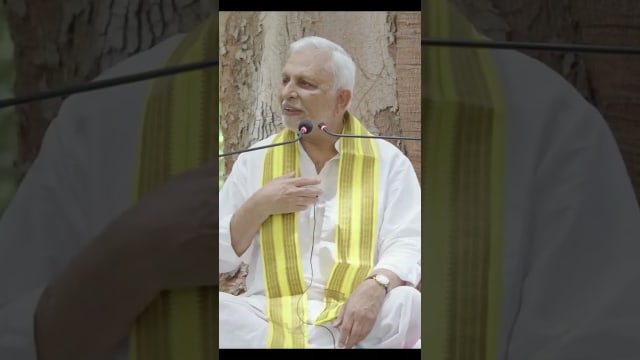
The mind does not come to us whole. This is the fundamental insight Sri M returns to again and again: we are, most of us, internally divided—pulled in opposite directions by competing desires, conflicting thoughts, and fragmented intentions. The gentleman who wanted to meditate but whose mind suggested beer first. The young couple at the bus stop seeing something in each other that the rest of us cannot articulate. These are not digressions in Sri M's teaching; they are the texture of the problem itself. The mind is not one witness observing the world. The mind is the battlefield.

Leitura · 5 seções

The Dialogue Within: Why Two Minds Cannot Be One

Sri M begins by anchoring his teaching in the Bhagavad Gita, specifically the concept of dialogue—or "samvada." A dialogue, he explains, requires two parties. And when two parties engage deeply enough, something shifts: "When this happens, there is no more dialogue required. It is understood. Words are not required." The Gita itself is a dialogue between Krishna and Arjuna, but it models something deeper about the structure of consciousness itself.

The progression is systematic. When spiritual practice begins—when you start dharana, the practice of concentration—there are still two: the meditator and the object of meditation. "I am meditating upon May I be my intelligence be awakened. There are two. There's a petitioner and there is somebody who received the petition." But in samadhi, the highest state, "there is no meditator, there is no meditated upon, there's only one meditation." The goal of yoga, Vedanta, and bhakti—the main paths Sri M names—is not to suppress one part of the mind and elevate another. It is to end the dialogue entirely by dissolving the two into one.

Yet our ordinary experience is the opposite. Psychologically, Sri M says, "our minds are always two." We want to meditate; the mind wants a beer. We know what is right; we do what feels easier. There is not conflict because we are weak. There is conflict because we are genuinely divided.

Schizophrenia as a Universal Condition

Sri M makes a provocative move here. He invites us to look at the word schizophrenia itself: it means "split brain," from the Greek "schizo" (split) and "phren" (mind). "Most of us are split brain," he says. "We are thinking one thing, doing another. There's one part of us hidden, there's another part of us out. There's one thing which says do this, the other says do that. So we are all split."

The only difference between those labeled mentally ill and the rest of us is a matter of degree. When the craziness stays within socially acceptable bounds, we call it normal. When it exceeds those limits, we institutionalize the person. But the fundamental split is not exceptional; it is universal. And this is why, as Sri M notes, "some level some percentage we are all crazy."

This is not intended as dark comedy, though there is humor in his delivery. It is an invitation to honesty. If we believe ourselves sane and unified while we act against our own understanding, we are simply not looking at ourselves clearly. The first step toward integration is to see the split as it is.

The Witness Beyond the War

If the split is universal, what resolves it? Sri M introduces the concept of the sakshi—the witness. The witness is not one side of the conflict taking victory over the other. The witness is what remains when you stop identifying with either side of the internal war.

"The tussle is not the witness, but the tussle is all that is not the witness fighting. Witness is watching both." The two (or many) parts of your mind will continue to have their disagreement. That is their nature. But behind all of it—behind the competing voices, the hidden and the exposed, the yearning and the doubt—there is something that simply watches. It does not judge the conflict. It does not choose a side. It observes.

When you recognize yourself as this witness rather than as the warring parts, Sri M suggests, the grip of the internal conflict loosens. You are no longer trying to force one part of yourself to obey another. You are resting in that which is prior to both.

Love as the Bridge from Two to One

The final turn in Sri M's teaching moves toward love—not as sentiment but as the lived experience of two becoming one. He speaks of young people falling in love, emphasizing the word "fallen." "To be really to really understand what love is, you have to fall and get hurt a few times. You can't think I'm safe and still be in love. Not possible."

What they are experiencing at the bus stop, looking into each other's eyes, cannot be explained in words. Yet everyone who has felt it knows exactly what he is pointing toward. It is an ordinary glimpse of something that, in spiritual realization, is multiplied "a thousand times."

This is crucial to Sri M's method. He does not ask you to abandon feeling in favor of logic. The Gita, he says, "is music that's trying to match and bring together these two and make it one. And that comes not through intellectualization, but through the heart, to understand it through feeling, through song, music, through love and affection."

The resolution of the split mind is not intellectual. No amount of philosophical understanding will end the war. But love—and by this, Sri M means the opening of the heart to what is true—can begin to bring the fragmented self back into wholeness. This is why bhakti, the path of devotion, sits alongside yoga and jnana (knowledge) in the teaching. All three are necessary because we are whole beings, not just minds.

The Theme of Satsang

Sri M closes by naming what he is offering: "Where there are no two, but there is only one. That's the theme of our satsang." A satsang is a gathering in truth. It is not a lecture. It is a space where, if the conditions are right, the internal dialogue can begin to quiet, and the witness can be recognized. The more you practice observing your own split without trying to fix it—the more you watch the mind's war with curiosity rather than judgment—the more the possibility of genuine unity opens. Not unity imposed from above, but unity discovered underneath everything.
Comments

Loading the conversation…

Transcript

[0:05] Yoga shastri it is also the science of

[0:08] yoga, which means the practical ways

[0:12] necessary to clean and sharpen calm the

[0:15] mind so that it understands

[0:19] You can't simply sit and say I am the

[0:22] Nothing left.

[0:24] You're not

[0:26] I'm him I'm not

[0:29] Doesn't happen simply by saying I'm the

[0:31] So to understand that the brain and the

[0:34] mind needs certain amount of

[0:37] clearing

[0:38] training and practice and that is yoga.

[0:43] Yoga means not just physical yoga, which

[0:45] is good of course.

[0:47] Also other forms of yoga, which is

[0:50] cultivation of the mind.

[0:53] So yoga shastri

[0:58] a dialogue between Krishna and

[1:02] Every chapter ends this way

[1:05] within the chapter is described.

[1:08] Now a dialogue

[1:10] cannot be a monologue.

[1:13] Naturally

[1:14] you need to

[1:18] to

[1:18] so

[1:20] when you say

[1:21] it would already

[1:24] but

[1:24] it might be some that means you have

[1:27] derived the word sum s u m in Latin from

[1:31] the Sanskrit word sum.

[1:35] So when two people are discussing in

[1:39] their minds very soon

[1:41] are flowing with the same frequency some

[1:46] When this happens, there is no more

[1:48] dialogue required. It is understood.

[1:50] Words are not required.

[1:54] This is a dialogue.

[1:56] Of course, in the Gita is considered a

[1:58] dialogue which Krishna who more and

[2:01] Arjuna is mostly listening, although

[2:03] once in a while he butts in.

[2:06] That's true. That's because Arjuna

[2:08] acknowledges that the other guy knows

[2:11] better than me, so let me listen.

[2:14] So this is the dialogue.

[2:16] Dialogue also means

[2:19] when you start there are two.

[2:24] Just as when you start your sadhana,

[2:26] there are two. There is you

[2:28] and the two.

[2:30] As you progress

[2:32] there is no two, there is only one.

[2:36] There is no you.

[2:37] Now see how it's connected to the yoga

[2:40] sutras of Patanjali.

[2:43] When you start the search,

[2:45] when you start the practice, when you do

[2:47] dharana,

[2:49] then you're there and what you're

[2:51] meditating upon is there too.

[2:56] Then it becomes dhyana, still there are

[2:58] two.

[2:59] I am meditating upon

[3:05] May I be my intelligence be awakened.

[3:10] There are two.

[3:11] There's a petitioner and there is

[3:12] somebody who received the petition.

[3:15] And in samadhi

[3:16] there is no two, there is only one.

[3:19] There is no meditator, there is no

[3:21] meditated upon, there's only one

[3:23] meditation.

[3:28] So in yoga,

[3:30] in Vedanta,

[3:31] in bhakti, which is all put together in

[3:35] understandable, easily understandable

[3:38] terms in the Bhagavad Gita,

[3:41] though it starts two, it ends with one.

[3:48] Right?

[3:49] Okay. Psychologically

[3:52] our minds are always two.

[3:54] Do you think they are one?

[3:57] Sometimes there are multiple minds in

[3:59] one.

[4:01] Right?

[4:03] There is one part of my mind which pulls

[4:05] me in one direction, another part of my

[4:08] mind which pulls me in another

[4:09] direction, and there is always a

[4:12] discussion going on

[4:13] somewhat.

[4:16] Sometimes it's not a somewhat, it's

[4:18] actually the yuddha, fight.

[4:22] The war is going on between the two,

[4:24] always, generally.

[4:26] I say I want to go and meditate, mind

[4:29] says wait a minute, have a beer first.

[4:35] So,

[4:37] I happen to know a gentleman, he's no

[4:39] more, good friends. I want to use his

[4:42] name.

[4:44] So, if you call on a Sunday,

[4:47] his wife picks up the phone. She says,

[4:50] where is Mr. so and so? Oh, well, he is

[4:52] with his satsang. There are

[4:55] uh many ladies for the satsang. Say

[4:57] what?

[4:58] Ladies and uh okay. And oh, he had a cup

[5:02] big [clears throat] mug of beer, so his

[5:03] mind is expanded and become brahman. So

[5:05] I said okay, thank you. I put down the

[5:07] phone before she says anything to me.

[5:09] So,

[5:11] our mind is always split.

[5:16] There is conflict.

[5:18] There is confusion.

[5:20] There are two or many sides pulling in

[5:22] each other.

[5:24] And in this we are hoping to remain sane

[5:27] and in unity. Is this possible?

[5:32] So this

[5:33] tussle has to end. When the tussle ends,

[5:35] there's only one witness,

[5:37] sakshi.

[5:39] The tussle is not the witness, but the

[5:41] tussle is all that is not the witness

[5:44] fighting. Witness is watching both.

[5:48] There's two sides, several sides.

[5:50] And in fact,

[5:52] people come and say oh, that person is

[5:54] the point of finger is suffering from

[5:55] schizophrenia. I can say look,

[5:58] in this world most people are

[5:59] schizophrenic. What is the meaning of

[6:02] schizophrenia? It means split brain.

[6:05] Split mind.

[6:08] For any

[6:09] phrenic.

[6:10] It means two.

[6:13] Most of us are split brain.

[6:16] We are thinking one thing, doing

[6:17] another. There's one part of us hidden,

[6:19] there's another part of us out. There's

[6:21] one thing which says do this, the other

[6:23] says do that. So we are all split. It's

[6:26] only when the symptoms become

[6:27] exaggerated that people say, oh, this

[6:29] person is mad.

[6:33] Actually,

[6:35] some level

[6:37] some percentage we are all crazy.

[6:41] In fact,

[6:42] when the craziness exceeds beyond

[6:44] limitations,

[6:45] either they are in the asylum or they

[6:48] have become

[6:54] You heard of the famous philosopher J.

[6:57] P. Krishnamurti.

[6:59] So one day we were having a

[7:03] personal chat, they did.

[7:06] And he said to me, sir,

[7:09] when he called me sir because he called

[7:10] even

[7:12] little children as sir and madam, not

[7:14] because of

[7:15] anything.

[7:16] He said, sir, you know, I have

[7:19] been in the lunatic asylum in the United

[7:22] States.

[7:23] I got really shocked. I thought I was

[7:24] listening to this guy. He's been in

[7:27] asylum, so he may not be saying the

[7:29] right things. So I said, sir, were you a

[7:31] patient? He said, no, no, no, no, I went

[7:32] to see. I said, okay, thank you.

[7:34] Relieved.

[7:35] So I went to see

[7:37] and and he said,

[7:40] you know, there is one difference

[7:41] between them and us.

[7:44] I said, sir, I think there are many

[7:46] differences. It can't be one difference.

[7:48] He said, no, no, no, no, there is only

[7:49] one difference. You find out. Yes.

[7:51] Think.

[7:53] I thought quite a bit and I couldn't

[7:54] come out with one difference. He said,

[7:56] there are many differences.

[7:59] Ah, he said. And give up? I said, yes,

[8:01] sir. Okay, I'll tell you sir. There's

[8:03] only one difference. What's the

[8:04] difference, sir? They are inside and we

[8:06] are outside.

[8:09] Why? Because we are always split. We are

[8:11] two.

[8:13] Not one. And the Gita is music that's

[8:17] trying to match

[8:19] and bring together these two and make it

[8:22] one.

[8:24] And that comes not through

[8:25] intellectualization,

[8:27] but through the heart,

[8:29] to understand it through feeling,

[8:31] through song, music,

[8:35] through love and affection.

[8:39] You see?

[8:42] Even ordinary love, let's say,

[8:45] what we call there's no such ordinary

[8:47] and extraordinary, but for the purpose

[8:50] of argument, even ordinary love so

[8:52] called.

[8:54] Two young people they say are in love

[8:55] with each other.

[8:58] And what the what is the word you use?

[9:00] They have fallen in love.

[9:03] They're not risen in love, they're

[9:04] fallen.

[9:05] Which means what?

[9:08] To be really to really understand what

[9:10] love is, you have to fall and get hurt a

[9:12] few times.

[9:14] You can't think I'm safe and still be in

[9:17] love. Not possible.

[9:19] You have to be adventurous, you have to

[9:22] be vulnerable too.

[9:24] You have to say it may break, but I'm

[9:26] falling in love. Still I'm falling, but

[9:28] in love.

[9:31] It's ordinary. Imagine something which

[9:33] is multiplied a thousand times.

[9:37] How

[9:41] And

[9:42] this can be put into words or explained

[9:45] actually, although we all try to explain

[9:47] it in some

[9:49] attempting the impossible almost.

[9:53] Even in ordinary love,

[9:56] normal physical love, it could be

[9:57] hormonal, okay, fine, doesn't matter.

[10:01] There are two people, young people

[10:02] standing on the bus stop looking at each

[10:04] other. What are they looking at? We

[10:06] don't know.

[10:09] Looking at each other's eyes, but what

[10:10] is there? I don't see anything. They

[10:12] seem to see something.

[10:19] You don't know.

[10:20] You can't understand.

[10:22] This is the ordinary love. So imagine

[10:25] what could be that which is called

[10:28] which is called understanding, which is

[10:30] also called

[10:32] which is also called

[10:34] It has different terms,

[10:37] but it's the same.

[10:39] Where there are no two, but there is

[10:42] only one.

[10:45] That's the theme of our satsang.

Satsang Foundation

Artist

Watch more from Satsang Foundation on YouTube.

Explorar temas
Split mindInner conflictConsciousnessSelf awarenessMeditation
Perguntas frequentes

Perguntas frequentes

According to Sri M, the mind is fundamentally divided into multiple parts with competing desires and beliefs, each pulling in different directions. This split is not a personal failing; it's a universal human condition. The internal war arises because there is no unified self calling the shots—only fragments in disagreement.

Schizophrenia literally means 'split mind.' Sri M uses this term to point out that most people think one thing, do another, and hide yet other parts of themselves. The difference between those labeled mentally ill and the rest of us is only a matter of degree—where the split becomes socially unacceptable or overwhelming.

Meditation begins with two: the meditator and the object of focus. As practice deepens through dharana (concentration) and dhyana (meditation), the gap between observer and observed narrows. Eventually, in samadhi, the split dissolves and there is only one—no meditator, no meditated upon, just meditation itself.

The witness (sakshi) is the part of consciousness that observes all mental conflict without taking sides or judging. It watches the internal war between competing desires and thoughts but remains untouched by them. Recognizing yourself as this witness, rather than identifying with the warring parts, is key to resolving inner conflict.

Love demonstrates the lived experience of two becoming one—not through logic but through feeling and openness. When two young people fall in love, they enter a state where there is no observer and observed, just shared presence. This ordinary love is a glimpse of the spiritual unity the Gita describes, multiplied a thousand times.

No. Sri M emphasizes that the resolution of the split mind comes not through intellectualization but through the heart—through feeling, song, music, and love. All three paths (yoga, jnana, and bhakti) are necessary because humans are whole beings, not minds alone.

Você também pode gostar

Ver Tudo
Guru Purnima Advice: Why Everyone Carries the Divine
Inspire

Guru Purnima Advice: Why Everyone Carries the Divine

Sri M closes a Guru Purnima 2025 talk with three instructions and one claim: every person in the room carries the supreme being in the heart…

7 min read
From Deliberate Practice to Effortless Bliss
Inspire

From Deliberate Practice to Effortless Bliss

Sri M traces the evolution of yoga asana from training to a transcendent state where postures arise spontaneously, grounded in Patanjali's a…

4 min read
Breaking the Cycle: How Bhakti Transforms Family Karma
Inspire

Breaking the Cycle: How Bhakti Transforms Family Karma

Generational trauma repeats through families, but the Vedic tradition teaches that one spiritually awakened person can transform an entire f…

8 min read
Heart of the Path: A Week in Costa Rican Kirtan Retreat
Inspire

Heart of the Path: A Week in Costa Rican Kirtan Retreat

Krishna Das and Nina Rao lead an immersive week-long retreat in Costa Rica combining kirtan, mantra practice, yoga, and open dialogue for sp…

5 min read
Ver tudoVocê também pode gostar→

Continue sua jornada

Mais sabedoria e mais encontros de todo o diretório BrightStar.

Mais artigos

Explore a biblioteca completa de ensinamentos, entrevistas e guias.

Voltar a todos os artigos →

Professores e artistas

Conheça as linhagens, os músicos e os guias do mundo consciente.

Explorar artistas →

Encontre um evento

Kirtan, retiros, banhos de som, breathwork, festivais — acontecendo em breve.

Ver eventos →