BrightStar

Ver todos os Events

Descubra encontros conscientes

events

Yoga
Meditation
Breathwork
Qigong
Tai Chi
Sacred Music
World Music
Medicine Music
Sound Healing
Ecstatic Dance
Destinos populares
BaliSedonaLos AngelesCosta RicaNew YorkSan FranciscoAustinMiamiJoshua TreeTulum
Ver todas as categoriasVer todos os destinos

Explorar todos os recursos

Ferramentas poderosas para expandir seus eventos

Recursos da plataforma

Precificação dinâmica inteligente
Categorias de ingressos
Lugares marcados
Recuperação de carrinho abandonado
Recuperação de visitantes
Doações e preço variável
Sistema de afiliados
Scanner de ingressos
Códigos de desconto
Perguntas personalizadas
Compartilhamento de ingressos
Upsells e adicionais
Análises e relatórios
Sequências de e-mail
Lista de espera / Notificar / Lembrar
Pessoas e Lugares
Artists & TeachersEvent OrganizersVenues & StudiosKnowledge BaseGlossaryInspiration
Ver todos os recursosSobre nós
PreçosBlog
Language
Saved events
Ver todos os eventos

events

YogaMeditationBreathworkQigongTai ChiSacred MusicWorld MusicMedicine Music

Destinos populares

BaliSedonaLos AngelesCosta RicaNew YorkSan Francisco

Pessoas e Lugares

Artists & TeachersEvent OrganizersVenues & StudiosKnowledge BaseGlossaryInspiration

Recursos da plataforma

Precificação dinâmica inteligenteCategorias de ingressosLugares marcadosRecuperação de carrinho abandonadoRecuperação de visitantesDoações e preço variávelSistema de afiliadosScanner de ingressosCódigos de descontoPerguntas personalizadasCompartilhamento de ingressosUpsells e adicionaisAnálises e relatóriosSequências de e-mailLista de espera / Notificar / Lembrar
Ver todos os recursosSobre nós
PreçosBlog
EntrarBuscadoresCriadores
  • Ver todos os Eventos
  • Para buscadores
  • Yoga
  • Meditação
  • Respiração consciente
  • Qigong
  • Tai chi
  • Música sagrada
  • World music
  • Música de medicina
  • Terapia sonora
  • Dança extática
  • Retiros
  • Workshops
  • Todas as categorias →
  • Bali
  • Sedona
  • Los Angeles
  • Costa Rica
  • Tulum
  • Byron Bay
  • San Francisco
  • Austin
  • New York
  • San Diego
  • Denver
  • Seattle
  • Portland
  • Miami
  • Todas as cidades →
  • Join the Movement
  • Why we list
  • Sell Globally
  • Para criadores
  • Para equipes
  • Para escritores
  • Para professores
  • Para artistas de kirtan
  • Para estúdios
  • Para festivais
  • Para centros de retiro
  • Para organizações sem fins lucrativos
  • Embaixador da marca
  • Ingressos grátis
  • Elevate
  • Amplify
  • Rede de 500K+ compradores
  • Recuperação de carrinho abandonado
  • Precificação dinâmica inteligente
  • Categorias de ingressos
  • Eventos recorrentes
  • Lugares marcados
  • Sistema de afiliados
  • Lista de espera / Notificar
  • Scanner de ingressos
  • Widget incorporável
  • Distribuição de eventos
  • Central de mensagens
  • Integrações
  • Relatórios
  • Todos os recursos →
  • Sobre
  • O ecossistema
  • Blog
  • Glossário
  • Inspiração
  • Central de ajuda
  • Contato
  • Documentação da API
  • Recursos da marca
  • Carreiras
  • Imprensa
  • Termos de Serviço
  • Política de Privacidade

Eventos

  • Ver todos os Eventos
  • Para buscadores
  • Yoga
  • Meditação
  • Respiração consciente
  • Qigong
  • Tai chi
  • Música sagrada
  • World music
  • Música de medicina
  • Terapia sonora
  • Dança extática
  • Retiros
  • Workshops
  • Todas as categorias →

Destinos

  • Bali
  • Sedona
  • Los Angeles
  • Costa Rica
  • Tulum
  • Byron Bay
  • San Francisco
  • Austin
  • New York
  • San Diego
  • Denver
  • Seattle
  • Portland
  • Miami
  • Todas as cidades →

Para criadores

  • Join the Movement
  • Why we list
  • Sell Globally
  • Para criadores
  • Para equipes
  • Para escritores
  • Para professores
  • Para artistas de kirtan
  • Para estúdios
  • Para festivais
  • Para centros de retiro
  • Para organizações sem fins lucrativos
  • Embaixador da marca
  • Ingressos grátis
  • Elevate
  • Amplify

Recursos

  • Rede de 500K+ compradores
  • Recuperação de carrinho abandonado
  • Precificação dinâmica inteligente
  • Categorias de ingressos
  • Eventos recorrentes
  • Lugares marcados
  • Sistema de afiliados
  • Lista de espera / Notificar
  • Scanner de ingressos
  • Widget incorporável
  • Distribuição de eventos
  • Central de mensagens
  • Integrações
  • Relatórios
  • Todos os recursos →

Empresa

  • Sobre
  • O ecossistema
  • Blog
  • Glossário
  • Inspiração
  • Central de ajuda
  • Contato
  • Documentação da API
  • Recursos da marca
  • Carreiras
  • Imprensa
  • Termos de Serviço
  • Política de Privacidade
BrightStar
Baixe o app
Baixar naApp StoreDisponível noGoogle Play
© 2026 BrightStar. Todos os direitos reservados.
Inspiration

Emotional Awareness in Children: Gift of Presence

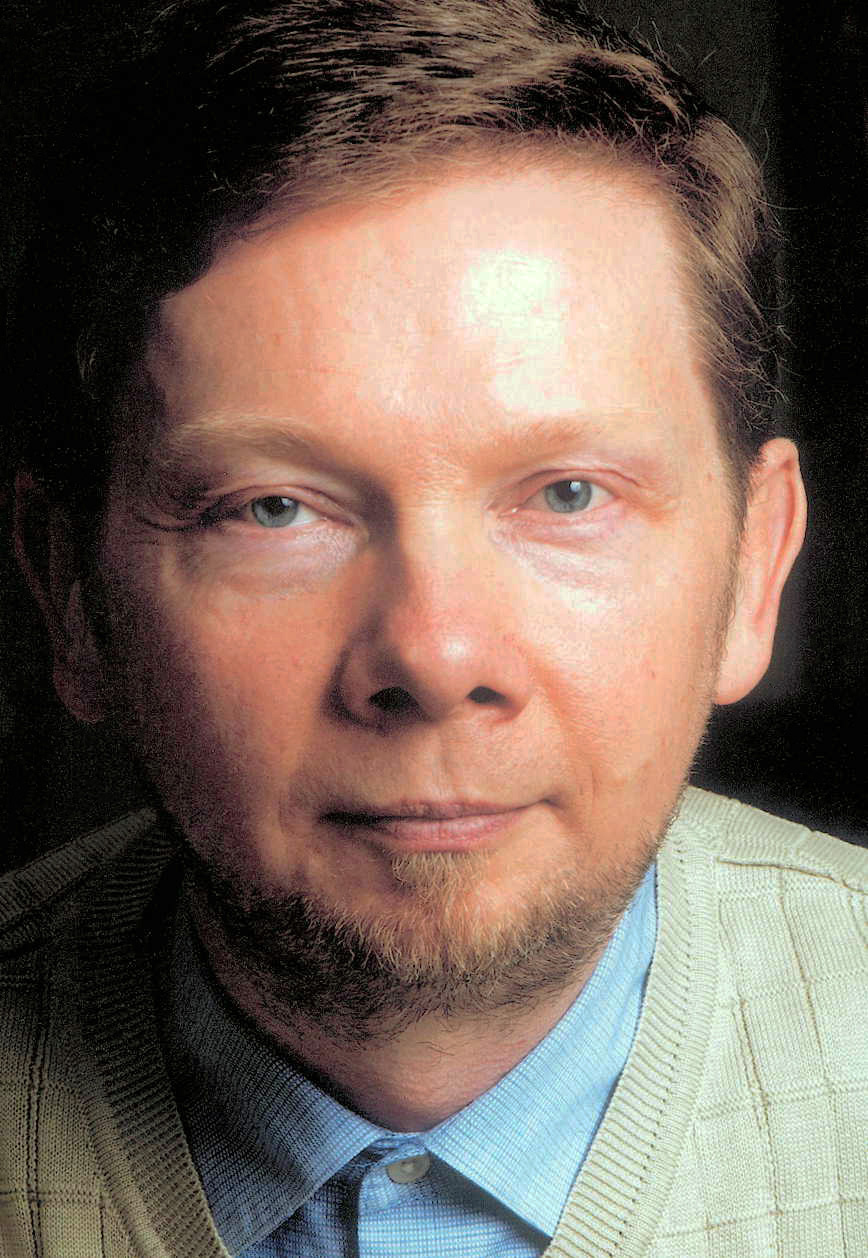
Eckhart Tolle
Eckhart Tolle
Dec 8, 2025
7 min de leitura

Eckhart Tolle explores how teaching children to recognize and name their emotions is among the most valuable gifts a parent or educator can offer. This emotional awareness prevents unconscious patterns of reactivity from solidifying in adulthood, and simultaneously serves as a doorway into deeper presence, mental clarity, and compassionate relating. Rather than suppressing or ignoring feelings, children who develop this skill gain access to their inner life and build resilience through conscious understanding.

Leitura · 6 seções

Why Emotional Recognition Matters in Childhood

Most children grow up in environments where emotions are either ignored, shamed, or dismissed. A child feels anger, sadness, or fear, and adults respond by telling them to "get over it," "calm down," or "don't cry." This teaches the child one critical lesson: their inner experience is not safe to acknowledge. Over time, this pattern becomes automatic—the child learns to disconnect from their feelings rather than recognize them.

Tolle emphasizes that this early disconnection from emotional life has cascading consequences. When children do not learn to name and acknowledge their emotions, those unrecognized feelings do not disappear. Instead, they accumulate in the body and mind as unconscious patterns. In adulthood, these buried emotions trigger reactive behavior—outbursts of rage, waves of anxiety, patterns of avoidance—all without the person understanding why. The individual experiences themselves as a victim of their own moods rather than someone with agency over their inner state.

Teaching emotional recognition, by contrast, begins to interrupt this cycle at its source. When a child can say, "I feel angry right now," or "I'm scared," something fundamental shifts. The feeling is no longer a shapeless force overwhelming them—it has been observed, named, and thereby brought into consciousness.

How Awareness Prevents Chaos Later in Life

One of Tolle's core insights is that awareness is the first step toward freedom. What remains unconscious controls us; what we can observe, we can work with. A child who has learned to recognize their emotions early gains a critical advantage: they develop a relationship with their inner life rather than being at war with it.

Without this skill, the child grows into an adult whose emotional reactions run the show. A minor frustration triggers disproportionate anger. A small rejection activates deep shame. An uncertainty spirals into overwhelming anxiety. Because these emotions were never brought into consciousness in childhood, the adult has no template for how to relate to them. The feeling simply takes over.

By contrast, a child who has been taught, "When you feel that heat in your chest and your fists clench, that's anger. It's okay to feel it. Let's notice it together," develops a completely different nervous system response. The emotion is still present, but it is no longer the hidden driver of behavior. The child learns that feelings can be felt without being acted upon, that emotions have information to offer, and that observing them is a sign of strength rather than weakness.

This early practice prevents the chaos of an adulthood spent unconsciously repeating reactive patterns. The adult who grew up with emotional awareness does not suppress their feelings until they explode, nor do they become entangled in stories about why they "shouldn't" feel what they feel. They simply know: this is what I'm experiencing, and I can handle it.

Emotional Awareness as a Doorway to Presence

Tolle's broader teaching centers on the power of presence—living in the now rather than being trapped in thought and reactivity. Emotional awareness in children is not merely a practical parenting tool; it is an early cultivation of presence itself. When a child pauses to notice what they are feeling, they are practicing the fundamental skill of turning inward and observing their actual experience in this moment.

This observation activates the conscious mind rather than letting unconscious reaction dominate. The child steps slightly outside of their automatic response and gains a degree of freedom. That small space between stimulus and response—between feeling the emotion and acting on it—is where presence begins. A child who learns early to inhabit that space carries this capacity into adulthood as a built-in refuge.

Presence is not the absence of emotion. It is the capacity to feel emotion while remaining aware of it, rather than being completely identified with it. Teaching a child, "You're angry, and you're also safe. Let's see what the anger is telling you," plants the seed of that capacity very early. The child learns that presence is not cold detachment—it is a warm, conscious relationship with what is happening inside.

Clarity Emerges from Emotional Understanding

When emotions remain unconscious, they cloud perception. A child who is angry but does not recognize it as anger may interpret neutral events as threats. A child who is afraid but has learned to ignore fear may act recklessly. A child who is sad but has been told "don't be sad" may develop a distorted understanding of their own needs and worth.

Emotional clarity—knowing what you feel and why—allows accurate perception of reality. When a child learns to recognize and name emotions, they also begin to understand what triggers them and what those emotions communicate. A child might notice, "I feel angry when I don't get my way," which is raw, honest data about their experience. From there, adults can help them learn what that anger is for—it signals that a need wasn't met, or a boundary was crossed.

This clarity is foundational to wisdom. Without it, the child remains trapped in confusion and reactivity. With it, emotions become meaningful information rather than overwhelming chaos. The child develops what might be called emotional literacy—the ability to read their inner landscape the way literate people read words on a page. This literacy allows them to make choices based on understanding rather than being pushed around by unconscious drives.

Compassion Blooms from Emotional Recognition

There is an often-overlooked connection between recognizing one's own emotions and being able to extend compassion to others. A child who has been shamed for their emotions will often shame others for theirs. A child who was told, "Stop crying, it's not a big deal," will dismiss others' pain. The child learns implicitly that emotions are weaknesses to be hidden or overcome, not part of being human.

By contrast, when a child is supported in recognizing their own emotional reality—when they are met with patience and curiosity rather than dismissal—they internalize a very different message. Feelings are normal. They deserve attention. They are not shameful. They are information. And importantly, they are human.

This becomes the foundation for compassion. A child who understands their own fear can recognize fear in others without judgment. A child who knows sadness and has been allowed to feel it can meet another's sadness with presence rather than avoidance. A child who has experienced anger without being punished for it can help another person navigate anger without shame.

In this way, emotional awareness becomes not just a personal tool but a relational one. It opens the door to authentic connection and genuine compassion—not the forced "be nice" kind, but the real thing that flows from actual understanding of the human experience.

Where to Go From Here

Teaching a child emotional recognition does not require elaborate techniques. It begins with something simple: when a child is experiencing emotion, pause and help them name it. "I see you're feeling frustrated." "That sounds scary." "You seem sad about that." Create a space where the emotion can be felt without being fixed or shamed. Ask questions that deepen awareness: "Where do you feel it in your body?" "What does the anger want you to know?" "What happened right before you felt that way?"

Model emotional awareness in your own life. Let children see adults recognizing and naming feelings—not with drama, but with the same straightforward attention you might give to noticing the weather. This teaches them that emotional awareness is not weakness; it is part of how conscious adults move through the world. The greatest gift you can offer a child is not perfection, success, or immunity from pain. It is the awareness that allows them to meet their own experience with presence, understanding, and compassion—and to extend that same gift to the world around them.

Comments

Loading the conversation…

Eckhart Tolle
ArtistEckhart Tolle

German-born spiritual teacher whose 1997 book The Power of Now became one of the most widely read spiritual works of the 21st century. After a profound transformation at 29 — movin…

Ver perfilSite
Explorar temas
Emotional-awarenessChild-developmentPresenceConsciousnessCompassion

Tem perguntas?

Perguntas frequentes

Start by naming emotions when you observe them: 'I notice you're frustrated' or 'That sounds scary.' Create space for the feeling without judgment or attempts to fix it. Ask questions like 'Where do you feel that in your body?' to deepen their awareness. The key is treating emotions as normal, observable experiences rather than problems to eliminate.
Emotional awareness prevents unconscious patterns from solidifying in adulthood. Children who learn to recognize their emotions develop the capacity to observe their inner experience rather than being controlled by reactive patterns, which translates into better resilience and clearer perception as adults.
Unrecognized emotions accumulate as unconscious patterns in the body and mind. In adulthood, these buried feelings trigger reactive behavior—outbursts, anxiety, avoidance—without the person understanding why they're happening or having agency over them.
When a child pauses to notice what they're feeling, they practice the fundamental skill of turning inward and observing their actual experience. This creates a small space between stimulus and response where conscious choice becomes possible—that space is where presence begins.
Yes. A child who is supported in recognizing their own emotions learns that feelings are normal and human. This foundation allows them to recognize and accept emotions in others without judgment, which is the ground of genuine compassion.
Rather than dismissing or suppressing the emotion, create space for it. Use simple language to name what you observe, ask curious questions about what they're experiencing, and let them know it's safe to feel. This teaches them that emotions are manageable experiences they can understand rather than overwhelming forces to fear.

Continuar lendo

More from Eckhart

Ver Tudo
Why Does God Allow Suffering? A Reframing of the Argument
Inspire

Why Does God Allow Suffering? A Reframing of the Argument

A therapist's question about suffering becomes a lesson on why the classic argument against God rests on a flawed picture. Here is Tolle's r…

1 min read
What You Know for Sure: Consciousness Aware of Itself
Inspire

What You Know for Sure: Consciousness Aware of Itself

Tolle answers Oprah's closing question with one certainty: you are conscious. Here is why noticing that awareness halts thought, and the sma…

1 min read
Speak Up or Stay Silent? A Guru Nanak Guide to Impact
Inspire

Speak Up or Stay Silent? A Guru Nanak Guide to Impact

Should you speak up or stay silent? SathPaal Singh's Guru Nanak-rooted test asks where impact lies, not who is right, from workplace clashes…

1 min read
Awareness Beyond the Person: The Direct Path to Universal Consciousness
Inspire

Awareness Beyond the Person: The Direct Path to Universal Consciousness

At Monte Sahaja, a seeker discovers that consciousness itself—not the person—is the unchanging witness of all experience. A radical shift in…

1 min read

Continue explorando

Continue sua jornada

Mais sabedoria e mais encontros de todo o diretório BrightStar.

Mais artigos

Explore a biblioteca completa de ensinamentos, entrevistas e guias.

Voltar a todos os artigos →

Professores e artistas

Conheça as linhagens, os músicos e os guias do mundo consciente.

Explorar artistas →

Encontre um evento

Kirtan, retiros, banhos de som, breathwork, festivais — acontecendo em breve.

Ver eventos →