BrightStar
BlogI miei biglietti
Saved events
Aiuto e contattiRegistratiAccedi
Eventi
  • Sfoglia tutti i Eventi
  • Yoga
  • Meditazione
  • Breathwork
  • Qigong
  • Musica sacra
  • World music
  • Musica medicina
  • Sound healing
  • Danza estatica
  • Cerimonia
  • Medicina delle piante
  • Guarigione energetica
  • Satsang e saggezza
  • Tantra
  • Ritiri
  • Tutte le categorie →
Destinazioni
  • Bali
  • Sedona
  • Los Angeles
  • Costa Rica
  • Tulum
  • Byron Bay
  • San Francisco
  • Austin
  • New York
  • San Diego
  • Denver
  • Seattle
  • Portland
  • Miami
  • London
  • Maui
  • Boulder
  • Tutte le città →
Piattaforma
  • Per organizzatori
  • Unisciti al movimento
  • Sell Globally
  • Per i creatori
  • Per team
  • Per gli scrittori
  • Per gli insegnanti
  • Per gli artisti kirtan
  • Per gli studi
  • Per i festival
  • Per i centri ritiro
  • Per le no-profit
  • Ambasciatore del brand
  • Biglietteria gratuita
  • Pro
  • Amplify
  • L’ecosistema
Funzionalità

Biglietteria e acquisto

  • Ticket categories
  • Assigned seating
  • Custom questions
  • Coupon codes
  • Smart pricing
  • Ticket sharing
  • Waitlist
  • Flexible refunds
  • Digital waivers
  • Tip jar
  • Donations and sliding scale
  • Embed widget
  • Mindful checkout
  • Recurring events
  • Private sessions
  • Online courses
  • Summits
  • Rooms and stays
  • Ticket scanner

Marketing e crescita

  • Abandoned cart recovery
  • Visitor recovery
  • Upsells and add-ons
  • Affiliate engine
  • Upsell affiliate network
  • Brand ambassador
  • Meta retargeting
  • Verified buyer network
  • Outbound email marketing
  • Email sequences
  • SMS and WhatsApp
  • Event upsell network
  • Direct mail campaigns
  • SEO engine
  • Syndication
  • Event sharing
  • Custom event pages
  • Artist profiles
  • Link in bio
  • Event blog
  • Blog newsletter

Pagamenti

  • Payments, powered by Stripe
  • Buy now, pay later
  • Apple Wallet
  • Multi currency

Dati e operazioni

  • Team access
  • Message center
  • Reports
  • Analytics reporting
  • Performance reporting
  • Customer data
  • Integrations
  • Switch from another platform

IA

  • Assistant
  • AI FAQ assistant
  • Tutte le funzionalità →
Azienda
  • Chi siamo
  • Domande frequenti
  • Contatti
  • Blog
  • Glossario
  • Guides
  • Ispirazione
  • Centro assistenza
  • Documentazione API
  • Risorse del brand
  • Stampa
  • Termini di servizio
  • Informativa sulla privacy

Eventi

  • Sfoglia tutti i Eventi
  • Yoga
  • Meditazione
  • Breathwork
  • Qigong
  • Musica sacra
  • World music
  • Musica medicina

Destinazioni

  • Bali
  • Sedona
  • Los Angeles
  • Costa Rica
  • Tulum
  • Byron Bay
  • San Francisco
  • Austin

Piattaforma

  • Per organizzatori
  • Unisciti al movimento
  • Sell Globally
  • Per i creatori
  • Per team
  • Per gli scrittori
  • Per gli insegnanti
  • Per gli artisti kirtan

Funzionalità

  • Rete della comunità
  • Recupero carrelli abbandonati
  • Categorie di biglietti
  • Eventi ricorrenti
  • Posti assegnati
  • Sistema affiliati
  • Lista d'attesa / Notifica
  • Tutte le funzionalità →

Azienda

  • Chi siamo
  • Domande frequenti
  • Contatti
  • Blog
  • Glossario
  • Guides
  • Termini di servizio
  • Informativa sulla privacy
Leggi di più

Eventi

  • Sound healing
  • Danza estatica
  • Cerimonia
  • Medicina delle piante
  • Guarigione energetica
  • Satsang e saggezza
  • Tantra
  • Ritiri
  • Tutte le categorie →

Destinazioni

  • New York
  • San Diego
  • Denver
  • Seattle
  • Portland
  • Miami
  • London
  • Maui
  • Boulder
  • Tutte le città →

Piattaforma

  • Per gli studi
  • Per i festival
  • Per i centri ritiro
  • Per le no-profit
  • Ambasciatore del brand
  • Biglietteria gratuita
  • Pro
  • Amplify
  • L’ecosistema

Azienda

  • Ispirazione
  • Centro assistenza
  • Documentazione API
  • Risorse del brand
  • Stampa

Biglietteria e acquisto

  • Ticket categories
  • Assigned seating
  • Custom questions
  • Coupon codes
  • Smart pricing
  • Ticket sharing
  • Waitlist
  • Flexible refunds
  • Digital waivers
  • Tip jar
  • Donations and sliding scale
  • Embed widget
  • Mindful checkout
  • Recurring events
  • Private sessions
  • Online courses
  • Summits
  • Rooms and stays
  • Ticket scanner

Marketing e crescita

  • Abandoned cart recovery
  • Visitor recovery
  • Upsells and add-ons
  • Affiliate engine
  • Upsell affiliate network
  • Brand ambassador
  • Meta retargeting
  • Verified buyer network
  • Outbound email marketing
  • Email sequences
  • SMS and WhatsApp
  • Event upsell network
  • Direct mail campaigns
  • SEO engine
  • Syndication
  • Event sharing
  • Custom event pages
  • Artist profiles
  • Link in bio
  • Event blog
  • Blog newsletter

Pagamenti

  • Payments, powered by Stripe
  • Buy now, pay later
  • Apple Wallet
  • Multi currency

Dati e operazioni

  • Team access
  • Message center
  • Reports
  • Analytics reporting
  • Performance reporting
  • Customer data
  • Integrations
  • Switch from another platform

IA

  • Assistant
  • AI FAQ assistant
Scarica l'app
Scarica suApp StoreDisponibile suGoogle Play
© 2026 BrightStar. Tutti i diritti riservati. BrightStar Selection · Crediti fotografici · Registro delle modifiche ·
Inspiration

Why People Aren't Happier: Simplicity, Meditation & Being

Ram Dass
Ram Dass
Jan 26, 2026
7 min di lettura

Da Be Here Now Network

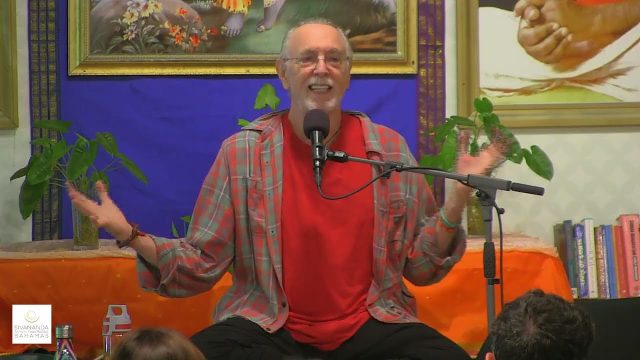
In conversation with psychologist Daniel Goleman, Ram Dass examines the paradox of modern unhappiness—why people with access to comfort and security remain dissatisfied. He identifies clinging to sense experiences and rigid attachment to identity as roots of suffering, and proposes that real change arises not from external circumstances but from inward awakening. Through meditation and embracing simplicity, he argues, we can quiet the mind's constant chatter, access the space behind thought, and shift identification from doing and knowing to simply being.

Lettura · 6 sezioni

Why Are People Unhappy Despite Having More?

Ram Dass begins by addressing a fundamental modern paradox: people have more comfort, more security, more access to experiences than ever before, yet happiness remains elusive. This isn't a failure of circumstance but a misunderstanding of what creates satisfaction. The unhappiness people experience stems not from lack, but from clinging—a habitual grasping after sense experiences and the belief that external conditions can deliver lasting contentment.

This clinging operates on two levels. First, there is the constant attempt to maximize pleasure and minimize pain through sensory experience. We chase after what feels good and push away what feels bad, yet this very mechanism becomes the source of suffering. No matter how refined or abundant our experiences, the mind trained to cling will always find another desired state just out of reach. Second, there is deep identification with a fixed self—the personality, history, and social role we believe ourselves to be. This identity becomes a fortress we defend, which generates constant anxiety about how we appear and whether we are secure.

Ram Dass points to a deeper realization that awakens through spiritual practice: there is no absolute, unchanging reality to cling to. Everything we perceive—our thoughts, emotions, sensations, even our sense of self—is in constant flux. Yet the mind continues to treat these impermanent phenomena as solid and permanent, which is the fundamental delusion that perpetuates suffering.

How Can We Actually Change Our Inner Experience?

When Goleman asks how someone can practically begin to change, Ram Dass is clear: real change comes from within, not from external rearrangement. This is not metaphorical. We can change our job, our relationship, our location, or our possessions, but if the inner mechanism of clinging and identification remains intact, we will recreate the same suffering in new circumstances. A wealthy person with an unchanged mind will find new sources of anxiety; a person in retreat with an unchanged mind will find new objects of craving.

The path forward, Ram Dass suggests, is a shift in consciousness itself. Rather than trying to control or perfect external conditions, we can begin to question the nature of the mind that experiences those conditions. This is where meditation becomes essential—not as a technique to achieve a better feeling, but as a direct investigation into how consciousness actually works.

The Power of Meditation and Entering the Space Behind Thought

Ram Dass illustrates the power of meditation through lived example. In meditation, one discovers something counterintuitive: between thoughts there is a gap—a space of pure awareness that is not cluttered with content. Most people have never consciously experienced this space because the mind is trained to move so rapidly from one thought to the next that the gaps appear imperceptible. Yet with practice, attention can rest in these gaps, and when it does, there is a profound shift.

In that space behind thought—in what Ram Dass calls the gap between mental movements—there is no suffering, no self-judgment, no grasping. There is simply awareness itself, clear and unadorned. This is not a blank void or unconsciousness; it is the most alive and aware state possible, but it operates differently than the thinking mind. When one tastes this directly through meditation, the stranglehold that constant mental activity holds over consciousness begins to loosen.

The intellectual mind—the faculty of analysis, categorization, and problem-solving—has immense value as a tool. Ram Dass frames this precisely: the intellect is a terrific servant but a terrible master. When the intellect runs the show, it tries to think its way to happiness, to engineer the perfect life, to understand everything. Yet understanding and knowing are not the same as being. The intellect will always find something to worry about, some gap between how things are and how they should be. Only by stepping back from identification with the thinking mind can one access a different mode of consciousness altogether.

The Delight of Simplicity

Ram Dass names something that poets like Walt Whitman have celebrated but modern culture has largely forgotten: there is a real delight in simplicity. Not simplicity born of deprivation or asceticism imposed from outside, but the natural simplicity that arises when the mind stops its constant demand for stimulation and complexity. When you quiet the mind's endless commentary, when you stop chasing experiences and simply rest in what is, there is a kind of joy that doesn't depend on anything external.

In simplicity, something becomes available that the complex mind cannot access: the ability to plumb one's own depths of being. One can actually appreciate and recognize who you are at a deeper level—not as a collection of achievements, possessions, or roles, but as an entity that has taken birth, that is moving through a series of experiences, all of which serve a purpose in unfolding consciousness itself.

This realization—that every experience, every difficulty, every joy is part of an unfolding—fundamentally changes one's relationship to life. Instead of dividing experience into categories of good and bad, and spending energy trying to maximize one and eliminate the other, one can recognize that all experiences have value in the journey of awakening. This doesn't mean seeking out suffering, but it means no longer being at war with what arises.

From Doing and Knowing to Being

The deepest shift Ram Dass points toward is a move from identification with doing and knowing to identification with being. Modern life trains us to be defined by our accomplishments, our knowledge, our productivity. "What do you do?" is one of the first questions asked in social introduction. Yet doing and knowing are activities of the mind and body—they are functions, not essence.

Being, by contrast, is what you are when all doing and knowing fall away. It is the simple fact of existence itself, present whether you are thinking or not, whether you are accomplishing anything or sitting quietly. When consciousness is identified with being rather than with the products of the mind, there is a fundamental shift in what feels meaningful and what generates anxiety. The constant pressure to become someone, to achieve something, to prove your worth—all of this arises from identification with the doing self. Identity with being is already complete; there is nothing to prove.

This doesn't mean abandoning work or knowledge—it means using these tools from a different ground. When action arises from being, it is more aligned, more natural, and less driven by fear and grasping. When understanding arises from being, it is less defensive and more open to what actually is.

Where to Go From Here

If this exploration resonates, the practical path forward is meditation. Begin with a simple practice: sit quietly and bring attention to the breath, or to a mantra, or to awareness itself. When the mind wanders—which it will—gently return attention. The goal is not to achieve a special state but to develop intimate familiarity with how your mind actually works, to experience the gaps between thoughts, and to begin to loosen the grip of constant mental activity over consciousness.

Simultaneously, experiment with simplicity in your daily life. Notice where you reach for stimulation out of habit rather than genuine need. Where can you create space? Where can you let go of complexity? What happens when you stop for a moment and simply rest in being, without agenda?

Read Ram Dass's written teachings on meditation and consciousness, engage with communities exploring these questions, and remember that this is not about achieving some distant goal. The being you are seeking to recognize is already here, waiting only for the mind to grow quiet enough to notice.

Commenti

Caricamento della conversazione…

L'artista di questa storia

Ram Dass

Ram Dass

Spiritual Teacher

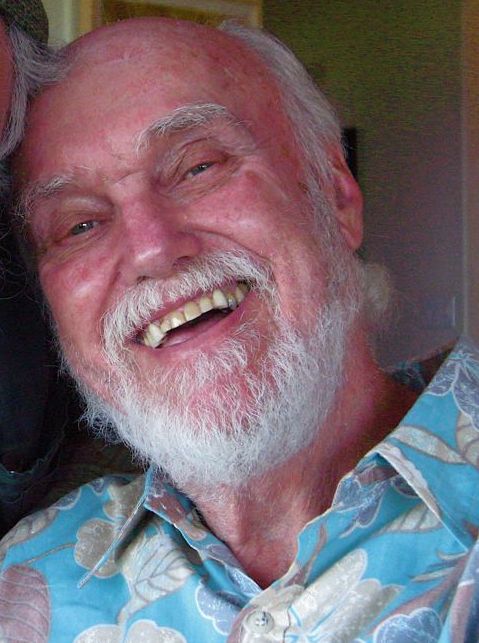
Ram Dass (born Richard Alpert, 1931-2019) was an American spiritual teacher, psychologist, and author whose 1971 book Be Here Now helped popularize Eastern spirituality in the West. A Harvard psychologist turned Hindu devotee, he bridged psychedelic research, yoga, and conscious living for millions.

Vedi il profilo
Esplora i temi
Happiness sufferingMeditation practiceSimplicity beingConsciousnessClinging attachment
Domande frequenti

Domande frequenti

Ram Dass explains that unhappiness stems from clinging to sense experiences and identifying rigidly with the self, not from lack of external conditions. Even with comfort and abundance, if the inner mechanism of grasping remains, the mind will recreate dissatisfaction with new circumstances. Real change requires inward awakening, not external rearrangement.

Through meditation, attention learns to rest in the gaps between thoughts—spaces of pure awareness where there is no mental chatter or suffering. By repeatedly returning attention to these gaps, the stranglehold that constant thinking has over consciousness loosens, allowing access to a different mode of awareness altogether.

The thinking mind excels at analysis and problem-solving when used as a tool, but when it runs the entire show, it creates suffering by constantly analyzing, comparing, and finding gaps between how things are and how they should be. Real freedom comes from shifting identification from thinking to being, which the intellect cannot access on its own.

No. Ram Dass describes simplicity as a delight that arises naturally when the mind stops demanding constant stimulation, not as something imposed from outside. True simplicity allows access to deeper levels of being and creates space to plumb one's own depths, whereas imposed deprivation is still the mind controlling experience.

Through consistent meditation and by noticing where you define yourself by accomplishments or knowledge, you can gradually recognize being as the ground of existence that does not depend on any doing or knowing. Being is what you are when all activity falls away—already complete and requiring nothing to prove its worth.

In meditation, between each thought there is a gap of pure awareness that the rapid mind usually misses. This space is not blank but alive with consciousness itself—here there is no suffering, judgment, or grasping. Sustained attention in this space reveals a mode of awareness distinct from thinking.

Yes. These teachings don't require abandoning work or knowledge—they reorient your relationship to these activities. When action arises from identification with being rather than from driven striving, it becomes more aligned, natural, and less reactive to fear or grasping.

Ram Dass identifies clinging—habitual grasping after pleasant experiences and pushing away unpleasant ones—as a core source of suffering. Because all experiences are impermanent, the mind's attempt to make them permanent creates constant friction. Real suffering comes from treating impermanent phenomena as if they are solid and absolute.

Potrebbe piacerti anche

Vedi Tutto
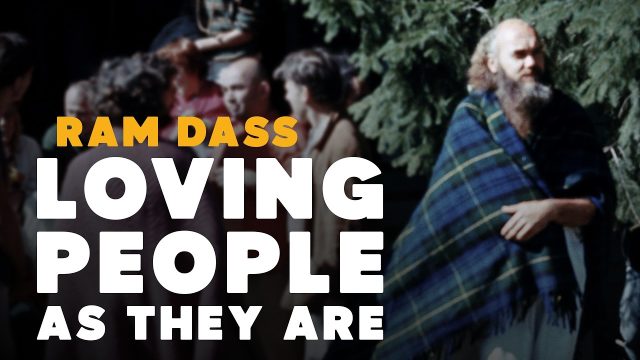
Love People As They Are: Responsive vs. Reactive
Inspire

Love People As They Are: Responsive vs. Reactive

Learn how to love people unconditionally by shifting from reactive patterns to responsive presence, keeping your heart open in the face of s…

9 min read
Freedom Without Connection: Why Liberation Feels Empty
Inspire

Freedom Without Connection: Why Liberation Feels Empty

External freedom without spiritual connection leaves the heart hollow. Explore why liberation requires more than just the absence of constra…

7 min read
First Meeting with a Living Guru: Recognition and Transformation
Inspire

First Meeting with a Living Guru: Recognition and Transformation

Krishna Das reflects on his first encounters with his teacher Maharaj-ji and Ram Dass, describing the moment he recognized something real ab…

7 min read
Rumi's Teaching Story: Presence and Spiritual Wisdom
Inspire

Rumi's Teaching Story: Presence and Spiritual Wisdom

Ram Dass shares a timeless Rumi story on presence and spiritual awakening. A brief but potent lesson in mindfulness and the heart's capacity…

6 min read
Vedi tuttiPotrebbe piacerti anche→

Continua il tuo viaggio

Altra saggezza e altri incontri da tutta la directory BrightStar.

Altri articoli

Sfoglia l’intera raccolta di insegnamenti, interviste e guide.

Torna a tutti gli articoli →

Insegnanti e artisti

Esplora i lignaggi, i musicisti e le guide del mondo consapevole.

Esplora gli artisti →

Trova un evento

Kirtan, ritiri, sound bath, breathwork, festival: in arrivo presto.

Sfoglia gli eventi →