BrightStar
BlogI miei biglietti
Saved events
Aiuto e contattiRegistratiAccedi
Eventi
  • Sfoglia tutti i Eventi
  • Yoga
  • Meditazione
  • Breathwork
  • Qigong
  • Musica sacra
  • World music
  • Musica medicina
  • Sound healing
  • Danza estatica
  • Cerimonia
  • Medicina delle piante
  • Guarigione energetica
  • Satsang e saggezza
  • Tantra
  • Ritiri
  • Tutte le categorie →
Destinazioni
  • Bali
  • Sedona
  • Los Angeles
  • Costa Rica
  • Tulum
  • Byron Bay
  • San Francisco
  • Austin
  • New York
  • San Diego
  • Denver
  • Seattle
  • Portland
  • Miami
  • London
  • Maui
  • Boulder
  • Tutte le città →
Piattaforma
  • Per organizzatori
  • Unisciti al movimento
  • Sell Globally
  • Per i creatori
  • Per team
  • Per gli scrittori
  • Per gli insegnanti
  • Per gli artisti kirtan
  • Per gli studi
  • Per i festival
  • Per i centri ritiro
  • Per le no-profit
  • Ambasciatore del brand
  • Biglietteria gratuita
  • Pro
  • Amplify
  • L’ecosistema
Funzionalità

Biglietteria e acquisto

  • Ticket categories
  • Assigned seating
  • Custom questions
  • Coupon codes
  • Smart pricing
  • Ticket sharing
  • Waitlist
  • Flexible refunds
  • Digital waivers
  • Tip jar
  • Donations and sliding scale
  • Embed widget
  • Mindful checkout
  • Recurring events
  • Private sessions
  • Online courses
  • Summits
  • Rooms and stays
  • Ticket scanner

Marketing e crescita

  • Abandoned cart recovery
  • Visitor recovery
  • Upsells and add-ons
  • Affiliate engine
  • Upsell affiliate network
  • Brand ambassador
  • Meta retargeting
  • Verified buyer network
  • Outbound email marketing
  • Email sequences
  • SMS and WhatsApp
  • Event upsell network
  • Direct mail campaigns
  • SEO engine
  • Syndication
  • Event sharing
  • Custom event pages
  • Artist profiles
  • Link in bio
  • Event blog
  • Blog newsletter

Pagamenti

  • Payments, powered by Stripe
  • Buy now, pay later
  • Apple Wallet
  • Multi currency

Dati e operazioni

  • Team access
  • Message center
  • Reports
  • Analytics reporting
  • Performance reporting
  • Customer data
  • Integrations
  • Switch from another platform

IA

  • Assistant
  • AI FAQ assistant
  • Tutte le funzionalità →
Azienda
  • Chi siamo
  • Domande frequenti
  • Contatti
  • Blog
  • Glossario
  • Guides
  • Ispirazione
  • Centro assistenza
  • Documentazione API
  • Risorse del brand
  • Stampa
  • Termini di servizio
  • Informativa sulla privacy

Eventi

  • Sfoglia tutti i Eventi
  • Yoga
  • Meditazione
  • Breathwork
  • Qigong
  • Musica sacra
  • World music
  • Musica medicina

Destinazioni

  • Bali
  • Sedona
  • Los Angeles
  • Costa Rica
  • Tulum
  • Byron Bay
  • San Francisco
  • Austin

Piattaforma

  • Per organizzatori
  • Unisciti al movimento
  • Sell Globally
  • Per i creatori
  • Per team
  • Per gli scrittori
  • Per gli insegnanti
  • Per gli artisti kirtan

Funzionalità

  • Rete della comunità
  • Recupero carrelli abbandonati
  • Categorie di biglietti
  • Eventi ricorrenti
  • Posti assegnati
  • Sistema affiliati
  • Lista d'attesa / Notifica
  • Tutte le funzionalità →

Azienda

  • Chi siamo
  • Domande frequenti
  • Contatti
  • Blog
  • Glossario
  • Guides
  • Termini di servizio
  • Informativa sulla privacy
Leggi di più

Eventi

  • Sound healing
  • Danza estatica
  • Cerimonia
  • Medicina delle piante
  • Guarigione energetica
  • Satsang e saggezza
  • Tantra
  • Ritiri
  • Tutte le categorie →

Destinazioni

  • New York
  • San Diego
  • Denver
  • Seattle
  • Portland
  • Miami
  • London
  • Maui
  • Boulder
  • Tutte le città →

Piattaforma

  • Per gli studi
  • Per i festival
  • Per i centri ritiro
  • Per le no-profit
  • Ambasciatore del brand
  • Biglietteria gratuita
  • Pro
  • Amplify
  • L’ecosistema

Azienda

  • Ispirazione
  • Centro assistenza
  • Documentazione API
  • Risorse del brand
  • Stampa

Biglietteria e acquisto

  • Ticket categories
  • Assigned seating
  • Custom questions
  • Coupon codes
  • Smart pricing
  • Ticket sharing
  • Waitlist
  • Flexible refunds
  • Digital waivers
  • Tip jar
  • Donations and sliding scale
  • Embed widget
  • Mindful checkout
  • Recurring events
  • Private sessions
  • Online courses
  • Summits
  • Rooms and stays
  • Ticket scanner

Marketing e crescita

  • Abandoned cart recovery
  • Visitor recovery
  • Upsells and add-ons
  • Affiliate engine
  • Upsell affiliate network
  • Brand ambassador
  • Meta retargeting
  • Verified buyer network
  • Outbound email marketing
  • Email sequences
  • SMS and WhatsApp
  • Event upsell network
  • Direct mail campaigns
  • SEO engine
  • Syndication
  • Event sharing
  • Custom event pages
  • Artist profiles
  • Link in bio
  • Event blog
  • Blog newsletter

Pagamenti

  • Payments, powered by Stripe
  • Buy now, pay later
  • Apple Wallet
  • Multi currency

Dati e operazioni

  • Team access
  • Message center
  • Reports
  • Analytics reporting
  • Performance reporting
  • Customer data
  • Integrations
  • Switch from another platform

IA

  • Assistant
  • AI FAQ assistant
Scarica l'app
Scarica suApp StoreDisponibile suGoogle Play
© 2026 BrightStar. Tutti i diritti riservati. BrightStar Selection · Crediti fotografici · Registro delle modifiche ·
Inspiration

Who Am I Anymore? Rediscovering Yourself as Life Changes

Jill Ripley
Jill Ripley
Oct 19, 2026
9 min di lettura

Da Uncovering Your Inner Power with Jill Ripley

Guarda · 8

Identity, Jill Ripley argues, is not something you find once and carry unchanged for the rest of your life. In this episode of her podcast Uncovering Your Inner Power, she makes the case that the roles we inhabit, such as child, parent, employee, or friend, are passing forms rather than permanent answers. She also suggests that the sentences we build around ourselves, beginning with the words "I am," can outlive the circumstances that produced them. Starting from a morning meditation and the biblical phrase "I Am That I Am," she examines how labels shape our beliefs and choices, why releasing familiar roles feels so uncomfortable, and how uncertainty can be lived in rather than feared. The episode runs just under eleven minutes, yet it offers a compact way of thinking for anyone standing in the middle of a life transition and asking who they are now.

Lettura · 7 sezioni

Where does a question about identity begin?

Ripley does not open with a theory. She opens with a moment of stillness. She tells her listeners that "something came to me during my meditation this morning," and what came was a contemplation of identity. Her starting assumption, the one she then sets out to test, is the one most of us hold without examining: that who we are is relatively permanent, something we settle into early and carry with us for our entire lives.

The meditation, she says, complicated that picture. The more she thought about it, the less fixed identity seemed. The point is a modest one on the surface, but it reframes everything that follows.

— Jill Ripley, Uncovering Your Inner Power, 0:35

Is identity really fluid?

Ripley's central claim is blunt: "I would argue that identity is fluid." To make the case she takes inventory of her own life. She has been, by her own list, a child, a mother, a sister, a wife, an employer, an employee, an entrepreneur, a friend, a foe, a confidant, and "yes, even a gossip." She is candid that not every identity on that list is one she is proud of, and she treats that candor as part of the point. Each role, unflattering ones included, represents some aspect of who she was at a particular time.

The fluidity, she argues, is not only a matter of decades. You do not have to wait years for your identity to shift. Ripley describes a single day that might hold a loving parent in the morning, a professional making important decisions in the afternoon, and a friend offering comfort in the evening. The person is the same throughout, but different aspects of the self surface depending on circumstances. Identity, in this framing, is less a fixed object than a set of responses that adjust to the room.

— Jill Ripley, Uncovering Your Inner Power, 2:13

That observation matters because it removes the premise that change is an exception. If we shift roles dozens of times in one day, then transition is not a rare crisis. It is the ordinary texture of being alive.

What does "I Am That I Am" have to do with it?

The spiritual turn in the episode comes from the book of Exodus, where Moses asks God for his name and receives the reply "I am that I am." Ripley is careful to say she is not a biblical scholar, and she does not attempt a formal reading. Instead she treats the phrase as a lens on ordinary speech. Every time we say "I am," she observes, we are making a declaration: "I am a mother. I am successful. I am strong. I am afraid." We attach a description to who we believe we are.

Her insight is in the grammar. Whatever follows those two words is not locked in place. The predicate is open to revision. The sentence can be rewritten by the same person who wrote it. In her words, "If I say I'm afraid today, that doesn't mean I'll be afraid tomorrow." The same logic applies to a career or a relationship that once defined us, and to mistakes we are not proud of. None of these needs to become a permanent description.

— Jill Ripley, Uncovering Your Inner Power, 3:45

For a practical reader, this is the most usable idea in the episode. Notice the "I am" statements you rely on. Ask which ones are observations about a moment and which ones have quietly hardened into verdicts. The first kind can change without drama. The second kind is often where the resistance to change lives.

Why is it so hard to let go of a familiar role?

Ripley is clear that the difficulty is not the roles themselves but attachment to them, especially roles that have occupied most of our lives. Her example is a woman who has spent decades raising her children. Motherhood has organized her days, her priorities, and much of her sense of purpose. Then the children grow up and build lives of their own. The woman has not stopped being a mother, but the role has changed shape, and she may find herself asking who she is outside the responsibilities that once filled her time.

— Jill Ripley, Uncovering Your Inner Power, 4:36

She extends the same logic to a marriage ending, to retirement, and to the loss of someone we love. Some of these transitions are chosen and some are imposed. In every case, Ripley says, we are left navigating the loss of a familiar way of defining ourselves. The emotional core of her argument follows: the fear that accompanies change is often not about the change itself. It is about what will be waiting on the other side.

— Jill Ripley, Uncovering Your Inner Power, 5:31

This is why familiar roles can feel uncomfortable to release even when they no longer serve us. We know how to function inside them. Stepping out means entering a stretch where we may not have answers, and that is an unsettling place for most people to stand.

Can you embrace uncertainty without feeling lost?

Ripley's answer begins with a reframing of pressure. Many of us, she suggests, place unnecessary demands on ourselves to know exactly who we are and where we are going. We treat uncertainty as something to be avoided rather than as a natural part of life. Her question is the one that unlocks the episode: what if we did not need to have the answer right away? What if we allowed ourselves to move through a transition without feeling obliged to construct a new identity immediately?

She draws on her own history to make this concrete. Looking back, she can see how often her life changed in ways she never anticipated. Some chapters she embraced with enthusiasm, and others she would never have chosen. Those experiences shaped who she is, but none of them, she says, represents the whole of her. The distinction she draws is between honoring the past and letting it define the future. You can appreciate the roles you have played, acknowledge your mistakes, and recognize what you learned, without assuming you must remain the same person indefinitely.

A closely related idea is permission. Ripley reminds listeners that we are allowed to change our minds, to develop new interests, to discover different priorities, and to revisit beliefs we have held for years. Something that once felt essential may no longer carry the same meaning, and that does not invalidate the person we were when it mattered. It means we have grown.

— Jill Ripley, Uncovering Your Inner Power, 7:27

She also names a complication that many people will recognize. Others often keep seeing us through the lens of who we have always been. They grew accustomed to the roles we played in their lives, and our growth can unsettle their expectations. Ripley's position is that we do not have to remain attached to an outdated version of ourselves just because it is familiar to someone else.

What does it mean to simply be?

The episode returns to its starting phrase in its closing movement. Instead of constantly defining ourselves through roles, accomplishments, or relationships, Ripley asks what would happen if we occasionally allowed ourselves simply to be. Beneath every changing identity, she says, there is still a person experiencing life, learning, growing, and evolving. That continuity is the thread that persists, even when the labels do not.

— Jill Ripley, Uncovering Your Inner Power, 8:47

She also loosens the demand to know the future. "We don't have to know exactly who we'll become 5 years from now," she says, "and we don't have to remain the person we were 5 years ago." Identity, in her telling, is not something discovered once and held forever. It keeps unfolding as we move through life.

Her final formulation holds the episode together. Our past is part of our story, but it does not have to be the limit of who we can become. Ripley's invitation is not to rush toward a new identity. It is to rest in who you are now while remaining free to grow beyond it.

Where to go from here

Ripley's episode is short, and its strength is in the questions it leaves behind. A few ways to work with them:

  • List the identities you have held across your life, as she does, including the ones you are not proud of. Seeing them together makes the fluidity visible.
  • Identify one identity you are reluctant to release. Ask what it protects you from, and what you fear will be waiting on the other side.
  • Pay attention to your own "I am" sentences. Separate the descriptions of a moment from the verdicts you have treated as permanent.
  • If you are in a transition, give yourself permission not to define the next chapter yet. Uncertainty, as Ripley puts it, does not necessarily mean you are lost.

To hear her full reflection in her own voice, watch the episode from Uncovering Your Inner Power on YouTube, and consider sharing it with someone who is navigating a season of change.

Commenti

Caricamento della conversazione…

Transcript

[0:03] Welcome, beautiful souls, to another

[0:05] episode of Uncovering Your Inner Power.

[0:08] I'm your host, Jill Ripley.

[0:10] Before we get started, I'd like to ask

[0:13] that if you're enjoying this show,

[0:14] [music]

[0:14] would you consider leaving a review, a

[0:16] like, or a follow?

[0:18] I would be very grateful.

[0:20] It helps this show and our community to

[0:23] grow and allows me to continue sharing

[0:25] thought-provoking content for personal

[0:27] growth.

[0:30] A something came to me during my

[0:31] meditation this morning that I'd like to

[0:33] share with you.

[0:35] I was contemplating the concept of

[0:38] identity and how we tend to think of it

[0:41] as something relatively permanent.

[0:44] We develop an understanding of who we

[0:47] are and we carry that understanding with

[0:50] us, sometimes for our entire lives.

[0:54] But the more I thought about it, the

[0:56] more I realized that identity isn't

[0:59] nearly as fixed as we might believe.

[1:02] In fact, I would argue that identity is

[1:05] fluid.

[1:08] I think about all the different

[1:09] identities you've held throughout your

[1:11] lifetime.

[1:12] We're someone's child, perhaps someone's

[1:15] mother or father,

[1:17] a friend, a caregiver, a boss, or an

[1:21] employee.

[1:23] We move through these different roles as

[1:26] our lives unfold, sometimes embracing

[1:28] them with excitement and anticipation,

[1:32] and other times finding those

[1:33] transitions uncomfortable or even

[1:36] frightening.

[1:39] I've been many things throughout my

[1:40] life.

[1:41] A child, a mother, a sister, a wife, an

[1:45] employer, an employee, an entrepreneur,

[1:49] a friend, a foe, a confidant,

[1:53] and yes, even a gossip.

[1:57] And I think that's worth acknowledging

[1:58] because not every identity we experience

[2:01] is necessarily one we're proud of.

[2:06] But each one represents some aspect of

[2:08] who we've been at a particular point in

[2:11] time.

[2:13] What's interesting is that we don't even

[2:15] need to wait years for our identities to

[2:18] change.

[2:19] We can experience several different

[2:21] versions of ourselves in a single day.

[2:25] We might spend our morning being a

[2:27] loving parent, our afternoon as a

[2:30] professional making important decisions,

[2:33] and our evening offering comfort to a

[2:35] friend who's struggling.

[2:37] We're still the same person, but

[2:39] different aspects of ourselves emerge

[2:42] depending on the circumstances.

[2:45] And this is where my thoughts took

[2:47] somewhat of a spiritual turn.

[2:50] I began thinking about the passage in

[2:52] the Bible where Moses asked God for his

[2:56] name.

[2:57] And God responds, "I am that I am."

[3:03] Now, I'm certainly not a biblical

[3:05] scholar, but I find those words

[3:08] fascinating when I consider them in

[3:10] relation to identity.

[3:14] Every time we say I am,

[3:16] we're making a declaration about

[3:18] ourselves.

[3:21] I am a mother.

[3:23] I am successful.

[3:24] I am strong.

[3:26] I am afraid.

[3:28] We're attaching a description to who we

[3:31] believe ourselves to be.

[3:35] But here's what I find so wonderful

[3:36] about that concept.

[3:39] Whatever follows those two words doesn't

[3:42] have to remain the same.

[3:45] If I say I'm afraid today, that doesn't

[3:48] mean I'll be afraid tomorrow.

[3:51] If I've spent years identifying myself

[3:53] through a particular career or

[3:55] relationship, it doesn't mean that that

[3:58] role must define the rest of my life.

[4:01] And if I've made mistakes or behaved in

[4:04] ways that I'm not particularly proud of,

[4:07] those experiences don't have to become

[4:09] permanent descriptions of who I am.

[4:13] There is something incredibly freeing

[4:15] about recognizing that we're not

[4:17] confined to the person we've been.

[4:21] Of course, the difficulty comes when we

[4:23] become attached to a particular

[4:25] identity,

[4:26] especially one that's been a significant

[4:28] part of our lives.

[4:31] Consider a woman who has spent decades

[4:33] raising her children.

[4:36] Being a mother has shaped her daily

[4:38] routines,

[4:39] her priorities, and much of her sense of

[4:42] purpose.

[4:43] Then, her children grow up and begin

[4:45] building lives of their own.

[4:47] She's still a mother, but her role has

[4:50] changed.

[4:52] And she may find herself wondering who

[4:54] she is outside of the responsibilities

[4:56] that once occupied so much of her time.

[5:00] The same thing can happen when a

[5:02] marriage ends,

[5:04] when we retire from a career,

[5:06] or when we lose someone we love.

[5:09] Sometimes we choose these transitions,

[5:12] and sometimes life chooses them for us.

[5:16] But either way, we're often left

[5:18] navigating the uncertainty of no longer

[5:20] being able to define ourselves in quite

[5:23] the same way.

[5:25] And I think that's an important

[5:27] distinction.

[5:29] Sometimes what frightens us about change

[5:31] isn't necessarily the change itself, but

[5:34] the uncertainty of who will be on the

[5:36] other side of it.

[5:39] We become comfortable with the familiar,

[5:42] even when the familiar no longer serves

[5:44] us.

[5:46] We know how to function within the

[5:48] identities we've created and stepping

[5:51] away from them means we're entering a

[5:52] period where we may not have all the

[5:55] answers.

[5:57] But what if we didn't need to?

[6:00] What if we allowed ourselves to

[6:01] experience these transitions without

[6:04] feeling that we immediately need to

[6:06] establish a new identity?

[6:10] I think we sometimes place unnecessary

[6:12] pressure on ourselves to know exactly

[6:15] who we are or where we're going.

[6:18] We want to have everything figured out

[6:20] as though uncertainty is something to be

[6:22] avoided rather than a natural part of

[6:25] life.

[6:27] Yet when I look back over my own

[6:29] experiences, I can recognize how many

[6:31] times my life has changed in ways I

[6:34] never could have anticipated.

[6:37] There have been chapters I embraced

[6:39] enthusiastically and others I never

[6:42] would have chosen.

[6:44] And while those experiences have

[6:46] certainly influenced the person I am

[6:49] today,

[6:50] none of them represents the entirety of

[6:53] who I am.

[6:56] I think there's an important difference

[6:57] between honoring our past and allowing

[7:00] it to define our future.

[7:03] We can appreciate the roles we've

[7:05] played,

[7:06] acknowledge the mistakes we've made,

[7:09] and recognize the lessons we've learned

[7:11] without believing that we must remain

[7:13] the same person indefinitely.

[7:17] And perhaps this is something we should

[7:19] remind ourselves of more often.

[7:22] Particularly as we move into different

[7:24] stages of life.

[7:27] We're allowed to change our minds.

[7:30] We're allowed to develop new interests,

[7:32] discover different priorities, and

[7:35] reconsider beliefs we've held for years.

[7:40] Something that once felt incredibly

[7:42] important may no longer hold the same

[7:45] meaning.

[7:46] And that doesn't invalidate the person

[7:48] we were when it did.

[7:51] It simply means we've grown.

[7:54] I also think it's worth remembering that

[7:57] other people may continue to see us

[7:59] through the lens of who we've always

[8:01] been.

[8:02] They became accustomed to the roles we

[8:04] played in their lives and sometimes our

[8:07] growth challenges those expectations.

[8:11] But we don't have to remain attached to

[8:13] an outdated version of ourselves simply

[8:16] because it's familiar to someone else.

[8:20] And this brings me back to the words

[8:21] that inspired my reflection.

[8:25] I am that I am.

[8:28] What if instead of constantly feeling

[8:30] the need to define ourselves through our

[8:33] roles, accomplishments, or

[8:35] relationships,

[8:36] we occasionally allowed ourselves to

[8:39] simply

[8:40] be?

[8:42] To recognize that underneath all these

[8:44] changing identities, there is still a

[8:47] person experiencing life, learning,

[8:50] growing, and evolving.

[8:53] We don't have to know exactly who we'll

[8:56] become 5 years from now.

[8:58] And we don't have to remain the person

[9:00] we were 5 years ago.

[9:04] Perhaps the beauty of identity is that

[9:07] it isn't something we discover once and

[9:09] hold on to forever.

[9:12] It's something that continues to unfold

[9:14] as we move through life.

[9:17] So today, I'd like to invite you to

[9:19] consider the different identities you've

[9:21] held throughout your lifetime.

[9:23] Perhaps there's one you've been

[9:25] reluctant to release.

[9:27] Or maybe you're currently navigating a

[9:29] transition that's left you feeling

[9:31] uncertain about who you are becoming.

[9:35] If that's the case, I hope you'll

[9:36] remember that uncertainty doesn't

[9:38] necessarily mean you're lost.

[9:41] Sometimes it simply means that a

[9:42] familiar chapter is ending and another

[9:45] has yet to reveal itself.

[9:48] And maybe, just maybe, you don't need to

[9:51] rush to figure out what comes next.

[9:54] You can simply allow yourself to be who

[9:56] you are in this moment.

[9:58] Knowing that you're free to grow beyond

[10:00] it.

[10:01] Because who you've been is a part of

[10:04] your story.

[10:05] But it doesn't have to be the limit of

[10:07] who you can become.

[10:10] Thank you for spending this time with me

[10:12] today on Uncovering Your Inner Power.

[10:15] If this conversation resonated with you,

[10:17] I hope you'll share it with someone who

[10:19] may be navigating a season of change.

[10:22] And until next time, beautiful souls,

[10:24] continue looking within.

[10:26] >> [music]

[10:27] >> Trust your journey, and remember that

[10:29] the power to create a meaningful life

[10:32] has always [music] been within you.

Jill Ripley

Jill Ripley

Artista

Jill Ripley is an author and inner wisdom guide who turns her own journey through trauma, addiction and spiritual awakening into encouragement for anyone feeling broken, forgotten or stuck.

Vedi il profilo
Esplora i temi
IdentitySelf discoveryLife transitionsLetting goI am that i am
Domande frequenti

Domande frequenti

Jill Ripley argues that identity is fluid rather than fixed. She points out that we move through many roles over a lifetime and can even shift between several versions of ourselves within a single day, depending on circumstances.

Ripley uses the phrase as a lens on everyday speech: every 'I am' statement is a declaration about who we believe we are. Because whatever follows 'I am' can be revised, the descriptions we attach to ourselves need not stay the same.

Ripley suggests the fear often has less to do with the change itself than with uncertainty about who we will be on the other side of it. We become comfortable with familiar roles, even when they no longer serve us, and stepping away means entering a period without all the answers.

Ripley's example of a mother whose children have grown describes how the role changes shape without disappearing, leaving a person to ask who they are beyond those responsibilities. Her advice is to recognize that the past shapes you without defining the whole of you, and to allow yourself time before needing a new identity.

No, according to Ripley. She says we place unnecessary pressure on ourselves to have everything figured out, and suggests we can simply be who we are in the present moment while remaining free to grow.

Ripley suggests noticing which self-descriptions are observations about a particular moment and which have hardened into permanent verdicts. Recognizing that you are allowed to change your mind, develop new interests, and revisit old beliefs makes it easier to release labels that no longer fit.

Potrebbe piacerti anche

Vedi Tutto
Ganga Is a Mother to Us All: A Story From Sri Siddhi Ma
Inspire

Ganga Is a Mother to Us All: A Story From Sri Siddhi Ma

A holy dip at Har Ki Pauri turns into a revelation in Sri Siddhi Ma. Nina Rao reads Jaya Prasada's Ganga passage beside the river.…

9 min read
The Heart Space Where All Is Welcome: A Guided Meditation
Inspire

The Heart Space Where All Is Welcome: A Guided Meditation

Tara Brach's guided meditation starts with a smile spreading across an open sky. Here is how its softening, expanding awareness and return t…

9 min read
Medicine Buddha Practice: Feeling Beneath the Thinking
Inspire

Medicine Buddha Practice: Feeling Beneath the Thinking

Lama Rod Owens opens a Monday-night Medicine Buddha session six years into the practice, teaching how to feel an experience instead of think…

10 min read
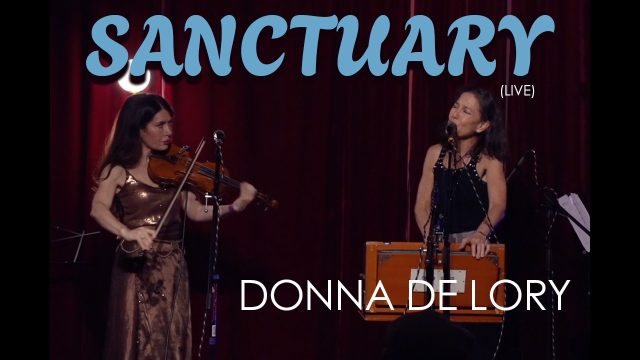
Sanctuary Live: Becoming a Living Sanctuary in Song
Inspire

Sanctuary Live: Becoming a Living Sanctuary in Song

Donna De Lory's acoustic performance of "Sanctuary" builds a six-minute prayer out of one request: prepare me. Here is how the lyric, the sh…

7 min read
Vedi tuttiPotrebbe piacerti anche→

Continua il tuo viaggio

Altra saggezza e altri incontri da tutta la directory BrightStar.

Altri articoli

Sfoglia l’intera raccolta di insegnamenti, interviste e guide.

Torna a tutti gli articoli →

Insegnanti e artisti

Esplora i lignaggi, i musicisti e le guide del mondo consapevole.

Esplora gli artisti →

Trova un evento

Kirtan, ritiri, sound bath, breathwork, festival: in arrivo presto.

Sfoglia gli eventi →