BrightStar
BlogI miei biglietti
Saved events
Aiuto e contattiRegistratiAccedi
Eventi
  • Sfoglia tutti i Eventi
  • Per i ricercatori
  • Yoga
  • Meditazione
  • Breathwork
  • Qigong
  • Musica sacra
  • World music
  • Musica medicina
  • Sound healing
  • Danza estatica
  • Cerimonia
  • Medicina delle piante
  • Guarigione energetica
  • Satsang e saggezza
  • Tantra
  • Ritiri
  • Tutte le categorie →
Destinazioni
  • Bali
  • Sedona
  • Los Angeles
  • Costa Rica
  • Tulum
  • Byron Bay
  • San Francisco
  • Austin
  • New York
  • San Diego
  • Seattle
  • Portland
  • Miami
  • London
  • Maui
  • Boulder
  • Oakland
  • Tutte le città →
Piattaforma
  • Per organizzatori
  • Unisciti al movimento
  • Sell Globally
  • Per i creatori
  • Per team
  • Per gli scrittori
  • Per gli insegnanti
  • Per gli artisti kirtan
  • Per gli studi
  • Per i festival
  • Per i centri ritiro
  • Per le no-profit
  • Ambasciatore del brand
  • Biglietteria gratuita
  • Elevate
  • Amplify
  • L’ecosistema
Funzionalità

Biglietteria e acquisto

  • Ticket categories
  • Assigned seating
  • Custom questions
  • Coupon codes
  • Smart pricing
  • Ticket sharing
  • Waitlist
  • Flexible refunds
  • Digital waivers
  • Tip jar
  • Donations and sliding scale
  • Embed widget
  • Mindful checkout
  • Recurring events
  • Private sessions
  • Online courses
  • Summits
  • Rooms and stays
  • Ticket scanner

Marketing e crescita

  • Abandoned cart recovery
  • Visitor recovery
  • Upsells and add-ons
  • Affiliate engine
  • Upsell affiliate network
  • Brand ambassador
  • Meta retargeting
  • Verified buyer network
  • Outbound email marketing
  • Email sequences
  • SMS and WhatsApp
  • Event upsell network
  • Direct mail campaigns
  • SEO engine
  • Syndication
  • Event sharing
  • Custom event pages
  • Artist profiles
  • Link in bio
  • Event blog
  • Blog newsletter

Pagamenti

  • Payments, powered by Stripe
  • Buy now, pay later
  • Apple Wallet
  • Multi currency

Dati e operazioni

  • Team access
  • Message center
  • Reports
  • Analytics reporting
  • Performance reporting
  • Customer data
  • Integrations
  • Switch from another platform

IA

  • Assistant
  • AI FAQ assistant
  • Tutte le funzionalità →
Azienda
  • Chi siamo
  • Domande frequenti
  • Contatti
  • Blog
  • Glossario
  • Guides
  • Ispirazione
  • Centro assistenza
  • Documentazione API
  • Risorse del brand
  • Stampa
  • Termini di servizio
  • Informativa sulla privacy

Eventi

  • Sfoglia tutti i Eventi
  • Per i ricercatori
  • Yoga
  • Meditazione
  • Breathwork
  • Qigong
  • Musica sacra
  • World music

Destinazioni

  • Bali
  • Sedona
  • Los Angeles
  • Costa Rica
  • Tulum
  • Byron Bay
  • San Francisco
  • Austin

Piattaforma

  • Per organizzatori
  • Unisciti al movimento
  • Sell Globally
  • Per i creatori
  • Per team
  • Per gli scrittori
  • Per gli insegnanti
  • Per gli artisti kirtan

Funzionalità

  • Rete della comunità
  • Recupero carrelli abbandonati
  • Categorie di biglietti
  • Eventi ricorrenti
  • Posti assegnati
  • Sistema affiliati
  • Lista d'attesa / Notifica
  • Tutte le funzionalità →

Azienda

  • Chi siamo
  • Domande frequenti
  • Contatti
  • Blog
  • Glossario
  • Guides
  • Termini di servizio
  • Informativa sulla privacy
Leggi di più

Eventi

  • Musica medicina
  • Sound healing
  • Danza estatica
  • Cerimonia
  • Medicina delle piante
  • Guarigione energetica
  • Satsang e saggezza
  • Tantra
  • Ritiri
  • Tutte le categorie →

Destinazioni

  • New York
  • San Diego
  • Seattle
  • Portland
  • Miami
  • London
  • Maui
  • Boulder
  • Oakland
  • Tutte le città →

Piattaforma

  • Per gli studi
  • Per i festival
  • Per i centri ritiro
  • Per le no-profit
  • Ambasciatore del brand
  • Biglietteria gratuita
  • Elevate
  • Amplify
  • L’ecosistema

Azienda

  • Ispirazione
  • Centro assistenza
  • Documentazione API
  • Risorse del brand
  • Stampa

Biglietteria e acquisto

  • Ticket categories
  • Assigned seating
  • Custom questions
  • Coupon codes
  • Smart pricing
  • Ticket sharing
  • Waitlist
  • Flexible refunds
  • Digital waivers
  • Tip jar
  • Donations and sliding scale
  • Embed widget
  • Mindful checkout
  • Recurring events
  • Private sessions
  • Online courses
  • Summits
  • Rooms and stays
  • Ticket scanner

Marketing e crescita

  • Abandoned cart recovery
  • Visitor recovery
  • Upsells and add-ons
  • Affiliate engine
  • Upsell affiliate network
  • Brand ambassador
  • Meta retargeting
  • Verified buyer network
  • Outbound email marketing
  • Email sequences
  • SMS and WhatsApp
  • Event upsell network
  • Direct mail campaigns
  • SEO engine
  • Syndication
  • Event sharing
  • Custom event pages
  • Artist profiles
  • Link in bio
  • Event blog
  • Blog newsletter

Pagamenti

  • Payments, powered by Stripe
  • Buy now, pay later
  • Apple Wallet
  • Multi currency

Dati e operazioni

  • Team access
  • Message center
  • Reports
  • Analytics reporting
  • Performance reporting
  • Customer data
  • Integrations
  • Switch from another platform

IA

  • Assistant
  • AI FAQ assistant
Scarica l'app
Scarica suApp StoreDisponibile suGoogle Play
© 2026 BrightStar. Tutti i diritti riservati. BrightStar Selection · Crediti fotografici · Registro delle modifiche ·
Inspiration

Universal Law Alignment: Tuning Into Dharmic Flow

Ram Dass
Ram Dass
Nov 29, 2025
5 min di lettura

Da Be Here Now Network

In this brief but concentrated teaching, Ram Dass addresses how to "tune" one's consciousness and awareness to align with the underlying laws governing the universe. Rather than imposing will or effort onto reality, the practice involves attunement—a receptive alignment with dharmic principles and the natural order. This tuning sharpens perception, reduces friction between self and circumstance, and enables action rooted in universal law rather than ego-driven impulse. The teaching draws on classical Hindu and Buddhist frameworks where dharma (the lawful order of existence) becomes the guide for both inner peace and outer righteous action.

Lettura · 6 sezioni

What Does It Mean to "Tune" to Universal Law?

The metaphor of tuning—as one might tune an instrument—points to a specific quality of awareness. Rather than thinking, deciding, and acting, tuning implies listening, calibrating, and aligning. Ram Dass emphasizes that the universe operates according to lawful principles that exist whether or not the individual ego recognizes them. These principles shape causality, interdependence, and the unfolding of karma.

When consciousness tunes into these laws, several things shift. First, perception clarifies. Events and circumstances that appeared random or hostile become recognizable as natural consequences. Second, action becomes more skillful because it flows from alignment rather than against the grain of reality. A guitarist who tunes their instrument doesn't fight the physics of sound; they align their strings to the frequency that resonates. Similarly, a human consciousness attuned to universal law doesn't struggle against causality—it moves with it.

How Does Resting in Awareness Facilitate Tuning?

The teaching title references "Resting in Awareness," which suggests that the practice is not effortful striving. This distinction matters. Many spiritual seekers mistake the path for another arena of ambition—trying to become enlightened, trying to be good, trying to tune themselves through sheer force of will. But tuning, as Ram Dass frames it here, requires a settling back into awareness itself rather than from awareness.

When the mind settles, when effort relaxes, the conditioned patterns that normally filter perception begin to quiet. The constant noise of preference, judgment, and self-referential thought drops. In that space, it becomes possible to notice what is actually true about the situation—what the universe is expressing in this moment. This is not passivity; it is receptive clarity. From that clarity, right action emerges naturally rather than being calculated by the small ego.

What Is Dharma and Why Does It Matter?

Dharma is often translated as "duty," "righteousness," or "law," but the full meaning is subtler. Dharma refers to the underlying order and coherence of existence—the patterns by which the universe maintains itself. In classical Indian philosophy, each being has a particular dharma: the integrity and authentic function specific to their nature and circumstance. For a king, dharma means ruling justly. For a teacher, it means transmitting wisdom. For a student, it means studying with sincere intention.

The insight Ram Dass points toward is that acting in alignment with one's dharma—one's true role and responsibility within the whole—paradoxically frees one from the burden of personal outcome. When you stop trying to engineer a specific result and instead ask "What does the universe need from me right now? What is my true function here?"—that alignment itself becomes the reward. The anxiety of personal success and failure falls away because you are no longer the center of the equation; you are a conduit of something larger.

How Does Tuning Connect to Karma?

Karma, often misunderstood as punishment and reward, is actually the principle of causality and intentional action. Every thought, word, and deed produces a vibration that propagates through the web of existence and eventually returns to the doer. If consciousness is attuned to universal law, actions naturally align with karma-producing truth: harmlessness, honesty, and wisdom. Misaligned consciousness—clouded by greed, anger, delusion—produces actions that sow suffering.

By tuning to the law of the universe, one's karma becomes cleaner, lighter. Not because one is trying to be good (which is still ego-driven), but because alignment with universal law spontaneously expresses as truth and compassion. The individual doesn't have to force virtue; virtue flows from the tuning itself.

What Is the Practical Difference This Makes?

In ordinary consciousness, life feels like a struggle. I want X, circumstances provide Y, I resist and suffer. But when consciousness rests in awareness and attunes to universal law, the same circumstances reveal a different texture. Obstacles become information. Failures become recalibration. Even pain becomes intelligible within the larger pattern rather than a meaningless affront. This doesn't mean passivity or indifference—genuine dharmic action often requires fierce effort and clarity—but it means effort rooted in alignment rather than in ego-fear.

Practically, this tuning allows a person to move through the world with less friction. Fewer wasted battles. Less resentment. More trust in the unfolding, even when the unfolding looks nothing like what the ego wanted. The irony is that this surrender often allows clearer, more effective action because the person is not divided against themselves, not fighting reality while trying to navigate it.

Where to Go From Here

To practice tuning to the law of the universe, begin with simple meditation or awareness-resting practices that quiet the mental chatter. Notice when you are acting from ego-impulse (I want, I fear, I resent) versus when you are acting from alignment (this feels true, this serves the whole, this is my dharma). Over time, the body learns the felt difference. Contemplate your actual role and responsibility in your life—not the role you think you should have, but the one that is authentically yours given your nature and circumstance. When facing a decision or challenge, pause and ask: "What is the universal law here? What does this situation require? What is my true function?" Then act from the clarity that emerges rather than from calculation. This is tuning—and it transforms not the universe, but your experience of moving through it.

Commenti

Caricamento della conversazione…

L'artista di questa storia

Ram Dass

Ram Dass

Spiritual Teacher

Ram Dass (born Richard Alpert, 1931-2019) was an American spiritual teacher, psychologist, and author whose 1971 book Be Here Now helped popularize Eastern spirituality in the West. A Harvard psychologist turned Hindu devotee, he bridged psychedelic research, yoga, and conscious living for millions.

Vedi il profilo
Esplora i temi
Universal lawDharmaAwarenessConsciousnessKarma
Domande frequenti

Domande frequenti

Tuning involves resting awareness and quieting ego-driven thought patterns rather than forcing or controlling. Through meditation and moment-to-moment attention, you develop sensitivity to what is actually true in a situation—the natural order beneath circumstances. This receptive clarity allows action to flow from alignment rather than from fear or personal ambition.

Dharma is your authentic role and function within the larger whole, while personal goals often reflect ego desires and conditioning. Dharmic action serves something beyond the self and naturally produces less internal conflict, whereas goal-driven action can create friction and suffering. Aligning with dharma paradoxically frees you from the anxiety of personal outcome.

No. Genuine dharmic action often requires fierce effort and clarity. The difference is that the effort flows from alignment with reality rather than against it. You stop wasting energy in inner resistance and instead direct it toward authentic responsibility—which typically becomes more effective and less exhausting.

When the mind settles and constant mental noise quiets, conditioned patterns of perception become transparent. From that clarity, you can perceive what the universe actually requires rather than what your ego imagines. This receptive state is the foundation from which authentic tuning—and right action—emerges naturally.

Karma is the principle of intentional action and its consequences. When consciousness is attuned to universal law, thoughts and actions naturally align with truth and compassion rather than greed or delusion. Tuning doesn't require forcing virtue; virtue flows spontaneously from alignment with the universal order.

Ego-driven action typically produces inner tension, defensiveness, and resentment. Dharmic action feels coherent, true, and carries a sense of rightness even when it is difficult. Over time, meditation practice develops the subtle sensitivity to distinguish these felt differences in how your body-mind registers alignment versus misalignment.

Potrebbe piacerti anche

Vedi Tutto
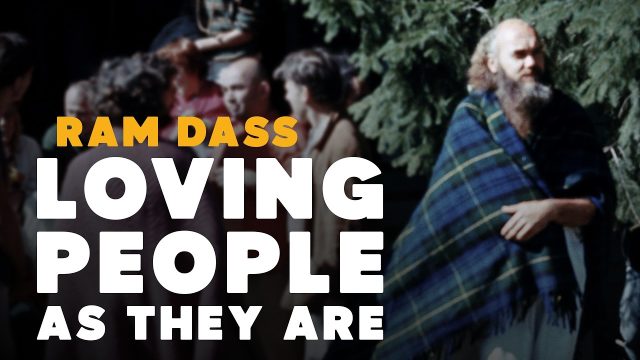
Love People As They Are: Responsive vs. Reactive
Inspire

Love People As They Are: Responsive vs. Reactive

Learn how to love people unconditionally by shifting from reactive patterns to responsive presence, keeping your heart open in the face of s…

9 min read
Freedom Without Connection: Why Liberation Feels Empty
Inspire

Freedom Without Connection: Why Liberation Feels Empty

External freedom without spiritual connection leaves the heart hollow. Explore why liberation requires more than just the absence of constra…

7 min read
First Meeting with a Living Guru: Recognition and Transformation
Inspire

First Meeting with a Living Guru: Recognition and Transformation

Krishna Das reflects on his first encounters with his teacher Maharaj-ji and Ram Dass, describing the moment he recognized something real ab…

7 min read
Rumi's Teaching Story: Presence and Spiritual Wisdom
Inspire

Rumi's Teaching Story: Presence and Spiritual Wisdom

Ram Dass shares a timeless Rumi story on presence and spiritual awakening. A brief but potent lesson in mindfulness and the heart's capacity…

6 min read
Vedi tuttiPotrebbe piacerti anche→

Continua il tuo viaggio

Altra saggezza e altri incontri da tutta la directory BrightStar.

Altri articoli

Sfoglia l’intera raccolta di insegnamenti, interviste e guide.

Torna a tutti gli articoli →

Insegnanti e artisti

Esplora i lignaggi, i musicisti e le guide del mondo consapevole.

Esplora gli artisti →

Trova un evento

Kirtan, ritiri, sound bath, breathwork, festival: in arrivo presto.

Sfoglia gli eventi →