BrightStar
BlogI miei biglietti
Saved events
Aiuto e contattiRegistratiAccedi
Eventi
  • Sfoglia tutti i Eventi
  • Yoga
  • Meditazione
  • Breathwork
  • Qigong
  • Musica sacra
  • World music
  • Musica medicina
  • Sound healing
  • Danza estatica
  • Cerimonia
  • Medicina delle piante
  • Guarigione energetica
  • Satsang e saggezza
  • Tantra
  • Ritiri
  • Tutte le categorie →
Destinazioni
  • Bali
  • Sedona
  • Los Angeles
  • Costa Rica
  • Tulum
  • Byron Bay
  • San Francisco
  • Austin
  • New York
  • San Diego
  • Denver
  • Seattle
  • Portland
  • Miami
  • London
  • Maui
  • Boulder
  • Tutte le città →
Piattaforma
  • Per organizzatori
  • Unisciti al movimento
  • Sell Globally
  • Per i creatori
  • Per team
  • Per gli scrittori
  • Per gli insegnanti
  • Per gli artisti kirtan
  • Per gli studi
  • Per i festival
  • Per i centri ritiro
  • Per le no-profit
  • Ambasciatore del brand
  • Biglietteria gratuita
  • Pro
  • Amplify
  • L’ecosistema
Funzionalità

Biglietteria e acquisto

  • Ticket categories
  • Assigned seating
  • Custom questions
  • Coupon codes
  • Smart pricing
  • Ticket sharing
  • Waitlist
  • Flexible refunds
  • Digital waivers
  • Tip jar
  • Donations and sliding scale
  • Embed widget
  • Mindful checkout
  • Recurring events
  • Private sessions
  • Online courses
  • Summits
  • Rooms and stays
  • Ticket scanner

Marketing e crescita

  • Abandoned cart recovery
  • Visitor recovery
  • Upsells and add-ons
  • Affiliate engine
  • Upsell affiliate network
  • Brand ambassador
  • Meta retargeting
  • Verified buyer network
  • Outbound email marketing
  • Email sequences
  • SMS and WhatsApp
  • Event upsell network
  • Direct mail campaigns
  • SEO engine
  • Syndication
  • Event sharing
  • Custom event pages
  • Artist profiles
  • Link in bio
  • Event blog
  • Blog newsletter

Pagamenti

  • Payments, powered by Stripe
  • Buy now, pay later
  • Apple Wallet
  • Multi currency

Dati e operazioni

  • Team access
  • Message center
  • Reports
  • Analytics reporting
  • Performance reporting
  • Customer data
  • Integrations
  • Switch from another platform

IA

  • Assistant
  • AI FAQ assistant
  • Tutte le funzionalità →
Azienda
  • Chi siamo
  • Domande frequenti
  • Contatti
  • Blog
  • Glossario
  • Guides
  • Ispirazione
  • Centro assistenza
  • Documentazione API
  • Risorse del brand
  • Stampa
  • Termini di servizio
  • Informativa sulla privacy

Eventi

  • Sfoglia tutti i Eventi
  • Yoga
  • Meditazione
  • Breathwork
  • Qigong
  • Musica sacra
  • World music
  • Musica medicina

Destinazioni

  • Bali
  • Sedona
  • Los Angeles
  • Costa Rica
  • Tulum
  • Byron Bay
  • San Francisco
  • Austin

Piattaforma

  • Per organizzatori
  • Unisciti al movimento
  • Sell Globally
  • Per i creatori
  • Per team
  • Per gli scrittori
  • Per gli insegnanti
  • Per gli artisti kirtan

Funzionalità

  • Rete della comunità
  • Recupero carrelli abbandonati
  • Categorie di biglietti
  • Eventi ricorrenti
  • Posti assegnati
  • Sistema affiliati
  • Lista d'attesa / Notifica
  • Tutte le funzionalità →

Azienda

  • Chi siamo
  • Domande frequenti
  • Contatti
  • Blog
  • Glossario
  • Guides
  • Termini di servizio
  • Informativa sulla privacy
Leggi di più

Eventi

  • Sound healing
  • Danza estatica
  • Cerimonia
  • Medicina delle piante
  • Guarigione energetica
  • Satsang e saggezza
  • Tantra
  • Ritiri
  • Tutte le categorie →

Destinazioni

  • New York
  • San Diego
  • Denver
  • Seattle
  • Portland
  • Miami
  • London
  • Maui
  • Boulder
  • Tutte le città →

Piattaforma

  • Per gli studi
  • Per i festival
  • Per i centri ritiro
  • Per le no-profit
  • Ambasciatore del brand
  • Biglietteria gratuita
  • Pro
  • Amplify
  • L’ecosistema

Azienda

  • Ispirazione
  • Centro assistenza
  • Documentazione API
  • Risorse del brand
  • Stampa

Biglietteria e acquisto

  • Ticket categories
  • Assigned seating
  • Custom questions
  • Coupon codes
  • Smart pricing
  • Ticket sharing
  • Waitlist
  • Flexible refunds
  • Digital waivers
  • Tip jar
  • Donations and sliding scale
  • Embed widget
  • Mindful checkout
  • Recurring events
  • Private sessions
  • Online courses
  • Summits
  • Rooms and stays
  • Ticket scanner

Marketing e crescita

  • Abandoned cart recovery
  • Visitor recovery
  • Upsells and add-ons
  • Affiliate engine
  • Upsell affiliate network
  • Brand ambassador
  • Meta retargeting
  • Verified buyer network
  • Outbound email marketing
  • Email sequences
  • SMS and WhatsApp
  • Event upsell network
  • Direct mail campaigns
  • SEO engine
  • Syndication
  • Event sharing
  • Custom event pages
  • Artist profiles
  • Link in bio
  • Event blog
  • Blog newsletter

Pagamenti

  • Payments, powered by Stripe
  • Buy now, pay later
  • Apple Wallet
  • Multi currency

Dati e operazioni

  • Team access
  • Message center
  • Reports
  • Analytics reporting
  • Performance reporting
  • Customer data
  • Integrations
  • Switch from another platform

IA

  • Assistant
  • AI FAQ assistant
Scarica l'app
Scarica suApp StoreDisponibile suGoogle Play
© 2026 BrightStar. Tutti i diritti riservati. BrightStar Selection · Crediti fotografici · Registro delle modifiche ·
Inspiration

Truth, Miracles, and Relationships Between Chaos and Cosmos

Ram Dass
Ram Dass
Oct 14, 2024
8 min di lettura

Da Be Here Now Network

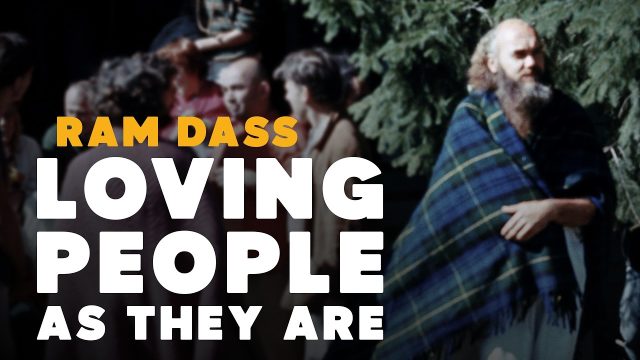
In this 1980s Sydney talk, Ram Dass uses stories of miracles from his teacher Maharaj-ji to illustrate how mind-bending experiences can break our attachment to rational thinking. He then pivots to the practical challenges of living truthfully in relationships—a domain where the gap between chaos (raw animal/unconscious impulses) and cosmos (order and transcendence) becomes visceral. He argues that dualistic methods like devotional yoga and relationships themselves, when pursued with integrity, can paradoxically carry us toward non-dual realization while helping us "straddle the thin line between chaos and cosmos."

Lettura · 7 sezioni

What's the Real Value of Miracles and Mind-Boggling Stories?

Ram Dass begins by recounting tales from Miracle of Love, specifically experiences involving Dr. Larry Brilliant and their shared teacher Maharaj-ji. The conventional assumption is that miracles prove something—that they're evidence of supernatural power or divine favor. But Ram Dass reframes their utility in a more subtle direction: the real work miracles do is cognitive disruption. When you encounter a story that contradicts your model of how reality works, it creates a crack in the fortress of your thinking mind.

This is not about blind belief. Rather, miraculous accounts—whether you accept them literally or not—serve as tools to loosen the tyranny of rational certainty. The mind wants to build walls, to categorize, to control experience through concepts. Stories that refuse to fit neatly into those categories act like a crowbar, prying open space for something beyond the mind's jurisdiction. Ram Dass emphasizes that the value lies in the *liberation from the thinking mind itself*, not in credulous acceptance of the impossible.

Money, Truth, and the Demand to Revise Your Work

Ram Dass shares a striking example from his own life: Maharaj-ji demanded changes to the manuscript of Be Here Now, the foundational spiritual text Ram Dass co-created. The story illustrates a principle Maharaj-ji articulated plainly: "Money and truth have nothing to do with one another." This is radical in a culture that often assumes financial success validates our ideas or that a profitable project must be sound.

What Maharaj-ji was saying is that truth operates on a different axis entirely from commercial viability. You can have a profitable lie; you can have a true statement that earns nothing. The revision demand wasn't about making the book more marketable—it was about aligning the work with truth, consequences be damned. This reflects a non-negotiable principle in spiritual practice: the priority of authenticity over outcome, and the willingness to dismantle something valuable if it carries corruption.

Why Is Truth So Scary in Relationships?

Ram Dass makes a blunt observation: "The truth is scary. Truth keeps shattering your models of how you think it ought to be." This is where the abstract becomes personal and visceral. He gives an example that many will recognize—looking at your intimate partner and, in an unguarded moment, seeing something other than the beloved face you've constructed. "You might look at your partner and suddenly they look like a skeleton. 'Good morning dear, you look absolutely ghastly.'"

This isn't morbidity for its own sake. It points to the raw, unfiltered perception that lives beneath our social overlays. In everyday relationships, we perform a kind of psychic diplomacy: we soften truth, repackage it, hide it behind courtesy and strategic silence. But what does it cost? We fracture ourselves. We train ourselves not to see, not to speak, not to be present to what is actually happening.

Ram Dass acknowledges the genuine dilemma: can you live in a relationship where truth operates without that filtering? Where you don't censor based on what will soothe the other person or preserve the image of the partnership? The answer is not simple, and that's his point. A relationship based on truth is not a feel-good paradise—it requires tremendous maturity and spiritual groundedness.

How Can a Relationship Straddle the Line Between Chaos and Cosmos?

This is perhaps Ram Dass's most delicate and important insight. He frames relationships as existing on a razor's edge. On one side is chaos—the raw, unconscious, animal impulses that humans carry: aggression, lust, fear, primitive reactivity. On the other is cosmos—order, transcendence, the orderly unfolding of divine intelligence. Most relationships collapse into one or the other: either they become so sanitized and rule-governed that they lose authenticity and juice, or they devolve into emotional and behavioral chaos.

The narrow path between them is the path of truth-based relationship. It requires you to acknowledge your animal nature—the skeleton you see, the rage, the selfish impulse—without either acting it out compulsively or repressing it into shadow. Simultaneously, you orient toward something higher: the cosmos, the divine intelligence, the transcendent love that sees beyond the particularity of the personality.

This balance is not achievable through willpower alone. It requires the support of spiritual practice and often of a teacher who embodies the possibility. It requires accepting that relationships will constantly shatter your models of how things "ought to be." The cosmos keeps intruding on the chaos, and the chaos keeps erupting beneath the cosmos—and the work is to stay present to both without collapsing into either.

What Role Do Dualistic Methods Play in Non-Dual Realization?

Near the end of the talk, Ram Dass makes a counter-intuitive claim: dualistic methods—relationship, devotional yoga, guru-disciple work, any practice that involves you and something other than you—can be a pathway to non-duality. This seems paradoxical. If non-duality is the direct recognition that subject and object are One, how can a dualistic practice get you there?

The answer lies in the *orientation* and *intensity* of the practice. When you approach a relationship, a guru, or a deity with total devotion and surrender, you are engaging in dualism—there is clearly a "me" and a "you." But the quality of that engagement—the purity of intention, the willingness to be dissolved, the persistence of love—can create conditions where the apparent separation begins to dissolve from within. The practice of devotion doesn't intellectually prove non-duality; it *enacts* it, makes it real in the body and heart.

Devotional yoga, in particular, is designed to kindle this. You sing to the divine, you bow to the guru, you serve your partner's highest good—all dualistic gestures. But done with full presence and surrender, these acts of devotion begin to erase the boundary between lover and beloved. The cosmos—the non-dual awareness—begins to permeate the dualistic form. This is what Ram Dass means by "dualistic methods" helping us "straddle the thin line": they give us a practical bridge, a lived experience of how chaos and cosmos, separation and unity, can coexist.

The Challenge of Being Truthful Around Other Human Beings

Ram Dass notes that being truthful is profoundly difficult "around other human beings." This is not an abstract complaint. When you are alone, you can acknowledge your full interior experience—the contradictions, the shadows, the parts of yourself that don't fit a coherent narrative. But the moment another person is present, a new variable enters: you become aware of *their* experience of you, their vulnerability, their potential pain. Truthfulness then becomes a question not just of honesty but of responsibility and compassion.

This is where many spiritual seekers get confused. They think enlightenment or spiritual maturity means always saying exactly what you think. But Ram Dass implies something more nuanced: it means bringing full presence and consciousness to the decision of what to speak and what to hold. Sometimes the truest response is silence. Sometimes it is a carefully chosen word that honors both the truth and the capacity of the other person to receive it.

The human animal is also a spiritual being, and the interaction of the two creates genuine complexity. You cannot simply override one for the other. The practice is to hold both—to be fully human and fully conscious of the trans-human cosmos—and to let that holding inform how you meet another person.

Where to Go From Here

If you recognize yourself in the dilemma Ram Dass describes—the pull toward truth-telling offset by the risk of harm, the simultaneous reality of being both animal and cosmos—you might ask: What would happen if I brought more consciousness to my relationships? Not perfection, not always speaking every thought, but a deepening awareness of where I'm contracting away from truth and where I'm using truth as a weapon.

The practices that support this work are not exotic. They include meditation and self-inquiry (to access your own inner chaos and cosmos), devotional practices (which attune you to something beyond your small self), and the willingness to stay present in relationships even when they shatter your models. Ram Dass's teaching here is that the relationship itself—messy, contradictory, ongoing—is the ashram, the spiritual laboratory. There is no need to retreat from it. The thin line between chaos and cosmos runs right through the middle of love.

Commenti

Caricamento della conversazione…

L'artista di questa storia

Ram Dass

Ram Dass

Spiritual Teacher

Ram Dass (born Richard Alpert, 1931-2019) was an American spiritual teacher, psychologist, and author whose 1971 book Be Here Now helped popularize Eastern spirituality in the West. A Harvard psychologist turned Hindu devotee, he bridged psychedelic research, yoga, and conscious living for millions.

Vedi il profilo
Esplora i temi
Truth relationshipsMiracles consciousnessDevotional yogaNon dualityChaos cosmos
Domande frequenti

Domande frequenti

Ram Dass argues that miraculous stories aren't valuable because they prove the supernatural, but because they disrupt the mind's model of how reality works. When an experience or story contradicts your rational certainty, it creates openness beyond thought itself, loosening the tyranny of the thinking mind.

Ram Dass acknowledges this as a genuine dilemma—truth is scary and can shatter the other person's sense of security. The practice is to bring full consciousness to what you speak and when, honoring both the truth and the other person's capacity to receive it, rather than using truth as a weapon or suppressing it entirely.

According to Ram Dass, relationships based on truth do work, but they require straddling a thin line between chaos (raw unconscious impulses) and cosmos (transcendent order). This demands spiritual maturity, the willingness to acknowledge your animal nature without being controlled by it, and constant adjustment as truth keeps shattering your models.

Ram Dass explains that when dualistic methods are pursued with full devotion and surrender—singing to the divine, bowing to a guru, serving your partner's growth—the intensity and purity of that engagement can dissolve the apparent separation from within, allowing non-dual awareness to permeate the dualistic form.

This principle from Maharaj-ji means that financial success does not validate truth, and profitability does not ensure authenticity. Spiritual integrity sometimes requires rejecting profitable or well-received work if it carries corruption, prioritizing truth over outcome.

Ram Dass notes that when alone, you can acknowledge your full interior experience. But in the presence of another person, you become conscious of their experience of you and their potential vulnerability, adding a dimension of responsibility and compassion that makes simple honesty complicated.

He argues that humans are simultaneously unconscious animal beings with primitive impulses and spiritual beings oriented toward transcendence. The spiritual practice is not to override one for the other, but to hold both consciously and let that integration inform how you relate to others.

Potrebbe piacerti anche

Vedi Tutto
Love People As They Are: Responsive vs. Reactive
Inspire

Love People As They Are: Responsive vs. Reactive

Learn how to love people unconditionally by shifting from reactive patterns to responsive presence, keeping your heart open in the face of s…

9 min read
Freedom Without Connection: Why Liberation Feels Empty
Inspire

Freedom Without Connection: Why Liberation Feels Empty

External freedom without spiritual connection leaves the heart hollow. Explore why liberation requires more than just the absence of constra…

7 min read
First Meeting with a Living Guru: Recognition and Transformation
Inspire

First Meeting with a Living Guru: Recognition and Transformation

Krishna Das reflects on his first encounters with his teacher Maharaj-ji and Ram Dass, describing the moment he recognized something real ab…

7 min read
Rumi's Teaching Story: Presence and Spiritual Wisdom
Inspire

Rumi's Teaching Story: Presence and Spiritual Wisdom

Ram Dass shares a timeless Rumi story on presence and spiritual awakening. A brief but potent lesson in mindfulness and the heart's capacity…

6 min read
Vedi tuttiPotrebbe piacerti anche→

Continua il tuo viaggio

Altra saggezza e altri incontri da tutta la directory BrightStar.

Altri articoli

Sfoglia l’intera raccolta di insegnamenti, interviste e guide.

Torna a tutti gli articoli →

Insegnanti e artisti

Esplora i lignaggi, i musicisti e le guide del mondo consapevole.

Esplora gli artisti →

Trova un evento

Kirtan, ritiri, sound bath, breathwork, festival: in arrivo presto.

Sfoglia gli eventi →