BrightStar
BlogI miei biglietti
Saved events
Aiuto e contattiRegistratiAccedi
Eventi
  • Sfoglia tutti i Eventi
  • Per i ricercatori
  • Yoga
  • Meditazione
  • Breathwork
  • Qigong
  • Musica sacra
  • World music
  • Musica medicina
  • Sound healing
  • Danza estatica
  • Cerimonia
  • Medicina delle piante
  • Guarigione energetica
  • Satsang e saggezza
  • Tantra
  • Ritiri
  • Tutte le categorie →
Destinazioni
  • Bali
  • Sedona
  • Los Angeles
  • Costa Rica
  • Tulum
  • Byron Bay
  • San Francisco
  • Austin
  • New York
  • San Diego
  • Seattle
  • Portland
  • Miami
  • London
  • Maui
  • Boulder
  • Oakland
  • Tutte le città →
Piattaforma
  • Per organizzatori
  • Unisciti al movimento
  • Sell Globally
  • Per i creatori
  • Per team
  • Per gli scrittori
  • Per gli insegnanti
  • Per gli artisti kirtan
  • Per gli studi
  • Per i festival
  • Per i centri ritiro
  • Per le no-profit
  • Ambasciatore del brand
  • Biglietteria gratuita
  • Elevate
  • Amplify
  • L’ecosistema
Funzionalità

Biglietteria e acquisto

  • Ticket categories
  • Assigned seating
  • Custom questions
  • Coupon codes
  • Smart pricing
  • Ticket sharing
  • Waitlist
  • Flexible refunds
  • Digital waivers
  • Tip jar
  • Donations and sliding scale
  • Embed widget
  • Mindful checkout
  • Recurring events
  • Private sessions
  • Online courses
  • Summits
  • Rooms and stays
  • Ticket scanner

Marketing e crescita

  • Abandoned cart recovery
  • Visitor recovery
  • Upsells and add-ons
  • Affiliate engine
  • Upsell affiliate network
  • Brand ambassador
  • Meta retargeting
  • Verified buyer network
  • Outbound email marketing
  • Email sequences
  • SMS and WhatsApp
  • Event upsell network
  • Direct mail campaigns
  • SEO engine
  • Syndication
  • Event sharing
  • Custom event pages
  • Artist profiles
  • Link in bio
  • Event blog
  • Blog newsletter

Pagamenti

  • Payments, powered by Stripe
  • Buy now, pay later
  • Apple Wallet
  • Multi currency

Dati e operazioni

  • Team access
  • Message center
  • Reports
  • Analytics reporting
  • Performance reporting
  • Customer data
  • Integrations
  • Switch from another platform

IA

  • Assistant
  • AI FAQ assistant
  • Tutte le funzionalità →
Azienda
  • Chi siamo
  • Domande frequenti
  • Contatti
  • Blog
  • Glossario
  • Guides
  • Ispirazione
  • Centro assistenza
  • Documentazione API
  • Risorse del brand
  • Stampa
  • Termini di servizio
  • Informativa sulla privacy

Eventi

  • Sfoglia tutti i Eventi
  • Per i ricercatori
  • Yoga
  • Meditazione
  • Breathwork
  • Qigong
  • Musica sacra
  • World music

Destinazioni

  • Bali
  • Sedona
  • Los Angeles
  • Costa Rica
  • Tulum
  • Byron Bay
  • San Francisco
  • Austin

Piattaforma

  • Per organizzatori
  • Unisciti al movimento
  • Sell Globally
  • Per i creatori
  • Per team
  • Per gli scrittori
  • Per gli insegnanti
  • Per gli artisti kirtan

Funzionalità

  • Rete della comunità
  • Recupero carrelli abbandonati
  • Categorie di biglietti
  • Eventi ricorrenti
  • Posti assegnati
  • Sistema affiliati
  • Lista d'attesa / Notifica
  • Tutte le funzionalità →

Azienda

  • Chi siamo
  • Domande frequenti
  • Contatti
  • Blog
  • Glossario
  • Guides
  • Termini di servizio
  • Informativa sulla privacy
Leggi di più

Eventi

  • Musica medicina
  • Sound healing
  • Danza estatica
  • Cerimonia
  • Medicina delle piante
  • Guarigione energetica
  • Satsang e saggezza
  • Tantra
  • Ritiri
  • Tutte le categorie →

Destinazioni

  • New York
  • San Diego
  • Seattle
  • Portland
  • Miami
  • London
  • Maui
  • Boulder
  • Oakland
  • Tutte le città →

Piattaforma

  • Per gli studi
  • Per i festival
  • Per i centri ritiro
  • Per le no-profit
  • Ambasciatore del brand
  • Biglietteria gratuita
  • Elevate
  • Amplify
  • L’ecosistema

Azienda

  • Ispirazione
  • Centro assistenza
  • Documentazione API
  • Risorse del brand
  • Stampa

Biglietteria e acquisto

  • Ticket categories
  • Assigned seating
  • Custom questions
  • Coupon codes
  • Smart pricing
  • Ticket sharing
  • Waitlist
  • Flexible refunds
  • Digital waivers
  • Tip jar
  • Donations and sliding scale
  • Embed widget
  • Mindful checkout
  • Recurring events
  • Private sessions
  • Online courses
  • Summits
  • Rooms and stays
  • Ticket scanner

Marketing e crescita

  • Abandoned cart recovery
  • Visitor recovery
  • Upsells and add-ons
  • Affiliate engine
  • Upsell affiliate network
  • Brand ambassador
  • Meta retargeting
  • Verified buyer network
  • Outbound email marketing
  • Email sequences
  • SMS and WhatsApp
  • Event upsell network
  • Direct mail campaigns
  • SEO engine
  • Syndication
  • Event sharing
  • Custom event pages
  • Artist profiles
  • Link in bio
  • Event blog
  • Blog newsletter

Pagamenti

  • Payments, powered by Stripe
  • Buy now, pay later
  • Apple Wallet
  • Multi currency

Dati e operazioni

  • Team access
  • Message center
  • Reports
  • Analytics reporting
  • Performance reporting
  • Customer data
  • Integrations
  • Switch from another platform

IA

  • Assistant
  • AI FAQ assistant
Scarica l'app
Scarica suApp StoreDisponibile suGoogle Play
© 2026 BrightStar. Tutti i diritti riservati. BrightStar Selection · Crediti fotografici · Registro delle modifiche ·
Inspiration

Philosophy Revolution: How Ideas Shape Consciousness

Alan Watts
Alan Watts
Mar 16, 2026
6 min di lettura

Da Be Here Now Network

Philosophy operates as a revolutionary force when it challenges the assumptions we take for granted about reality, self, and consciousness. Rather than abstract intellectual exercise, genuine philosophical inquiry—as discussed in this episode of Being in the Way—offers a practical tool for dismantling habitual patterns of thinking and perceiving. The revolution happens not through political or social upheaval but through a fundamental reorientation of how we understand our relationship to existence itself.

Lettura · 6 sezioni

What Does Philosophical Revolution Really Mean?

Philosophy, in its most radical sense, is not merely the study of abstract concepts confined to academic discourse. It is, rather, a direct investigation into the nature of reality and consciousness—one that has the potential to revolutionize how we experience our lives moment to moment. The word "philosophy" itself derives from the Greek philosophia, meaning "love of wisdom," but wisdom in this context refers not to accumulated knowledge but to direct insight into how things actually work.

A philosophical revolution occurs when we shift from passive acceptance of culturally inherited beliefs to active questioning of their validity. Most people operate from unexamined assumptions about what is real, what matters, and who they fundamentally are. These assumptions, absorbed from family, education, media, and society, function like invisible operating systems—so embedded in our consciousness that we mistake them for objective truth rather than conditioned patterns.

The revolutionary act, then, is simply to look at these assumptions directly and ask: Is this actually true? Where did this belief come from? What if the opposite were possible? This inquiry, when pursued with genuine curiosity rather than mere intellectual skepticism, has the power to crack open entirely new ways of being.

How Does Questioning Habitual Patterns Create Change?

The human mind tends toward habituation. We develop automatic responses to life based on our conditioning—patterns of thinking, feeling, and reacting that become so familiar they feel like reality itself. Philosophy, when practiced as genuine inquiry, interrupts this automaticity. It creates a space where we can observe our own mental processes rather than being entirely identified with them.

Consider how most people approach major life questions: What should I do with my life? Who am I? What happens after death? Typically, these questions are answered by default conditioning—inherited religious beliefs, cultural values, family expectations, or unexamined social norms. We rarely pause to actually investigate these questions ourselves. We simply accept the pre-packaged answers our environment provides.

But when genuine philosophical inquiry begins, something shifts. You start to notice the difference between what you've been told to believe and what you actually experience when you look carefully. This distinction is crucial. A philosophical revolution doesn't necessarily mean arriving at radical new conclusions; it means developing the capacity to think and perceive for yourself rather than delegating that responsibility to institutions, authorities, or inherited tradition.

Why Is Direct Experience Central to Philosophical Inquiry?

One of the most overlooked aspects of philosophical revolution is its grounding in direct experience. Philosophy is not purely theoretical—it is fundamentally about how we actually live and perceive in each moment. When you examine your own mind carefully, you discover things that no textbook can teach you. You notice how fear operates, how desire shapes perception, how the sense of separate self is constructed moment by moment.

This direct investigation has revolutionary implications. If you can observe that your sense of self is not a fixed entity but a moment-to-moment construction, you begin to realize that identity is more fluid and malleable than you assumed. If you can notice that your thoughts are not necessarily true reflections of reality but mental events arising and passing away, you gain freedom from compulsive thinking. If you can perceive that much of what you call "problems" are actually problems only in relation to certain unexamined beliefs, you open the door to genuine problem-solving.

The revolution of philosophy, then, is profoundly practical. It is not about winning arguments or accumulating clever ideas. It is about waking up to how you are actually experiencing your life right now, and recognizing the ways that habitual patterns limit your freedom and awareness.

What Role Does Consciousness Play in Philosophical Revolution?

Philosophy and consciousness are inseparable. Consciousness is both the tool of inquiry (through which we investigate) and the subject of investigation (what we are trying to understand). When philosophy becomes truly revolutionary, it shifts our relationship to consciousness itself.

Rather than viewing consciousness as something that happens to us, or consciousness as merely a byproduct of brain activity, genuine philosophical inquiry opens the possibility that consciousness is the fundamental nature of reality. This is not mere speculation—it can become direct experience when you turn your awareness inward and investigate carefully.

Most people live in a state of divided consciousness. Part of us is aware of our thoughts and emotions; part of us is identified with them. Part of us wants to change our patterns; part of us is invested in keeping them the same. This fragmentation creates suffering and confusion. A philosophical revolution at the level of consciousness involves recognizing this division and discovering the possibility of unified awareness—consciousness aware of itself, not divided against itself.

How Does This Apply to Everyday Life?

The practical implications of philosophical revolution extend into every area of life. In relationships, for instance, most conflicts arise from unexamined assumptions about what the other person "should" be doing or feeling. A philosophical approach involves investigating these assumptions: Why do I believe my partner should react this way? What would happen if I released that expectation? What would genuine communication look like if I wasn't defending a fixed position about how things should be?

In work and creative pursuits, philosophical inquiry into the nature of self and motivation can liberate energy previously tied up in self-doubt or the need for external validation. When you investigate directly what drives your actions—fear, greed, genuine interest, service—you gain the option to choose differently.

In relation to suffering and difficulty, philosophy offers a revolutionary tool: the possibility that suffering often arises not from circumstances themselves but from our conditioned interpretation of circumstances. This doesn't mean denying real pain or injustice, but it does mean recognizing that the suffering—the added layer of resistance, resentment, and contraction—is sometimes optional, available to be released through insight.

Where to Go From Here

The revolution of philosophy begins not with reading or debate but with a simple commitment to look directly at your own experience. Notice one assumption you carry about reality, yourself, or another person. Ask: Is this actually true? Where did this belief originate? What evidence am I using to justify it? What would change if I released it?

This inquiry, pursued with honesty and curiosity, is itself the philosophical revolution. It is not something that happens "out there" in the world of ideas; it happens in the living laboratory of your own awareness, in each moment of genuine questioning and direct perception. The transformation available through philosophy is not distant or abstract—it is available right now, wherever you are, whenever you choose to turn your attention inward and ask what is actually true.

Commenti

Caricamento della conversazione…

L'artista di questa storia

Alan Watts

speaker and lecturer

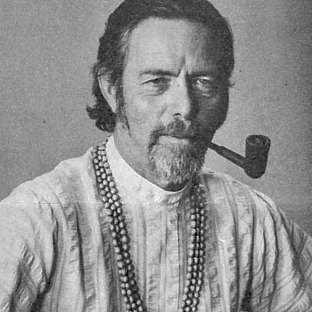
Speaker and lecturer Alan Watts, whose hundreds of hours of talks recorded from 1960 to 1973 on vinyl, tape reels, and cassettes continue to be shared today through the Alan Watts Org.

Vedi il profilo
Esplora i temi
PhilosophyConsciousnessSelf inquiryParadigm shiftWisdom
Domande frequenti

Domande frequenti

Philosophy becomes revolutionary when it moves us from passive acceptance of inherited beliefs to active investigation of their truth. This shift from unexamined assumptions to direct inquiry into reality fundamentally changes how we experience consciousness and our relationship to existence, moment by moment.

When you investigate your habitual beliefs directly, you discover the difference between what you've been told to believe and what you actually experience. This recognition creates freedom—you realize patterns that seemed inevitable are actually optional, opening new possibilities in relationships, work, and how you relate to difficulty.

True philosophy is fundamentally practical. It is direct investigation into your own mind and experience that can dissolve suffering, improve relationships, and increase freedom. The revolution happens through actual shifts in perception and consciousness, not through accumulating clever ideas.

Begin by selecting one assumption you hold about reality, yourself, or others. Investigate it directly: Where did this belief come from? Is it actually true in my direct experience? This simple practice of honest questioning is itself the philosophical revolution.

Consciousness is both the tool through which we philosophize and the subject of investigation. Philosophical revolution involves recognizing that consciousness is not something that happens to you but the fundamental ground of your experience, available to be understood directly through inquiry.

Yes. Most conflicts arise from unexamined assumptions about how others should behave. By investigating these assumptions philosophically, you can release fixed positions and discover genuine communication and understanding, transforming relationships from the ground up.

Potrebbe piacerti anche

Vedi Tutto
Why Predictability Is an Illusion: Embracing Uncertainty
Inspire

Why Predictability Is an Illusion: Embracing Uncertainty

Predictability is a fundamental illusion that constrains how we live. Exploring uncertainty and the nature of control reveals deeper wisdom …

8 min read
Alan Watts' Veil of Thoughts: Money, Work & Civilization
Inspire

Alan Watts' Veil of Thoughts: Money, Work & Civilization

Alan Watts examines how abstract thinking obscures our relationship with money and work, and how civilization perpetuates illusions that dis…

7 min read
Sacred Feminine Power: Chanting Devi Beyond the Mat
Inspire

Sacred Feminine Power: Chanting Devi Beyond the Mat

An in-person gathering in Bengaluru merges ancient devotional chanting with modern psychotherapy to explore how the Goddess archetype illumi…

8 min read
Work Isn't Your Spiritual Problem—Attachment Is
Inspire

Work Isn't Your Spiritual Problem—Attachment Is

The Bhagavad Gita teaches that career and ambition aren't obstacles to spirituality—attachment, ego, and ownership are what bind us.…

2 min read
Vedi tuttiPotrebbe piacerti anche→

Continua il tuo viaggio

Altra saggezza e altri incontri da tutta la directory BrightStar.

Altri articoli

Sfoglia l’intera raccolta di insegnamenti, interviste e guide.

Torna a tutti gli articoli →

Insegnanti e artisti

Esplora i lignaggi, i musicisti e le guide del mondo consapevole.

Esplora gli artisti →

Trova un evento

Kirtan, ritiri, sound bath, breathwork, festival: in arrivo presto.

Sfoglia gli eventi →