BrightStar
BlogI miei biglietti
Saved events
Aiuto e contattiRegistratiAccedi
Eventi
  • Sfoglia tutti i Eventi
  • Yoga
  • Meditazione
  • Breathwork
  • Qigong
  • Musica sacra
  • World music
  • Musica medicina
  • Sound healing
  • Danza estatica
  • Cerimonia
  • Medicina delle piante
  • Guarigione energetica
  • Satsang e saggezza
  • Tantra
  • Ritiri
  • Tutte le categorie →
Destinazioni
  • Bali
  • Sedona
  • Los Angeles
  • Costa Rica
  • Tulum
  • Byron Bay
  • San Francisco
  • Austin
  • New York
  • San Diego
  • Denver
  • Seattle
  • Portland
  • Miami
  • London
  • Maui
  • Boulder
  • Tutte le città →
Piattaforma
  • Per organizzatori
  • Unisciti al movimento
  • Sell Globally
  • Per i creatori
  • Per team
  • Per gli scrittori
  • Per gli insegnanti
  • Per gli artisti kirtan
  • Per gli studi
  • Per i festival
  • Per i centri ritiro
  • Per le no-profit
  • Ambasciatore del brand
  • Biglietteria gratuita
  • Pro
  • Amplify
  • L’ecosistema
Funzionalità

Biglietteria e acquisto

  • Ticket categories
  • Assigned seating
  • Custom questions
  • Coupon codes
  • Smart pricing
  • Ticket sharing
  • Waitlist
  • Flexible refunds
  • Digital waivers
  • Tip jar
  • Donations and sliding scale
  • Embed widget
  • Mindful checkout
  • Recurring events
  • Private sessions
  • Online courses
  • Summits
  • Rooms and stays
  • Ticket scanner

Marketing e crescita

  • Abandoned cart recovery
  • Visitor recovery
  • Upsells and add-ons
  • Affiliate engine
  • Upsell affiliate network
  • Brand ambassador
  • Meta retargeting
  • Verified buyer network
  • Outbound email marketing
  • Email sequences
  • SMS and WhatsApp
  • Event upsell network
  • Direct mail campaigns
  • SEO engine
  • Syndication
  • Event sharing
  • Custom event pages
  • Artist profiles
  • Link in bio
  • Event blog
  • Blog newsletter

Pagamenti

  • Payments, powered by Stripe
  • Buy now, pay later
  • Apple Wallet
  • Multi currency

Dati e operazioni

  • Team access
  • Message center
  • Reports
  • Analytics reporting
  • Performance reporting
  • Customer data
  • Integrations
  • Switch from another platform

IA

  • Assistant
  • AI FAQ assistant
  • Tutte le funzionalità →
Azienda
  • Chi siamo
  • Domande frequenti
  • Contatti
  • Blog
  • Glossario
  • Guides
  • Ispirazione
  • Centro assistenza
  • Documentazione API
  • Risorse del brand
  • Stampa
  • Termini di servizio
  • Informativa sulla privacy

Eventi

  • Sfoglia tutti i Eventi
  • Yoga
  • Meditazione
  • Breathwork
  • Qigong
  • Musica sacra
  • World music
  • Musica medicina

Destinazioni

  • Bali
  • Sedona
  • Los Angeles
  • Costa Rica
  • Tulum
  • Byron Bay
  • San Francisco
  • Austin

Piattaforma

  • Per organizzatori
  • Unisciti al movimento
  • Sell Globally
  • Per i creatori
  • Per team
  • Per gli scrittori
  • Per gli insegnanti
  • Per gli artisti kirtan

Funzionalità

  • Rete della comunità
  • Recupero carrelli abbandonati
  • Categorie di biglietti
  • Eventi ricorrenti
  • Posti assegnati
  • Sistema affiliati
  • Lista d'attesa / Notifica
  • Tutte le funzionalità →

Azienda

  • Chi siamo
  • Domande frequenti
  • Contatti
  • Blog
  • Glossario
  • Guides
  • Termini di servizio
  • Informativa sulla privacy
Leggi di più

Eventi

  • Sound healing
  • Danza estatica
  • Cerimonia
  • Medicina delle piante
  • Guarigione energetica
  • Satsang e saggezza
  • Tantra
  • Ritiri
  • Tutte le categorie →

Destinazioni

  • New York
  • San Diego
  • Denver
  • Seattle
  • Portland
  • Miami
  • London
  • Maui
  • Boulder
  • Tutte le città →

Piattaforma

  • Per gli studi
  • Per i festival
  • Per i centri ritiro
  • Per le no-profit
  • Ambasciatore del brand
  • Biglietteria gratuita
  • Pro
  • Amplify
  • L’ecosistema

Azienda

  • Ispirazione
  • Centro assistenza
  • Documentazione API
  • Risorse del brand
  • Stampa

Biglietteria e acquisto

  • Ticket categories
  • Assigned seating
  • Custom questions
  • Coupon codes
  • Smart pricing
  • Ticket sharing
  • Waitlist
  • Flexible refunds
  • Digital waivers
  • Tip jar
  • Donations and sliding scale
  • Embed widget
  • Mindful checkout
  • Recurring events
  • Private sessions
  • Online courses
  • Summits
  • Rooms and stays
  • Ticket scanner

Marketing e crescita

  • Abandoned cart recovery
  • Visitor recovery
  • Upsells and add-ons
  • Affiliate engine
  • Upsell affiliate network
  • Brand ambassador
  • Meta retargeting
  • Verified buyer network
  • Outbound email marketing
  • Email sequences
  • SMS and WhatsApp
  • Event upsell network
  • Direct mail campaigns
  • SEO engine
  • Syndication
  • Event sharing
  • Custom event pages
  • Artist profiles
  • Link in bio
  • Event blog
  • Blog newsletter

Pagamenti

  • Payments, powered by Stripe
  • Buy now, pay later
  • Apple Wallet
  • Multi currency

Dati e operazioni

  • Team access
  • Message center
  • Reports
  • Analytics reporting
  • Performance reporting
  • Customer data
  • Integrations
  • Switch from another platform

IA

  • Assistant
  • AI FAQ assistant
Scarica l'app
Scarica suApp StoreDisponibile suGoogle Play
© 2026 BrightStar. Tutti i diritti riservati. BrightStar Selection · Crediti fotografici · Registro delle modifiche ·
Inspiration

Impermanence and Immortality: Krishnamurti on Death's Deeper Meaning

Dec 30, 2025
6 min di lettura

Da Be Here Now Network

Krishnamurti examines the relationship between impermanence and immortality, proposing that our resistance to the constantly changing nature of existence prevents us from recognizing what is truly timeless within ourselves. Rather than viewing death as an ending or seeking literal immortality, Krishnamurti suggests that genuine understanding of impermanence dissolves the fear-based self and reveals an eternal dimension of consciousness that exists beyond the temporal, personal ego.

Lettura · 7 sezioni

What Does Krishnamurti Mean by Impermanence?

Krishnamurti begins with a fundamental observation: everything in the manifest world is impermanent. Form, matter, relationships, thoughts, emotions—all are in constant flux. Yet human consciousness resists this reality intensely. We construct elaborate psychological defenses, narratives, and belief systems to deny or escape the fact that nothing remains fixed. This denial is not incidental; it is central to how the psychological self maintains its sense of continuity and control.

In Krishnamurti's view, impermanence is not a tragedy to be overcome through spiritual practice or technological immortality projects. Rather, the acceptance of impermanence is the doorway to liberation. When we stop struggling against change and truly observe it without judgment, we cease reinforcing the anxious self that believes it must endure forever in its present form.

Why Do We Fear Impermanence and Seek Immortality?

The pursuit of immortality—whether through religious afterlife beliefs, cryogenics, or accumulating legacy—stems from a fundamental misidentification. We have confused the conditioned, temporal self—the personality, memory, social role—with our actual nature. This self knows it will die; it is perishable by definition. And so it desperately seeks assurance that something essential will survive.

Krishnamurti suggests this fear is understandable but based on a category error. We are seeking immortality for something that was never meant to be permanent. The personal ego, with all its desires and fears, is inherently temporary. Trying to make the temporary permanent is like trying to make a wave stay frozen on the ocean; the effort itself creates suffering.

What Does Immortality Really Mean in Krishnamurti's Teaching?

When Krishnamurti speaks of immortality, he is not referring to the persistence of the individual person. Instead, he points toward what remains when the illusion of a separate, permanent self dissolves. This is not mystical or abstract in his framework—it is a matter of direct perception.

In the moment when we fully accept impermanence without resistance, something paradoxical occurs. The anxiety-driven self, which depends on denying change, loses its grip. What remains is awareness itself—not the "my awareness" of a personal subject, but awareness as such. This awareness, in Krishnamurti's view, is not born and does not die; it is the ground of all experience. It is not affected by time because it is not located within time as a personal entity would be.

This is the immortality he speaks of: not the survival of the ego, but the recognition that consciousness itself—the very capacity to know and experience—is untouched by the impermanence of its contents. Forms arise and dissolve within it, but it remains.

How Does Understanding Impermanence Transform Our Relationship with Death?

For most people, death is the ultimate proof of impermanence and the ultimate threat to the self. We are willing to accept that other things are temporary, but we resist with full force the idea that we personally will cease to exist. Krishnamurti suggests this resistance is based on a prior confusion about what "we" actually are.

If we identify primarily with the body-mind organism—the collection of memories, preferences, and personality traits—then death is indeed a catastrophe. But if through meditation and inquiry we begin to recognize awareness itself as our actual nature, death loses much of its terror. The body will die; the narrative self will end; but the ground of awareness does not depend on these for its existence.

This is not mere philosophical consolation. Krishnamurti is describing a shift in direct experience and perception that becomes possible when the mind is quiet enough to observe without the distortion of fear. In that quietness, one may recognize that there is no continuous "I" being born moment to moment in the first place—only the constant arising and passing of experience within awareness itself.

What Is the Relationship Between Accepting Impermanence and Peace?

There is a counterintuitive peace that arises from fully accepting impermanence. As long as we are fighting against change, we are in conflict with reality itself. This conflict is exhausting and endless because reality will not cooperate with our denial. The moment we cease that struggle—not through resignation or depression, but through clear seeing—a profound relaxation becomes possible.

This relaxation is not indifference or passivity. One can still live fully, act wisely, and care deeply for others. But these actions arise from a different ground—not from the anxious scrambling of a separate self trying to secure itself, but from a response to life that is no longer divided between a fearful "me" trying to preserve itself and a changing world threatening to destroy it.

In this state, impermanence is no longer an enemy. It is simply the nature of existence. Each moment is fresh and vivid precisely because we are not trying to hold onto the previous one. Each relationship is alive because we are not clinging to it or trying to make it permanent. This openness to change is what Krishnamurti calls freedom.

Can We Practice Recognizing This Timeless Awareness?

Krishnamurti generally resisted the notion that there are special practices or techniques that lead to truth. He believed that any practice built on the assumption that "I" must do something to achieve realization actually reinforces the separation and ego that obscures the truth. However, he consistently recommended observation—careful, non-judgmental watching of how the mind actually works.

This observation includes noticing our resistance to impermanence. When we observe how the mind constantly tries to make things permanent through memory, planning, and identity—and see the futility and suffering this creates—a natural shift in understanding can occur. It is not something we achieve; it is something we recognize through seeing clearly.

Moments of timelessness may already be present in our experience—in deep sleep, in moments of genuine beauty or absorption, in the gaps between thoughts. These are not separate from our ordinary life; they are always here. What changes is our recognition and openness to them.

Where to go from here

Krishnamurti's teaching on impermanence and immortality invites a radical reexamination of what we think we are and what we are trying to preserve. Rather than seeking escape from death or techniques to transcend the body, he points toward a deeper investigation into the nature of consciousness itself and our direct experience of awareness.

For those interested in exploring this further, the full episode "Freedom from the Known: The Vitality of Death with Krishnamurti and Dr. Allan W. Anderson" offers deeper context and dialogue. Bringing this inquiry into daily life—observing how the mind resists change, noticing moments of timelessness, questioning who exactly is afraid of death—can gradually shift one's relationship to impermanence from fear to curiosity and eventually to peace.
Commenti

Caricamento della conversazione…

Esplora i temi
ImpermanenceDeath consciousnessKrishnamurtiImmortalityEgo dissolution
Domande frequenti

Domande frequenti

Krishnamurti distinguishes between the impermanence of form (body, personality, ego) and the immortality of awareness itself. The personal self is temporary and bound to die, but consciousness—the capacity to know and experience—is not affected by time and change. Immortality is not the survival of the ego, but the recognition that awareness itself is timeless and untouched by the impermanence of its contents.

The psychological self, made of memory and identity, naturally resists the fact of constant change because change threatens its sense of continuity and control. To maintain the illusion of a permanent, separate self, the mind constructs defenses, narratives, and belief systems that deny or escape the reality of impermanence. This resistance itself is a primary source of human suffering.

When we truly accept that everything changes and nothing is permanent, we begin to question our identification with the body-mind organism—the part of us that will die. As we recognize awareness itself as our actual nature rather than the temporary personal self, death loses much of its terror because awareness does not depend on the body for its existence.

No. Krishnamurti is not advocating resignation or depression. Rather, he points to a peace that comes from ceasing to struggle against reality. When we stop fighting change, we can live fully and act wisely from a ground that is no longer divided between a fearful self and a threatening world.

Krishnamurti emphasized careful observation of the mind without judgment rather than formal practices. He recommended watching how the mind resists impermanence and tries to make things permanent, noticing the suffering this creates, and bringing awareness to moments of timelessness that are already present in ordinary experience.

Krishnamurti taught that truth is recognized rather than achieved. Through clear observation of how the mind works and how it resists change, a natural understanding can arise. Moments of timeless awareness are already present in experience; what changes is our openness and recognition of them.

Potrebbe piacerti anche

Vedi Tutto
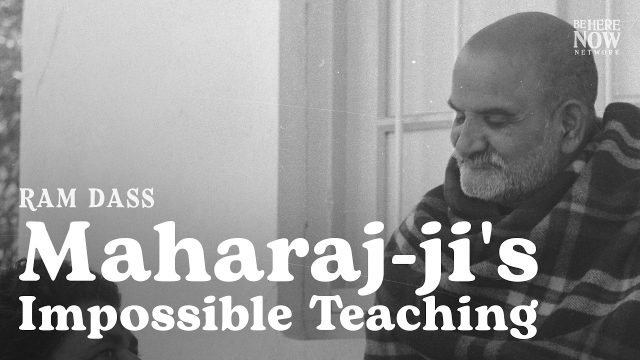
The Impossible Teaching: Love Everyone and Tell the Truth
Inspire

The Impossible Teaching: Love Everyone and Tell the Truth

In a 1990 talk, Ram Dass recounts two contradictory commands from his guru in the Himalayas. The lesson he drew from them is about letting g…

10 min read
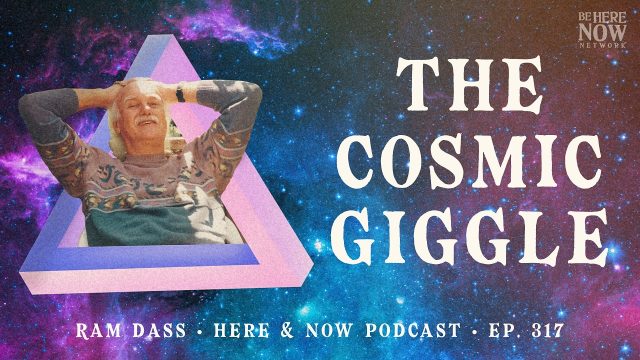
The Cosmic Giggle: Finding Joy Without Denying Suffering
Inspire

The Cosmic Giggle: Finding Joy Without Denying Suffering

Ram Dass explores how to hold both joy and sorrow simultaneously—and why laughter amid suffering isn't denial, but enlightenment itself.…

9 min read
Service as the Ray Into God: The Beloved Everywhere
Inspire

Service as the Ray Into God: The Beloved Everywhere

Ram Dass teaches that recognizing Spirit in all beings transforms service from obligation into the deepest form of love and the truest path …

6 min read
The Hardest Spiritual Practice: Living in Everyday Chaos
Inspire

The Hardest Spiritual Practice: Living in Everyday Chaos

Ram Dass explores why spiritual growth demands confronting desire in the world's hottest fires—not fleeing to sheltered ashrams.…

8 min read
Vedi tuttiPotrebbe piacerti anche→

Continua il tuo viaggio

Altra saggezza e altri incontri da tutta la directory BrightStar.

Altri articoli

Sfoglia l’intera raccolta di insegnamenti, interviste e guide.

Torna a tutti gli articoli →

Insegnanti e artisti

Esplora i lignaggi, i musicisti e le guide del mondo consapevole.

Esplora gli artisti →

Trova un evento

Kirtan, ritiri, sound bath, breathwork, festival: in arrivo presto.

Sfoglia gli eventi →