Most of us know the difference between bumping into someone at a coffee shop and genuinely meeting them. One is transaction; the other is presence. We've learned to perform connection—to smile at the right moment, to say the right words, to seem engaged. Yet something fundamental is missing. The person across from us senses it. We sense it too. There is an art to moving beyond this theater into what one contemporary dharma teacher calls "heart connection," a state so fundamentally different from ordinary interaction that it rewires how relationships work.
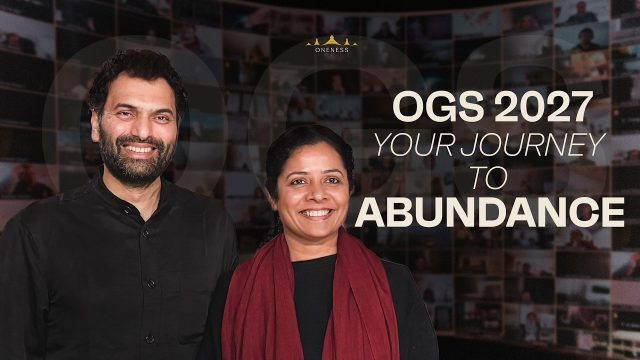
We often confuse connection with its neighbors: kindness, generosity, a pleasant manner. These have their place. But heart connection, as articulated by Preethaji, is distinct. It "goes beyond kindness and speech, beyond generosity and actions and humility and attitude." It is not accumulated kindnesses. It is a state of being.
To understand what this means, consider what ordinarily passes for connection. You listen to someone's problem while your mind rehearses your response. You offer a gift while calculating how it will be received. You perform presence while remaining fundamentally elsewhere—in your own concerns, your own image, your own comfort. The other person feels this. They may not name it, but they know they are being processed rather than met.
Heart connection inverts this. It begins with a radical shift: the dissolution of the boundary between your inner world and theirs. "You feel the other," Preethaji explains. "You celebrate the joy of another as if it were your own." This is not sympathy—the polite distance of understanding someone else's experience. It is resonance. You do not stand apart observing their joy; you inhabit it.
This resonance extends to suffering. Heart connection means becoming "sensitive to another's inner pain." But sensitivity, left alone, can become a wound. The natural response to another's pain is to flinch, to distance, to treat it as an intrusion on your peace. Heart connection asks something harder: "You do not run away in fear or see it as nuisance, but you stay."
This staying is crucial. It is not passive empathy—the sorrowful nod across a table. It is active presence coupled with a commitment to help "the other become free of their inner pain." You do not absorb their suffering into yourself, drowning alongside them. You remain clear, present, and oriented toward their healing. This requires a particular quality of being: not lost in your own need to feel good, not performing rescue to feel needed, but simply available.
The cultivation of this presence requires releasing several habitual patterns. Preethaji identifies the first as self-obsession—the constant gravitational pull back toward your own inner narrative. But she names a subtler trap: "not to be lost in wanting to be pleased or wanting to please." This distinction matters enormously. Many people mistake the desire to please for connection. They are attentive, accommodating, responsive—entirely focused on making the other person comfortable. Yet the energy remains self-referential. Am I doing this right? Will they appreciate me? Do I look good in this exchange?
Heart connection requires stepping out of this loop entirely. You are not performing for approval; you are not protecting yourself from judgment. You are simply present. Preethaji describes this presence as rooted in recognition: "Heart connection is to recognize and to appreciate the other person's presence in your life." There is a warmth in this—not the warmth of ambition or neediness, but the warmth of genuine welcome. The other person's existence matters. They are not a role in your story; they are real.
Most people, if asked to recall the most meaningful moments in their lives, will describe moments of connection. Not achievement. Not acquisition. Connection. There is a reason for this. "These are the most beautiful and nourishing moments of your life," Preethaji says. When you are fully present to another and fully received, something shifts in you. Your ordinary preoccupation with your own inadequacy, your own concerns, your own future—all of it softens. You remember what it feels like to simply be. The other person experiences the same release. For both, there is a permission granted: permission to exist without justification, to be met as you are.
This is healing. Not therapy. Not technique. Healing as the restoration of wholeness through being truly seen. And the impact extends further than the two people in the room. Preethaji notes that heart connection "heals you, it heals the giver and it heals the receiver and it also impacts the onlooker." Someone witnessing this kind of presence—the absence of pretense, the lack of agenda, the genuine care—is changed by it. They remember it is possible. They glimpse what human relating could be.
Here is where the teaching becomes practical. We do not live in moments of peak connection. We live in relationships—ongoing, daily, sometimes decades long. How does heart connection apply to the person you wake up next to, the colleague you see every week, the family member whose patterns trigger you?
Preethaji's answer is direct: "When you relate to another this way, then your relationships are not planned conversations. It is a joy to be." The shift is from agenda to presence, from management to spontaneity. Planned conversations are transactions: you want something (to be understood, to be appreciated, to resolve a conflict), so you structure an interaction around achieving it. Heart connection dissolves this. What replaces it is not chaos or avoidance—it is responsiveness. You show up to what is actually alive in the moment, rather than what you prepared for.
This has a remarkable consequence: "No matter how many years you have lived together, you will still feel ignited in each other's presence." This flies in the face of a common assumption—that relationships naturally cool, that the spark fades, that longevity requires accepting diminishment. But the teaching suggests something else: the dimming happens when you stop being present, when you rely on habit and memory instead of meeting the living person in front of you. When presence returns, so does the vitality.
The practice of heart connection is not a technique to acquire. It is a way of being to remember. It begins with a single relationship—perhaps the one nearest to you—and a simple intention: to be more present than usual, to release your agenda, to genuinely recognize the other person. You do not need to be skilled. You need only to show up, without performance, and stay.