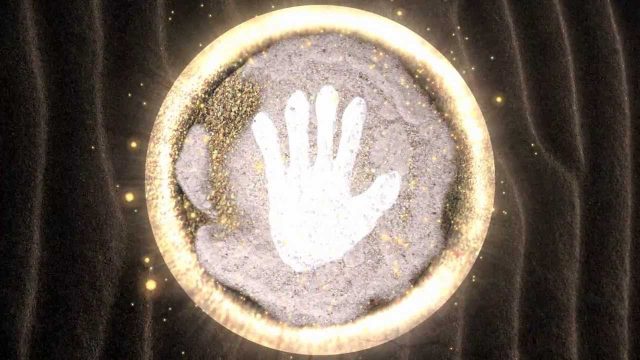
The video opens in a liminal space—a figure moving through walls and boundaries, literally passing through structures that have held form. This is not accident. The image mirrors the song's central tension: a soul caught between wanting and release, between the walls we build and the freedom we seek. Random Rab's "A Little More Free," from the 2017 album Formless Edge, is a meditation on constraint and liberation delivered through the precise language of electronic production and visual metaphor.
What makes this work distinct in the contemporary dharma-conscious music landscape is its refusal of easy answers. The lyrics circle a paradox: I don't want to fall / I think I might want it all / I just need to be a little more free. This is not a proclamation of enlightenment. It's the genuine prayer of someone still negotiating desire, ambition, and the possibility of letting go. The repetition builds hypnotically, the mantra-like structure suggesting both Buddhist practice traditions and the pulse of electronic music itself—both forms that invite the listener into altered states through disciplined repetition.
Random Rab's approach to production mirrors this thematic architecture. The bass frequencies anchor the track, grounding the listener in the body even as the lyrics reach toward transcendence. In the artist's own note about the official audio master, he acknowledges the bass sits heavy on the mix, particularly in the vocal frequencies—a limitation he would refine on the album version of Formless Edge. This detail reveals something crucial: the medium of electronic music requires the same craft-consciousness that classical composers brought to orchestration. Each frequency band, each layer of the mix, is a wall or a window.
Director Matt Yarrington's cinematic approach, produced through Abandon Building, transforms what could have been a performance video into a philosophical statement. The protagonist moves through literal and metaphorical architecture, passing through barriers, embodying the song's central question about what constrains us. Actor Wolfe Casals moves with deliberateness, suggesting neither defeat nor transcendence but the honest labor of someone trying to move through what blocks them.
The imagery of walls and streams—"all around me silent stream of sun"—creates a visual-lyrical correspondence. Water flows where it will; structures remain. The "sudden streaming of sun" suggests grace or illumination arriving without warning. This is devotional vocabulary, but expressed through the vernacular of contemporary visual storytelling rather than explicit spiritual rhetoric. The work trusts the viewer to meet the metaphor halfway.
Random Rab's work sits within an expanding tradition of artists using electronic music as a vehicle for contemplative inquiry—a lineage that runs from early ambient pioneers like Brian Eno toward contemporary producers who see the studio itself as a meditation hall. The harmonium drones and devotional wordplay in kirtan traditions find parallels in the sustained bass frequencies and cyclical vocal structures Rab employs. Both practices rely on repetition to shift consciousness; both resist the novelty-seeking that dominates popular music.
What distinguishes Rab's approach is the specificity of emotional terrain he navigates. This is not generic spirituality. The desire for freedom is paired with the acknowledgment that we don't want to fall—that there is wisdom in some constraints. This suggests maturity: the recognition that freedom and form are not opposites but dance partners.
"A Little More Free" arrives within the sonic and conceptual framework of Formless Edge, an album that—judging by this single—grapples with the relationship between structure and freedom. The title itself suggests the artist's central preoccupation: what happens at the threshold where form dissolves into openness? Electronic music, with its reliance on precise digital architecture to generate organic-sounding textures, is naturally suited to explore this boundary.
The artist's transparency about the mastering choices—the acknowledgment that the album version achieves better sonic balance—speaks to a producer who understands that the technical container shapes the message itself. In devotional practice, the purity of a note matters. So too with electronic music: the frequency response is not separate from the meaning-making. It is the meaning-making.
The video was released in March 2017 and has accumulated over 76,000 views—a modest but meaningful number for an explicitly spiritual electronic work. Random Rab's approach to his audience reflects a philosophy of gift and gratitude. His production notes thank listeners for their support and direct them toward both his ongoing catalog and the collaborators who made the work possible. This is not the persona of an artist treating his audience as a market; it's the practice of a musician embedded in community.
The reference to future releases—"Please subscribe to my YouTube Channel for many more upcoming releases"—positions the work not as a finished object but as one moment in an ongoing conversation. This aligns with both the mystical traditions that inform his work and the open-source generosity that characterizes much of the electronic music community.
To experience Random Rab's full artistic vision, visit his official site at randomrab.com for tour dates and additional releases. Listen to the full Formless Edge album to hear the refined mastering Rab favors and explore how "A Little More Free" sits within a larger meditative journey. For those interested in the visual dimension of his work, follow Abandon Building on Vimeo to see the full scope of director Matt Yarrington's output. If the intersection of electronic production and contemplative inquiry resonates with you, this work is both entry point and deepening practice—each listen revealing new layers of the question it asks.